
For millions of people—particularly those of East Asian descent—a single glass of wine or beer triggers an unmistakable reaction: warmth across the face, neck, and chest, followed by visible redness, sometimes accompanied by itching, nausea, or rapid heartbeat. This isn’t just “blushing” in the social sense—it’s a physiological response rooted deep in human DNA. Known clinically as the *alcohol flush reaction*, it’s one of the most well-documented examples of pharmacogenetics—the study of how genetic variation affects drug (and toxin) metabolism. Unlike temporary embarrassment, this flush signals a real biochemical bottleneck in alcohol processing—and carries implications far beyond aesthetics.
The Biochemical Bottleneck: ALDH2 and Acetaldehyde Buildup
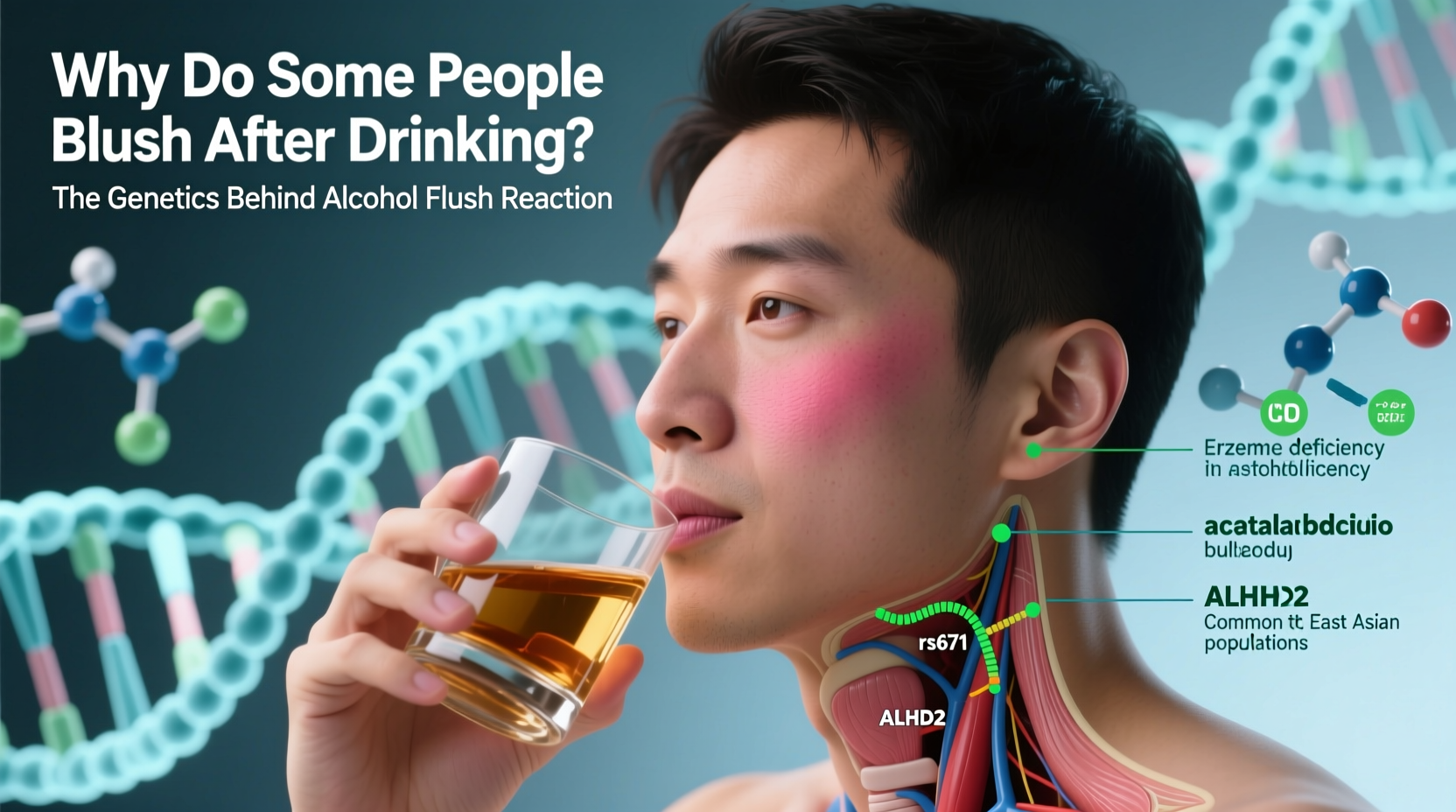
Alcohol metabolism occurs in two primary enzymatic steps. First, alcohol dehydrogenase (ADH) converts ethanol into acetaldehyde—a highly reactive, toxic compound classified by the World Health Organization as a Group 1 carcinogen. Then, aldehyde dehydrogenase 2 (ALDH2), primarily located in the mitochondria of liver cells, rapidly breaks down acetaldehyde into harmless acetate, which is further metabolized into carbon dioxide and water.
In individuals who experience the flush reaction, a single point mutation in the ALDH2 gene—specifically the rs671 variant—results in a nearly inactive form of the enzyme. This mutation substitutes glutamic acid for lysine at position 487 (E487K), destabilizing the enzyme’s tetrameric structure and reducing catalytic activity to less than 10% of normal in homozygous carriers—and roughly 30–50% in heterozygotes. As a result, acetaldehyde accumulates rapidly after even modest alcohol intake. Because acetaldehyde causes vasodilation (widening of blood vessels), histamine release, and inflammation, the skin—especially the thin, vascular-rich tissue of the face—reacts visibly within minutes.
This isn’t a matter of tolerance or “weak constitution.” It’s a genetically encoded metabolic deficiency—one that evolved independently in multiple East Asian populations over the past 7,000–10,000 years, likely as a protective mechanism against alcohol-related harm in agrarian societies where fermented beverages became dietary staples.
Genetic Prevalence and Population Patterns
The rs671 variant is among the most geographically stratified genetic traits known. Its frequency follows a clear gradient across Asia:
| Population | % Carrying At Least One rs671 Allele (Hetero- or Homozygous) | % Homozygous (Severe Flush Reaction) | Notes |
|---|---|---|---|
| Japanese | ≈40% | ≈8–10% | Highest documented prevalence of homozygosity |
| Korean | ≈30% | ≈5–7% | Strong correlation with self-reported flushing severity |
| Chinese (Han) | ≈25–35% | ≈3–6% | Variation observed between northern and southern subgroups |
| Vietnamese | ≈20–25% | ≈2–4% | Understudied but consistent with regional patterns |
| Caucasian & African Ancestry | <0.01% | Extremely rare | No clinically significant ALDH2 deficiency reported |
This distribution isn’t random. Studies suggest the rs671 allele underwent positive selection in rice-cultivating communities of southern China, possibly because reduced alcohol consumption conferred survival advantages—such as lower risk of alcohol poisoning, fewer accidents during labor-intensive farming, or decreased vulnerability to parasitic infections exacerbated by heavy drinking. The timing aligns closely with the domestication of rice and the emergence of early fermentation practices around 7,000 BCE.
Tip: If you flush after one drink, don’t assume it’s “just sensitivity.” Ask your doctor about ALDH2 status—especially if you have a family history of esophageal cancer or hypertension. Genetic testing for rs671 is widely available and clinically validated.Health Implications Beyond the Flush
The flush reaction is often dismissed as a harmless quirk—something to joke about at dinner parties or shrug off with “I just can’t hold my liquor.” But decades of epidemiological research reveal serious, dose-dependent health consequences tied directly to acetaldehyde accumulation.
People with the rs671 variant face dramatically elevated risks when they drink regularly—even moderately. A landmark 2013 meta-analysis published in PLoS Medicine found that heterozygous carriers who consumed two or more alcoholic drinks per day had a 2.5-fold increased risk of esophageal squamous cell carcinoma compared to non-carriers who drank the same amount. For homozygotes, the risk soared to over 10-fold. Why? Acetaldehyde directly damages DNA, forms mutagenic adducts with proteins and nucleic acids, and impairs folate metabolism—creating a perfect storm for upper gastrointestinal cancers.
Cardiovascular effects are equally consequential. While light-to-moderate drinking has been associated with reduced heart disease risk in some populations, that benefit disappears—or reverses—in ALDH2-deficient individuals. A 2020 study in JAMA Internal Medicine tracked over 160,000 Japanese adults for a decade and found that carriers who drank ≥1 drink/day had significantly higher rates of hypertension, atrial fibrillation, and stroke than non-carriers—even after adjusting for smoking, BMI, and diet.
“The alcohol flush isn’t a warning light—it’s a siren. When acetaldehyde builds up, it’s not just your cheeks turning red; it’s your cells signaling acute biochemical stress. Ignoring it doesn’t build tolerance—it accelerates damage.” — Dr. David M. Phillips, Professor of Pharmacogenomics, University of Tokyo Institute of Medical Science
What About Other Genes? ADH Variants and Modifying Factors
While ALDH2 rs671 is the dominant driver, it doesn’t act alone. Variants in alcohol dehydrogenase genes—particularly ADH1B (rs1229984)—also influence flushing intensity. The “fast-metabolizing” ADH1B*2 allele, common in East Asians, converts ethanol to acetaldehyde more rapidly than the ancestral form. When combined with deficient ALDH2, this creates a double-hit effect: acetaldehyde is produced faster *and* cleared slower. Individuals carrying both variants typically report earlier onset, greater intensity, and more systemic symptoms (e.g., tachycardia, headache, nausea) than those with ALDH2 deficiency alone.
Non-genetic factors also modulate expression:
- Medications: Disulfiram (Antabuse), metronidazole, and certain sulfonylureas inhibit ALDH2 activity and can trigger severe reactions—even in non-carriers.
- Dietary components: Foods high in tyramine (aged cheeses, fermented soy) or histamine (cured meats, vinegar-based dressings) may amplify flushing due to synergistic vasodilatory effects.
- Stress and hormonal fluctuations: Cortisol and estrogen can influence ADH/ALDH expression, explaining why some women report increased sensitivity during menstruation or menopause.
- Smoking: Nicotine induces cytochrome P450 2E1 (CYP2E1), an alternative pathway for ethanol metabolism that generates oxidative stress and additional acetaldehyde—worsening outcomes in carriers.
Mini Case Study: Maya, 32, Software Engineer, Seoul
Maya grew up watching her father avoid alcohol entirely after being told he’d “damage his liver” as a teenager. She herself never flushed much until age 28—then began noticing intense redness and palpitations after just half a glass of soju. Initially, she attributed it to stress or poor sleep. But when her younger brother was diagnosed with Barrett’s esophagus at 31—despite minimal drinking—she sought genetic counseling. Testing confirmed she was heterozygous for ALDH2 rs671 and carried the fast-metabolizing ADH1B*2 allele. Her physician emphasized that her rising blood pressure (138/86 mmHg) and mild gastritis were likely alcohol-exacerbated—not coincidental. Within three months of complete abstinence, her resting heart rate dropped by 12 bpm, her gastric symptoms resolved, and her annual endoscopy showed no progression of pre-cancerous changes. “I thought I was just ‘bad at drinking,’” she shared in a patient advocacy webinar. “Turns out my body was screaming at me in biochemistry—and I finally learned to listen.”
Practical Action Plan: What to Do If You Flush
Recognizing the flush is only the first step. Here’s a science-backed, step-by-step approach to protect your long-term health:
- Confirm your status: Use a direct-to-consumer genetic test (e.g., 23andMe, AncestryDNA) and check rs671 (ALDH2) and rs1229984 (ADH1B). Confirm clinically if planning pregnancy or managing chronic conditions.
- Adopt strict alcohol avoidance: There is no safe threshold for ALDH2-deficient individuals. Even occasional drinking increases cancer risk disproportionately. Replace alcohol with non-fermented alternatives like sparkling tea, ginger-lime water, or kombucha labeled “0.5% ABV or less.”
- Screen proactively: Begin upper endoscopy screening at age 40—or 10 years earlier than the youngest affected relative—if you’ve ever consumed alcohol regularly.
- Optimize detox pathways: Support healthy acetaldehyde clearance via B-vitamin cofactors (B1, B2, B6, folate), magnesium, and cruciferous vegetables (sulforaphane enhances glutathione synthesis).
- Educate your circle: Share your genetic status with close family members—especially siblings and children—so they can consider testing and prevention early.
FAQ
Can I “train” myself to stop flushing?
No. The flush reflects a fixed genetic deficiency in ALDH2 enzyme function. Tolerance does not develop—and attempts to “build up” exposure increase cumulative acetaldehyde burden and cancer risk. Abstinence remains the only evidence-based strategy.
Does taking antihistamines before drinking help?
Not meaningfully—and potentially dangerously. While antihistamines like loratadine may slightly reduce visible redness by blocking H1 receptors, they do nothing to lower acetaldehyde levels. Worse, they mask warning signs and may encourage risky consumption. They also carry their own cardiovascular and cognitive side effects, especially when combined with alcohol.
Are there any supplements that safely reduce flushing?
No supplement restores ALDH2 function. Some compounds—like Dihydromyricetin (DHM) from Japanese raisin tree—show *in vitro* ALDH2 activation in rodent models, but human trials are lacking, and safety data is insufficient. Relying on unproven “anti-flush” pills undermines the core message: your body is issuing a biologically urgent signal. Heed it—not bypass it.
Conclusion
The alcohol flush reaction is not a trivial trait. It’s a precise, inherited biomarker—one that reveals how deeply our genes shape our relationship with everyday substances. Understanding its origins in the ALDH2 gene transforms a momentary embarrassment into a powerful opportunity for preventive healthcare. For those who flush, every sip carries measurable biological cost. But knowledge changes everything: it replaces confusion with clarity, resignation with agency, and risk with resilience. You don’t need to change your genes—you need to honor them. Start today by choosing water over wine, asking questions at your next check-up, and sharing this insight with someone who might be misinterpreting their own flush as weakness instead of wisdom. Your future self—and your DNA—will thank you.
💬 Have you experienced the alcohol flush—or supported someone who does? Share your story, ask questions, or pass this article along. Real understanding begins when we stop normalizing biology—and start listening to it.








