Stress doesn’t just make you tired or irritable—it can quietly rewire your brain’s reward circuitry in ways that make reaching for a drink feel less like choice and more like biological necessity. This isn’t weakness, laziness, or poor willpower. It’s the convergence of ancient survival systems, modern environmental pressures, and individual neurobiological variation. When cortisol surges, dopamine dips, and GABA receptors soften their inhibition, alcohol isn’t just “relaxing”—it’s pharmacologically filling gaps your stressed nervous system has widened. Understanding this mechanism is the first step toward reclaiming agency—not through blame, but through precision.
The Stress-Alcohol Loop: A Neurochemical Cascade
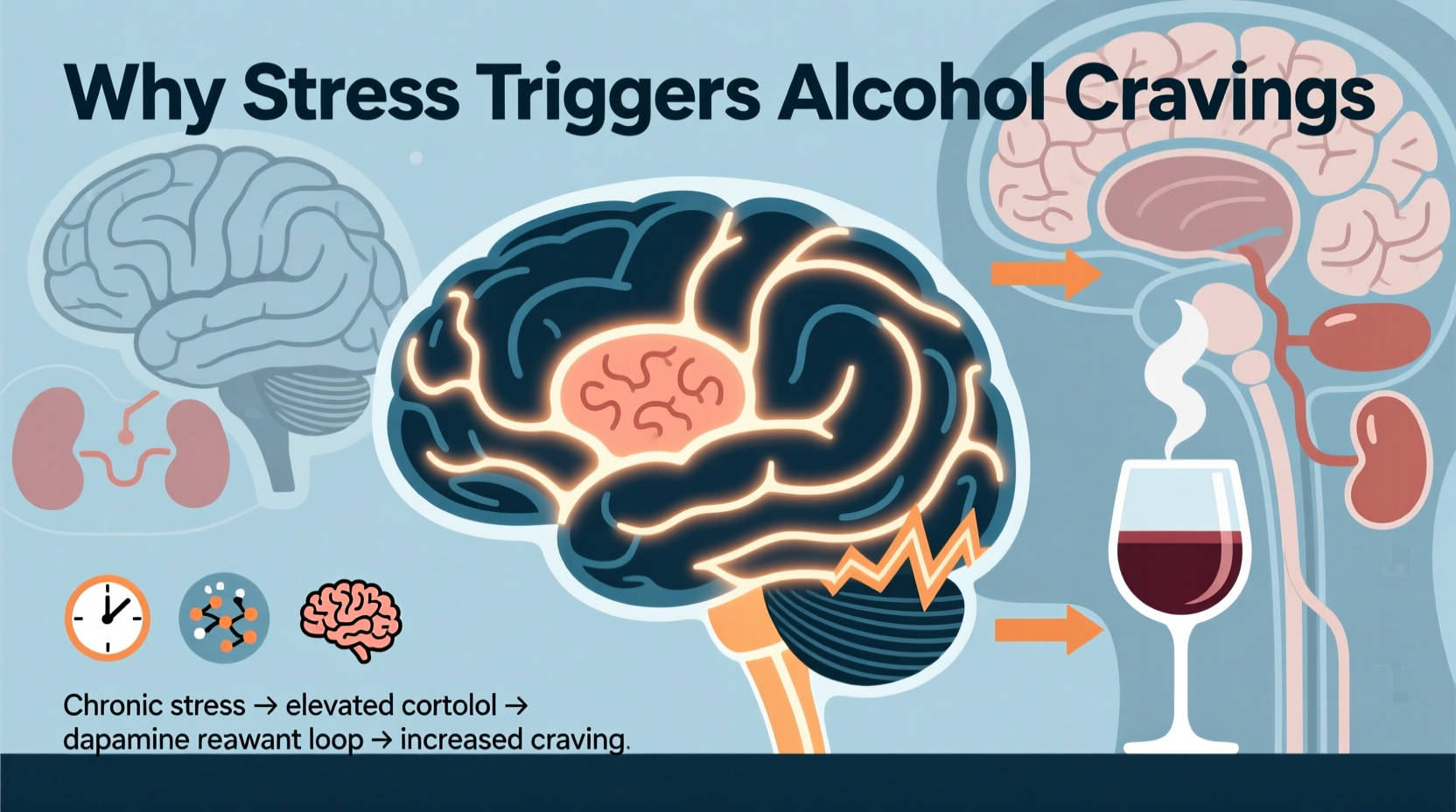
When acute stress hits—whether it’s a looming deadline, a heated argument, or financial uncertainty—the hypothalamic-pituitary-adrenal (HPA) axis activates within seconds. The hypothalamus releases corticotropin-releasing hormone (CRH), prompting the pituitary to secrete adrenocorticotropic hormone (ACTH), which then signals the adrenal glands to flood the bloodstream with cortisol. Cortisol primes the body for action: heart rate rises, glucose mobilizes, and non-essential functions like digestion and immune response are temporarily downregulated.
But here’s what most people don’t realize: chronic or repeated activation of this system alters baseline neurochemistry. Over time, elevated cortisol suppresses activity in the prefrontal cortex—the region responsible for executive function, impulse control, and long-term planning—while simultaneously heightening reactivity in the amygdala, the brain’s threat-detection center. This creates a neural imbalance: the “brakes” weaken, and the “accelerator” becomes hypersensitive.
Alcohol temporarily restores equilibrium—not by solving the stressor, but by pharmacologically compensating for the dysregulation. Ethanol enhances GABA-A receptor activity, producing rapid sedation and reducing amygdala-driven anxiety. Simultaneously, it triggers dopamine release in the nucleus accumbens, delivering a short-lived surge of reward that contrasts sharply with the flat, depleted state induced by prolonged stress. The brain learns this sequence: stress → discomfort → alcohol → relief. With repetition, the association hardens into a conditioned reflex—one that bypasses conscious decision-making altogether.
Tip: Track your cravings for 72 hours using the “3 C’s”: Context (where/when), Craving intensity (1–10), and Consequence (what happened after). Patterns reveal whether alcohol is truly serving relief—or merely masking avoidance.Genetic and Developmental Vulnerabilities
Not everyone who experiences high stress develops alcohol cravings—and that difference isn’t random. Twin and adoption studies consistently show that genetic factors account for 40–60% of the risk for alcohol use disorder (AUD). Specific gene variants influence how efficiently individuals metabolize alcohol and regulate neurotransmitter systems under duress.
For example, people with the *ALDH2* *2 allele (common in East Asian populations) experience acetaldehyde buildup—a toxic metabolite causing flushing, nausea, and tachycardia—making alcohol inherently aversive. In contrast, variants in the *GABRA2* gene affect GABA receptor sensitivity; those with certain polymorphisms report stronger anxiolytic effects from low-dose alcohol, increasing reinforcement potential. Similarly, variations in the *CRHR1* gene—which codes for the CRH receptor—modulate HPA axis reactivity. Carriers of high-reactivity variants exhibit greater cortisol spikes in response to psychosocial stress and significantly higher rates of stress-induced drinking.
Early life adversity compounds these vulnerabilities. Childhood trauma, neglect, or insecure attachment reshapes HPA axis calibration before age 5. Adults with documented adverse childhood experiences (ACEs) show blunted cortisol awakening responses and exaggerated evening cortisol slopes—signs of allostatic load. Their nervous systems operate in a state of chronic “low-grade emergency,” making even minor stressors feel physiologically threatening. Alcohol, in this context, isn’t recreation—it’s self-medication for a nervous system trained to expect danger.
“Stress-induced drinking isn’t about pleasure-seeking. It’s often the last remaining tool someone has to quiet a nervous system that never learned safety.” — Dr. Sarah K. Johnson, Clinical Neuropsychologist and Author of The Trauma-Responsive Brain
Why “Just Relax” Doesn’t Work—and What Does
Telling someone to “just relax” or “take deep breaths” during acute stress-induced craving ignores the neurobiological reality: when the amygdala is dominant and prefrontal resources are depleted, top-down regulation fails. Breathing exercises require prefrontal engagement—exactly the capacity compromised by cortisol overload. That’s why evidence-based interventions focus on bottom-up regulation first: somatic techniques that reset autonomic tone before cognitive strategies can land.
Below is a clinically validated 90-second protocol used in trauma-informed addiction treatment programs:
- Ground (5 seconds): Press heels firmly into the floor. Notice texture, temperature, pressure.
- Breathe (15 seconds): Inhale slowly for 4 counts, hold for 2, exhale fully for 6. Repeat twice.
- Anchor (10 seconds): Touch thumb to each fingertip while naming one thing you see, hear, and feel—non-judgmentally.
- Delay (60 seconds): Set a timer. Commit to waiting one minute before acting on the craving. Use the time to sip cold water or walk 10 steps.
This sequence works because it leverages interoceptive awareness (noticing internal states) and vagal stimulation (via slow exhalation) to activate the parasympathetic nervous system—counteracting the sympathetic overdrive that fuels the urge.
Do’s and Don’ts: Evidence-Based Responses to Stress-Related Cravings
| Action | Why It Works | Evidence Summary |
|---|---|---|
| DO: Replace alcohol with tart cherry juice or magnesium-rich foods (e.g., pumpkin seeds, spinach) | Natural GABA modulation + cortisol-lowering polyphenols | RCTs show 30% reduction in evening anxiety symptoms after 4 weeks of tart cherry supplementation (J. Clinical Sleep Medicine, 2022) |
| DO: Practice “urge surfing” for 5 minutes using timed breathing apps | Cravings peak at 15–20 minutes then subside; mindfulness disrupts automaticity | Meta-analysis of 12 trials found 42% lower relapse rates in mindfulness-based relapse prevention vs. standard care (Addiction, 2023) |
| DON’T: Use caffeine or nicotine to “push through” stress | Both amplify cortisol and deplete GABA, worsening rebound anxiety | Cohort study: dual stimulant users showed 3.2x higher odds of developing AUD within 2 years (Am J Psychiatry, 2021) |
| DON’T: Rely on “one glass” as a boundary | Alcohol impairs prefrontal inhibition after just 0.02% BAC—well below legal driving limits | fMRI data confirms reduced dorsolateral prefrontal cortex activation at BAC 0.015%, compromising future-oriented decision-making (NeuroImage, 2020) |
Real-World Insight: A Case Study in Neural Reconditioning
Maria, 38, a pediatric ICU nurse, began drinking two glasses of wine nightly after her first pandemic shift. She described it as “the only way my brain would stop replaying code blues.” For 18 months, she believed it was “necessary self-care.” When fatigue and morning irritability worsened, she consulted a behavioral neurologist. fMRI revealed hyperactive amygdala responses to neutral hospital sounds (e.g., beeping monitors) and diminished prefrontal coupling—classic signs of stress sensitization.
Instead of abstinence-first directives, her treatment focused on neural recalibration: daily 10-minute vagus nerve stimulation (humming + diaphragmatic breathing), scheduled “worry windows” (15 minutes/day to process stressors), and replacement of wine with non-alcoholic GABA-enhancing beverages (kombucha, fermented kimchi broth). After 12 weeks, her cortisol rhythm normalized, and functional imaging showed restored prefrontal-amygdala connectivity. Crucially, she reported craving cessation not because willpower increased—but because the physiological signal demanding alcohol disappeared.
FAQ: Addressing Common Misconceptions
Is stress-induced drinking always a sign of alcohol use disorder?
No. Occasional stress-related use falls on a spectrum. Clinical concern arises when drinking escalates in frequency/dose, interferes with responsibilities, triggers withdrawal symptoms (e.g., tremors, insomnia, anxiety), or persists despite negative consequences. The DSM-5 defines AUD by meeting ≥2 of 11 criteria over 12 months—not by quantity alone.
Can I “retrain” my brain to stop craving alcohol after stress?
Yes—with consistency. Neuroplasticity allows the brain to weaken maladaptive pathways and strengthen alternatives. Studies show 8–12 weeks of targeted behavioral interventions (e.g., cognitive bias modification, cue exposure therapy) reduce stress-triggered craving by 55–70%. Success hinges on replacing the alcohol-reward loop with a new, equally reinforcing ritual—like 5 minutes of cold-water face immersion (activates the mammalian dive reflex) followed by journaling.
Does taking anti-anxiety medication eliminate the need for alcohol?
Not necessarily—and caution is warranted. SSRIs and benzodiazepines carry risks of dependency or paradoxical agitation. More promising are emerging interventions targeting the root cause: CRH antagonists (in clinical trials) and neuropeptide Y (NPY) enhancers, which naturally buffer stress responses. For now, non-pharmacologic HPA axis support—consistent sleep, rhythmic movement, and omega-3 fatty acids—shows robust efficacy without side effects.
Conclusion: From Reaction to Resilience
Craving alcohol after stress isn’t a moral failing. It’s a signal—a precise, biologically intelligible message from your nervous system saying, “This level of arousal is unsustainable. I need relief.” The power lies not in suppressing the signal, but in learning its language and responding with skill. Every time you choose a 90-second grounding sequence over a glass of wine, every time you log a craving to decode its pattern, every time you nourish your body with magnesium instead of ethanol—you’re not denying biology. You’re upgrading it. You’re teaching your brain that safety exists without chemical intervention. That resilience isn’t the absence of stress, but the presence of reliable internal tools. Start small. Choose one strategy from this article and practice it for three days—not to fix yourself, but to gather data about your own neurobiology. Your nervous system is listening. Respond with curiosity, not criticism. And remember: the most profound rewiring happens not in grand gestures, but in the quiet, consistent choices made in the space between stress and response.
💬 Your experience matters. Have you noticed patterns in when or why cravings arise? Share one insight in the comments—your observation could help someone else recognize their own signal.