
The moment Jinx pulls the trigger on Silco in *Arcane* is not just a shocking plot twist—it’s the culmination of years of psychological manipulation, love twisted by trauma, and a desperate search for identity. This act isn’t about betrayal; it’s about liberation. To understand why Jinx killed Silco, we must look beyond the surface violence and examine the complex emotional architecture that defines both characters. Their relationship is one of the most nuanced portrayals of found family turned toxic dependency in modern storytelling.
Silco raised Jinx when no one else would. He gave her purpose, protection, and a sense of belonging—yet those gifts came with strings made of control, fear, and chemical dependence. As much as he loved her, he also shaped her into a weapon. And when Jinx finally sees him not as a father but as a mirror of her own pain, the only way forward is through destruction.
The Father Figure Who Was Never a Parent
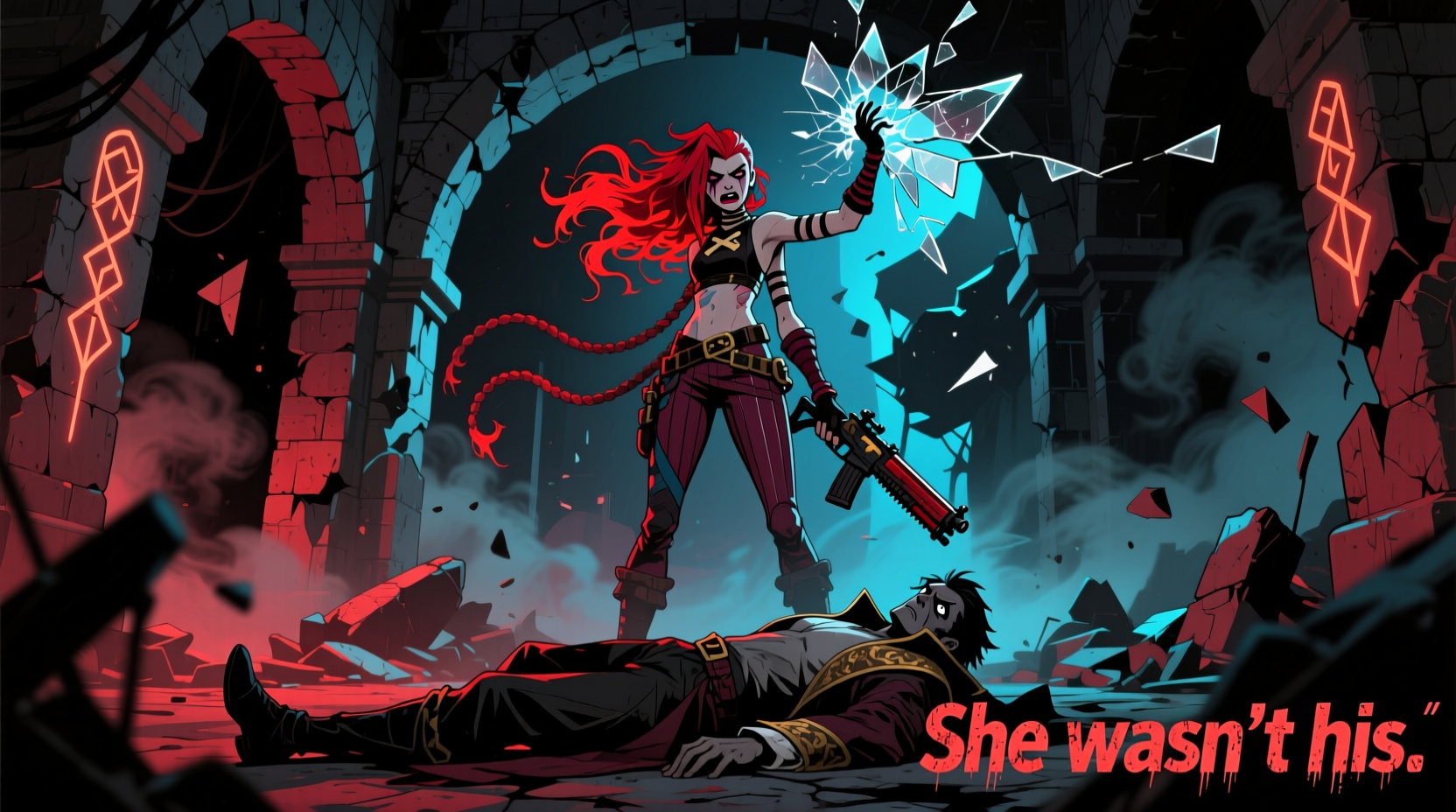
Silco’s role in Jinx’s life cannot be reduced to villain or savior. He rescued Powder—Jinx’s former self—from abandonment and abuse. In a world where children are discarded in the undercity, his decision to raise her was radical. But his methods were deeply flawed. He nurtured her brilliance with explosives, celebrated her chaos, and normalized violence as strength.
What Silco failed to provide was safety rooted in unconditional love. Instead, he offered conditional acceptance: “You’re valuable because you’re dangerous.” This warped foundation set the stage for Jinx’s fractured psyche. She internalized the idea that she had to earn affection through performance—whether it was blowing things up or proving loyalty.
“Love shouldn’t require proof. But in Zaun, even affection has a price.” — Viktor, *Arcane*
This quote, though spoken by another character, encapsulates the tragedy of Jinx and Silco’s bond. Their love existed, but it was transactional. When Silco used Shimmer to manipulate her emotions and suppress her memories, he crossed a line from protector to abuser. The drug didn’t just alter her mind—it erased her agency.
Trauma, Identity, and the Fracture of Self
Jinx doesn’t wake up one day and decide to kill Silco. The decision unfolds over seasons of accumulated pain, confusion, and realization. Her identity has always been unstable—torn between Powder, the scared child, and Jinx, the unhinged destroyer. Silco encouraged the latter while suppressing the former.
But during her time in Piltover, especially after reconnecting with Vi, fragments of Powder resurface. These moments aren’t weakness—they’re reclamation. Every memory of running through Zaun tunnels with her sister, every flash of laughter before the explosion at the bridge, chips away at the persona Silco built.
The turning point comes when Jinx realizes Silco lied about Vi’s role in the death of their friends. He fed her a narrative of betrayal to keep her dependent. Once she learns the truth—that Vi tried to save them—her entire worldview cracks. The story Silco constructed collapses under its own falsehoods.
Tip: When analyzing character motivations, look beyond actions to emotional triggers—what broke them, what healed them, and what they're trying to prove.The Final Confrontation: A Choice, Not a Reflex
In the final episode, Jinx enters the laboratory knowing Silco is dying. He’s weak, vulnerable, and calling out to her with genuine affection. This is not the cold mastermind—he’s a man facing death, reaching for the daughter he created.
Yet Jinx hesitates only briefly before firing. Why?
Because in that moment, she isn’t choosing between love and hate. She’s choosing autonomy. Killing Silco isn’t vengeance—it’s an assertion of self. By ending him, she severs the last tether binding her to a past defined by others’ expectations. It’s tragic, yes, but also empowering. She stops being a product of trauma and becomes the author of her own story.
Her words—“I’m not your little girl anymore”—are not said in anger, but in sorrowful clarity. This isn’t a triumphant moment. It’s a funeral for the version of herself that needed Silco to survive.
A Timeline of Emotional Collapse
Jinx’s path to that final shot can be traced through key emotional milestones:
- Childhood Abandonment: Left behind during the raid on the orphanage, setting the foundation for attachment issues.
- The Bridge Explosion: Believes Vi abandoned her, triggering deep-seated guilt and rage.
- Adoption by Silco: Gains protection but loses identity; begins transformation into Jinx.
- Chemical Dependence: Shimmer use escalates, blurring reality and reinforcing Silco’s control.
- Reconnection with Vi: Memories return, creating cognitive dissonance between past and present.
- Discovery of Lies: Learns Silco manipulated her perception of Vi, shattering trust.
- The Laboratory Scene: Chooses self-determination over loyalty, kills Silco.
This progression shows that Jinx didn’t “snap.” She evolved. Each step forced her to confront who she was told to be versus who she might become.
Do’s and Don’ts in Understanding Toxic Bonds
| Do | Don't |
|---|---|
| Recognize that love and harm can coexist in relationships | Dismiss abusive dynamics just because affection is present |
| Acknowledge the survivor’s need for closure, even if it’s painful | Assume leaving or ending a relationship means hatred |
| Understand that breaking free often requires drastic action | Pathologize someone’s choices without context |
| See identity reclamation as a form of healing | Label characters as purely “good” or “evil” |
Mini Case Study: From Powder to Jinx – A Psychological Reckoning
Consider a real-world parallel: survivors of coercive caregiving often struggle with loyalty long after escaping. A child raised by a loving yet manipulative parent may defend them publicly while privately feeling trapped. Therapy often reveals that cutting ties—not out of malice, but self-preservation—is a necessary step toward wholeness.
Likewise, Jinx’s killing of Silco mirrors this therapeutic rupture. It’s not about justice or revenge. It’s about stopping the cycle. In real-life trauma recovery, this moment is called “setting boundaries at all costs.” For Jinx, the cost is high—but the alternative is eternal fragmentation.
Frequently Asked Questions
Was Jinx justified in killing Silco?
From a moral standpoint, murder is indefensible. But within the narrative logic of trauma and survival, Jinx’s act is framed as inevitable. Silco manipulated her mind, exploited her instability, and used drugs to maintain control. Her choice reflects a tragic necessity rather than ethical righteousness.
Did Silco truly love Jinx?
Yes—but his love was possessive and conditional. He saw her as an extension of himself, not as a separate person with autonomy. True love supports growth; Silco feared it. His final words show genuine emotion, but they come too late to undo years of damage.
Could Jinx have saved Silco instead?
Possibly, but not without sacrificing her progress. Saving him would have meant returning to dependency. At that stage, choosing life for Silco might have meant death for Powder—the part of her seeking peace. The narrative suggests that sometimes, letting go requires finality.
Conclusion: Breaking Chains, One Bullet at a Time
Jinx killing Silco is not a betrayal—it’s the ultimate act of self-liberation. It’s the moment a girl who spent her life being shaped by others finally grabs the chisel and carves her own face. The tragedy lies not in the act itself, but in the fact that such violence was necessary for freedom.
*Arcane* doesn’t offer easy answers. It shows us that love can poison. That protection can imprison. And that healing sometimes looks like loss. Jinx’s journey reminds us that breaking free from toxic bonds—even those wrapped in care—requires courage few can bear.
💬 What do you think—was Jinx’s choice inevitable, or could there have been another way? Share your thoughts and join the conversation below.








