
Waking up hours before your alarm, while the world is still dark and quiet, might sound peaceful—but when it happens regularly, it becomes a source of frustration and fatigue. You’re not alone: millions struggle with early morning awakenings that disrupt restful sleep. The reasons range from biological shifts to stress, medical conditions, or poor sleep habits. Understanding the root causes is the first step toward reclaiming uninterrupted nights and energized mornings.
The Science Behind Early Waking
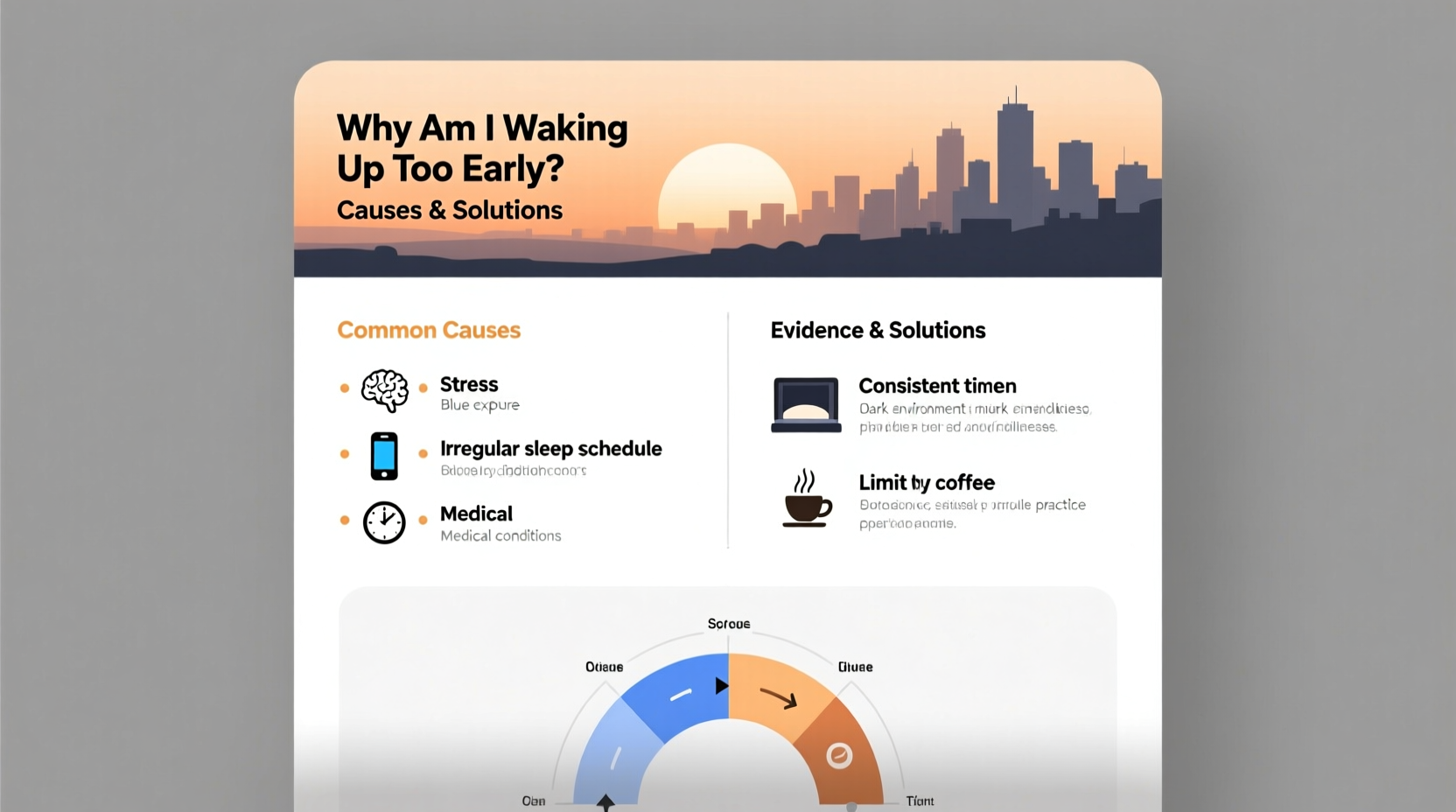
Your body operates on a circadian rhythm—a 24-hour internal clock regulated by light exposure, hormones like melatonin, and environmental cues. This rhythm dictates when you feel alert and when you feel sleepy. When functioning properly, it aligns with your desired sleep schedule. However, disruptions can cause your brain to wake prematurely, often between 3 a.m. and 5 a.m., even if you went to bed at a reasonable hour.
One key factor is the natural rise of cortisol, the \"awakening hormone,\" which begins increasing in the bloodstream around 3–4 a.m. In healthy individuals, this supports a smooth transition into wakefulness near the end of the sleep cycle. But if your sleep is fragmented or shallow, this hormonal shift can jolt you awake too soon, leaving you unable to fall back asleep.
“Early awakening without the ability to return to sleep is one of the hallmark symptoms of sleep maintenance insomnia.” — Dr. Rebecca Robbins, Sleep Scientist, Harvard Medical School
Common Causes of Waking Up Too Early
Several interrelated factors can lead to premature waking. Identifying which apply to you is essential for targeted solutions.
1. Age-Related Sleep Changes
As people age, particularly over 60, sleep architecture changes. Deep sleep decreases, and circadian rhythms may shift earlier—a phenomenon known as \"phase advance.\" This means older adults often feel sleepy earlier in the evening and wake up earlier in the morning, sometimes as early as 4 a.m.
2. Stress and Anxiety
Mental health plays a major role in sleep quality. High levels of stress or anxiety increase activity in the sympathetic nervous system, making it harder to stay asleep. The early morning hours are especially vulnerable because this is when REM sleep peaks, and dreams (often emotionally charged) can trigger wakefulness.
3. Depression
Early-morning awakening is a diagnostic criterion for depression in many clinical frameworks. People with depression often experience disrupted sleep cycles, including terminal insomnia—waking up significantly earlier than desired and being unable to fall back asleep.
4. Poor Sleep Hygiene
Habits such as using screens before bed, irregular sleep schedules, consuming caffeine late in the day, or napping excessively can fragment sleep and make early waking more likely.
5. Medical Conditions
Certain health issues contribute to early waking:
- Sleep apnea: Breathing interruptions can cause micro-awakenings that accumulate, leading to full wakefulness.
- Nocturia: Frequent nighttime urination due to diabetes, prostate issues, or medications forces you out of bed.
- Hormonal imbalances: Thyroid disorders or menopause (with night sweats) disrupt sleep continuity.
Practical Solutions to Prevent Early Waking
Fixing early awakening isn’t about forcing yourself to sleep longer—it’s about creating conditions that support continuous, high-quality rest. Here are evidence-based strategies to help you stay asleep until your intended wake time.
1. Optimize Your Circadian Rhythm
Exposure to bright light in the morning helps anchor your internal clock. Spend at least 15–30 minutes outside shortly after waking (even on cloudy days). Conversely, dim lights and avoid blue light from screens in the evening to encourage melatonin release.
2. Maintain a Consistent Sleep Schedule
Go to bed and wake up at the same time every day—even on weekends. This consistency strengthens your circadian rhythm and reduces the likelihood of premature awakening.
3. Limit Time in Bed
If you’re consistently waking up too early and lying awake for long periods, reduce your total time in bed to match actual sleep duration. For example, if you’re only sleeping 6 hours but spending 8 in bed, limit bedtime to 6 hours initially, then gradually expand as sleep efficiency improves.
4. Address Underlying Mental Health Issues
If stress, anxiety, or depression is contributing to your sleep troubles, cognitive behavioral therapy (CBT), particularly CBT for insomnia (CBT-I), has been shown to be highly effective. It helps reframe negative thought patterns that interfere with sleep.
5. Create a Sleep-Conducive Environment
Ensure your bedroom is cool (around 65°F or 18°C), dark, and quiet. Use blackout curtains, a white noise machine, or earplugs if needed. Reserve the bed only for sleep and intimacy—no work, scrolling, or TV watching.
Step-by-Step Guide to Reestablish Healthy Sleep
- Track your sleep pattern: For one week, record bedtime, wake time, and any nighttime awakenings using a journal or app.
- Set a fixed wake-up time: Choose a realistic time and stick to it daily, no matter how little you slept.
- Adjust bedtime accordingly: Based on your average sleep duration, set a bedtime that allows 7–8 hours—but don’t go to bed earlier than necessary.
- Practice wind-down routines: Begin 60 minutes before bed with calming activities like reading, stretching, or meditation.
- Avoid stimulants: Eliminate caffeine after 2 p.m. and avoid heavy meals or alcohol close to bedtime.
- Seek professional help if needed: If early waking persists beyond 2–3 weeks despite lifestyle changes, consult a sleep specialist.
Do’s and Don’ts: Quick Reference Table
| Do | Don’t |
|---|---|
| Expose yourself to morning sunlight | Use your phone when you wake up early |
| Keep a consistent wake-up time | Try to force sleep if you’re not tired |
| Practice relaxation techniques before bed | Drink fluids right before sleeping |
| Limit naps to 20–30 minutes, before 3 p.m. | Stay in bed awake for more than 20 minutes |
| Seek treatment for chronic conditions | Ignore persistent early waking |
Real-Life Example: Sarah’s Journey Back to Restful Sleep
Sarah, a 52-year-old teacher, began waking up at 4:30 a.m. every day, unable to fall back asleep. She felt exhausted by midday but chalked it up to aging. After tracking her sleep, she realized she was going to bed at 9 p.m. due to boredom but wasn’t truly sleepy. She started delaying bedtime to 10:30 p.m., took daily walks in the morning sun, and stopped drinking herbal tea after dinner (which increased nighttime bathroom trips). Within three weeks, she was consistently sleeping until 6 a.m. and felt more alert during the day. Her case highlights how small, intentional changes can have powerful effects.
Frequently Asked Questions
Is waking up too early a sign of a serious health issue?
Not always. Occasional early waking due to stress or travel is normal. However, if it happens most nights and impairs your daytime function, it could signal insomnia, depression, or a sleep disorder—and warrants evaluation by a healthcare provider.
Can melatonin help me sleep longer?
Melatonin may help regulate your sleep-wake cycle, especially if your circadian rhythm is misaligned. A low dose (0.5–3 mg) taken 1–2 hours before bedtime can support sleep onset. However, it’s less effective for staying asleep. Extended-release formulations may offer better results for sleep maintenance.
Should I try to go back to sleep if I wake up early?
If you wake up more than an hour before your planned wake time and aren’t drowsy, it’s often better to get out of bed. Stay in dim light, avoid screens, and engage in quiet activities like reading or journaling until you feel sleepy again. Staying in bed frustrated can create negative associations with your bed.
Take Control of Your Sleep
Waking up too early doesn’t have to become your new normal. Whether the cause is biological, psychological, or behavioral, there are actionable steps you can take to improve sleep continuity. Start by evaluating your routine, environment, and mental well-being. Small adjustments—like managing light exposure, refining your sleep schedule, or addressing stress—can yield significant improvements. If self-help strategies don’t work, don’t hesitate to seek support from a sleep specialist. Quality sleep isn’t a luxury—it’s foundational to your health, mood, and daily performance.
🚀 Ready to transform your sleep? Pick one strategy from this article and implement it tonight. Share your progress or questions in the comments below—your journey could inspire someone else to rest better, too.








