
It’s a familiar pattern: you push through a demanding workweek, fueled by coffee, adrenaline, and sheer willpower. Then, as soon as Friday evening hits or Saturday morning arrives, that familiar throb begins behind your eyes. The irony? You’re finally relaxed—and now you have a headache. This isn’t coincidence. It’s a well-documented phenomenon known as the “stress let-down effect,” and it’s responsible for weekend headaches in countless people who otherwise feel fine during high-pressure periods.
Understanding this cycle is key to breaking it. Far from being random, these headaches follow a predictable physiological pathway triggered not by stress itself, but by its sudden absence. When your body abruptly shifts from a state of chronic tension to relaxation, it can misinterpret the change as a signal to release built-up neurological and hormonal pressure—often in the form of a migraine or tension-type headache.
The Science Behind the Stress Let-Down Effect
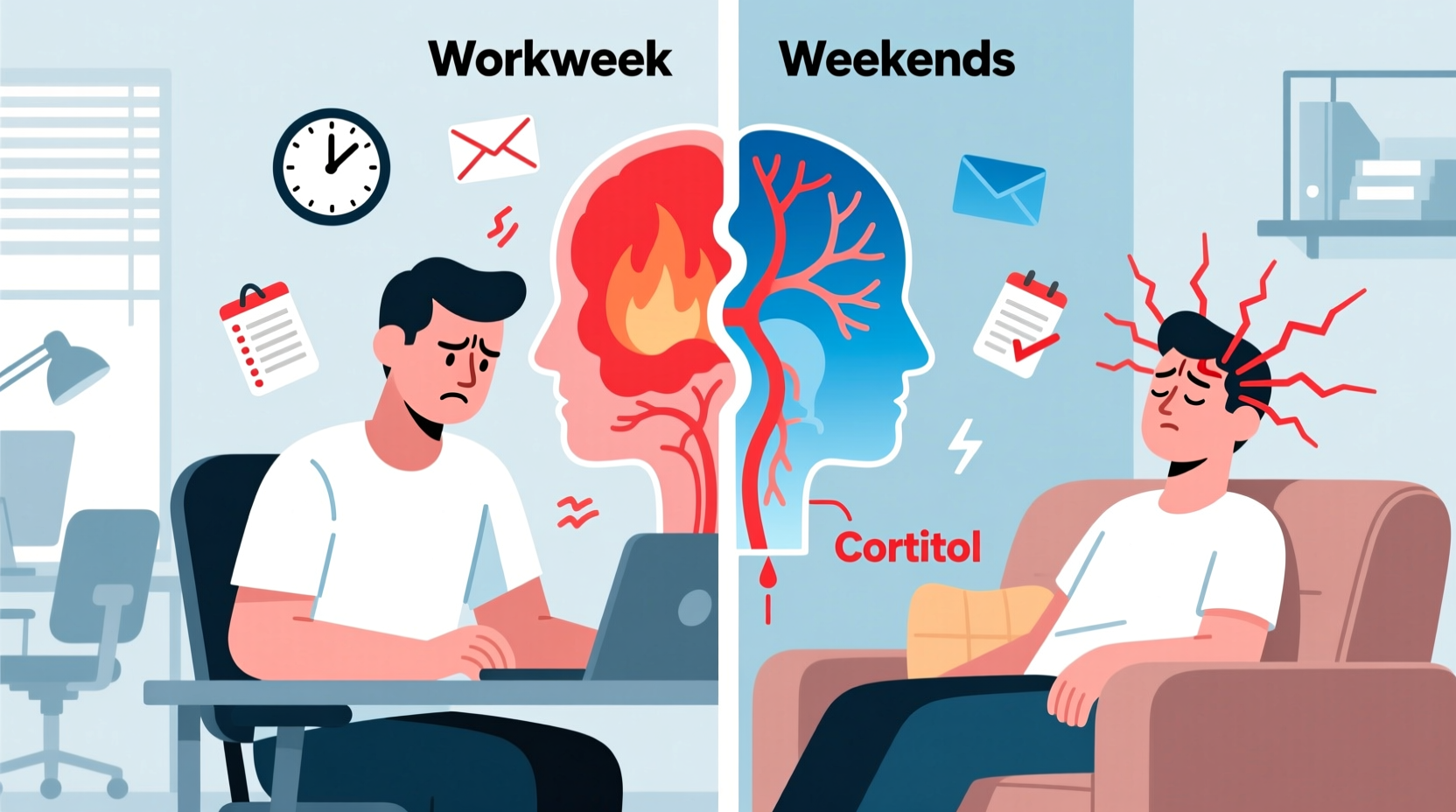
The human body operates on a delicate balance of hormones and nervous system activity. During periods of sustained stress, your sympathetic nervous system—the “fight-or-flight” mode—remains highly active. Cortisol and adrenaline levels rise, keeping your alertness elevated, muscles tensed, and pain perception suppressed. This heightened state masks underlying vulnerabilities, including developing headaches.
When the stressor ends—say, at the close of the workweek—your parasympathetic nervous system takes over, initiating “rest-and-digest” functions. Blood pressure drops, heart rate slows, and cortisol plummets. While this shift is healthy in theory, the rapid drop in stress hormones can destabilize brain chemistry, particularly affecting serotonin and other neurotransmitters involved in pain regulation.
According to Dr. Kathleen Mullin, a neurologist specializing in headache disorders:
“The stress let-down headache is one of the most common patterns we see in clinic. Patients often report migraines starting Friday night or Saturday morning. Their bodies were coping under pressure, but once the guard comes down, the nervous system reacts with a rebound effect.”
This neurological rebound can trigger migraines or tension headaches within hours of relaxation, especially if other triggers like poor sleep, dehydration, or caffeine withdrawal are also present.
Why Weekends Are High-Risk for Headaches
Weekends differ significantly from weekdays in routine, behavior, and environment—all of which influence headache susceptibility. Even subtle changes can tip the balance when combined with the stress let-down effect.
Consider the typical weekday-to-weekend transition:
- Sleep schedule shifts: Staying up late Friday night or sleeping in on Saturday disrupts circadian rhythms, a known migraine trigger.
- Caffeine fluctuations: Skipping morning coffee or consuming more alcohol (which contains tyramine, a headache-inducing compound) alters brain chemistry.
- Diet changes: Irregular meals or increased intake of processed foods can cause blood sugar swings linked to headaches.
- Posture and screen time: Slouching on the couch for extended periods increases neck and shoulder tension.
These factors don’t cause headaches in isolation, but they compound the neurological instability created by the sudden drop in stress hormones. The result? A perfect storm for weekend head pain.
Tip: Track your headache onset alongside daily habits using a journal or app. Patterns often reveal surprising triggers beyond stress.Identifying Your Personal Triggers
While the stress let-down effect explains the timing of weekend headaches, individual triggers vary widely. Some people react strongly to dietary changes, while others are sensitive to light, sound, or hormonal shifts.
A practical way to identify your unique combination of factors is through a symptom and habit log. Record the following each day for two weeks:
- Time and severity of headache (use a 1–10 scale)
- Sleep duration and quality
- Caffeine and alcohol intake
- Meals and hydration
- Stress levels throughout the day
- Physical activity
- Medication or supplement use
After two weeks, review the data. Do headaches consistently follow skipped breakfasts? Late nights? Wine on Fridays? The answers will guide targeted prevention.
Common Weekend Headache Triggers
| Trigger | How It Contributes | Prevention Strategy |
|---|---|---|
| Sleeping in | Disrupts melatonin and serotonin cycles | Limit weekend sleep extension to 1 hour past weekday wake time |
| Caffeine reduction | Causes blood vessel dilation in the brain | Maintain consistent caffeine intake; avoid abrupt cuts |
| Alcohol consumption | Dehydrates and releases inflammatory compounds | Limit drinks, choose low-histamine options, hydrate between sips |
| Skipped meals | Leads to hypoglycemia-induced head pain | Eat balanced snacks every 3–4 hours |
| Sudden physical inactivity | Reduces endorphins and circulation | Include light movement like walking or stretching |
Step-by-Step Guide to Preventing Weekend Headaches
Preventing stress let-down headaches isn’t about eliminating relaxation—it’s about managing the transition into it. Follow this five-step plan to reduce your risk:
- Smooth Out Your Weekday Stress Peaks
Chronic high stress sets the stage for let-down reactions. Incorporate micro-breaks during the workday: 5 minutes of deep breathing, a short walk, or stretching every few hours. These practices help regulate cortisol and prevent extreme buildups. - Gradual Wind-Down Routine
Don’t go from 100 mph to zero overnight. Start easing into weekend mode Thursday evening. Reduce non-essential tasks, dim lights, and avoid stimulating media after 8 PM. This gradual shift prevents neurological shock. - Preserve Consistent Rhythms
Keep sleep, eating, and caffeine schedules within a 60–90 minute window of your weekday routine. Going to bed at 10:30 PM Friday instead of midnight makes a measurable difference. - Hydrate and Eat Proactively
Dehydration is a silent trigger. Begin Saturday morning with a glass of water and a nutritious breakfast—even if you’re not hungry. Include protein, complex carbs, and healthy fats to stabilize energy. - Engage in Light Activity
Gentle exercise like yoga, swimming, or a 20-minute walk supports blood flow and endorphin release without overexertion. Avoid intense workouts if you're prone to exertion headaches.
Mini Case Study: Sarah’s Saturday Migraine Pattern
Sarah, a 34-year-old project manager, experienced debilitating migraines every Saturday morning. She assumed she was “overworking,” but her diary revealed a different story. During the week, she drank three cups of coffee, ate breakfast promptly, slept 6.5 hours, and maintained a rigid schedule. On Fridays, she’d skip coffee after lunch, stay out until 1 AM, drink wine, and sleep until 10 AM Saturday.
Her neurologist identified the problem: a triple threat of caffeine withdrawal, sleep disruption, and alcohol consumption—all occurring just as her work stress lifted. By adjusting her Friday evening habits—limiting wine, drinking decaf after noon, and going to bed by 11 PM—Sarah reduced her weekend headaches by 80% within four weeks.
Actionable Tips and Prevention Checklist
Tip: Set a Friday evening alarm to start your wind-down routine. Use it to brew herbal tea, change into comfortable clothes, and begin disconnecting from work emails.To help you stay consistent, here’s a printable-style checklist to follow every Friday:
📋 Weekend Headache Prevention Checklist- ✅ Maintain caffeine intake—no abrupt cuts after Thursday
- ✅ Eat a balanced dinner with protein and complex carbs
- ✅ Limit alcohol or choose low-histamine options (e.g., vodka soda, dry white wine)
- ✅ Hydrate: drink 1–2 glasses of water before bed
- ✅ Stick to bedtime within 1 hour of weekday schedule
- ✅ Avoid screens 60 minutes before sleep; try reading or meditation
- ✅ Prepare breakfast ingredients the night before to ensure morning nutrition
- ✅ Schedule light activity for Saturday morning (e.g., walk, stretch, gentle yoga)
Frequently Asked Questions
Can stress let-down headaches be prevented with medication?
For some individuals, especially those with frequent migraines, doctors may recommend preventive medications such as beta-blockers, anticonvulsants, or CGRP inhibitors. However, lifestyle adjustments are typically the first line of defense. Acute treatments like NSAIDs or triptans can help if taken early, but relying on them regularly risks medication-overuse headaches.
Are weekend headaches a sign of something serious?
In most cases, no. Stress let-down headaches are benign and tied to lifestyle patterns. However, if your headaches are sudden, severe, accompanied by neurological symptoms (vision changes, weakness, confusion), or worsening over time, consult a healthcare provider to rule out secondary causes like hypertension, structural issues, or hormonal disorders.
Why do I only get headaches on weekends and not during stressful times?
This paradox occurs because stress hormones like cortisol act as natural analgesics—they suppress pain signals. When stress lifts, the brain experiences a kind of \"withdrawal\" from this protective state, allowing previously masked pain pathways to activate. It’s not that stress causes the headache; it delays its expression.
Conclusion: Reclaim Your Weekends Without the Pain
Weekend headaches driven by the stress let-down effect are both common and manageable. They’re not a sign of weakness or poor resilience—they’re a physiological response to abrupt changes in your body’s internal environment. By smoothing the transition from workweek intensity to weekend recovery, you can enjoy true relaxation without paying the price in head pain.
Start small: pick one strategy from this guide—perhaps stabilizing your sleep schedule or hydrating better on Fridays—and commit to it for two weeks. Track your results. Over time, layer in additional habits until your weekends become genuinely restorative, not punishing.
💬 Have you noticed a pattern between stress relief and headaches? Share your experience or tips in the comments—your insight could help someone break the cycle.








