Onions are a foundational ingredient in cuisines around the world—adding depth, sweetness, and complexity to soups, stews, sauces, and sautés. Yet for a growing number of people, consuming onions triggers uncomfortable gastrointestinal distress, bloating, and fatigue. These reactions are not allergies in the traditional sense but rather signs of onion intolerance, a condition that affects digestion rather than the immune system. Unlike an allergic reaction, which can be immediate and severe, onion intolerance often develops gradually and is easily misattributed to other digestive issues like irritable bowel syndrome (IBS) or general food sensitivity. Recognizing the symptoms and understanding the root causes is essential for those seeking relief and long-term gut health.
Definition & Overview
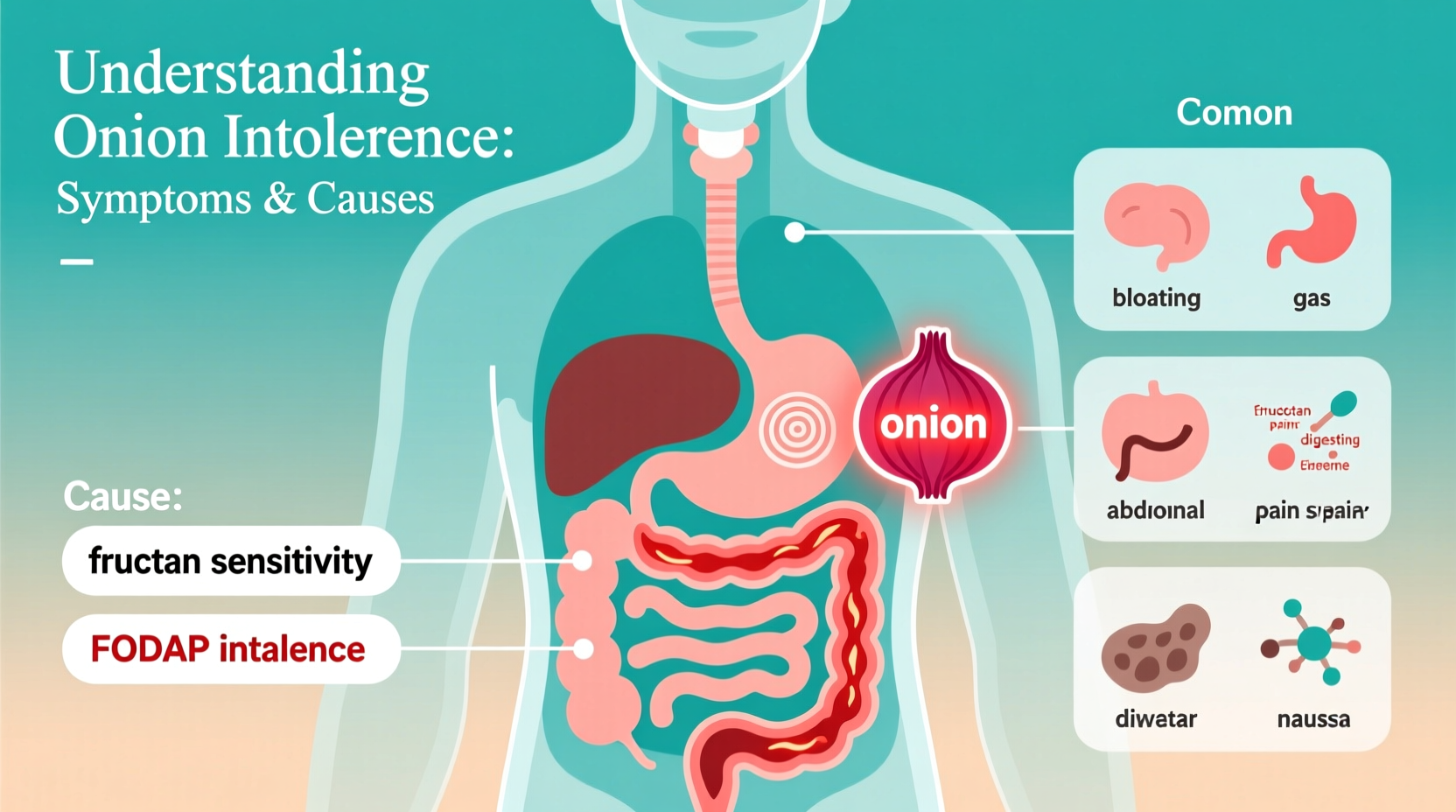
Onion intolerance refers to the body’s inability to properly digest certain compounds found in onions, leading to gastrointestinal discomfort and systemic symptoms. It is classified as a non-immunological food sensitivity, meaning it does not involve IgE-mediated immune responses like a true food allergy would. Instead, the digestive tract struggles to break down specific carbohydrates and sulfur-containing compounds abundant in onions, particularly fructans—a type of fermentable oligosaccharide, disaccharide, monosaccharide, and polyol (FODMAP). This malabsorption leads to fermentation by gut bacteria, gas production, and irritation of the intestinal lining.
Onions belong to the *Allium* family, which includes garlic, leeks, shallots, chives, and scallions. All members of this group contain similar FODMAPs and organosulfur compounds, meaning intolerance often extends beyond just raw or cooked onions. The condition is more prevalent among individuals with pre-existing digestive disorders such as IBS, small intestinal bacterial overgrowth (SIBO), or leaky gut syndrome. While not life-threatening, chronic exposure can exacerbate inflammation, disrupt microbiome balance, and impair nutrient absorption.
Key Characteristics of Onion Intolerance
- Type: Non-allergic food intolerance (digestive origin)
- Primary Trigger Compounds: Fructans, allyl propyl disulfide, and other sulfur-based molecules
- Reaction Onset: Typically delayed—symptoms appear 1–6 hours after ingestion
- Symptom Duration: Can last several hours to days depending on individual sensitivity and gut health status
- Prevalence: Underdiagnosed; estimated to affect up to 15–20% of people with functional gastrointestinal disorders
- Diagnosis Method: Elimination diet followed by controlled reintroduction; hydrogen breath testing may support findings
- Dietary Classification: High-FODMAP food; restricted in low-FODMAP diets
| Feature | Onion Intolerance | General Digestive Sensitivity |
|---|---|---|
| Immune Involvement | No | No |
| Primary Mechanism | Fructan malabsorption and bacterial fermentation | Broad reactivity to multiple irritants (spices, fats, additives) |
| Specificity | Linked directly to Allium vegetables | Non-specific; varies widely between individuals |
| Diagnostic Clarity | Clear improvement on elimination and relapse upon reintroduction | Less predictable patterns; harder to isolate triggers |
Common Symptoms of Onion Intolerance
Symptoms vary in intensity and combination but primarily manifest in the gastrointestinal tract. Because these overlap significantly with conditions like IBS, many individuals remain unaware that onions are the root cause.
- Bloating and distension: One of the most consistent complaints—abdominal swelling due to gas buildup from bacterial fermentation of undigested fructans.
- Abdominal pain or cramping: Often localized in the lower abdomen, occurring shortly after meals containing onions.
- Excessive gas (flatulence): Caused by colonic fermentation; may be foul-smelling due to sulfur compounds.
- Diarrhea or alternating bowel habits: Some experience loose stools, while others report constipation-dominant patterns.
- Nausea: Especially when large quantities are consumed or eaten on an empty stomach.
- Heartburn or reflux: Onions can relax the lower esophageal sphincter and increase gastric acidity in sensitive individuals.
- Systemic effects: Fatigue, brain fog, and mild headaches have been reported post-consumption, likely linked to gut-brain axis disruption.
“Patients who eliminate high-FODMAP foods like onions often see dramatic improvements in both digestive comfort and overall energy levels—even if they didn’t realize how much they were affected until removal.” — Dr. Lena Tran, Gastroenterology Nutrition Specialist
Underlying Causes and Contributing Factors
The root cause of onion intolerance lies in the human digestive system’s limited ability to break down fructans. Humans lack the enzyme fructanase, required to hydrolyze the beta(2→1) linkages in fructose chains. As a result, fructans pass intact into the colon, where resident bacteria ferment them, producing hydrogen, methane, and carbon dioxide gases. This process draws water into the bowel lumen via osmosis, leading to bloating, distension, and altered motility.
Several physiological and environmental factors increase susceptibility:
1. Imbalanced Gut Microbiota (Dysbiosis)
An overgrowth of gas-producing bacteria—particularly in cases of SIBO—amplifies fermentation and symptom severity. A healthy microbiome processes FODMAPs more efficiently, whereas dysbiosis leads to exaggerated responses.
2. Impaired Intestinal Permeability (“Leaky Gut”)
Chronic inflammation or poor diet can weaken tight junctions in the intestinal lining. This allows larger particles and bacterial byproducts to enter circulation, potentially triggering low-grade systemic inflammation and sensitization to foods like onions.
3. Pre-Existing GI Conditions
Individuals diagnosed with IBS-C, IBS-D, or IBS-M are far more likely to react to onions. Studies show that 75% of IBS patients benefit symptomatically from a low-FODMAP diet, with onion elimination being a key component.
4. Enzyme Deficiency or Reduced Digestive Capacity
Aging, chronic stress, or pancreatic insufficiency can reduce overall digestive enzyme output, making it harder to process complex plant compounds even in moderate amounts.
5. Dietary Patterns High in Processed Foods
Many processed items contain onion powder or concentrated onion extract as flavor enhancers. Regular consumption leads to cumulative exposure, increasing the likelihood of developing tolerance thresholds.
Practical Insight: Read labels carefully. Onion powder appears in spice blends, broths, frozen meals, sauces, and even some gluten-free products. Even trace amounts can trigger symptoms in highly sensitive individuals.
Variants and Forms of Onions That Trigger Reactions
All forms of onions—regardless of preparation—can provoke intolerance, though potency varies. Awareness of different types helps manage exposure effectively.
| Type | FODMAP Level | Notes |
|---|---|---|
| Raw white/yellow/red onions | High | Most potent form; highest fructan concentration. Common in salads and salsas. |
| Cooked onions | Moderate to High | Cooking reduces volume but not fructan content. Still problematic for sensitive individuals. |
| Onion powder | Very High (concentrated) | Dehydrated form intensifies flavor and fructan density per gram. Found in seasoning mixes and instant foods. |
| Green onions (scallions) – green parts only | Low | The green tops are low in fructans and generally well-tolerated. Use as a substitute in garnishes. |
| Shallots | High | Botanically related; contain similar FODMAP profiles. Avoid unless tested individually. |
| Garlic | High | Shares chemical composition with onions; cross-reactivity is common. Often co-eliminated in low-FODMAP diets. |
Comparison with Onion Allergy
It's critical to distinguish onion intolerance from onion allergy, as their mechanisms, risks, and management differ significantly.
| Aspect | Intolerance | Allergy |
|---|---|---|
| Immune Response | None | IgE-mediated (immediate hypersensitivity) |
| Onset Time | Delayed (1–6 hours) | Immediate (minutes to 2 hours) |
| Severity | Mild to moderate; uncomfortable but not dangerous | Potentially severe; risk of anaphylaxis |
| Skin or Respiratory Symptoms | Rare | Common (hives, itching, nasal congestion, asthma) |
| Dose Dependency | Yes—small amounts may be tolerated | Often no—trace exposure can trigger reaction |
| Testing | No reliable blood test; diagnosis via elimination | Skin prick test or serum IgE testing available |
While rare, true onion allergy has been documented, typically involving respiratory symptoms during food preparation (inhalation of airborne particles) or skin contact. If you suspect an allergy, consult an allergist for proper evaluation.
Practical Management Strategies
Managing onion intolerance involves strategic dietary modification, not complete deprivation. The goal is to identify personal thresholds and maintain nutritional variety without compromising digestive peace.
1. Implement a Low-FODMAP Elimination Diet
Developed by researchers at Monash University, this evidence-based approach removes high-FODMAP foods for 2–6 weeks, then systematically reintroduces them to assess tolerance. Onions are among the first eliminated.
- Remove all sources of onion and garlic from your diet—including powders, extracts, and hidden forms in processed foods.
- Replace with low-FODMAP aromatics such as:
- Green onion greens (not bulbs)
- Chives (in moderation)
- Carrot, celery, and bell pepper (for mirepoix-style bases)
- Infused oils (e.g., garlic-infused oil, where fructans don't leach into fat)
- After symptom resolution, conduct a structured challenge: consume a known amount of onion (e.g., ¼ cup chopped raw red onion) and monitor for 48 hours.
2. Cook Smart: Modify Techniques to Reduce Impact
While cooking doesn’t destroy fructans, certain methods may reduce overall load:
- Sweating instead of caramelizing: Briefly soften onions in oil to extract flavor, then remove before serving (similar to using a bouquet garni).
- Straining broth: Simmer onions in stocks or soups, then discard solids to minimize intake while retaining subtle aroma.
3. Explore Substitutes and Flavor Builders
Recreate savory depth without triggering symptoms:
- Asafoetida (hing): A resinous spice used in Indian cuisine; imparts umami and sulfurous notes similar to onion/garlic when cooked in oil. Use sparingly (⅛ tsp per dish).
- Mushroom powder: Adds earthy richness; blend dried porcini or shiitake into rubs and gravies.
- Tomato paste: Deepens color and provides natural glutamates for savory flavor.
- Lemon juice or vinegar: Brightens dishes and enhances perception of complexity.
Frequently Asked Questions
Can you suddenly develop onion intolerance?
Yes. Changes in gut health—such as after antibiotic use, gastrointestinal infection (e.g., gastroenteritis), prolonged stress, or major dietary shifts—can alter digestive capacity and lead to newly acquired sensitivities, even to foods previously well-tolerated.
Are red onions less problematic than white onions?
No significant difference in fructan content. All varieties (red, white, yellow) are considered high-FODMAP. Sweet onions like Vidalia may taste milder but still contain comparable levels of fermentable carbohydrates.
Is onion intolerance permanent?
Not necessarily. Many individuals regain tolerance after healing the gut through dietary correction, probiotics, stress reduction, and treatment of underlying conditions like SIBO. Periodic retesting is recommended.
Can children have onion intolerance?
Yes, though it’s less commonly diagnosed. Parents may notice recurring abdominal pain, refusal to eat certain meals, or chronic bloating. Consult a pediatric gastroenterologist before implementing restrictive diets.
Does cooking destroy the problematic compounds?
No. Fructans are heat-stable and water-soluble. Boiling, frying, roasting, or grilling does not reduce their FODMAP content. Fermentation (e.g., pickling) also retains fructans.
Summary & Key Takeaways
Onion intolerance is a clinically relevant digestive condition driven by malabsorption of fructans and sulfur compounds. It manifests primarily as bloating, gas, abdominal pain, and altered bowel function, often mistaken for IBS. Unlike allergies, it does not involve the immune system and poses no acute danger—but chronic exposure can impair quality of life and gut integrity.
Effective management hinges on accurate identification through elimination and challenge, careful label reading, and smart culinary substitutions. Understanding that all forms of onions—including powders and extracts—are potential triggers empowers informed choices. With time and gut-focused care, many individuals can reduce sensitivity or achieve full tolerance restoration.
Start tracking your symptoms with a food and symptom journal. Note every meal containing onions—even in small amounts—and observe patterns over two weeks. This simple step could reveal the missing link in your digestive wellness journey.









