
Waking up with tingling fingers is a surprisingly common experience, yet one that many people dismiss as temporary or harmless. While occasional numbness may not be alarming, persistent or recurring sensations—especially upon waking—can signal underlying issues related to nerve compression, posture, or lifestyle habits. Understanding the root causes and implementing targeted ergonomic adjustments can make a significant difference in both comfort and long-term hand and nerve health.
Tingling, often described as “pins and needles,” typically affects the fingers of one or both hands and may be accompanied by weakness, stiffness, or a burning sensation. These symptoms frequently arise during sleep due to positioning that compresses nerves, particularly the median or ulnar nerves. Addressing these triggers through smart ergonomics, improved sleep posture, and daily movement patterns can alleviate discomfort and prevent progression to more serious conditions like carpal tunnel syndrome or cubital tunnel syndrome.
Common Causes of Morning Finger Tingling
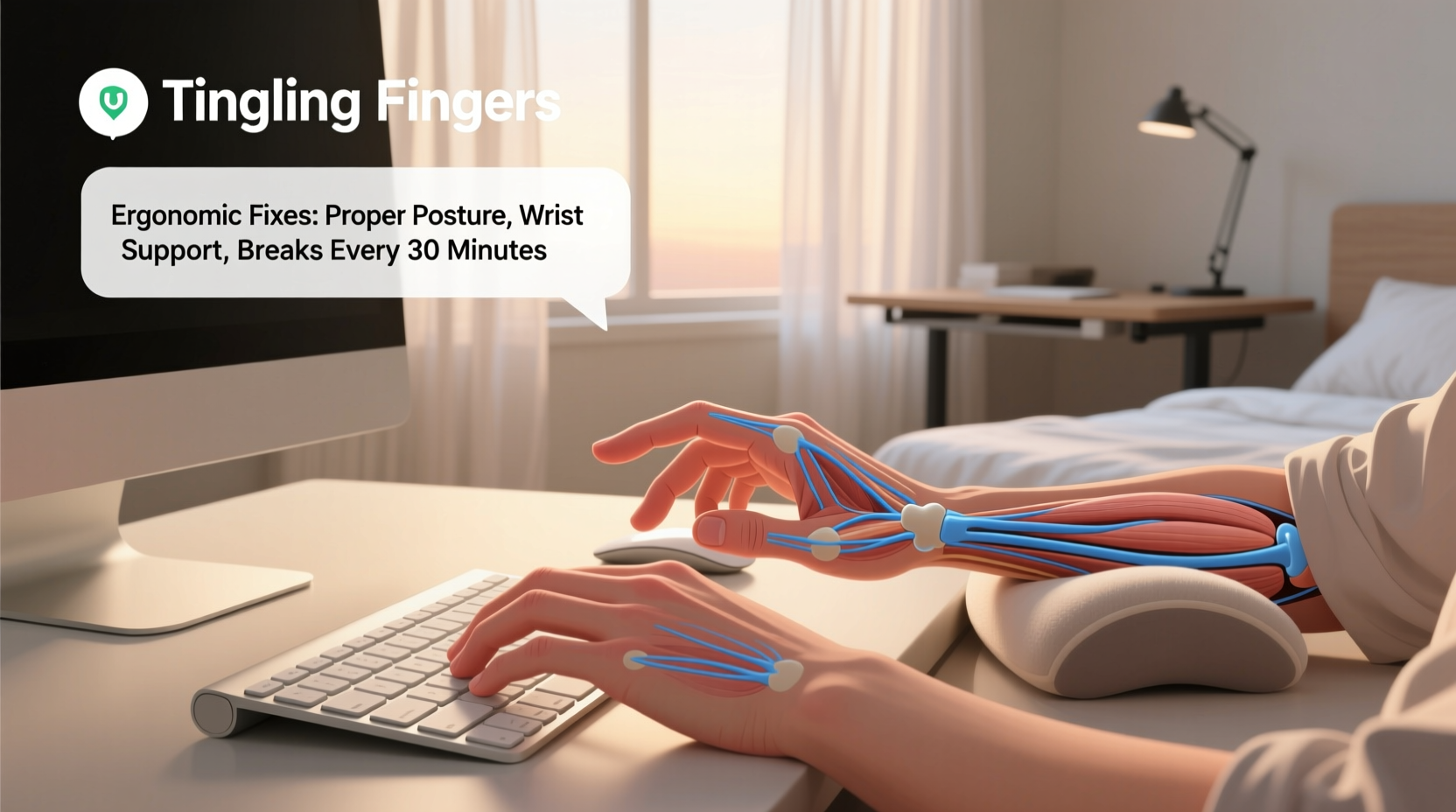
The sensation of tingling fingers upon waking is rarely random. It usually stems from mechanical pressure on peripheral nerves during sleep. The two most commonly affected nerves are the median nerve (associated with carpal tunnel syndrome) and the ulnar nerve (linked to cubital tunnel syndrome). Identifying which nerve is involved helps determine the cause and appropriate response.
- Carpal Tunnel Syndrome: Compression of the median nerve at the wrist, often worsened by sleeping with bent wrists.
- Cubital Tunnel Syndrome: Pressure on the ulnar nerve at the elbow, typically caused by sleeping with arms tightly bent or tucked under the body.
- Thoracic Outlet Syndrome: Compression of nerves between the neck and shoulder, sometimes aggravated by poor posture or tight muscles.
- Poor Sleep Posture: Lying on your arms or in positions that kink the wrists or elbows restricts blood flow and irritates nerves.
- Vitamin Deficiencies: Low levels of B12, B6, or vitamin E can contribute to nerve dysfunction and sensory disturbances.
- Diabetes and Neuropathy: Elevated blood sugar over time damages nerves, leading to chronic tingling, especially in extremities.
- Pregnancy: Fluid retention increases pressure in the carpal tunnel, making nighttime tingling more common in the second and third trimesters.
Ergonomic Fixes for Nighttime Hand Numbness
Many cases of morning finger tingling respond well to non-invasive, ergonomic interventions. These focus on reducing nerve pressure during sleep and improving alignment throughout the upper body. The key is consistency—small changes in sleep position and support can yield major improvements over time.
1. Use a Wrist Splint at Night
A neutral-position wrist splint keeps the wrist straight while you sleep, preventing the flexion that compresses the median nerve. Look for lightweight, breathable models that allow some finger movement but prevent excessive bending.
2. Adjust Your Sleeping Position
Sleeping on your side with arms extended overhead or tightly curled can compress nerves at the shoulder or elbow. Try to keep arms alongside your body, with elbows slightly bent and wrists in a neutral position. If you're a stomach sleeper, consider switching to back sleeping to reduce strain on the neck and shoulders.
3. Optimize Pillow Support
Your pillow plays a critical role in spinal alignment. A pillow that’s too high or too flat can tilt the neck and pinch nerves exiting the cervical spine. Test different heights until your head and neck align with your spine. Memory foam or adjustable pillows often provide better support.
4. Avoid Elbow Flexion During Sleep
Bending the elbow beyond 90 degrees puts tension on the ulnar nerve. Some people benefit from wearing a soft elbow brace or even taping the elbow loosely to discourage deep flexion. Alternatively, hugging a pillow can help maintain a safer arm angle.
“Nighttime nerve compression is often reversible with positional changes. Early intervention prevents chronic nerve damage.” — Dr. Lena Torres, Neurologist and Sleep Medicine Specialist
Daily Ergonomic Habits That Make a Difference
Nerve health isn’t just about what happens at night—it’s influenced by your daytime activities. Repetitive motions, poor workstation setup, and sustained awkward postures accumulate stress on the nervous system, lowering the threshold for nighttime symptoms.
Workstation Setup Checklist
- Keyboard positioned so wrists remain straight and relaxed.
- Mouse within easy reach to avoid overreaching.
- Monitor at eye level, centered in front of you.
- Chair height adjusted so feet rest flat on the floor and elbows form a 90-degree angle.
- Use a document holder if typing from written material.
Hand and Nerve Gliding Exercises
Gentle nerve gliding exercises can improve mobility and reduce irritation. Perform them daily, especially before bed:
- Median Nerve Glide: Extend your arm out to the side, palm up. Tilt your head gently to the opposite side while slowly rotating your palm down and extending your wrist.
- Ulnar Nerve Glide: Start with arm out, elbow slightly bent. Turn palm down, bend wrist further, then straighten elbow while tilting head to the opposite side.
- Repeat each 5–10 times slowly, without pain.
Do’s and Don’ts: Managing Tingling Fingers
| Do’s | Don’ts |
|---|---|
| Keep wrists in a neutral position during sleep and work | Sleep with hands curled under your chin or beneath your pillow |
| Use ergonomic keyboards and vertical mice | Rest wrists on hard surfaces while typing |
| Stretch shoulders, neck, and forearms daily | Ignore persistent tingling lasting more than a few weeks |
| Check blood sugar and vitamin B12 levels if symptoms persist | Self-diagnose or delay medical evaluation for worsening weakness |
| Try a supportive mattress that aligns the spine | Use overly soft mattresses that cause spinal misalignment |
Real-Life Example: Sarah’s Recovery Journey
Sarah, a 42-year-old graphic designer, began noticing her right hand tingling every morning, particularly in her thumb and index finger. Initially, she dismissed it as poor circulation. But after several weeks, the numbness started lingering into mid-morning, and she occasionally dropped her coffee mug due to sudden weakness.
She consulted a physical therapist who identified classic signs of early carpal tunnel syndrome. Her workstation had the keyboard too high, forcing her wrists to bend downward while drawing on her tablet. At night, she slept with her wrist sharply bent against the pillow.
Her treatment plan included:
- Switching to a split ergonomic keyboard and adjusting chair height.
- Wearing a wrist splint nightly for six weeks.
- Performing nerve glides and forearm stretches twice daily.
- Using voice-to-text software to reduce typing load.
When to Seek Medical Help
While many cases resolve with lifestyle and ergonomic changes, certain red flags require prompt medical evaluation:
- Constant numbness or tingling, not limited to mornings
- Muscle weakness in the hand, such as difficulty gripping or buttoning clothes
- Loss of sensation or inability to feel temperature or touch
- Symptoms spreading to the forearm, shoulder, or neck
- History of diabetes, thyroid disorders, or autoimmune diseases
A healthcare provider may recommend nerve conduction studies, imaging, or blood tests to diagnose underlying conditions. In severe cases, corticosteroid injections or surgery may be considered—but most patients respond well to conservative management.
Frequently Asked Questions
Can dehydration cause tingling fingers in the morning?
Dehydration alone is unlikely to cause persistent finger tingling, though it can temporarily affect nerve signaling. More commonly, dehydration contributes to muscle cramps or fatigue. However, maintaining proper hydration supports overall nerve function and circulation, so it's still important for symptom management.
Is tingling in all fingers a sign of heart problems?
Isolated finger tingling without chest pain, shortness of breath, or left arm pain is rarely cardiac-related. Heart attack symptoms typically include central chest pressure, radiating pain, sweating, and nausea. That said, any unexplained upper-body discomfort should be evaluated by a doctor to rule out serious causes.
How long does it take for ergonomic changes to reduce tingling?
Many people notice improvement within 2–4 weeks of consistent ergonomic adjustments, especially when combined with nighttime splinting and stretching. Full resolution may take 6–12 weeks, depending on the severity and duration of nerve compression.
Action Plan: 30-Day Routine to Reduce Morning Tingling
To address tingling fingers systematically, follow this step-by-step plan over four weeks:
- Week 1 – Assess & Adjust: Evaluate your sleep posture and workstation. Purchase a wrist splint and adjust your desk setup using the checklist above.
- Week 2 – Introduce Movement: Begin nerve gliding exercises twice daily. Add shoulder rolls and neck stretches to your routine. Avoid resting your elbows on armrests for prolonged periods.
- Week 3 – Monitor & Modify: Keep a symptom journal noting when tingling occurs and its intensity. Experiment with different pillows or sleep positions to find the most comfortable alignment.
- Week 4 – Consolidate Habits: Reinforce new behaviors. Set reminders to stretch hourly if working at a desk. Reassess progress—if symptoms persist, schedule a consultation with a healthcare provider.
Conclusion: Take Control of Your Nerve Health
Waking up with tingling fingers doesn’t have to become a normal part of your routine. Recognizing it as a signal—from your body asking for better alignment, less compression, and smarter daily habits—is the first step toward lasting relief. With targeted ergonomic fixes, mindful posture, and proactive care, most people can eliminate or significantly reduce their symptoms without invasive treatments.
The choices you make today—at your desk, in bed, and throughout your day—directly influence your nerve health tomorrow. Start with one change: adjust your pillow, try a wrist splint, or perform a simple stretch before bed. Small actions build resilience. Your hands deserve to wake up feeling refreshed, not numb.
💬 Have you experienced tingling fingers when waking up? What helped you find relief? Share your story in the comments—your insight could help someone else regain comfort and confidence.








