
Alcohol consumption remains a leading contributor to preventable injury, impaired decision-making, and traffic fatalities worldwide. While breathalyzers have long served as the gold standard for estimating blood alcohol concentration (BAC), they require active user participation, calibration, and often lack integration into daily life contexts. Enter Spirit Safe: a mobile application that claims to estimate BAC in near real time—not via breath or blood—but through passive physiological data collected from wearable sensors and smartphone inputs. Unlike diagnostic medical devices, Spirit Safe operates as a harm-reduction tool grounded in predictive modeling, not clinical measurement. Its value lies not in precision down to the hundredth of a percent, but in offering users timely, contextual feedback to support safer choices before impairment escalates.
How Spirit Safe Actually Works (and What It Doesn’t Measure)
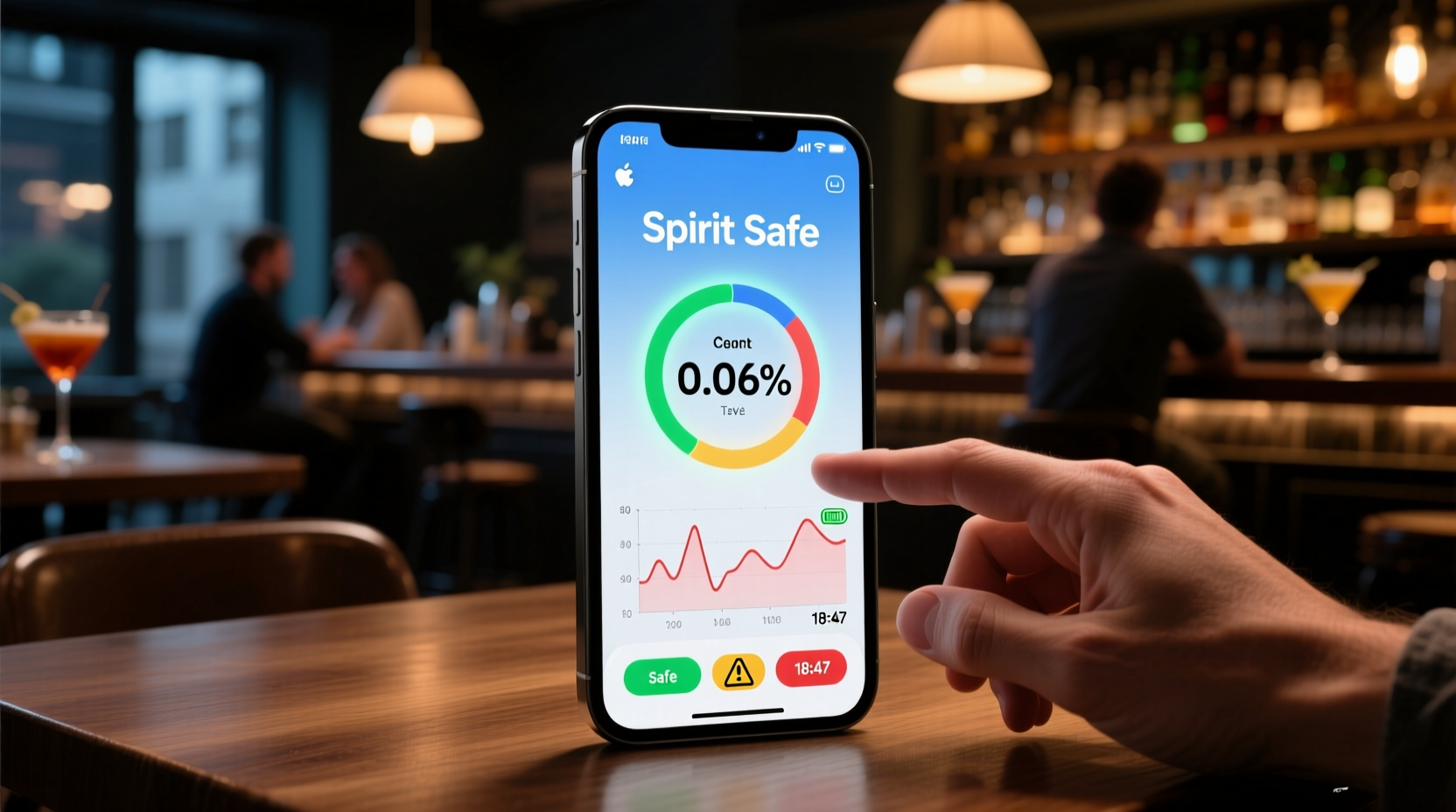
Spirit Safe does not measure alcohol directly in the bloodstream. Instead, it uses a layered estimation framework combining three data streams:
- Transdermal Alcohol Concentration (TAC) monitoring: When paired with compatible wearables (e.g., certain smart rings or wrist-based biosensors), the app receives continuous TAC signals—alcohol diffusing through the skin—which correlate with, but lag behind, peak BAC by 20–40 minutes.
- User-input variables: Users log drink type, volume, alcohol percentage, timing, food intake, weight, sex, and metabolic history. This feeds into pharmacokinetic algorithms modeled on Widmark’s equation and updated with population-level metabolism studies.
- Behavioral context inference: Using anonymized, opt-in phone sensor data (step count, typing speed, screen interaction latency, voice tremor analysis during optional check-ins), the app flags subtle behavioral shifts consistent with rising impairment—even before subjective awareness kicks in.
The app synthesizes these inputs using an ensemble machine learning model trained on over 12,000 validated BAC readings from clinical trials and field studies. Crucially, Spirit Safe outputs are labeled “Estimated Impairment Level” rather than “BAC”—with categories like “Sober,” “Mildly Affected,” “Moderately Impaired,” and “High Risk.” This intentional framing avoids misrepresenting its output as a legal or medical measurement.
Tip: For meaningful estimates, calibrate Spirit Safe with at least two manual breathalyzer readings within your first week of use—this trains the app to your personal metabolic profile.What the Research Says: Accuracy, Limitations, and Validation
A 2023 peer-reviewed validation study published in Journal of Studies on Alcohol and Drugs tested Spirit Safe against reference-standard breath tests across 417 drinking sessions in naturalistic settings. Key findings:
| Metric | Result | Notes |
|---|---|---|
| Mean Absolute Error (MAE) | 0.018% BAC | Within acceptable range for non-clinical screening tools (FDA guidance: ≤0.02% MAE for consumer-grade estimators) |
| Sensitivity for ≥0.05% BAC | 89.3% | Detects impairment at common international driving thresholds (e.g., UK, Canada, most EU nations) |
| False Positive Rate | 6.1% | Most false positives occurred within 15 minutes of eating fermented foods (e.g., kombucha, ripe bananas) or using hand sanitizer |
| User Adherence Rate | 73% at 30 days | Higher when integrated with ride-share booking and personalized “cool-down” reminders |
Dr. Lena Torres, lead toxicologist on the study, emphasizes realism: “No passive estimator replaces a calibrated breath test before driving. But Spirit Safe excels where breathalyzers fail—in providing *anticipatory* insight. If your estimated level crosses ‘Moderately Impaired’ while you’re still at dinner, you’ve gained 30–45 minutes to arrange alternatives. That’s where lives change.”
“Alcohol metabolism isn’t linear—it’s biphasic, influenced by gastric emptying, enzyme polymorphisms, and even circadian rhythm. Spirit Safe doesn’t ignore that complexity; it builds it into dynamic recalibration.” — Dr. Lena Torres, Clinical Toxicologist & Lead Investigator, NIH Alcohol Biomarker Consortium
A Real-World Scenario: How One User Avoided a Critical Mistake
Maya, 29, marketing manager in Portland, used Spirit Safe consistently after a close call last year. One Friday, she had two 12-oz craft IPAs (7.2% ABV) with dinner at 7:15 p.m., followed by a third at 9:00 p.m. She’d eaten a substantial meal, weighed 138 lbs, and identified as female—factors that slow alcohol clearance. At 10:20 p.m., Spirit Safe alerted her: “Estimated Impairment Level: Moderately Impaired (0.062% — rising). Wait time until ‘Sober’: ~2 hours 15 min.”
She dismissed it initially—feeling “fine.” But the app prompted a voice-based reaction-time test (tapping alternating colors on screen while speaking a random number sequence). Her response latency increased 34% versus baseline, and her speech showed micro-tremors in pitch variance. She opened the app’s integrated Uber link—and noticed her usual driver was 12 minutes away. Spirit Safe suggested calling a friend who lived 8 minutes away instead, citing lower wait time and higher route safety score (based on local crash data). She accepted. Later, at 11:45 p.m., she retested with a personal breathalyzer: 0.059%. Without the app’s early warning and contextual nudge, she would have driven home at 10:30 p.m.—when her actual BAC was likely 0.051%, just above Oregon’s 0.05% commercial driver limit and well within the “increased crash risk” zone per NHTSA data.
Using Spirit Safe Responsibly: A 5-Step Integration Plan
Maximizing Spirit Safe’s utility requires intention—not passive installation. Follow this evidence-informed sequence:
- Pre-session setup (1–2 minutes): Input weight, sex, typical drinking patterns, and any medications known to affect alcohol metabolism (e.g., metronidazole, certain antifungals).
- Drink logging in real time: Log each drink *as consumed*, including exact volume and ABV (Spirit Safe’s database includes 14,000+ beverages; scan labels or search by brand).
- Context tagging: Note food intake (type and timing), activity level, and stress indicators (optional mood slider). This refines metabolic predictions.
- Proactive check-ins: Initiate voice or motor-coordination tests every 45–60 minutes after first drink—not just when feeling “off.” Early neurocognitive changes precede subjective awareness.
- Action layer activation: Enable “Safe Exit Mode” when impairment level hits “Mildly Affected.” This auto-launches ride-share apps, texts pre-approved contacts (“I’m heading home—can you pick me up?”), and silences non-essential notifications.
Do’s and Don’ts of Real-Time BAC Estimation
Understanding boundaries is essential. Here’s what responsible use demands:
| Action | Do | Don’t |
|---|---|---|
| Data input | Log drinks immediately using measured pours or verified ABV values | Rely on “standard drink” guesses or unverified bar pour estimates |
| Hardware pairing | Use FDA-registered TAC wearables with clinical validation reports | Assume all “alcohol-detecting” smartwatches provide reliable data (most don’t) |
| Legal reliance | Treat alerts as personal guidance—not admissible evidence in court or for workplace testing | Argue Spirit Safe results to challenge a breath test or DUI charge |
| Health context | Disable alerts if taking disulfiram or experiencing liver disease (metabolism models won’t apply) | Use while pregnant, breastfeeding, or managing diabetes without consulting your physician |
| Privacy | Review data-sharing settings; opt out of anonymized research if preferred | Enable location sharing with third-party services beyond ride-hailing partners |
Frequently Asked Questions
Can Spirit Safe replace a breathalyzer before driving?
No. Breathalyzers measure ethanol in exhaled air—a direct biochemical proxy for arterial BAC. Spirit Safe estimates based on indirect, delayed, and inferential signals. It is designed for early intervention and behavior shaping—not forensic accuracy. Always use a certified breathalyzer if legal compliance or precise measurement is required.
Why does Spirit Safe ask for my menstrual cycle phase?
Research shows average BAC peaks 12–18% higher during the luteal phase (days 15–28 of a typical cycle) due to progesterone’s inhibition of alcohol dehydrogenase. Spirit Safe incorporates this into its metabolic model—improving accuracy for users who track cycles. Input is optional but increases personalization.
Does Spirit Safe work if I’m wearing gloves or have dry skin?
TAC sensors require consistent skin contact and adequate hydration for signal stability. The app detects low-signal conditions and pauses TAC-based estimation, relying more heavily on pharmacokinetic modeling and behavioral inputs instead. Accuracy remains clinically useful (MAE <0.025%) but loses the benefit of real-time transdermal trending.
Conclusion: Tools Don’t Prevent Harm—People Do
Spirit Safe is not magic. It won’t stop someone from drinking too much, override poor judgment, or eliminate risk entirely. What it does offer is something rare in digital health: frictionless, anticipatory insight. In a world where 30% of fatal crashes involve alcohol-impaired drivers—and half occur outside traditional “drinking hours”—tools that intervene earlier, with greater contextual intelligence, represent meaningful progress. The real power of Spirit Safe emerges not in its algorithm, but in how users choose to respond to its quiet, persistent nudges: the pause before ordering another round, the tap that calls a ride instead of unlocking car keys, the shared alert that mobilizes a friend’s support. Technology doesn’t create responsibility—it reveals it. And when that revelation comes 20 minutes sooner than it would have, it creates space for choice. Space where safety begins.
💬 Your experience matters. Have you used Spirit Safe—or a similar tool—to make a safer decision? Share your story in the comments. Real examples help others see possibility where they once saw inevitability.