
The market for wearable fitness technology is more crowded than ever. At one end, you have sleek, full-featured smartwatches like the Fitbit Sense 2 priced around $300. At the other, basic chest strap or wrist-based heart rate monitors can cost under $50. For someone focused on tracking their heart health—whether for training, recovery, or general wellness—the question arises: Is the premium price of the Fitbit Sense 2 justified?
The answer isn’t a simple yes or no. It depends on what you need from your device, how deeply you want to integrate health data into your daily life, and whether advanced metrics offer tangible benefits beyond raw heart rate numbers.
Understanding What You’re Paying For
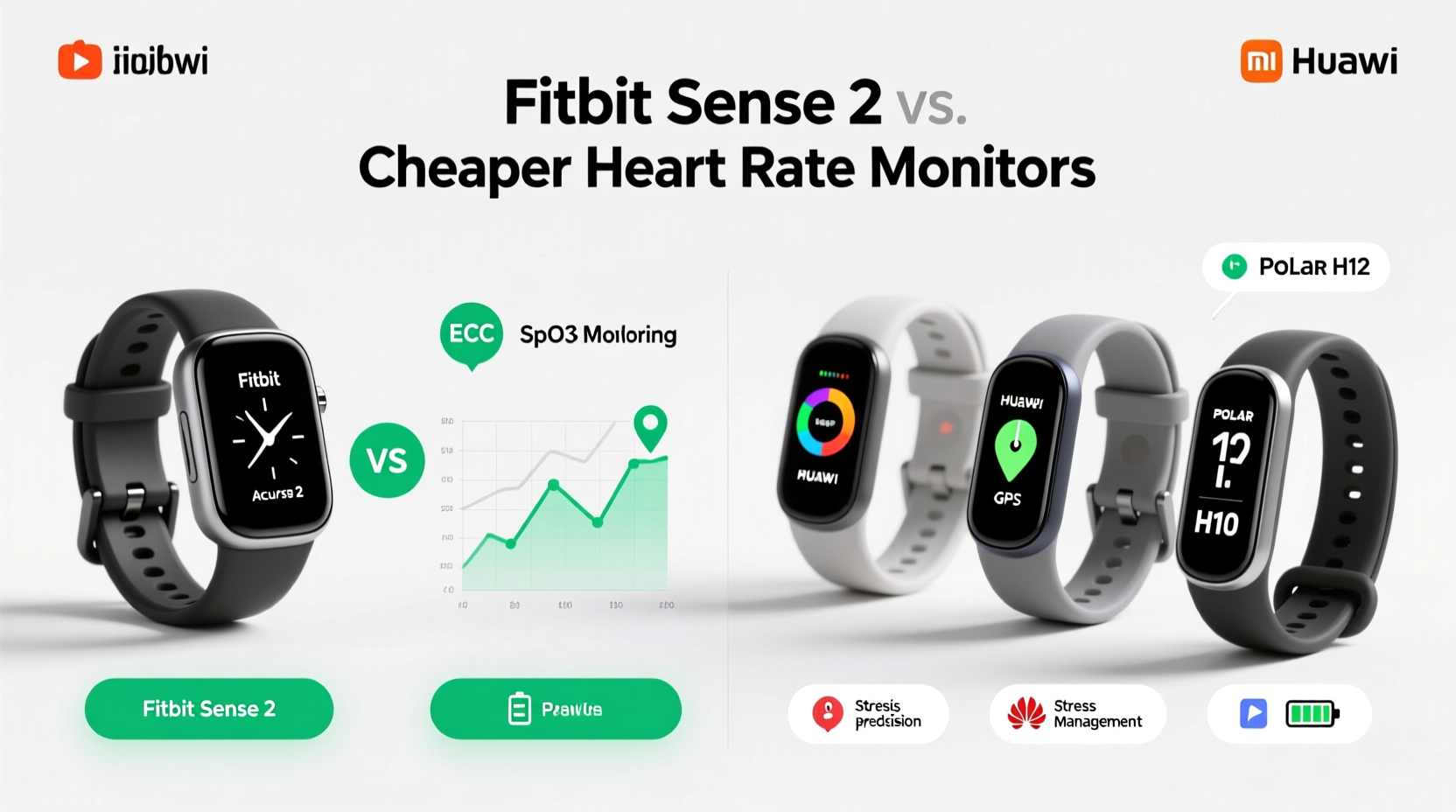
Cheap heart rate monitors serve a single purpose: deliver heart rate data. Most use either optical sensors on the wrist or ECG-style chest straps that measure electrical signals. They’re effective for logging beats per minute during exercise but often lack context, long-term analysis, or integration with broader health insights.
In contrast, the Fitbit Sense 2 is a comprehensive health platform. Beyond continuous heart rate monitoring, it includes:
- ECG app for atrial fibrillation screening
- Stress management tools with EDA (electrodermal activity) scanning
- Advanced sleep staging and Sleep Score analysis
- SpO2 tracking for blood oxygen levels
- Daily Readiness Score combining HRV, sleep, and activity
- 24/7 skin temperature variation monitoring
- GPS, smartphone notifications, and voice assistant support
This breadth transforms the device from a passive tracker into an active health companion. But does this matter if your primary goal is monitoring heart rate during workouts?
Tip: If you only need heart rate during runs or gym sessions, a budget monitor may suffice. But if you want to understand how stress, sleep, and recovery affect your cardiovascular system, the Sense 2 offers deeper insights.Accuracy: How Do They Compare?
One might assume that higher price equals better accuracy. In reality, studies show mixed results. According to research published in *JMIR mHealth and uHealth*, optical wrist-based trackers—including Fitbit devices—are generally reliable for steady-state cardio but less accurate during high-intensity interval training (HIIT) or rapid heart rate fluctuations.
Chest straps, particularly those using Bluetooth or ANT+ protocols like the Polar H10, remain the gold standard for precision due to their proximity to the heart and use of electrical signals rather than light-based photoplethysmography (PPG).
That said, the Fitbit Sense 2 uses upgraded PPG sensors with improved algorithms and signal filtering. In controlled environments, its average deviation from medical-grade equipment is within 5–8 bpm—comparable to many mid-tier wearables and far better than entry-level wristbands.
“While no wrist-based tracker replaces a clinical ECG, consistent improvements in sensor fusion and machine learning are narrowing the gap.” — Dr. Lena Torres, Biomedical Engineer & Wearable Tech Researcher, Stanford Health Lab
If absolute precision during sprints or heavy lifting is critical, a chest strap paired with a fitness watch (including the Sense 2, which supports external HRM pairing) remains optimal. However, for day-to-day monitoring, resting heart rate trends, and recovery insights, the Sense 2’s accuracy is more than adequate.
Feature Comparison: What You Gain With the Fitbit Sense 2
To evaluate true value, consider not just heart rate tracking but the ecosystem around it. The following table compares core capabilities across three common options:
| Feature | Budget Wrist Monitor (~$40) | Chest Strap HRM (~$60) | Fitbit Sense 2 (~$300) |
|---|---|---|---|
| Continuous Heart Rate | Yes | Only during workouts | Yes (24/7) |
| Resting HR & Trends | Limited | No | Yes, with long-term graphs |
| Heart Rate Variability (HRV) | No | Yes (with compatible apps) | Yes (integrated into Daily Readiness) |
| Sleep Tracking & Stages | Basic estimates | No | Advanced (REM, deep, light, SpO2) |
| Stress Monitoring | No | No | EDA scans + guided breathing |
| ECG Functionality | No | No | Yes (FDA-cleared) |
| GPS | No | No | Yes (built-in) |
| Smartphone Integration | Limited alerts | No | Full notifications, voice assistant, apps |
| Battery Life | 7–14 days | Up to 400 hours (intermittent use) | 6–12 days |
The Sense 2 clearly dominates in feature depth. But again, relevance depends on usage. A marathon runner focused solely on pace and heart rate zones may find little utility in stress tracking or ECG scans. Conversely, someone managing chronic conditions, recovering from illness, or optimizing lifestyle habits gains actionable intelligence from these integrations.
A Real-World Example: Managing Stress-Induced Heart Palpitations
Consider Sarah, a 38-year-old project manager working in a high-pressure tech role. She began experiencing occasional heart palpitations and fatigue. Her doctor recommended monitoring her heart rate and identifying potential triggers.
She first tried a $35 wristband. It showed elevated heart rates during work hours but offered no explanation. Then she borrowed a friend’s Fitbit Sense 2. Over two weeks, she noticed a pattern: spikes in heart rate coincided with low sleep scores, high stress markers, and elevated skin temperature—all flagged automatically by the device.
Using the EDA stress scan feature, she started taking five-minute mindfulness breaks when prompted. Within a month, her resting heart rate dropped from 78 to 66 bpm, and palpitations decreased significantly. Her physician credited the holistic data with helping identify stress as the root cause.
In this case, the extra cost wasn’t about better heart rate numbers—it was about context, correlation, and intervention.
When a Cheaper Option Makes More Sense
The Fitbit Sense 2 shines when used as part of a proactive health strategy. But there are clear scenarios where lower-cost alternatives are smarter:
- Athletes needing precise workout data: Serious runners or cyclists often pair a chest strap (like Garmin HRM-Pro or Polar H10) with a sports watch. These deliver millisecond-level R-R intervals for accurate zone training and lactate threshold estimation—something even the Sense 2 can’t match natively.
- Short-term monitoring: If you’re tracking heart rate for a few weeks post-illness or during a specific fitness challenge, renting or buying a budget monitor avoids unnecessary investment.
- Minimalists who dislike constant notifications: The Sense 2 is a smartwatch at heart. If you prefer simplicity and longer battery life without distractions, a basic tracker reduces digital clutter.
Additionally, some users report discomfort with always-on wrist tracking, especially during sleep. For them, using a chest strap intermittently may be more comfortable and equally effective.
Step-by-Step: Choosing the Right Device for Your Needs
Follow this decision framework to determine whether the Fitbit Sense 2 is worth the upgrade:
- Define your primary goal: Are you tracking performance, managing health conditions, improving sleep, or simply staying active?
- Evaluate required features: List must-haves (e.g., GPS, 24/7 HR, ECG) versus nice-to-haves (smart replies, music control).
- Assess data integration needs: Do you want insights synced to apps like MyFitnessPal, Apple Health, or Google Fit? Fitbit excels here.
- Test usability: Consider comfort, battery life, and interface. Can you see readings easily? Is charging frequent enough to disrupt use?
- Compare total cost of ownership: Factor in subscription services (Fitbit Premium is $9.99/month), replacement bands, and expected lifespan (typically 2–3 years).
- Try before you buy: Many retailers offer return windows. Use it for a week with varied activities to gauge real-world performance.
Frequently Asked Questions
Can the Fitbit Sense 2 detect heart problems?
The Sense 2 includes an FDA-cleared ECG app that can detect signs of atrial fibrillation (AFib), a common arrhythmia. It also monitors for irregular rhythm notifications. However, it is not a diagnostic tool and should not replace professional medical evaluation. Always consult a doctor if you experience symptoms like dizziness, chest pain, or persistent palpitations.
Do I need a Fitbit Premium subscription to get full value?
No, but you’ll miss key insights. Free accounts provide basic stats like steps, heart rate, and sleep duration. Premium unlocks Daily Readiness Score, detailed sleep analysis, wellness reports, and advanced workout guidance. At $9.99/month, it adds up—but for serious users, the personalized feedback can justify the cost.
Can I use the Fitbit Sense 2 with a chest strap for better accuracy?
Yes. The Sense 2 supports Bluetooth LE heart rate monitors. Pairing it with a chest strap like the Polar H10 gives you clinical-grade heart rate data during workouts while retaining all Fitbit features like GPS, readiness scoring, and post-exercise recovery tracking.
Final Verdict: Who Should Upgrade?
The Fitbit Sense 2 isn’t “better” than cheaper heart rate monitors in every way—it’s different. It trades raw precision for holistic insight, trading niche functionality for broad health intelligence.
If your focus is purely athletic performance and you already use a chest strap or advanced sports watch, the Sense 2 likely duplicates functions you already own. But if you're seeking a daily health companion that connects the dots between heart rate, sleep, stress, and activity—especially for preventive care or lifestyle optimization—the added cost delivers measurable returns.
For individuals managing hypertension, anxiety, insomnia, or post-COVID recovery, the Sense 2’s ability to highlight patterns across biometrics offers something no standalone heart rate monitor can: awareness.
“The future of personal health isn’t just measuring vitals—it’s interpreting them in context. Devices like the Sense 2 are moving us closer to truly personalized medicine.” — Dr. Arjun Patel, Digital Health Innovation Fellow, Johns Hopkins Medicine
Conclusion: Make the Decision That Serves Your Life
Technology should enhance, not complicate, your well-being. The Fitbit Sense 2 is worth it if you actively engage with its insights, act on its feedback, and integrate its data into meaningful lifestyle changes. If you’ll only glance at heart rate now and then, a simpler, cheaper tool will serve you just as well.
Ask yourself: Do I want to know my heart rate—or do I want to understand my heart?
🚀 Ready to take control of your health metrics? Assess your goals today—then choose a device that aligns with your lifestyle, not just your budget.








