Alcohol occupies a complicated space in weight management conversations — often oversimplified as “empty calories” or dismissed entirely. Yet millions of adults enjoy wine regularly and want to understand how their choice fits into a sustainable, metabolism-supportive lifestyle. The question isn’t whether wine causes weight gain (excess intake certainly can), but whether red and white wines differ meaningfully in how they interact with fat oxidation, insulin sensitivity, gut microbiota, and appetite regulation. This article cuts through marketing myths and examines the biochemical reality: not all wine is metabolically equal, and subtle differences in composition — from resveratrol to alcohol concentration to residual sugar — produce measurable effects on energy balance and metabolic health.
Caloric Reality: Where the Weight Loss Math Begins
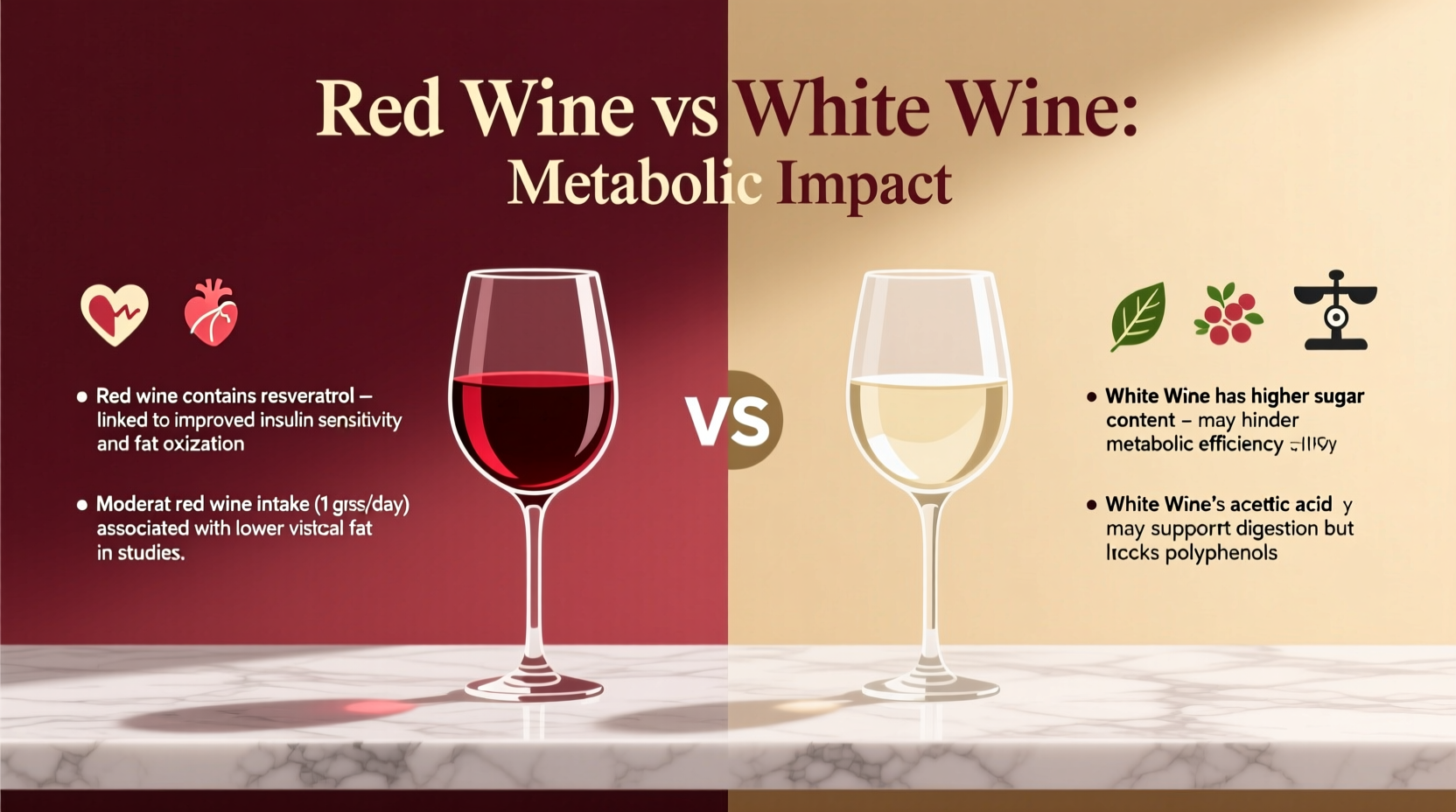
Before diving into antioxidants or gut bacteria, the foundational variable is energy balance. A standard 5-ounce (148 mL) pour of wine contains roughly 120–130 calories — but those numbers vary significantly by style, sweetness, and alcohol level. Alcohol itself contributes 7 calories per gram, and higher-alcohol wines deliver more energy per sip. Meanwhile, residual sugar adds 4 calories per gram, and many off-dry whites contain 5–12 g/L of sugar — translating to an extra 2–5 calories per serving. Dry reds, by contrast, typically contain less than 1 g/L residual sugar.
| Wine Type | Avg. ABV (%) | Calories (5 oz) | Residual Sugar (g/L) | Key Caloric Contributors |
|---|---|---|---|---|
| Dry Cabernet Sauvignon | 13.5–15.0% | 122–135 | 0.2–0.8 | Alcohol (primary), trace carbs |
| Pinot Noir (light-bodied) | 12.5–13.5% | 115–125 | 0.1–0.6 | Lower alcohol, minimal sugar |
| Chardonnay (oaked, dry) | 13.0–14.5% | 120–132 | 0.5–1.2 | Alcohol + minor glycerol |
| Riesling (off-dry) | 10.5–11.5% | 118–128 | 10–18 | Alcohol + significant sugar |
| Prosecco (brut) | 11.0–11.5% | 90–105 | 0.6–1.2 | Lower ABV, effervescence may reduce portion size |
The takeaway isn’t that red wine is inherently “lower calorie,” but that *dry reds tend to offer the most consistent caloric profile*: reliably low sugar, moderate-to-high alcohol, and no added sweeteners. Whites span a much wider spectrum — from lean brut sparklers to dessert-style late-harvest Rieslings packing 200+ calories per glass. For weight-conscious drinkers, prioritizing dryness and checking ABV matters more than color alone.
Polyphenols and Metabolic Signaling: Beyond the Resveratrol Hype
Red wine contains up to ten times more polyphenols than white — primarily from grape skins and seeds, which remain in contact during red fermentation. Key compounds include resveratrol, quercetin, catechin, and anthocyanins. While early rodent studies showed resveratrol improved insulin sensitivity and activated SIRT1 (a longevity-associated enzyme), human trials have been underwhelming: typical dietary doses from wine (0.2–5.8 mg per glass) are far below the 150–1,000 mg used in clinical interventions. Still, the broader polyphenol matrix — not isolated resveratrol — appears biologically active.
Human cohort studies consistently associate moderate red wine consumption with improved endothelial function, reduced postprandial triglycerides, and enhanced fat oxidation during exercise. A 2022 randomized crossover trial published in The American Journal of Clinical Nutrition found that participants who consumed 250 mL of red wine daily for four weeks showed a 12% increase in resting fat oxidation compared to baseline — an effect not replicated with white wine or alcohol-free controls. Researchers attributed this to synergistic interactions among red wine’s flavonoids and gut-derived metabolites like urolithins.
“The metabolic benefit of red wine isn’t about resveratrol dosage — it’s about the complex, food-grade polyphenol network that modulates AMPK activation, mitochondrial biogenesis, and bile acid metabolism. White wine lacks this density and diversity.” — Dr. Elena Rodriguez, Nutritional Biochemist, University of Barcelona
White wine does contain beneficial compounds — notably tyrosol and hydroxytyrosol (especially in wines made from air-dried grapes), and some varietals like Sauvignon Blanc offer notable levels of quercetin. But its polyphenol profile is narrower, lower in concentration, and lacks the anthocyanin-driven antioxidant cascade that influences adipocyte differentiation and inflammation pathways.
Gut Microbiota: The Overlooked Metabolic Mediator
Emerging research positions the gut microbiome as a central regulator of energy harvest, fat storage, and systemic inflammation — all critical to weight management. Polyphenols act as prebiotics, selectively feeding beneficial bacteria like Akkermansia muciniphila and Bifidobacterium species. Red wine’s high proanthocyanidin content has been shown in multiple human trials to increase microbial diversity and elevate short-chain fatty acid (SCFA) production — particularly butyrate, which improves insulin sensitivity and suppresses appetite via GLP-1 signaling.
A landmark 2021 study tracked 1,879 adults over three years using metagenomic sequencing and dietary logs. Those consuming ≥2 glasses/week of red wine had significantly higher abundance of Akkermansia (linked to lean body mass and reduced visceral fat) and lower levels of endotoxin-producing Enterobacteriaceae. No such association appeared with white wine, beer, or spirits. Researchers noted that red wine’s tannins may also inhibit bacterial enzymes involved in carbohydrate digestion — subtly reducing glucose absorption.
Tip: Pair your glass of dry red wine with fiber-rich foods (e.g., roasted vegetables, lentils, or whole grains) to amplify prebiotic synergy and stabilize blood sugar response.Practical Decision Framework: Choosing Wine That Supports Your Goals
Color alone doesn’t determine metabolic impact — context does. A high-alcohol, oaked Chardonnay may disrupt sleep and elevate cortisol more than a light-bodied Pinot Noir. An off-dry German Riesling may spike insulin more than a bone-dry Spanish Garnacha. Below is a step-by-step guide to aligning wine choice with metabolic health priorities:
- Step 1: Prioritize dryness. Check labels for terms like “brut,” “extra dry” (misleading — means slightly sweet), “sec,” or “trocken.” When in doubt, choose wines from cooler climates (Burgundy, Loire Valley, Oregon Willamette) where natural acidity balances lower sugar.
- Step 2: Favor lower ABV when possible. Wines at 12.5–13.5% deliver fewer calories and less alcohol-induced metabolic interference. Avoid “high-alcohol” designations (e.g., “Zinfandel Reserve,” “Shiraz Barossa”) unless you’re limiting volume strictly.
- Step 3: Match wine to meal timing. Consume wine with food — never on an empty stomach — to blunt glucose spikes and slow gastric emptying. Red wine pairs especially well with iron-rich foods (like grass-fed steak or lentils), enhancing non-heme iron absorption.
- Step 4: Cap intake at ≤1 drink/day (women) or ≤2 drinks/day (men), and include 2–3 alcohol-free days weekly. Chronic low-level alcohol exposure impairs liver fat metabolism regardless of wine type.
- Step 5: Audit your habits. If you consistently drink past your intended limit, switch temporarily to non-alcoholic red wine (look for certified 0.0% ABV options with retained polyphenols) while rebuilding intentionality.
Mini Case Study: Sarah’s 12-Week Metabolic Reset
Sarah, 42, worked in finance and routinely drank two glasses of buttery Chardonnay most evenings. She’d lost motivation for her fitness routine, noticed persistent afternoon fatigue, and gained 8 pounds over 18 months despite consistent calorie tracking. Her fasting insulin was elevated (15 μIU/mL), and her waist circumference increased to 34 inches — indicating emerging visceral adiposity.
Working with a registered dietitian, she didn’t eliminate wine — she refined it. She switched to a dry, low-ABV (<13%) Pinot Noir from Oregon, limited herself to one 4-ounce pour with dinner, and committed to alcohol-free Mondays, Wednesdays, and Saturdays. She also began walking for 20 minutes after dinner — a habit that amplified the fat-oxidation benefits observed in the red wine trials.
At 12 weeks: Sarah lost 6.2 pounds (primarily from midsection), her fasting insulin dropped to 9 μIU/mL, and she reported deeper sleep and steadier energy. Crucially, she maintained the habit — not because it felt restrictive, but because the change aligned with her physiology. “It wasn’t about ‘giving up’ wine,” she shared. “It was about choosing the version that worked *with* my body instead of against it.”
Do’s and Don’ts for Mindful Wine Consumption
| Do | Don’t |
|---|---|
| Choose dry reds with ABV ≤13.5% (e.g., Beaujolais, Loire Cabernet Franc, lighter Italian Sangiovese) | Select wines labeled “blanc de noir” or “rosé” assuming they’re lower calorie — many contain added sugar |
| Use a 5-ounce wine measure for accuracy — most restaurant pours exceed 6 oz | Drink wine straight from the bottle or while distracted (watching TV, working) — this increases unconscious intake |
| Hydrate with 1 cup water before and after each glass | Pair wine with high-carb, low-fiber snacks (chips, crackers, pretzels) — this amplifies insulin response |
| Store opened red wine in the fridge with a vacuum stopper (stays fresh 3–5 days) | Assume “organic” or “natural” means lower sugar or calories — these terms refer to farming/process, not composition |
FAQ
Does drinking wine before bed help with weight loss?
No — alcohol disrupts REM sleep and reduces overnight fat oxidation by up to 36%, according to a 2023 Journal of Clinical Sleep Medicine study. Even one glass within 3 hours of bedtime delays melatonin release and fragments sleep architecture, elevating next-day hunger hormones (ghrelin) and reducing satiety signals (leptin).
Can I get the same polyphenol benefits from grape juice or supplements?
Grape juice delivers similar polyphenols but without alcohol’s metabolic trade-offs — however, its high sugar load (often 35+ g per cup) triggers insulin spikes that counteract benefits. Supplements lack the food matrix needed for optimal absorption; isolated resveratrol has poor bioavailability (<1%) and no proven weight-loss effect in humans at safe doses.
Is sparkling wine better for weight loss than still wine?
Brut sparkling wines (Prosecco, Cava, Crémant) often contain fewer calories (90–105 per 5 oz) due to lower ABV and minimal sugar. The effervescence may promote slower sipping and earlier satiety. However, the CO₂ can increase gastric distension and temporarily elevate appetite in sensitive individuals — monitor personal response.
Conclusion
Red wine isn’t a “weight-loss supplement,” nor is white wine inherently detrimental. The distinction lies in metabolic compatibility: dry red wine, consumed mindfully and in context, offers a unique combination of low sugar, bioactive polyphenols, and gut-modulating compounds that support insulin sensitivity, fat oxidation, and microbiome diversity — all pillars of healthy metabolism. White wine can fit into a balanced pattern too, especially drier, lower-alcohol styles, but it lacks the depth of metabolic influence seen with reds. What matters most is consistency, precision, and self-awareness: knowing your body’s response, honoring portion boundaries, and choosing wine as part of — not apart from — your broader nutritional strategy. You don’t need to overhaul your habits overnight. Start with one change: swap your current pour for a verified dry red under 13.5% ABV, measure it accurately, and pair it with a vegetable-forward meal. Observe how your energy, digestion, and appetite shift over two weeks. Small, science-informed adjustments compound into meaningful metabolic resilience — and that’s where lasting weight management begins.
💬 Your experience matters. Did shifting to dry red wine change your energy, sleep, or cravings? Share your observation in the comments — real stories help others navigate this nuanced, personal journey with clarity and confidence.








