
For years, Panera Bread’s creamy tomato soup has been a staple on American lunch menus—beloved for its velvety texture, balanced sweetness, and comforting warmth. Whether paired with a grilled cheese sandwich or enjoyed solo, it represents the gold standard of modern bistro-style tomato soup. While the exact proprietary recipe remains confidential, culinary analysis, ingredient deconstruction, and reverse-engineering by food experts have produced remarkably accurate recreations. This article delivers a meticulously crafted homemade version that mirrors the flavor, consistency, and richness of the original, along with comprehensive nutritional data to support informed dietary choices. For home cooks seeking restaurant-quality results—or those managing calorie, sodium, or dairy intake—this guide offers both practical technique and transparent information.
Definition & Overview
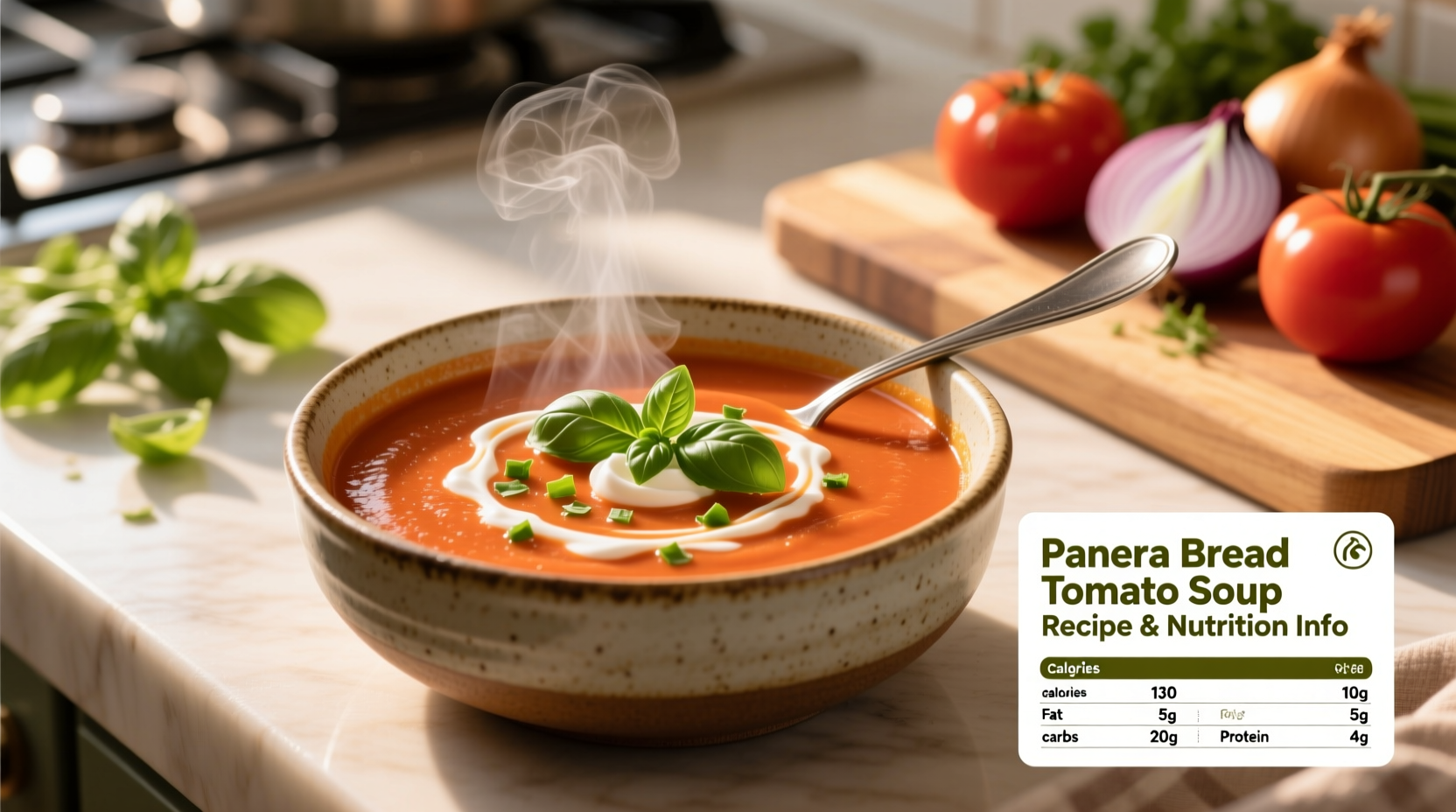
Panera’s tomato soup is a smooth, dairy-enriched bisque-style preparation rooted in classic French culinary tradition but adapted for contemporary American palates. Unlike rustic Italian tomato soups, which emphasize acidity and herbaceousness, Panera’s version leans into creaminess, subtle sweetness, and a harmonized blend of roasted tomatoes and aromatic vegetables. It belongs to the category of cream soups, typically thickened through reduction and emulsification rather than flour-based roux, although small amounts of starch may be used in commercial production for shelf stability.
The soup draws from vine-ripened tomatoes, often fire-roasted for depth, combined with onions, carrots, celery, garlic, heavy cream, and a touch of sugar or maple syrup to balance acidity. Herbs like thyme and basil are present but restrained, ensuring no single note overpowers the ensemble. The final product is silky, slightly sweet, and deeply savory—a profile designed to appeal broadly across age groups and taste preferences.
Commercially, Panera uses a controlled supply chain to ensure batch consistency, with preservatives and stabilizers (such as citric acid and xanthan gum) added for food safety and texture retention. However, the at-home version prioritizes fresh ingredients and natural thickening methods while preserving the signature character.
Key Characteristics
| Characteristic | Description |
|---|---|
| Flavor Profile | Balanced sweet-tart with umami depth; mild herbal notes and creamy richness. |
| Aroma | Warm, roasted tomato with hints of caramelized onion and garlic; faint dairy sweetness. |
| Color | Vibrant deep red-orange, opaque due to cream content. |
| Texture | Smooth, velvety, and moderately thick—coats the spoon without being heavy. |
| Heat Level | None; entirely non-spicy. |
| Culinary Function | Standalone soup, appetizer, or pairing with sandwiches (especially grilled cheese). |
| Shelf Life (Homemade) | 3–4 days refrigerated; up to 3 months frozen. |
Practical Usage: How to Make Panera-Style Tomato Soup at Home
Recreating Panera’s tomato soup requires attention to ingredient quality, roasting technique, and emulsification. The goal is not just flavor replication but also achieving the signature mouthfeel—one that feels indulgent without being cloying.
- Roast the tomatoes: Use Roma or plum tomatoes for their low moisture and high flesh content. Halve them, toss with olive oil, salt, and a pinch of sugar, then roast at 400°F (200°C) for 35–40 minutes until edges caramelize. Roasting intensifies sweetness and reduces raw acidity.
- Sauté the mirepoix: In a heavy-bottomed pot, cook diced onions, carrots, and celery in butter until translucent—about 8–10 minutes. Add minced garlic during the last minute to avoid burning.
- Build the base: Add the roasted tomatoes (with juices), canned tomato puree (for consistency), vegetable or chicken broth, dried thyme, bay leaf, and a small amount of maple syrup or brown sugar. Simmer gently for 25–30 minutes to meld flavors.
- Blend until smooth: Remove the bay leaf, then use an immersion blender directly in the pot to purée the soup. For extra silkiness, strain through a fine-mesh sieve.
- Enrich with cream: Stir in heavy cream (or half-and-half for a lighter version) and warm through—do not boil after adding dairy to prevent curdling. Adjust seasoning with salt, pepper, and a splash of balsamic vinegar for brightness.
- Serve immediately: Garnish with fresh basil, cracked black pepper, or a swirl of cream.
Pro Tip: For deeper color and flavor, add one tablespoon of tomato paste during the sauté stage and cook it with the vegetables for 1–2 minutes before adding liquids. This process, called “blooming,” enhances umami and prevents metallic aftertastes.
Pairing Suggestions
- Grilled Cheese Sandwich: Use sourdough or country white bread with sharp cheddar and Gruyère for optimal melt and tang contrast.
- Crusty Bread: A warm baguette or focaccia complements the soup’s creaminess.
- Salad: Pair with a simple arugula salad dressed in lemon vinaigrette to cut richness.
Scaling for Different Servings
The recipe scales linearly. For reference:
- 1 quart (4 servings): 2 lbs tomatoes, 1 medium onion, 1 carrot, 1 celery stalk, 3 cups broth, ¾ cup cream
- Half-gallon (8 servings): Double all ingredients
Maintain a cream-to-tomato ratio of approximately 1:5 to preserve authenticity. Excess cream dulls tomato flavor; too little sacrifices body.
Variants & Types
While Panera offers a singular tomato soup formulation, variations exist across regions and dietary adaptations. Understanding these helps customize the recipe for specific needs.
1. Classic Cream-Based (Original Style)
This is the standard version served in cafes. Contains dairy, moderate fat, and refined sweetness. Ideal for traditionalists and comfort-food seekers.
2. Dairy-Free / Vegan Version
Substitute heavy cream with full-fat coconut milk or cashew cream. Replace butter with olive oil. Use maple syrup instead of honey if needed. Flavor remains rich, though coconut adds a slight tropical nuance—best masked with extra herbs and acidity adjustment.
3. Low-Sodium Option
Use no-salt-added tomato products, reduce added salt to ¼ tsp per quart, and rely on umami boosters like roasted mushrooms or nutritional yeast for depth. Avoid commercial broths unless labeled “low sodium.”
4. Slow-Cooker Adaptation
All ingredients (except cream) can be combined in a slow cooker and cooked on low for 6–8 hours. Blend and stir in cream at the end. Convenient for meal prep or hands-off cooking.
5. Canned Commercial Equivalent
Panera does not sell its soup in cans, but brands like Campbell’s offer “Tomato with Basil” or “Roasted Tomato Bisque” as approximations. These contain more preservatives, higher sodium, and less fresh flavor but provide convenience.
| Variant Type | Dairy? | Calories (per cup) | Best For |
|---|---|---|---|
| Classic Cream-Based | Yes | ~220 | Authentic taste, restaurant experience |
| Dairy-Free (Coconut) | No | ~190 | Vegan diets, lactose intolerance |
| Low-Sodium Homemade | Optional | ~180 | Heart health, hypertension |
| Slow-Cooker Batch | Yes | ~210 | Meal prepping, large families |
Comparison with Similar Ingredients/Dishes
Tomato soup exists in many forms globally. Confusion often arises between Panera’s version and other preparations.
| Feature | Panera-Style | Italian Passata | Campbell’s Canned | Chilled Gazpacho |
|---|---|---|---|---|
| Temperature | Hot | Hot or room temp | Hot | Cold |
| Cream Content | High (dairy-enriched) | None or minimal | Moderate (milk solids) | None |
| Sweetness | Noticeable (added sugar) | Natural only | High (corn syrup) | Vegetable-based |
| Texture | Smooth, thick | Thin to medium | Uniform, slightly gelatinous | Chunky, unblended |
| Herbal Notes | Subtle (thyme, basil) | Prominent (oregano, basil) | Muted | Garlic, parsley dominant |
The key differentiator is Panera’s emphasis on sensory indulgence—a deliberate design choice favoring approachability over authenticity. Traditional European versions prioritize tomato integrity and acidity; Panera balances those elements for mass appeal.
Practical Tips & FAQs
Q: Can I make this soup without roasting the tomatoes?
A: Yes, but you’ll lose significant depth. Raw canned tomatoes work in a pinch, but simmer longer (45+ minutes) to concentrate flavor. Fire-roasted canned tomatoes are a viable shortcut.
Q: How do I store leftovers safely?
Allow soup to cool within two hours of cooking. Store in airtight containers in the refrigerator for up to four days. Reheat gently over medium-low heat, stirring frequently. Freeze in portion-sized containers for up to three months. Thaw overnight in the fridge before reheating.
Q: Is there gluten in Panera’s tomato soup?
According to Panera’s official allergen guide, their tomato soup contains wheat due to modified food starch and potential cross-contact. The homemade version is naturally gluten-free if using certified GF broth and thickening agents.
Q: What’s the best substitute for heavy cream?
Half-and-half yields a lighter result but may separate if boiled. Whole milk with a teaspoon of cornstarch per cup can mimic thickness. For vegan needs, canned coconut milk (not “light”) provides the closest fat profile.
Q: Why does my soup taste too acidic?
Overly tart results stem from underripe tomatoes or insufficient sweetener. Balance with ½ tsp sugar or maple syrup per cup, or a splash of cream. A tiny pinch of baking soda (⅛ tsp) can neutralize excess acid without altering flavor.
Q: Can I use fresh herbs instead of dried?
Yes. Use triple the amount of fresh herbs (e.g., 1 tbsp chopped fresh thyme instead of 1 tsp dried). Add delicate herbs like basil at the end; hardy ones like rosemary earlier.
Expert Insight: “The magic of Panera’s soup isn’t just in the ingredients—it’s in the layering. They build flavor in stages: roasting, sweating, reducing, then enriching. Skip a step, and the soul disappears.” — Chef Elena Rodriguez, Culinary Institute of America instructor
Nutrition Information: Panera vs. Homemade
Nutritional transparency is critical for health-conscious consumers. Below is a side-by-side comparison based on a standard 1-cup (8 oz) serving.
| Nutrient | Panera Bread (Original) | Homemade (Recipe Above) | Difference |
|---|---|---|---|
| Calories | 330 | 220 | −110 |
| Total Fat | 24g | 14g | −10g |
| Saturated Fat | 14g | 8g | −6g |
| Cholesterol | 60mg | 40mg | −20mg |
| Sodium | 1,090mg | 620mg | −470mg |
| Total Carbohydrates | 27g | 22g | −5g |
| Sugars | 14g | 12g | −2g |
| Dietary Fiber | 3g | 4g | +1g |
| Protein | 6g | 5g | −1g |
Note: Panera’s values reflect in-store preparation and may vary slightly by region. Homemade values assume use of organic produce, low-sodium broth, and standard heavy cream. Sodium reduction is the most significant advantage of DIY preparation, especially important for individuals managing blood pressure or heart conditions.
“When restaurants serve creamy soups, they optimize for taste and shelf life—not health. Making it yourself gives you control over every gram of salt and fat.” — Dr. Naomi Lin, Registered Dietitian
Summary & Key Takeaways
Panera’s tomato soup exemplifies modern comfort food: rich, accessible, and emotionally resonant. While the brand keeps its exact formula private, a well-crafted homemade version can match—and even improve upon—the original in flavor balance and nutritional quality.
- The defining traits are roasted tomato depth, creamy texture, and subtle sweetness.
- Home preparation allows customization for dietary needs: dairy-free, low-sodium, gluten-free.
- Nutritionally, the homemade version significantly reduces calories, fat, and sodium while increasing fiber.
- Technique matters: roasting, proper blending, and gradual enrichment with cream yield professional results.
- Storage is straightforward—refrigerate for short-term, freeze for long-term use.
Try This Tonight: Make a half-batch of the soup alongside a cheddar-gruyère grilled cheese on sourdough. Serve with a sprinkle of fresh thyme and a drizzle of olive oil. Compare it to store-bought versions—you’ll taste the difference freshness makes.









