
Red onions are more than just a colorful garnish—they are a nutrient-dense, bioactive-rich member of the allium family with compelling implications for long-term health and daily culinary performance. Often overshadowed by their white or yellow counterparts in discussions of kitchen utility, red onions deliver a unique combination of antioxidants, anti-inflammatory compounds, and prebiotic fibers that make them indispensable both on the plate and in preventive nutrition. With rising consumer interest in plant-based phytonutrients and functional foods, understanding the full scope of red onion benefits—from cardiovascular protection to gut microbiome support—offers practical value for home cooks, health-conscious eaters, and culinary professionals alike.
Definition & Overview
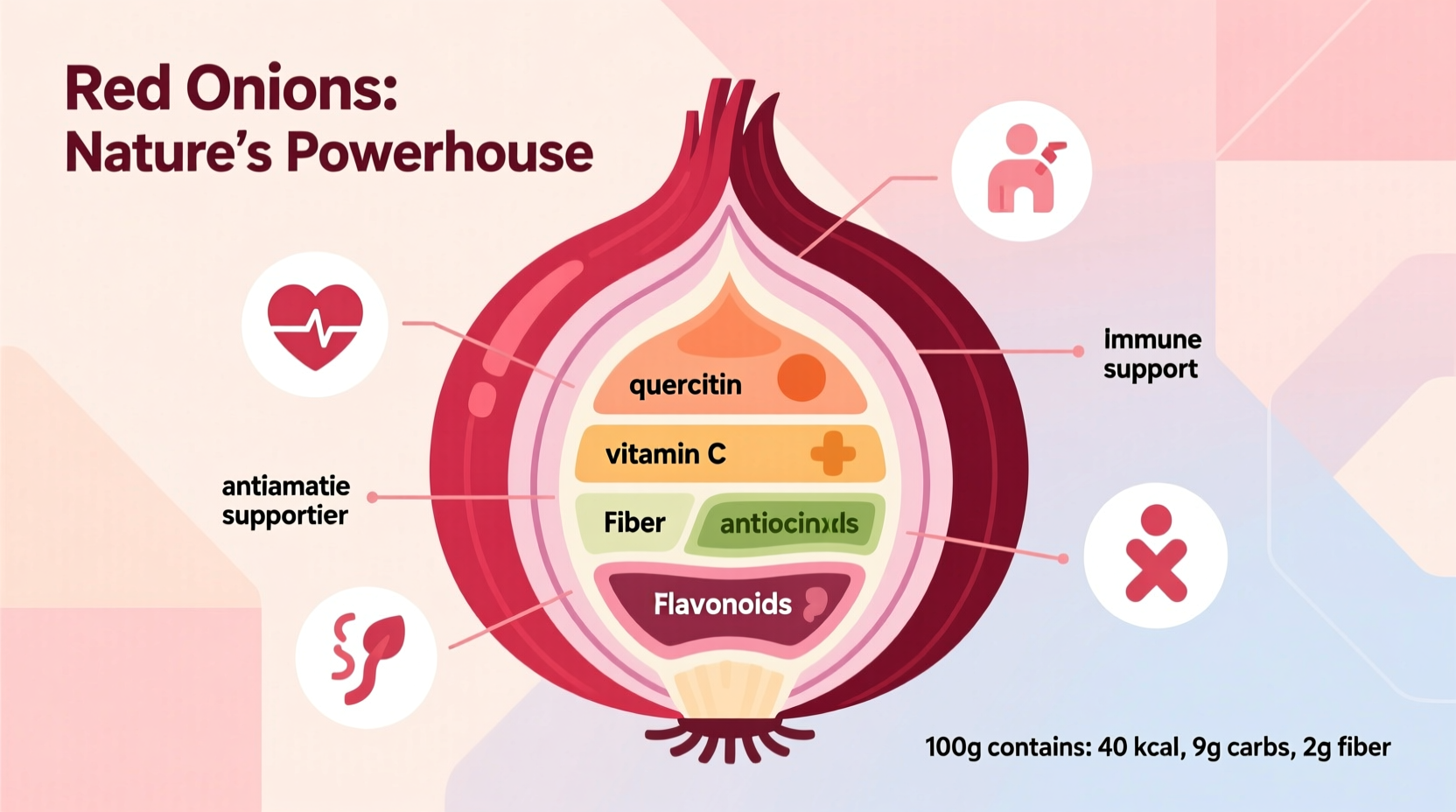
Red onions (Allium cepa var. aggregatum) are a cultivar group of bulb onions distinguished by their deep purple-red skin and flesh, crisp texture, and milder, slightly sweet flavor compared to yellow or white varieties. Native to western Asia, onions have been cultivated for over 5,000 years, but red onions gained prominence in Mediterranean, Middle Eastern, Latin American, and Indian cuisines for their visual appeal and balanced pungency.
Botanically classified as a vegetable, the red onion is technically a modified stem—a tunicate bulb composed of layered fleshy scales surrounded by dry, papery outer skin. Unlike sharper yellow onions bred for cooking, red onions contain lower levels of sulfur-containing volatile compounds, making them ideal for raw applications. Their signature hue comes from anthocyanins, water-soluble flavonoid pigments also found in blueberries and black currants, which contribute significantly to their health-promoting properties.
In culinary contexts, red onions are prized not only for their color contrast in salads and salsas but also for their ability to retain structure when grilled, roasted, or lightly pickled. They are available year-round in most markets, with peak harvest occurring in late spring through early summer.
Key Characteristics
| Characteristic | Description |
|---|---|
| Flavor Profile | Mildly pungent, slightly sweet, with a clean finish; less sulfurous than yellow onions |
| Aroma | Sharp, fresh, alliaceous (garlic-like), dissipates quickly when cut |
| Color & Form | Purple-red skin and flesh; round to flat-round bulbs; typically 2–4 inches in diameter |
| Heat Level (Pungency) | Low to moderate; registers between 2–4 on a 10-point pungency scale |
| Culinary Function | Adds color, crunch, and mild bite; used raw, grilled, roasted, or pickled |
| Shelf Life | 3–4 weeks at room temperature in a cool, dry, dark place; up to 2 months refrigerated in perforated bags |
| Nutrient Density | Low-calorie, high in vitamin C, B6, folate, potassium, and polyphenols |
Practical Usage
Red onions shine brightest when used raw, where their color and crispness elevate dishes without overwhelming other ingredients. However, they adapt well to various cooking methods, each transforming their flavor profile subtly:
- In Raw Applications: Thinly sliced red onions add vibrancy to green salads, grain bowls, tacos, ceviche, and sandwiches. Soaking slices in ice water for 10 minutes reduces sharpness while preserving crunch.
- Pickling: Quick-pickled red onions—made with vinegar, sugar, salt, and optional spices like coriander or chili flakes—are a staple in Mexican, Middle Eastern, and modern fusion cuisine. They last up to 3 weeks refrigerated and pair exceptionally well with grilled meats, fish tacos, falafel, and avocado toast.
- Grilled or Roasted: When exposed to heat, red onions caramelize gently, developing sweetness and softening in texture. Cut into wedges or thick rounds, brush with olive oil, season with salt and pepper, and grill over medium heat for 4–6 minutes per side. Use as a side dish, burger topping, or component in kebabs.
- Blended into Sauces: Finely minced red onion can be incorporated into vinaigrettes, chimichurri, raita, or tzatziki, contributing body and subtle bite without clouding the sauce’s appearance.
Pro Tip: To prevent discoloration when storing cut red onions, keep them in an airtight container in the refrigerator. Avoid contact with reactive metals like aluminum, which can cause oxidation and off-flavors. For maximum nutrient retention, consume raw or lightly cooked—prolonged boiling may degrade heat-sensitive vitamins and anthocyanins.
Variants & Types
While \"red onion\" refers broadly to purple-skinned cultivars, several distinct types exist, differing in size, intensity, and regional use:
- Standard Globe Red Onion: The most common type found in supermarkets—round, firm, with deep violet layers. Best for slicing and grilling.
- Red Bermuda Onion: Larger, flatter, and milder, originally grown in the Atlantic islands. Excellent for sandwiches and burgers due to its low pyruvate content (less tear-inducing).
- Italian Red Onion (e.g., Tropea Calabria): Elongated, sweeter, almost fruity. Often eaten raw in antipasti or drizzled with olive oil and herbs. Gaining popularity in gourmet markets.
- Red Pearl or Cocktail Onions: Small, marble-sized bulbs, usually pickled and served in martinis or hors d'oeuvres.
- Dried Red Onion Flakes / Powder: Dehydrated form used in spice blends, rubs, and instant soups. Lacks fresh texture but retains flavor and some antioxidants.
The choice of variant depends on application. For raw presentation and visual impact, globe or Italian types are preferred. For extended storage or processed foods, dried forms offer convenience, though they lack the hydration and enzymatic activity of fresh bulbs.
Comparison with Similar Ingredients
Red onions are frequently substituted or confused with other onion varieties. Understanding key differences ensures proper usage and maximizes both flavor and nutritional benefit.
| Feature | Red Onion | Yellow Onion | White Onion | Shallot |
|---|---|---|---|---|
| Flavor | Mild, slightly sweet | Sharp, robust when raw; sweetens when cooked | Crisp, clean, mildly spicy | Delicate, garlicky, nuanced |
| Best Use | Raw, pickled, grilled | Sautéing, soups, stews, roasting | Salsas, Mexican dishes, frying | Fine sauces, dressings, reductions |
| Color Retention | High (anthocyanins stable in acid) | None (turns golden when cooked) | Translucent when cooked | Pale gold when sautéed |
| Antioxidant Content | Very high (rich in anthocyanins and quercetin) | Moderate (quercetin present, no anthocyanins) | Low to moderate | Moderate (higher allicin yield) |
| Shelf Life | 3–4 weeks | 2–3 months (best keeper) | 1–2 months | 1 month (more perishable) |
Notably, red onions contain up to **twice the antioxidant capacity** of yellow or white onions due to their anthocyanin content. Shallots, while smaller and more aromatic, do not offer the same visual or volumetric utility in bulk preparations.
Practical Tips & FAQs
What are the main health benefits of eating red onions?
Red onions are associated with multiple evidence-backed health benefits:
- Cardiovascular Protection: Quercetin, a flavonoid abundant in red onions, helps reduce blood pressure and inhibit LDL cholesterol oxidation, lowering atherosclerosis risk.
- Anti-Cancer Properties: Organosulfur compounds like S-allyl cysteine and anthocyanins have demonstrated anti-proliferative effects in colon and stomach cancer cell studies.
- Immune Support: High in vitamin C and polyphenols, which enhance white blood cell function and reduce oxidative stress.
- Gut Health: Rich in inulin and fructooligosaccharides (FOS), prebiotic fibers that feed beneficial gut bacteria such as Bifidobacterium and Lactobacillus.
- Anti-Inflammatory Action: Anthocyanins suppress pro-inflammatory cytokines like TNF-alpha and IL-6, potentially easing symptoms of arthritis and metabolic syndrome.
How many calories are in a red onion?
One medium red onion (approximately 110 grams) contains about 44 calories, 10 grams of carbohydrates (including 2 grams of fiber and 5 grams of natural sugars), 1.2 grams of protein, and negligible fat. It provides roughly 20% of the Daily Value (DV) for vitamin C and 10% for vitamin B6 and folate.
Can I substitute red onions for yellow onions in recipes?
Yes, but with caveats. In cooked dishes like soups or stews, substitution is acceptable, though red onions may impart a slight pink tint and milder flavor. In raw applications requiring sharpness (e.g., French onion soup base), yellow onions are preferable. For color-critical dishes like pico de gallo, substituting white onion will result in visual loss.
Do red onions lose nutrients when cooked?
Some nutrients are affected by heat. Vitamin C and certain sulfur compounds degrade with prolonged cooking, especially boiling. However, quercetin becomes more bioavailable when heated, and anthocyanins remain stable in acidic environments (e.g., vinegar-based salads). Steaming, grilling, or sautéing preserves more nutrients than boiling.
How should I store red onions?
Whole, unpeeled red onions should be stored in a cool, dry, dark, and well-ventilated area—never in plastic bags or near potatoes, which emit moisture and ethylene gas, accelerating spoilage. Once cut, wrap tightly in beeswax or plastic and refrigerate for up to 5 days. Do not freeze whole bulbs, but frozen diced red onion can be used in cooked dishes for up to 6 months (texture degrades upon thawing).
Are red onions safe for people with digestive sensitivities?
For individuals with irritable bowel syndrome (IBS), red onions may trigger symptoms due to their FODMAP content (fermentable oligosaccharides). Fructans in onions can cause bloating and gas in sensitive individuals. Low-FODMAP alternatives include green onion tops (scallion greens) or small amounts of canned lentils instead of raw onion in salads. Cooking may reduce—but not eliminate—FODMAP levels.
“The red onion is one of the few vegetables that combines aesthetic function with measurable physiological impact. Its anthocyanin profile rivals that of berries, yet it remains underutilized in clinical nutrition conversations.” — Dr. Elena Torres, PhD, Nutritional Biochemistry, University of California, Davis
Nutritional Breakdown (Per 100g Raw Red Onion)
| Nutrient | Amount | % Daily Value (DV) |
|---|---|---|
| Calories | 40 kcal | 2% |
| Carbohydrates | 9.3 g | 3% |
| Dietary Fiber | 2.0 g | 7% |
| Sugars | 5.2 g | — |
| Protein | 1.2 g | 2% |
| Vitamin C | 15 mg | 17% |
| Vitamin B6 | 0.18 mg | 9% |
| Folate (B9) | 24 mcg | 6% |
| Potassium | 200 mg | 6% |
| Calcium | 23 mg | 2% |
| Magnesium | 14 mg | 3% |
| Phosphorus | 33 mg | 3% |
| Iron | 0.3 mg | 2% |
| Zinc | 0.2 mg | 2% |
| Quercetin (approximate) | 19–40 mg | — |
| Anthocyanins (total) | 200–400 mg/kg fresh weight | — |
Summary & Key Takeaways
Red onions are a powerful example of how culinary appeal and nutritional science converge. Far from being merely decorative, they offer a dense profile of antioxidants, prebiotics, and essential micronutrients that support cardiovascular, immune, and digestive health. Their mild flavor and striking color make them ideal for raw and lightly cooked dishes, while their versatility spans global cuisines.
Key takeaways:
- Red onions are the richest source of anthocyanins among common onion types, offering superior antioxidant protection.
- They provide meaningful amounts of vitamin C, B6, folate, and potassium in a low-calorie package.
- Best consumed raw or lightly cooked to preserve heat-sensitive nutrients, though grilling enhances quercetin bioavailability.
- Quick pickling improves palatability and extends usability while maintaining color and some phytonutrients.
- Storage matters: Keep whole bulbs dry and ventilated; refrigerate only after cutting.
- While beneficial for most, those with FODMAP sensitivities should limit intake or opt for alternatives.
Make red onions a weekly staple. Aim to include them in at least three meals per week—whether in a morning salad, pickled topping, or roasted vegetable medley—to harness their full health potential.









