
Armor Vienna Sausage occupies a unique space in American pantries—convenient, shelf-stable, and instantly recognizable by its cylindrical tin and savory aroma. While often dismissed as a processed food with limited nutritional value, understanding its composition reveals both practical utility and dietary considerations. For campers, emergency preppers, or home cooks needing a quick protein source, Armor Vienna Sausage offers accessibility. However, its high sodium, fat content, and preservatives require informed consumption. This detailed analysis examines the nutritional profile, ingredient breakdown, health implications, and smart culinary applications of this canned meat staple.
Definition & Overview
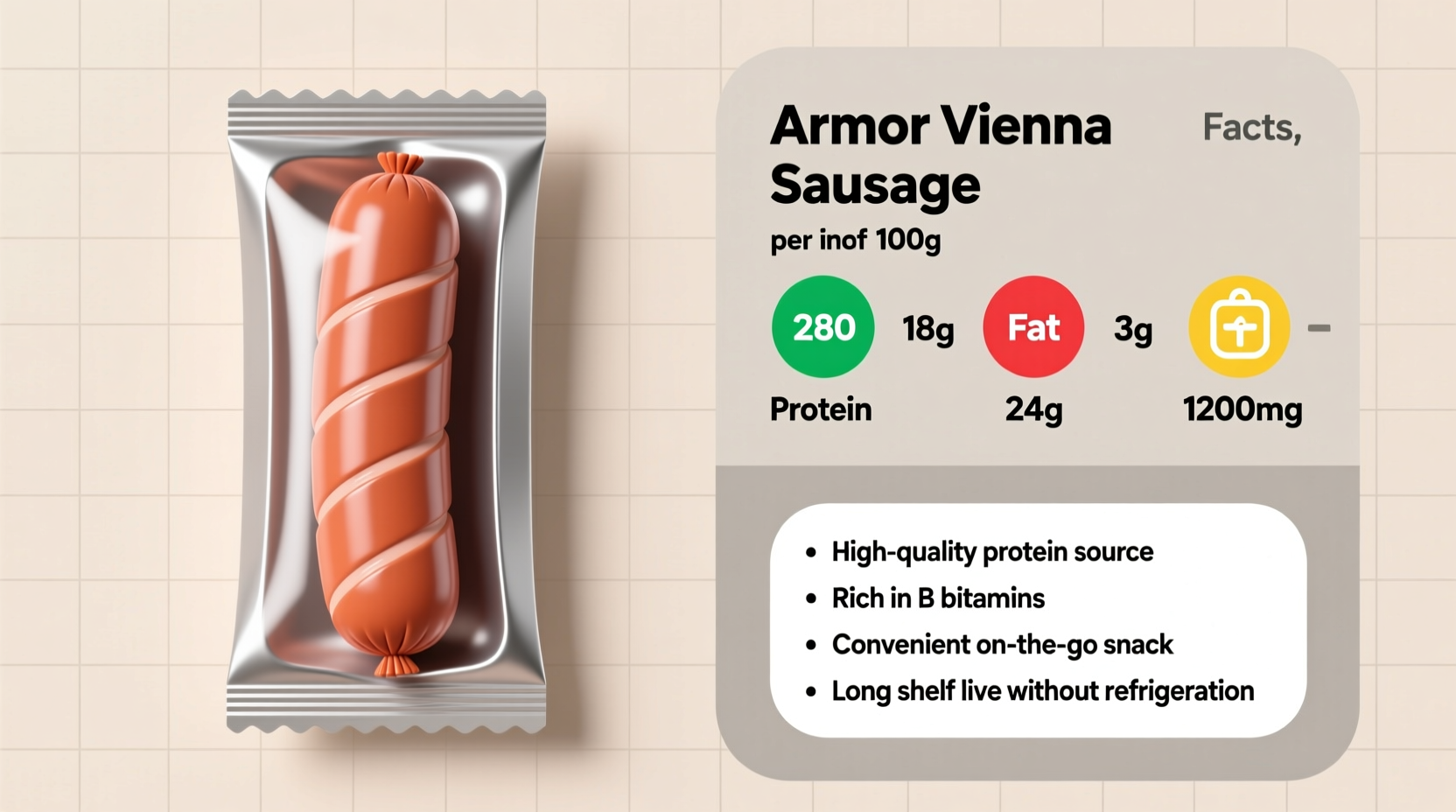
Armor Vienna Sausage refers to a commercially produced, canned pork sausage product made by Smithfield Foods under the Armor brand. Originating from European-style smoked sausages, particularly inspired by Austrian \"Wiener\" sausages, the modern canned version is a U.S.-developed convenience food. It consists primarily of finely ground pork, mechanically separated chicken, water, corn syrup, salt, and various preservatives and flavorings. The mixture is emulsified, stuffed into casings, cooked, and sealed in individual tins for long-term shelf stability.
Unlike artisanal versions made from whole cuts of meat and natural casings, Armor’s formulation prioritizes mass production, affordability, and extended shelf life over gourmet quality. Each can typically contains six to eight small, soft-textured sausage links submerged in a gelatinous broth that solidifies when chilled. The product requires no refrigeration until opened and can be eaten straight from the can, though it is commonly heated or incorporated into recipes.
While not a traditional component of fine dining, Armor Vienna Sausage has carved a niche in Southern U.S. cuisine, military rations, camping supplies, and budget-conscious households. Its ease of use makes it a fallback protein during power outages, natural disasters, or when fresh meat isn’t accessible.
Key Characteristics
| Attribute | Description |
|---|---|
| Flavor Profile | Savory, salty, mildly smoky with subtle sweetness from corn syrup; lacks complexity compared to fresh sausages. |
| Aroma | Distinctive cured-meat scent intensified upon opening; slightly metallic due to tin packaging. |
| Texture | Soft, smooth, and uniform—almost paste-like—with no fibrous bite; gelatinous liquid sets when cold. |
| Color | Pale pink to light gray interior; surface may darken slightly after heating. |
| Heat Level | Not spicy; seasoned minimally with paprika and spices but remains mild. |
| Culinary Function | Ready-to-eat protein; functions as a filler, flavor enhancer, or emergency food source. |
| Shelf Life | 2–5 years unopened (check expiration date); 3–4 days refrigerated after opening. |
Practical Usage: How to Use Armor Vienna Sausage in Cooking
Despite its reputation as a last-resort food, Armor Vienna Sausage can be integrated thoughtfully into everyday cooking. The key lies in treating it as a seasoning agent rather than a centerpiece. Due to its high sodium and soft texture, pairing it with complementary ingredients balances flavor and improves mouthfeel.
Home Cooking Applications
- Breakfast Skillet Add-In: Slice and sauté with diced potatoes, onions, and bell peppers. Fold in beaten eggs for a hearty breakfast hash. The sausage contributes saltiness, reducing the need for added seasoning.
- Bean Dishes: Stir chopped Vienna sausage into baked beans, red beans and rice, or navy bean stews. It enhances savoriness without requiring additional bacon or ham hocks.
- Casseroles and Rice Bakes: Combine with cooked rice, cream of mushroom soup, peas, and cheese for a simple casserole. Bake at 350°F (175°C) for 25 minutes until bubbly.
- Appetizers: Wrap slices in crescent dough or puff pastry and bake until golden. Serve with mustard or horseradish sauce for contrast.
- Fried Snack: Drain, pat dry, and pan-fry in butter or oil until lightly browned. Serve with crackers or pickled vegetables to cut richness.
Professional and Institutional Uses
In institutional kitchens—such as those in shelters, remote work camps, or disaster relief operations—Armor Vienna Sausage serves as a logistical solution. Its resistance to spoilage, minimal preparation requirements, and caloric density make it suitable for feeding large groups under constrained conditions. Chefs in these settings often stretch the product by combining it with grains, legumes, or vegetables to improve nutrition and reduce per-serving cost.
Pairing Suggestions and Ratios
To mitigate excessive saltiness:
- Use **one can (13 oz)** of Vienna sausage per **2 cups** of starch (rice, pasta, potatoes).
- Balance with **acidic elements**: tomatoes, vinegar-based sauces, or pickled jalapeños.
- Add **fresh herbs** like parsley or green onions to brighten flavor.
- Incorporate **vegetables**: spinach, mushrooms, or cabbage absorb excess fat and add fiber.
Pro Tip: Rinse and drain the sausages before use to remove up to 30% of surface sodium. Simmering in fresh water for 2–3 minutes further reduces salt content while firming the texture slightly.
Variants & Types
Armor offers several variations of Vienna Sausage, differing primarily in base meat and added flavors. Understanding these helps consumers choose based on dietary needs or taste preferences.
| Type | Main Ingredients | Best Use Case |
|---|---|---|
| Original Pork & Chicken | Pork, mechanically separated chicken, water, salt, corn syrup | General-purpose cooking; most widely available |
| Jalapeño | Same base with added jalapeño peppers and spices | Adding mild heat to casseroles, scrambled eggs, or nachos |
| Beef | Beef, water, salt, corn syrup, sodium nitrite | Halal/Kosher diets (where pork-free); alternative for pork allergies |
| Cheddar Cheese | Pork/chicken with pasteurized cheese sauce swirls | Snacking or appetizers; higher fat and sodium |
All variants share similar processing methods and nutritional concerns. The beef version avoids pork but still contains mechanically separated poultry and preservatives. The flavored types increase sensory appeal but do not improve overall nutrition.
Comparison with Similar Ingredients
Armor Vienna Sausage is often confused with other canned meats or fresh sausages. Clarifying differences ensures proper usage and expectation management.
| Product | Differences from Armor Vienna Sausage |
|---|---|
| Hot Dogs / Frankfurters | Fresh or refrigerated; made from higher-quality meat emulsion; lower in sodium per serving; firmer texture; require cooking. |
| Spam (Luncheon Meat) | Also canned and shelf-stable, but made from coarser pork shoulder and ham; denser texture; slightly less sodium per ounce; more versatile in global cuisines (e.g., Spam musubi). |
| Artisan Vienna Sausages | House-made or specialty products using natural casings, whole pork, and minimal additives; require refrigeration; grilled or poached; far superior flavor and texture. |
| Canned Tuna | Seafood-based; significantly lower in saturated fat; higher in omega-3s; neutral flavor; better nutritional profile overall. |
“Canned processed meats like Vienna sausage serve a purpose in food security, but they should be used strategically—not habitually. Think of them as emergency tools, not daily staples.”
— Dr. Elena Torres, Registered Dietitian and Public Health Nutritionist
Practical Tips & FAQs
Is Armor Vienna Sausage Healthy?
No single food defines health, but context matters. Armor Vienna Sausage provides 150–180 calories and 6–7 grams of protein per 2-link serving. However, it also delivers around 530 mg of sodium (over 20% of the daily limit), 14–16 grams of fat (5–6 g saturated), and contains sodium nitrite—a preservative linked to increased cancer risk in frequent processed meat consumers. Occasional use is unlikely to harm, but regular intake may contribute to hypertension and cardiovascular issues.
How Should I Store It?
Keep unopened cans in a cool, dry pantry away from direct sunlight. Do not freeze. Once opened, transfer leftovers to an airtight container and refrigerate for up to four days. Discard if the can is bulging, leaking, or emits a foul odor upon opening—signs of botulism risk.
Can I Eat It Raw?
Yes. The product is fully cooked during manufacturing and safe to consume straight from the can. However, heating improves texture and flavor dispersion in dishes.
Are There Healthier Substitutes?
- Canned chicken or tuna in water: Lower sodium options with better protein-to-fat ratios.
- Grilled turkey sausage slices: Refrigerated, lower in fat and sodium, free from nitrites.
- Homemade boiled sausages: Made with lean pork, garlic, and marjoram—preservative-free and customizable.
What Are the Main Ingredients?
The standard ingredient list includes: pork, mechanically separated chicken, water, salt, corn syrup, sodium phosphate, MSG (in some varieties), sodium erythorbate, and sodium nitrite. \"Mechanically separated chicken\" refers to pulp recovered from bones after primary deboning—controversial due to texture and regulatory concerns.
Is It Suitable for Special Diets?
No. The original version contains pork and is not halal, kosher, or suitable for vegetarians/vegans. The beef variant is pork-free but still contains mechanically separated chicken, which some religious authorities prohibit. None are gluten-free certified, though no wheat ingredients are listed—cross-contamination risks exist.
How Can I Reduce Sodium When Using It?
- Rinse and drain the sausages thoroughly under cold water.
- Simmer in unsalted broth or water for 2–3 minutes, then discard liquid.
- Pair with potassium-rich foods like white beans, sweet potatoes, or bananas to help balance electrolytes.
- Leverage acidic ingredients (lemon juice, tomatoes) to enhance perceived flavor without adding salt.
Best Dishes for Armor Vienna Sausage
- Vienna Sausage and Gravy Over Biscuits
- Creole-Style Red Beans with Sliced Sausage
- One-Pot Rice and Sausage Bake
- Breakfast Quesadilla with Eggs and Peppers
- Emergency Pantry Soup with Carrots, Celery, and Barley
Case Study – Emergency Preparedness: During Hurricane Ian (2022), Florida food banks distributed over 120,000 cans of Vienna sausage as part of MRE-style kits. Recipients reported high acceptance due to familiarity and ease of consumption without cooking. Nutritionists advised pairing with fruit cups or peanut butter crackers to create more balanced mini-meals.
Summary & Key Takeaways
Armor Vienna Sausage is a highly processed, shelf-stable canned meat product designed for convenience, not nutritional excellence. While it delivers usable protein and energy in emergencies, its high sodium, saturated fat, and inclusion of preservatives like sodium nitrite warrant cautious, infrequent use. It performs best as a supporting ingredient in dishes where its saltiness can be offset by vegetables, acids, and whole grains.
Understanding its limitations allows for smarter integration into real-world cooking scenarios—from camp stoves to kitchen pantries. Consumers should treat it as a functional backup rather than a dietary cornerstone. Opting for rinsed or simmered preparations reduces sodium exposure, and exploring healthier alternatives like canned poultry or homemade sausages supports long-term wellness.
Ultimately, the value of Armor Vienna Sausage lies not in its gourmet appeal, but in its resilience and accessibility. When used mindfully, it fulfills a specific role in food systems where safety, shelf life, and simplicity outweigh ideal nutrition.
Consider your next pantry restock: Is Armor Vienna Sausage a strategic reserve—or a habitual choice? Choose wisely.