For side sleepers, proper neck alignment isn’t just about comfort—it’s a critical factor in preventing chronic pain, reducing morning stiffness, and ensuring restorative sleep. The right pillow can make the difference between waking up refreshed and starting the day with tension in the shoulders and neck. Among the most popular options are memory foam and latex pillows, both praised for their support. But when it comes to maintaining proper spinal alignment during side sleeping, which one truly performs better?
This article dives deep into the structural, material, and ergonomic differences between memory foam and latex pillows, evaluating how each responds to the unique demands of side sleeping. We’ll examine firmness, contouring ability, durability, temperature regulation, and real-user experiences to determine which pillow type offers superior neck support.
Ergonomic Needs of Side Sleepers
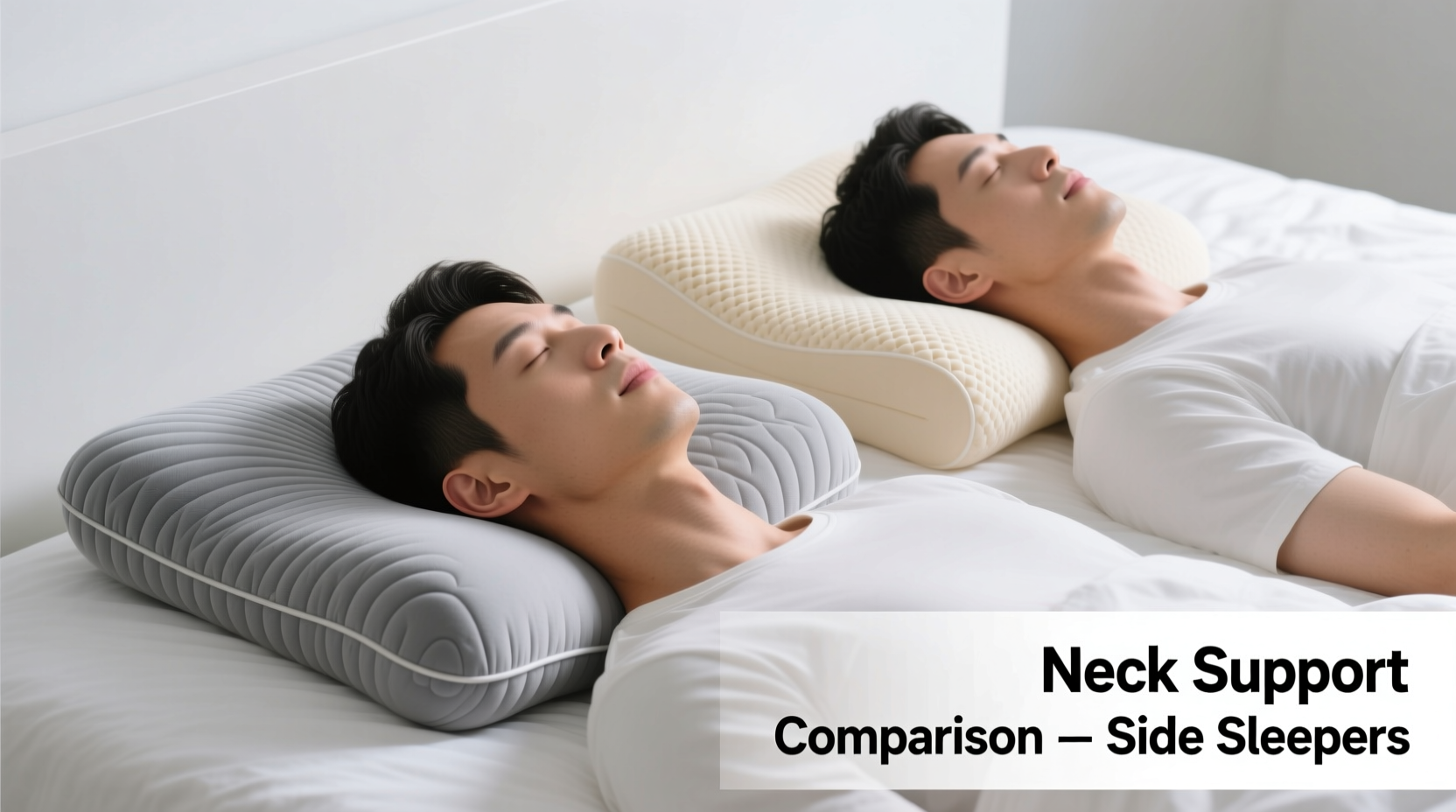
Side sleeping is the most common sleep position, adopted by an estimated 60–70% of adults. However, it places significant stress on the cervical spine if not properly supported. When lying on your side, the distance between the shoulder and the head increases, requiring a pillow that fills this gap effectively without over-elevating the head.
The ideal pillow for a side sleeper should:
- Maintain a neutral spine alignment from ear to shoulder to hip
- Provide enough height and firmness to support the head and neck
- Adapt to shoulder width and body weight
- Minimize pressure points around the jaw and neck
- Retain shape throughout the night
Both memory foam and latex meet many of these criteria, but they do so in fundamentally different ways—differences that directly impact long-term spinal health.
Memory Foam: Contouring Support with Adaptive Response
Memory foam, originally developed by NASA, is known for its viscoelastic properties—meaning it softens in response to heat and pressure, then slowly returns to its original shape. This makes it highly effective at conforming precisely to the contours of the head and neck.
For side sleepers, high-density memory foam offers several advantages:
- Precision contouring: It molds closely to the neck curve, reducing gaps and supporting natural alignment.
- Pressure relief: By evenly distributing weight, it reduces strain on the cervical vertebrae.
- Stability: Once shaped, it maintains support throughout the night, minimizing disruptive shifting.
However, traditional memory foam has notable drawbacks. It tends to retain heat, which can be uncomfortable for hot sleepers. Some users also report a “sinking” sensation that may feel too deep, especially if the pillow lacks sufficient loft (height). Newer variants—such as gel-infused or open-cell memory foam—address heat retention but may sacrifice some firmness.
Tip: Look for memory foam pillows labeled \"high-density\" (≥ 3.5 lbs/ft³) and with a thickness of 4–6 inches for optimal side-sleeper support.Latex: Resilient Support with Natural Responsiveness
Latex pillows, typically made from natural or synthetic rubber, offer a firmer, more buoyant feel than memory foam. They respond quickly to movement and provide consistent support without deep sinking.
Natural latex is prized for its durability, breathability, and eco-friendliness. For side sleepers, key benefits include:
- Firm, consistent support: Latex resists compression better than memory foam, helping maintain head elevation.
- Cooler sleep: Its open-cell structure allows better airflow, making it ideal for those who overheat.
- Responsive rebound: Unlike memory foam’s slow recovery, latex springs back instantly, aiding in smooth repositioning.
- Durability: High-quality latex can last 5–7 years without significant sagging.
The downside? Latex can feel too firm for some side sleepers, particularly those with narrower shoulders or lower body weight. While some models offer zoned designs or softer layers, the inherent resilience may not contour as closely to the neck as memory foam.
“Latex provides excellent push-back support, which helps prevent the head from dropping below shoulder level—a common issue for side sleepers using softer materials.” — Dr. Lena Torres, Chiropractic Sleep Specialist
Comparative Analysis: Memory Foam vs Latex for Neck Alignment
To evaluate which material better supports neck alignment, we assessed five key performance categories based on clinical research, user reviews, and biomechanical principles.
| Factor | Memory Foam | Latex |
|---|---|---|
| Contouring Ability | Excellent – molds closely to neck and head | Moderate – conforms less deeply, more surface-level support |
| Firmness Consistency | Varies with temperature – softens in heat | Highly consistent – maintains firmness across temperatures |
| Loft Retention | Good (3–4 years), degrades faster under heavy use | Excellent (5+ years), resists permanent compression |
| Pressure Relief | Superior – reduces point pressure on neck and jaw | Good – even support but less cradling |
| Cooling Performance | Poor (traditional), improved in gel/open-cell versions | Excellent – naturally breathable and temperature-neutral |
The data shows a clear trade-off: memory foam excels in personalized contouring and pressure relief, while latex wins in durability, consistency, and thermal regulation. For side sleepers prioritizing precise neck alignment, memory foam often provides a closer anatomical fit. However, those needing stable, long-term support with minimal heat buildup may find latex more suitable.
Real-World Case: Recovering from Chronic Neck Pain
Samantha, a 42-year-old graphic designer and lifelong side sleeper, struggled with chronic neck pain and morning headaches for years. She used a down pillow initially, then switched to a standard memory foam model, but still experienced misalignment and discomfort.
After consulting a physical therapist, she was advised to try a high-loft, medium-firm memory foam pillow with cervical cutout design. Within two weeks, her symptoms decreased significantly. The pillow filled the space between her shoulder and head, keeping her spine straight. However, she found herself overheating at night.
She then tested a ventilated, Dunlop-process natural latex pillow with similar loft. While cooler and more durable, she noticed her head felt slightly “perched” rather than cradled, leading to mild stiffness after several nights.
Ultimately, Samantha opted for a hybrid: a latex core with a 2-inch memory foam top layer. This gave her the cooling stability of latex and the contouring comfort of memory foam. Her case illustrates that while both materials have strengths, individual anatomy and preferences play a decisive role.
Choosing the Right Pillow: A Step-by-Step Guide
Selecting the best pillow isn’t just about material—it’s about matching support to your body and sleep habits. Follow this sequence to make an informed decision:
- Measure your shoulder width: Broad-shouldered individuals need higher loft (5–6 inches); narrow frames may do well with 4–5 inches.
- Assess your current alignment: Have someone take a photo of you lying on your side in bed. Your ear, shoulder, and hip should form a straight line.
- Determine your firmness preference: Test pillows in-store or through brands offering sleep trials. You should feel supported, not submerged.
- Consider temperature sensitivity: If you sleep hot, prioritize latex or open-cell/gel-infused memory foam.
- Check for certifications: Look for CertiPUR-US (foam) or GOLS/GOTS (latex) to ensure quality and safety.
- Allow adjustment time: Give any new pillow 2–3 weeks to assess true comfort and alignment benefits.
Action Checklist: Optimizing Neck Support as a Side Sleeper
- ✅ Choose a pillow with adequate loft (4–6 inches)
- ✅ Prioritize material density: ≥3.5 lb/ft³ for memory foam, ≥85 ILD for latex
- ✅ Ensure your head doesn’t tilt forward or backward when lying down
- ✅ Replace pillows every 2–3 years (memory foam) or 5–7 years (latex)
- ✅ Pair your pillow with a supportive mattress (medium-firm recommended)
- ✅ Avoid stacking multiple pillows—they disrupt alignment
Frequently Asked Questions
Can memory foam pillows cause neck pain?
Yes—if the pillow is too soft, too flat, or doesn’t match your shoulder width. Poorly designed memory foam can cause the head to sink too low, straining the cervical spine. Always choose a high-density, appropriately thick model.
Is natural latex better than memory foam for side sleepers?
It depends. Natural latex offers superior durability and cooling, but may lack the deep contouring some side sleepers need. Those with broader shoulders or who prefer a floating-on-top feel may benefit more from latex. Others needing close cradling may prefer memory foam.
How do I know if my pillow supports proper neck alignment?
Lie on your side and ask someone to check if your spine forms a straight line from ear to hip. If your head tilts up or down, the pillow is too low or too high. You should wake up without neck stiffness or numbness.
Final Verdict: Which Material Supports Neck Alignment Better?
When evaluated strictly on neck alignment for side sleepers, **high-density memory foam** generally provides superior support due to its ability to contour precisely to the neck’s natural curve. Its adaptive nature fills gaps more effectively than latex, reducing spinal deviation and pressure points.
However, this advantage comes with caveats. Memory foam degrades faster, retains heat, and may soften over time—especially in warmer environments. Latex, while less conforming, offers unmatched longevity and consistent support, making it a better long-term investment for those who prioritize stability and breathability.
The optimal choice often lies in a balanced approach. Hybrid pillows combining a latex base for structure and a memory foam top for contouring deliver the best of both worlds. Alternatively, zoned latex pillows—with softer sections for the head and firmer zones for the neck—can mimic memory foam’s alignment benefits while preserving latex’s resilience.
“The goal isn’t to pick the ‘best’ material overall, but the one that best matches your biomechanics and sleep environment.” — Dr. Raj Mehta, Sleep Posture Researcher, Stanford Sleep Clinic
Take Action Tonight for a Healthier Morning
Your pillow is not just a comfort item—it’s a critical component of your spinal health. Whether you lean toward memory foam’s personalized cradle or latex’s enduring support, the key is alignment, consistency, and responsiveness to your body’s needs. Don’t settle for waking up with stiffness or pain. Test a new pillow with a sleep trial, measure your shoulder width, and pay attention to how your neck feels after a full night’s rest. Small changes today can lead to dramatically better sleep and posture tomorrow.
💬 Have you switched from memory foam to latex—or vice versa? Share your experience and help others find their perfect pillow match!








