
Anxiety affects millions worldwide, often disrupting sleep, focus, and daily functioning. As interest in self-care grows, two practices consistently emerge as accessible tools for mental regulation: meditation and journaling. Both are low-cost, require minimal equipment, and can be practiced almost anywhere. But when it comes to reducing anxiety, which one delivers stronger results? The answer isn’t straightforward—because effectiveness depends on individual needs, cognitive style, and the nature of anxious thoughts. This article explores both practices in depth, compares their mechanisms, and provides evidence-based guidance to help you choose—or combine—the right habit for lasting anxiety relief.
How Meditation Addresses Anxiety
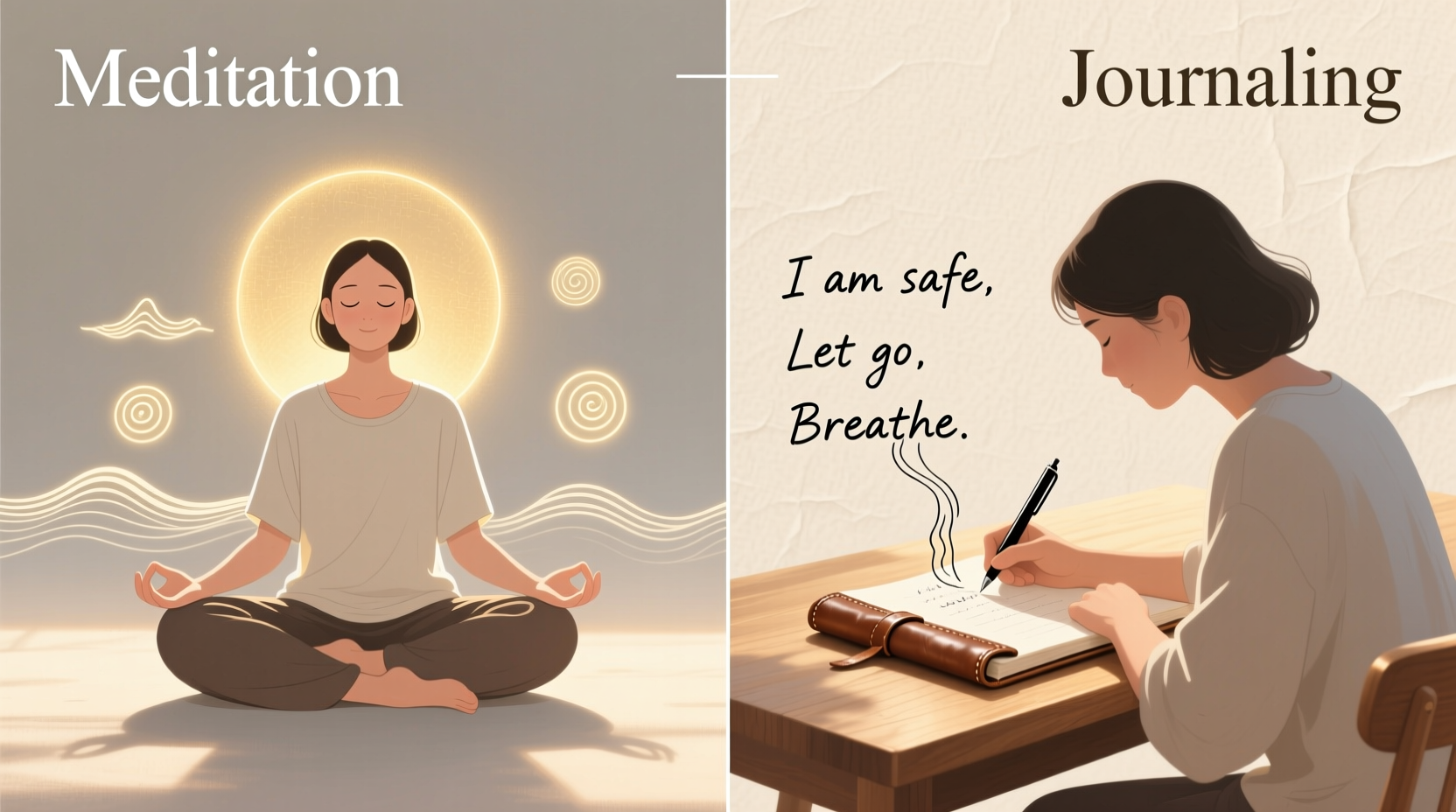
Meditation, particularly mindfulness meditation, trains the mind to observe thoughts and sensations without judgment. Rooted in ancient contemplative traditions and now widely supported by neuroscience, this practice helps break the cycle of rumination—a hallmark of anxiety. When a person meditates regularly, they develop greater awareness of mental patterns, allowing them to disengage from catastrophic thinking before it escalates.
Studies show that even short-term meditation programs reduce activity in the amygdala, the brain region responsible for processing fear and threat. A 2014 meta-analysis published in JAMA Internal Medicine found moderate evidence that mindfulness meditation improves anxiety symptoms across diverse populations. Over time, practitioners report not only reduced frequency of anxious episodes but also increased emotional resilience during stress.
Tip: Start with just five minutes of focused breathing each day. Use a guided app like Insight Timer or Headspace if silence feels overwhelming.The Psychological Power of Journaling
Journalling, especially expressive writing, works differently. Instead of quieting the mind, it gives anxious thoughts a structured outlet. By putting emotions into words, individuals externalize internal chaos, making it easier to identify triggers, distortions, and recurring themes. James Pennebaker, a pioneer in expressive writing research, demonstrated that writing about traumatic or stressful experiences for 15–20 minutes over three to four days significantly improves psychological well-being and reduces anxiety markers.
The act of writing engages the prefrontal cortex—the brain’s executive control center—helping regulate emotional responses. Unlike meditation, which teaches detachment from thoughts, journaling encourages engagement: naming fears, analyzing them, and reframing narratives. For people who feel “stuck” in their heads, writing offers clarity and a sense of agency.
“Writing forces the mind to slow down and organize experience. That alone can reduce the feeling of being overwhelmed.” — Dr. Susan David, psychologist and author of *Emotional Agility*
Direct Comparison: Meditation vs Journaling
To understand which method might work better for anxiety relief, consider how each functions cognitively and emotionally. The table below outlines key differences:
| Aspect | Meditation | Journaling |
|---|---|---|
| Mechanism | Non-reactive awareness; observing thoughts without attachment | Cognitive processing; organizing and analyzing emotions |
| Time to Effect | Gradual (weeks to months) | Faster initial release (within days) |
| Skill Required | Focus, patience, consistency | Self-reflection, willingness to confront emotions |
| Best For | Rumination, hyperarousal, chronic worry | Unresolved trauma, overthinking, emotional suppression |
| Common Barrier | Frustration with “empty mind” misconception | Fear of confronting painful memories |
Neither approach is universally superior. Meditation excels at reducing physiological arousal—lowering heart rate, calming the nervous system—while journaling shines in uncovering root causes of anxiety and reshaping thought patterns. The choice often comes down to personal preference and the type of anxiety experienced.
A Real-Life Example: Sarah’s Journey with Anxiety
Sarah, a 34-year-old project manager, struggled with generalized anxiety disorder for years. Her mind raced at night, replaying meetings and anticipating future problems. She tried meditation first, sitting quietly each morning. Initially, she felt more agitated—her thoughts seemed louder in the silence. After two weeks, she gave up, convinced it wasn’t for her.
Then she started journaling. Every evening, she wrote freely for ten minutes, capturing everything that worried her. Within days, she noticed a shift. Seeing her fears on paper made them feel less threatening. She began identifying patterns: most of her anxiety centered around perfectionism and fear of criticism. Over time, she used journaling to challenge these beliefs, writing compassionate responses to her inner critic.
Months later, after building emotional stability through writing, Sarah returned to meditation. This time, it felt different. With fewer unresolved thoughts swirling, she could sit quietly without resistance. Now, she combines both: journaling in the evening to process the day, and meditating in the morning to set a calm tone.
Step-by-Step Guide to Building an Effective Routine
If you're unsure where to start, follow this six-week plan to test both methods and determine what works best for you:
- Week 1–2: Try Meditation Only
Practice 5–10 minutes daily. Focus on breath awareness. Use a timer or app. Note changes in mood, sleep, and anxiety levels in a log. - Week 3–4: Switch to Journaling Only
Write for 10–15 minutes each evening. Prompt: “What made me anxious today, and why?” Don’t edit—just release. - Week 5: Combine Both
Journal briefly in the morning to clear mental clutter, then meditate for 10 minutes. Observe how the sequence affects your focus. - Week 6: Evaluate and Choose
Review your log. Ask: Which practice reduced anxiety more? Which felt more sustainable? Did combining them enhance results?
This structured trial removes guesswork and builds self-awareness—key to long-term success.
When to Choose Meditation
Meditation is ideal if your anxiety manifests as physical tension, restlessness, or constant mental chatter without clear cause. It’s especially effective for those who feel overwhelmed by stimuli or struggle with insomnia due to racing thoughts. Mindfulness-Based Stress Reduction (MBSR) programs have been clinically proven to reduce anxiety in high-stress environments, including healthcare workers and students during exam periods.
However, meditation may not be the best starting point for individuals with severe trauma or intrusive thoughts. Sitting with intense emotions without tools to process them can sometimes increase distress. In such cases, journaling may offer a safer entry point.
When to Choose Journaling
Journalling suits people whose anxiety stems from specific stressors—relationship conflicts, work pressure, or unresolved grief. It’s also beneficial for analytical thinkers who prefer logical processing over sensory awareness. Writing allows them to dissect worries, assess validity, and plan responses.
One caveat: unstructured venting without reflection can reinforce negative thinking. To avoid this, use prompts that encourage insight, such as:
- “What evidence supports or contradicts this worry?”
- “If a friend had this fear, what would I tell them?”
- “What’s the worst that could happen, and how likely is it?”
Can You Combine Both? The Synergy Effect
Many find the greatest benefit in combining meditation and journaling. Think of them as complementary tools: meditation cultivates awareness, while journaling applies that awareness to real-life concerns. For example, after a meditation session, you might notice a recurring thought pattern (“I’m not doing enough”). Later, journaling allows you to explore its origin and reframe it constructively.
Research supports integration. A 2020 study in the Journal of Clinical Psychology found that participants who combined mindfulness with expressive writing showed greater reductions in anxiety than those using either method alone. The combination appears to strengthen both emotional regulation and cognitive flexibility.
Checklist: Build Your Anxiety-Relief Habit
Use this checklist to implement a sustainable practice:
- ☐ Assess your primary anxiety symptoms (physical, cognitive, emotional)
- ☐ Choose a starting method based on your needs (meditation for arousal, journaling for rumination)
- ☐ Set a consistent time and place (e.g., mornings for meditation, evenings for journaling)
- ☐ Start small—5 minutes is enough to begin
- ☐ Track changes in anxiety weekly using a simple scale (1–10)
- ☐ After four weeks, evaluate and adjust: continue, switch, or combine
- ☐ Be patient—neuroplasticity takes time; benefits accumulate subtly
Frequently Asked Questions
Can journaling make anxiety worse?
Initially, yes—for some people. Confronting deep-seated fears can trigger temporary discomfort. To minimize risk, avoid dwelling on trauma without support. If distress increases, pause and consult a therapist. Structured prompts and time limits (e.g., 15 minutes) help contain emotional exposure.
Is there a best time of day to meditate for anxiety?
Morning meditation sets a calm tone for the day and prevents anxiety from escalating. However, evening sessions can help unwind after stress buildup. Experiment to see what aligns with your rhythm. Consistency matters more than timing.
Do I need to write every day to benefit from journaling?
No. Studies show benefits even with 2–3 sessions per week. What matters is depth and honesty, not frequency. Aim for quality reflection rather than daily obligation.
Conclusion: Choose What Serves You—Not What’s Trendy
There’s no single “best” habit for anxiety relief. Meditation and journaling operate through different pathways, each offering unique advantages. Meditation teaches presence and detachment, helping you step out of the storm of thoughts. Journaling fosters understanding and resolution, giving voice to what’s buried beneath the surface.
The most effective approach is the one you’ll actually do—and stick with. Some thrive in silence; others need the catharsis of writing. Many discover that alternating or combining both creates a balanced mental hygiene routine. Rather than chasing perfection, focus on progress: a few mindful breaths, a single honest sentence in a notebook, done consistently, can reshape your relationship with anxiety over time.
🚀 Start tonight: Spend 7 minutes journaling your worries, then try 5 minutes of slow breathing. Notice how your body feels afterward. Small steps lead to real change—begin where you are.








