In the past decade, mindfulness has transitioned from niche wellness trend to mainstream mental health tool. As more people seek relief from stress, anxiety, and digital overload, meditation has become a go-to practice. But with so many ways to access guided sessions—ranging from free YouTube videos to premium app subscriptions—many are left wondering: is paying for a meditation app truly worth it?
The answer isn’t black and white. While YouTube offers vast, accessible content at no cost, meditation apps provide curated experiences, structured programs, and personalized features. To make an informed decision, it’s essential to evaluate not just price, but also consistency, quality, functionality, and long-term engagement.
Understanding the Core Differences
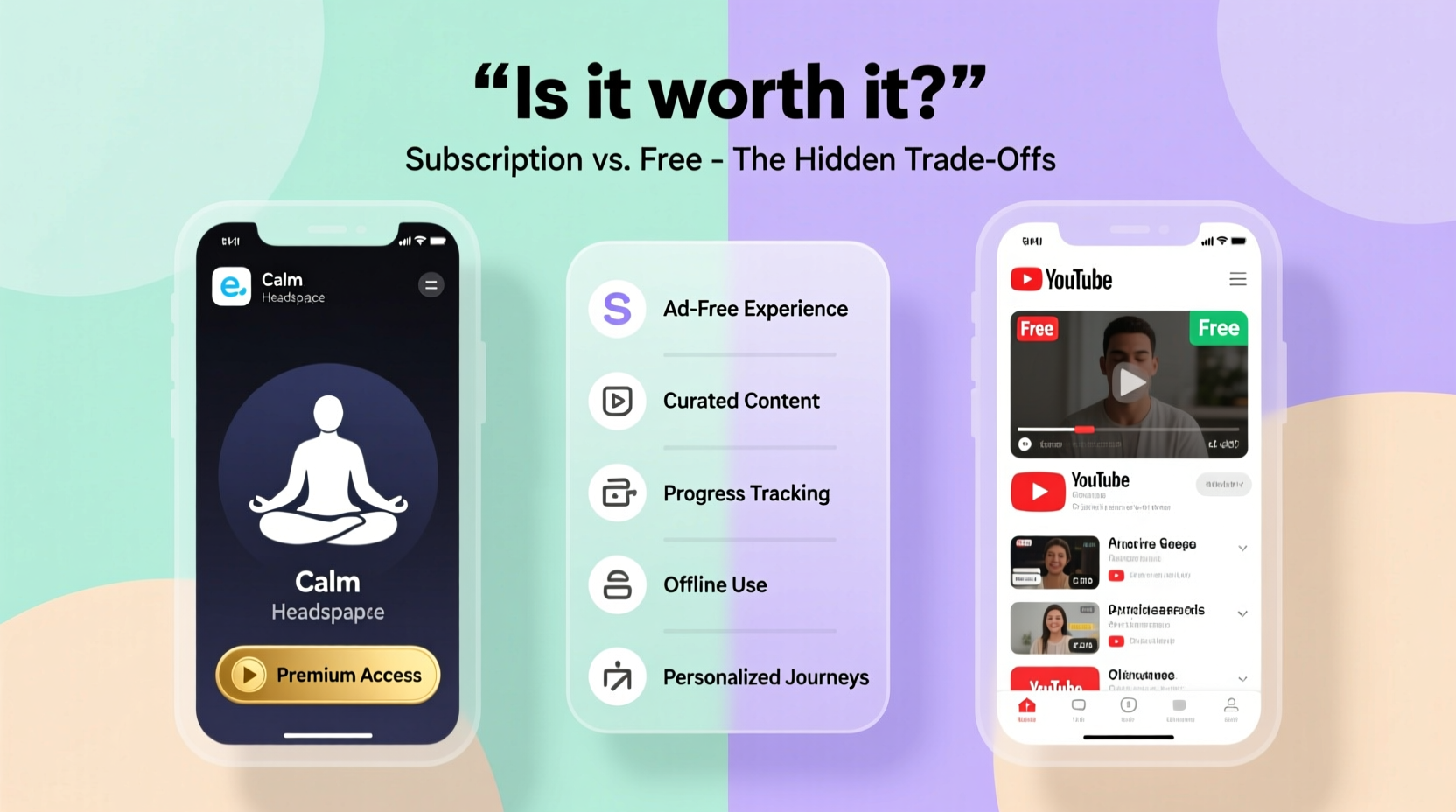
At first glance, both platforms deliver guided meditations. However, their underlying structures, goals, and user experiences differ significantly.
YouTube videos are typically created by independent teachers, wellness influencers, or organizations aiming to share knowledge freely. Content ranges from five-minute breathing exercises to hour-long deep relaxation sessions. The platform thrives on variety and accessibility, but lacks standardization in teaching style, audio quality, and progression.
Meditation apps, such as Headspace, Calm, or Insight Timer, are designed with intentionality. They offer structured learning paths, progress tracking, sleep stories, mood logging, and sometimes even clinical backing. These tools aim to foster habit formation and deeper personal growth over time.
The key difference lies in curation versus abundance. Apps guide you; YouTube lets you choose. One prioritizes depth and consistency, the other breadth and spontaneity.
Tip: If you're new to meditation, a structured app can prevent overwhelm and build confidence faster than browsing random videos.Cost Comparison: Free Access vs. Monthly Subscriptions
One of the most compelling arguments for YouTube is obvious: it’s free. There’s no paywall, no credit card required, and thousands of hours of content available instantly. This makes it ideal for experimentation or occasional use.
Premium meditation apps, meanwhile, typically charge between $50 and $70 per year. Some offer limited free tiers, but full access requires a subscription. For budget-conscious users, this raises a valid concern: can free content deliver the same results?
To assess value, consider what you’re paying for beyond access:
- Ad-free listening environments
- Scientifically designed courses (e.g., “Managing Anxiety” or “Focus Training”)
- Offline downloads for travel or low-connectivity areas
- Progress tracking and reminders
- Expert-led programs developed with psychologists or neuroscientists
While YouTube may host similar topics, these features are either missing or inconsistently applied. Ads interrupt sessions, playlists lack logical sequencing, and there’s no way to track your streaks or emotional shifts over time.
“Consistency is the cornerstone of meditation benefits. Tools that support daily practice—like reminders and milestones—are often worth the investment.” — Dr. Lena Torres, Clinical Psychologist & Mindfulness Researcher
Quality and Reliability: Who’s Leading Your Practice?
Not all meditation guidance is created equal. On YouTube, anyone can upload a video titled “Guided Meditation for Deep Sleep,” regardless of training or experience. While some creators are certified teachers, others rely on intuition or popularity metrics rather than expertise.
This variability affects both safety and effectiveness. A poorly guided body scan might increase anxiety instead of reducing it. Misleading claims about healing trauma through passive listening can set unrealistic expectations.
Reputable apps, by contrast, vet their instructors rigorously. Headspace was co-founded by a former Buddhist monk; Calm partners with licensed therapists and sleep specialists. Their content undergoes editorial review and aligns with evidence-based practices.
Beyond credentials, audio production matters. App recordings feature studio-quality sound, ambient music tailored to focus or relaxation, and voice modulation designed to soothe the nervous system. YouTube videos often suffer from background noise, uneven volume, or distracting visuals.
| Feature | Meditation Apps | YouTube Videos |
|---|---|---|
| Instructor Credentials | Verified experts, often with certifications | Mixed – varies widely by creator |
| Audio Quality | Professional-grade, consistent | Variable – depends on uploader |
| Content Structure | Sequenced courses with clear goals | Standalone videos, rarely progressive |
| Ads During Sessions | None (premium) | Frequent interruptions |
| Personalization | Daily recommendations, mood tracking | Algorithm-driven, based on watch history |
A Real Example: Two Users, Two Paths
Consider two individuals starting meditation for stress reduction.
Sarah chooses YouTube. She searches “10-minute anxiety relief” and finds a calming video with soft piano music. It helps temporarily, but she struggles to find another session that feels right. Over time, she skips days, gets distracted by suggested videos, and eventually stops altogether after three weeks.
James downloads a meditation app with a free trial. He takes a brief onboarding quiz and is placed in a “Stress Essentials” course. Each day, he receives a notification and completes a five- to ten-minute session. The app tracks his streak, celebrates milestones, and gradually introduces longer practices. After six weeks, he reports improved sleep and greater emotional resilience—and decides to subscribe.
Their outcomes aren’t due to willpower alone. James benefited from design elements that reduce friction and reinforce commitment. Sarah faced decision fatigue and inconsistent quality, common pitfalls of open-platform browsing.
Tip: Use a free trial period to test whether an app’s structure supports your lifestyle before committing financially.When Free Might Be Enough (And When It Isn’t)
YouTube excels in specific scenarios:
- You want to try meditation without commitment.
- You’re looking for short, situational practices (e.g., pre-sleep or pre-meeting calm).
- You already have a trusted channel or teacher whose style resonates.
- You prefer passive consumption over active tracking.
However, if you’re seeking any of the following, a paid app likely offers better returns:
- Habit Formation: Apps use behavioral science to encourage daily use through streaks, rewards, and gentle nudges.
- Progressive Learning: Just as you wouldn’t learn guitar from random YouTube clips, meditation deepens through structured curricula.
- Specialized Support: Conditions like chronic anxiety, PTSD, or insomnia benefit from clinically informed programs not commonly found on open platforms.
- Distraction-Free Environment: Removing ads and algorithmic distractions allows for deeper presence.
Moreover, while YouTube’s algorithm promotes engagement, it doesn’t prioritize your well-being. You might finish a meditation only to be served a sensational news clip that spikes cortisol levels—undermining the entire purpose.
Step-by-Step Guide: Choosing What Works for You
Instead of assuming one option fits all, follow this decision-making process:
- Define Your Goal: Are you exploring curiosity, managing stress, improving sleep, or supporting therapy? Clear intent guides your choice.
- Test Both Platforms: Spend one week using only YouTube meditations. Then try a 7-day free trial of a top app. Note differences in ease, consistency, and emotional impact.
- Evaluate Engagement: Did you complete sessions? Were you reminded? Did you feel supported?
- Assess Long-Term Fit: Can you imagine sustaining this method for three months? Does it integrate smoothly into your routine?
- Calculate Value: Divide the annual app cost by 365. Is $0.15/day worth better sleep, reduced reactivity, or enhanced focus?
- Decide or Hybridize: Choose one primary method—or combine them. For example, use an app for daily practice and YouTube for variety on weekends.
“The best meditation tool is the one you actually use. But if cost is stopping you from building a real habit, consider whether short-term savings lead to long-term stagnation.” — Rajiv Mehta, Mindfulness Coach & Author of *Present Moment Habits*
FAQ
Can I get the same benefits from free YouTube videos as from a paid app?
You can achieve meaningful benefits from free content, especially if you’re consistent and selective. However, structured programs, expert curation, and engagement tools in apps often lead to deeper, more sustainable results—particularly for beginners or those dealing with mental health challenges.
Are meditation app subscriptions tax-deductible or covered by insurance?
In some cases, yes. Certain U.S. health savings accounts (HSAs) or flexible spending accounts (FSAs) allow reimbursement for wellness apps prescribed by a healthcare provider. Employers offering mental health stipends may also cover subscriptions. Always check with your provider.
Do any meditation apps offer permanent purchases instead of subscriptions?
A few do. Insight Timer offers a one-time purchase option for lifetime access to premium content. Others, like Buddhify, sell apps outright with no recurring fees. These are rare exceptions—most operate on subscription models to fund ongoing development and instructor compensation.
Checklist: Is a Meditation App Worth It for You?
Answer the following to determine if a subscription makes sense:
- ☑ I struggle to stay consistent with free resources
- ☑ I want guided programs that evolve over time
- ☑ I value ad-free, high-quality audio experiences
- ☑ I’d benefit from sleep stories, breathing exercises, or mood tracking
- ☑ I’ve tried YouTube and felt lost or unmotivated
- ☑ I’m willing to invest under $6/month for mental well-being
If four or more apply, a subscription could significantly enhance your practice.
Conclusion: Investing in Your Inner Environment
The question isn’t merely whether meditation apps are worth the money—it’s whether you value intentional mental care enough to support it with appropriate tools. Free content will always have a place, especially for exploration and accessibility. But when it comes to cultivating lasting inner change, structure, guidance, and consistency matter.
Think of it like fitness: you can follow free workout videos online, but many find greater results with a trainer, a gym membership, or a structured program. The same principle applies here. A meditation app isn’t just selling content—it’s offering a framework for transformation.
💬 Ready to take the next step? Try a 7-day free trial of a top meditation app and track how it impacts your focus, mood, and sleep. Share your experience in the comments—your journey might inspire someone else to begin theirs.








