For millions of people who rely on caffeine to start their day, the choice between matcha and coffee isn’t just about flavor—it’s about how it affects the mind and body. If you're prone to anxiety, jitteriness, or energy crashes, the type of caffeine you consume can make a significant difference in your daily well-being. While both matcha and coffee deliver alertness, they do so in fundamentally different ways. Understanding these differences can help you make a smarter, more calming choice when reaching for that morning boost.
Coffee has long been the go-to stimulant for productivity, but its reputation for triggering nervousness and heart palpitations leaves many anxious individuals searching for alternatives. Enter matcha—a finely ground green tea powder with a growing following among wellness enthusiasts and mental health advocates. But does matcha truly offer a smoother, more balanced form of caffeine? And if so, why?
The Science Behind Caffeine and Anxiety
Caffeine works by blocking adenosine receptors in the brain—adenosine being the chemical responsible for making us feel tired. By inhibiting this signal, caffeine promotes wakefulness and mental sharpness. However, this mechanism also stimulates the release of adrenaline and cortisol, the body’s stress hormones. In some individuals, especially those predisposed to anxiety, this hormonal surge can trigger symptoms such as restlessness, rapid heartbeat, and even panic attacks.
Not all caffeine is processed the same way by the body. The rate at which caffeine enters the bloodstream, how long it stays there, and what other compounds accompany it all influence its psychological impact. This is where the divergence between matcha and coffee becomes critical. While both contain caffeine, their composition, absorption speed, and secondary compounds create vastly different experiences.
“Caffeine sensitivity varies widely. What feels energizing to one person may feel destabilizing to another. The key is not eliminating caffeine, but choosing forms that support sustained focus without emotional turbulence.” — Dr. Lena Patel, Integrative Neurologist
How Matcha Delivers a Smoother Stimulant Effect
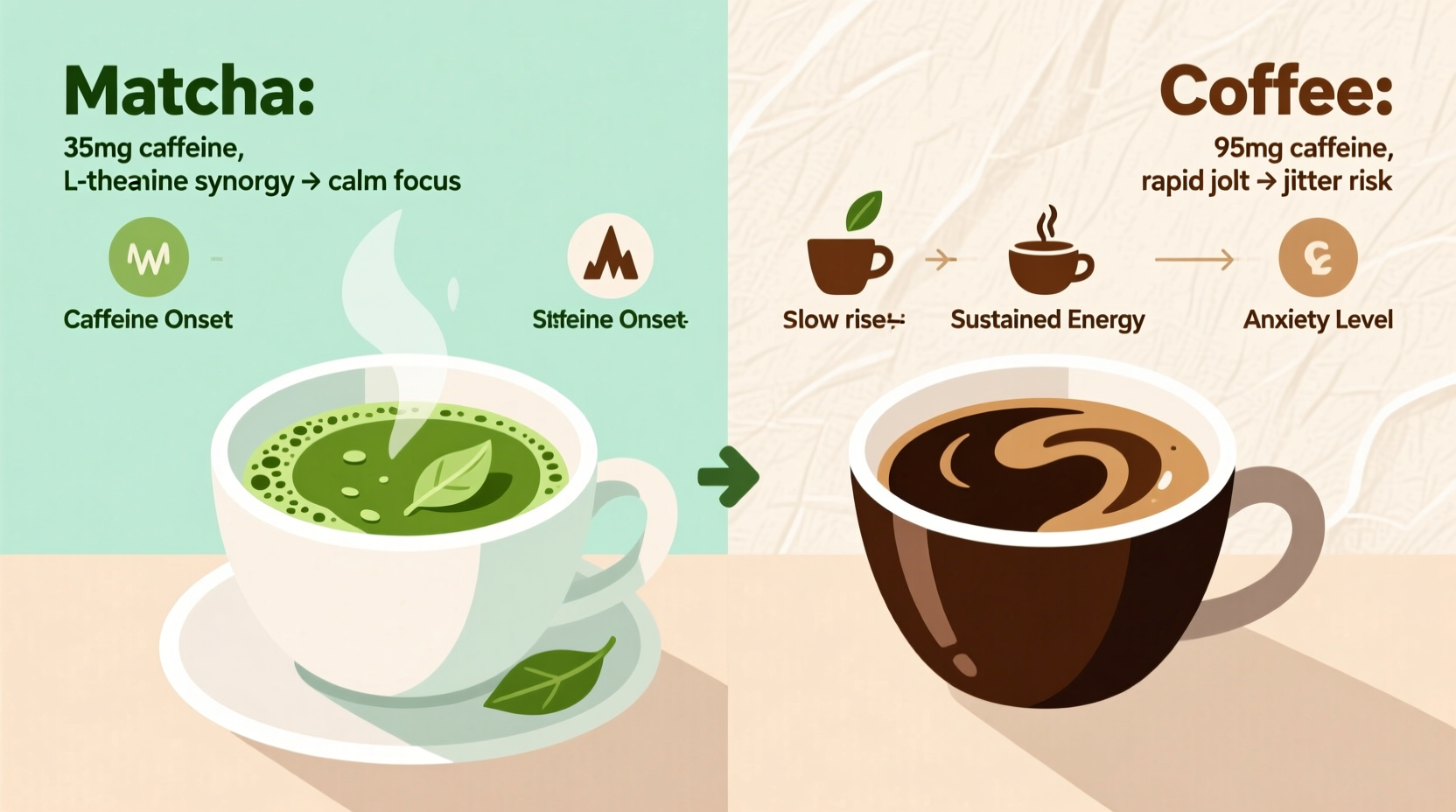
Matcha contains less caffeine per serving than a typical cup of coffee—about 30–70 mg compared to coffee’s 95–200 mg—but its effect often feels more balanced and enduring. This isn't just perception; it's rooted in biochemistry.
One of matcha’s defining features is its high concentration of L-theanine, an amino acid found almost exclusively in tea plants. L-theanine promotes relaxation without drowsiness by increasing alpha brain wave activity, which is associated with a state of calm alertness. When combined with caffeine, L-theanine counteracts the jittery side effects typically caused by stimulants.
Studies have shown that the combination of L-theanine and caffeine improves attention, reaction time, and cognitive performance—without increasing subjective feelings of tension. Unlike coffee, which delivers a sudden spike followed by a potential crash, matcha provides a gradual rise in energy that can last up to six hours, thanks to slower caffeine absorption and the modulating effect of L-theanine.
Tip: For maximum calming benefits, opt for ceremonial-grade matcha, which contains higher levels of L-theanine due to shade-growing practices before harvest.Coffee’s Rapid Kick and Its Drawbacks for Anxious Minds
Coffee delivers caffeine quickly, primarily because it’s consumed as a brewed liquid with minimal binding compounds. This rapid absorption leads to a sharp increase in blood caffeine levels within 15–45 minutes. For many, this results in immediate alertness—sometimes too much so.
The fast onset of stimulation can overactivate the sympathetic nervous system, leading to physical symptoms like increased heart rate, muscle tension, and sweating. Psychologically, this mimics the early stages of anxiety, making it difficult for sensitive individuals to distinguish between caffeine-induced arousal and genuine anxious thoughts.
Additionally, coffee lacks natural calming agents like L-theanine. While some specialty beans may contain trace amounts of other compounds, they don’t counteract caffeine’s edge the way matcha does. As a result, many regular coffee drinkers report needing sugar, cream, or food to “buffer” the harshness of their morning cup.
Another factor is acidity. Coffee is highly acidic, which can irritate the gut lining and exacerbate anxiety through the gut-brain axis. Chronic gastrointestinal discomfort has been linked to heightened anxiety levels, meaning that even indirect effects of coffee consumption may contribute to mental unease.
Direct Comparison: Matcha vs Coffee for Anxiety
| Feature | Matcha | Coffee |
|---|---|---|
| Average Caffeine (per 8 oz) | 30–70 mg | 95–200 mg |
| Onset of Energy | Gradual (30–60 min) | Rapid (15–45 min) |
| Duration of Effect | 4–6 hours | 2–4 hours |
| L-Theanine Content | High (5–20 mg) | Negligible |
| Crash Risk | Low | Moderate to High |
| Gut Irritation Potential | Low (alkaline) | High (acidic) |
| Anxiety Trigger Risk | Low | High in sensitive individuals |
This comparison highlights why matcha is increasingly recommended by functional medicine practitioners for clients managing anxiety, ADHD, or adrenal fatigue. It offers a middle path between sedation and overstimulation—one that supports mental clarity without emotional volatility.
Real-Life Example: A Shift from Coffee to Matcha
Sarah, a 34-year-old project manager in Toronto, had relied on two strong coffees each morning to power through her workday. Over time, she began noticing that her afternoon meetings were plagued by shakiness, difficulty concentrating, and unexplained irritability. After consulting with a nutritionist, she decided to replace her morning espresso with ceremonial-grade matcha.
Within a week, Sarah reported feeling “more awake but less wired.” She no longer needed mid-morning snacks to stabilize her mood, and her afternoon focus improved significantly. Most notably, her nighttime anxiety—which had previously disrupted her sleep—began to subside. “It’s like I finally found a caffeine source that works with my brain instead of against it,” she said.
Her experience reflects a growing trend: professionals and creatives alike are turning to matcha not as a fad, but as a functional alternative that aligns better with long-term mental resilience.
How to Make the Switch: A Step-by-Step Guide
If you’re considering replacing coffee with matcha—or simply want to test its effects on your anxiety—follow this structured approach to ensure a smooth transition:
- Start with ceremonial-grade matcha. Culinary-grade powders may contain fillers or lower nutrient levels. Look for vibrant green color and origin from Japan (Uji or Nishio regions).
- Begin with half a serving (½ tsp) in the morning. Mix with 6–8 oz of hot (not boiling) water and whisk until frothy. Monitor your response for 90 minutes.
- Gradually increase to a full serving (1 tsp) if well-tolerated. Avoid adding sugar or dairy initially to assess pure effects.
- Track your symptoms daily. Note changes in energy, mood, focus, and anxiety using a journal or app.
- Replace one coffee per day with matcha. Do this for at least two weeks before deciding on a full switch.
- Listen to your body. If you feel overly stimulated, reduce dosage or shift to a decaf green tea.
Frequently Asked Questions
Can matcha still cause anxiety?
While matcha is generally gentler than coffee, it still contains caffeine. Individuals with severe caffeine sensitivity or diagnosed anxiety disorders should start with very small doses. In rare cases, excessive intake (over 2 servings) may lead to mild jitteriness, though the presence of L-theanine makes this less likely.
Is decaf coffee a better option for anxiety than regular coffee?
Decaf removes most caffeine but retains some acidity and bioactive compounds that may still affect digestion and nervous system sensitivity. For those seeking a warm ritual without stimulants, herbal teas or roasted grain beverages might be preferable. However, if you enjoy coffee flavor without the buzz, high-quality decaf can be a reasonable compromise.
Does brewing method affect matcha’s calming properties?
Yes. Using water that’s too hot (above 175°F / 80°C) can degrade L-theanine and create bitterness. Lower temperatures preserve the delicate amino acids and polyphenols responsible for matcha’s soothing effects. Additionally, traditional preparation with a bamboo whisk ensures optimal suspension of particles and enhanced bioavailability.
Actionable Checklist: Choosing Your Calmer Caffeine
- ☐ Assess your current caffeine tolerance and anxiety triggers
- ☐ Purchase ceremonial-grade matcha from a reputable brand
- ☐ Replace one daily coffee with matcha for 14 days
- ☐ Keep a symptom log tracking energy, focus, and mood shifts
- ☐ Avoid adding sugar or artificial sweeteners during trial period
- ☐ Consult a healthcare provider if you have heart conditions or take medications affected by caffeine
- ☐ Re-evaluate after two weeks: did anxiety decrease? Was focus sustained?
Final Thoughts: Matching Your Stimulant to Your Nervous System
The question isn’t whether caffeine is good or bad—it’s about finding the right form for your physiology and lifestyle. For those navigating anxiety, the goal isn’t to eliminate stimulation entirely, but to find a rhythm of alertness that doesn’t come at the cost of inner peace.
Matcha offers a compelling alternative: a clean, sustained lift grounded in centuries of tradition and supported by modern neuroscience. Its synergy of caffeine and L-theanine creates a state of “wakeful calm”—a balance many coffee drinkers never achieve. That doesn’t mean coffee must be abandoned altogether. Some thrive on its intensity, especially when paired with food or consumed later in the morning after cortisol naturally dips.
But if you’ve ever felt shaky after your second cup, struggled with afternoon crashes, or noticed your thoughts spiraling into worry after a latte, it may be time to reconsider your caffeine source. Small changes in how you fuel your mind can yield profound improvements in emotional stability and cognitive endurance.
💬 Have you tried switching from coffee to matcha for anxiety? Share your experience in the comments—your story could help someone find their calmer caffeine path.








