For decades, the simple manual toothbrush has been the cornerstone of daily oral hygiene. But with the rise of electric models—complete with oscillating heads, timers, and Bluetooth connectivity—many people are asking: Is upgrading worth it? Does an electric toothbrush actually deliver a superior clean compared to its traditional counterpart? The answer isn’t as straightforward as marketing campaigns suggest. While electric brushes offer technological advantages, manual models remain effective when used correctly. Understanding the science, user behavior, and real-world outcomes is key to making an informed decision about what works best for your mouth.
The Science Behind Plaque Removal
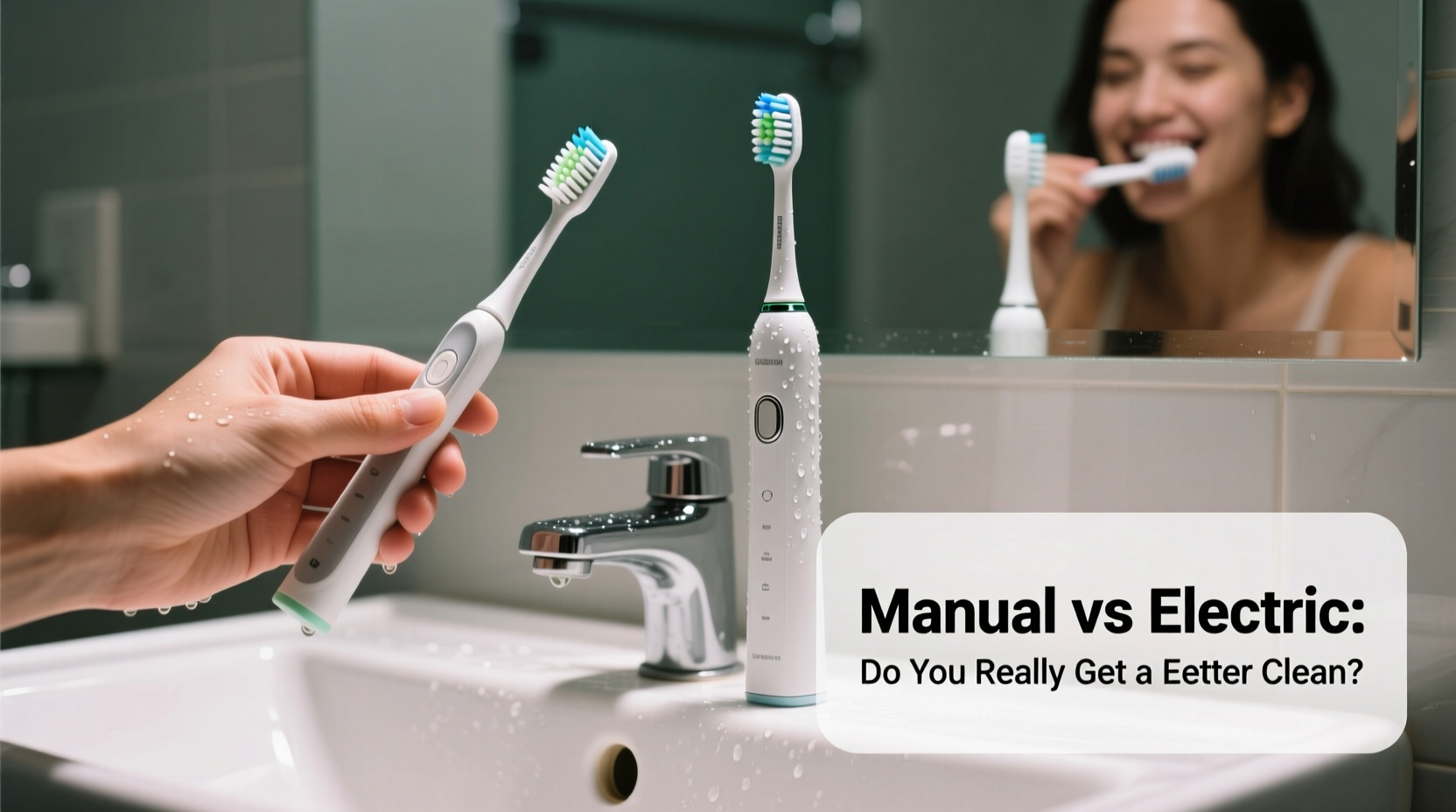
At the core of any brushing debate is plaque—the sticky biofilm of bacteria that accumulates on teeth and along the gumline. If not removed regularly, plaque hardens into tartar, leading to gingivitis, cavities, and eventual periodontal disease. Both manual and electric toothbrushes are designed to disrupt and remove this buildup, but they do so in different ways.
Manual toothbrushes rely entirely on user technique. The effectiveness depends on brushing angle (ideally 45 degrees toward the gums), stroke pattern (short back-and-forth or circular motions), pressure applied, and duration. In contrast, electric toothbrushes automate motion. Oscillating-rotating models rotate in one direction and then reverse, while sonic brushes vibrate at high frequencies (often over 30,000 strokes per minute), creating fluid dynamics that can dislodge plaque beyond direct bristle contact.
A 2014 Cochrane review analyzing over 50 clinical trials found that electric toothbrushes, particularly oscillating-rotating types, reduced plaque by 21% and gingivitis by 11% more than manual brushes after three months of use. These improvements were statistically significant, though modest in absolute terms. The study concluded that electric brushes offer a \"small but consistent\" advantage in long-term oral health outcomes.
Tip: No matter which brush you use, two minutes twice a day with proper technique is non-negotiable for plaque control.Real-World Performance: Technique vs. Technology
In theory, both tools can be equally effective. In practice, human behavior tilts the balance. Most adults brush for less than 60 seconds—far below the recommended two minutes. Many apply excessive pressure, risking enamel wear and gum recession. Others miss critical areas like the back molars or inner tooth surfaces.
Electric toothbrushes address several of these behavioral shortcomings. Built-in timers ensure users brush for the full duration. Pressure sensors alert when too much force is applied. The automated motion reduces reliance on perfect hand movements, making it easier for children, older adults, or those with limited dexterity to achieve a thorough clean.
However, technology doesn't eliminate poor habits. Some users still rush through brushing, turn off the timer, or fail to guide the brush head systematically across all tooth surfaces. An electric brush won’t compensate for skipping half the mouth.
“Even the most advanced electric toothbrush is only as good as the person holding it. Consistency and coverage matter more than vibrations per minute.” — Dr. Lena Patel, Clinical Dentist and Oral Health Educator
Comparative Analysis: Features, Costs, and Practicality
To make an informed choice, consider functionality, cost, convenience, and individual needs. The following table compares key aspects of manual and electric toothbrushes:
| Feature | Manual Toothbrush | Electric Toothbrush |
|---|---|---|
| Average Cost | $1–$5 per brush | $30–$200+ (brush + replacement heads) |
| Motion Control | Depends on user technique | Automated oscillation or vibration |
| Timer | Rare (some smart versions available) | Standard (quad-pacer and 2-minute) |
| Pressure Feedback | None | Available on mid-to-high-end models |
| Battery/Lifespan | N/A (no power source) | Rechargeable (weeks per charge); heads replaced every 3 months |
| Portability | Highly portable, no charging needed | Bulkier; requires charger/travel case |
| Best For | Budget-conscious users, travelers, kids learning to brush | People with arthritis, braces, or difficulty maintaining technique |
The data shows electric toothbrushes outperform manual ones in controlled settings, but real-life benefits depend heavily on personal habits. For someone disciplined with time, pressure, and coverage, a soft-bristled manual brush can be just as effective. For others, the automation and feedback features of electric models provide meaningful support.
Case Study: Two Siblings, Two Brushing Styles
Consider the example of Sarah and James, siblings in their late 20s with similar diets and dental histories. Sarah uses a $3 manual toothbrush and brushes for about 45 seconds each morning, often skipping nights. She applies heavy pressure, especially on her lower front teeth. During her biannual cleaning, her hygienist notes early signs of gum recession and moderate plaque near the gumline.
James uses a mid-range electric toothbrush with a pressure sensor and timer. He follows the quad-pacer function, spending 30 seconds in each quadrant. Though he occasionally forgets to replace the head every three months, his brushing routine is consistent. His dental checkups show minimal plaque and healthy gums.
Their dentist points out that James’s brush isn’t inherently “better”—but its design supports better habits. When Sarah switches to an electric model and commits to using the timer, her next exam reveals noticeable improvement in gum health and plaque reduction. The tool didn’t fix everything; it enabled consistency.
Expert Recommendations and Usage Tips
Dental professionals agree: the best toothbrush is the one you’ll use properly and consistently. However, certain situations favor one type over the other.
- Choose an electric toothbrush if: You have limited hand mobility, wear braces, tend to brush too hard, or struggle with timing.
- Stick with a manual brush if: You’re on a tight budget, travel frequently, or prefer simplicity without batteries or charging.
Step-by-Step Guide to Maximizing Your Brush’s Effectiveness
- Position the brush at a 45-degree angle to the gumline to clean both tooth surface and crevice where plaque accumulates.
- Use gentle pressure—let the bristles do the work. Scrubbing too hard damages gums and enamel.
- Divide your mouth into four quadrants (upper right, upper left, lower right, lower left). Spend 30 seconds on each for a full two minutes.
- Focus on all surfaces: outer, inner, and chewing. Don’t neglect the backs of front teeth or molars.
- Finish with a tongue sweep to reduce bacteria and freshen breath.
- Rinse thoroughly and store upright to air-dry, minimizing bacterial growth.
Checklist: Choosing the Right Brush for You
- ☐ Assess your current brushing habits—do you rush, press too hard, or miss spots?
- ☐ Consider physical limitations (e.g., arthritis, injury) that affect manual dexterity.
- ☐ Set a budget—include replacement heads for electric models (typically $10–$30 every 3 months).
- ☐ Test brushes in-store or via trial versions if possible—comfort matters.
- ☐ Look for the ADA Seal of Acceptance on either type to ensure safety and efficacy.
Frequently Asked Questions
Can a manual toothbrush be as effective as an electric one?
Yes—if used correctly. Studies show that with proper technique, duration, and frequency, a manual toothbrush can achieve comparable plaque removal. However, most people don’t brush optimally, which is why electric models often yield better average results.
Do electric toothbrushes damage enamel or gums?
Not when used properly. High-quality electric brushes are designed with soft bristles and safety features like pressure sensors. However, aggressive sideways scrubbing—even with an electric brush—can cause gum recession and enamel abrasion over time.
Are expensive electric toothbrushes worth the price?
Not necessarily. Mid-range models ($50–$100) with oscillating or sonic action, a timer, and pressure feedback offer most benefits. Premium features like app connectivity or multiple modes add convenience but don’t significantly improve cleaning performance for most users.
Final Verdict: It’s Not Just About the Tool—It’s About How You Use It
The debate between manual and electric toothbrushes ultimately comes down to personal preference, lifestyle, and discipline. Electric models offer measurable advantages in plaque reduction and habit formation, especially for individuals prone to inconsistency or physical challenges. Their built-in timers, motion assistance, and feedback systems act as coaching tools, guiding users toward better routines.
Yet, a $3 manual toothbrush in the hands of someone who brushes mindfully for two minutes twice a day—with proper angle, light pressure, and full coverage—can outperform a neglected electric model. The tool amplifies behavior; it doesn’t replace it.
Instead of focusing solely on technology, prioritize consistency, technique, and follow-through. Whether you choose manual or electric, pair your brush with daily flossing and regular dental visits. Upgrade if it helps you maintain better habits—but remember, the most advanced brush in the world won’t help if it sits dry in the holder.
💬 What’s your brushing routine? Have you switched from manual to electric—or vice versa? Share your experience and tips with others looking to improve their oral care!








