Skincare has evolved from a basic hygiene practice into a sophisticated, culture-driven ritual. Nowhere is this more evident than in the growing global fascination with Korean skincare, particularly its famed 10-step routine. While Western skincare often prioritizes speed and treatment of visible issues, Korean skincare emphasizes prevention, layering, and long-term skin health. This contrast has sparked widespread interest — and debate — about which approach works better. But to understand the real appeal of the 10-step routine, we must look beyond the steps themselves and examine the philosophy, ingredients, and cultural mindset that fuel its popularity.
The Core Philosophy: Prevention vs Correction
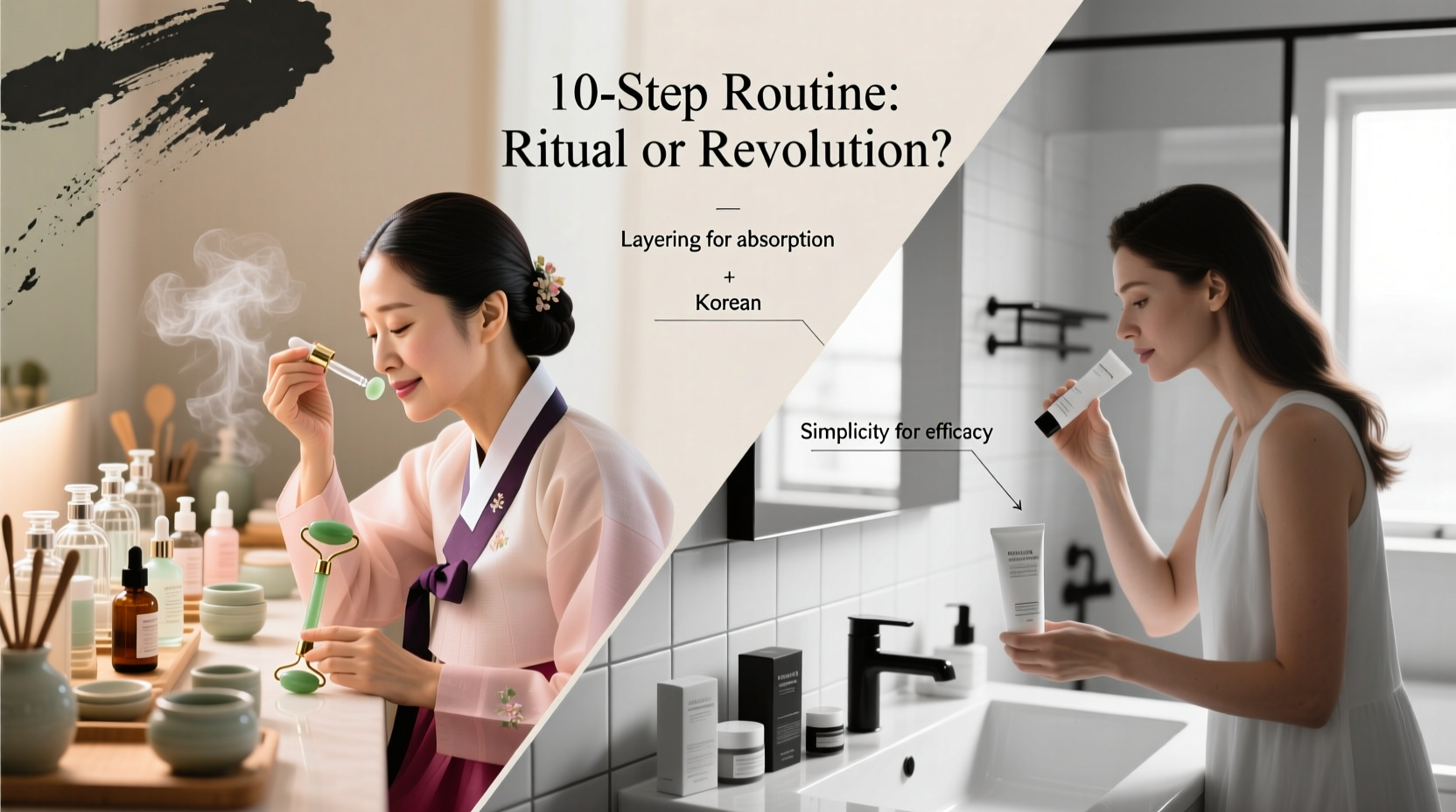
At the heart of the divide between Korean and Western skincare lies a fundamental difference in philosophy. Western routines typically focus on correction — addressing concerns like acne, wrinkles, or hyperpigmentation after they appear. Products are often potent, fast-acting, and centered around active ingredients such as retinoids, salicylic acid, and benzoyl peroxide. The goal is visible results, sometimes at the expense of irritation or compromised skin barriers.
In contrast, Korean skincare is rooted in the principle of prevention. The idea is simple: invest time and care daily to maintain healthy skin so problems never arise. This proactive approach values consistency over intensity. Rather than aggressively attacking issues, Korean skincare nurtures the skin barrier, promotes hydration, and supports natural renewal processes. It’s less about quick fixes and more about cultivating resilience over months and years.
“Korean skincare isn’t about erasing flaws overnight. It’s about creating an environment where your skin can thrive naturally.” — Dr. Hye-jin Park, Dermatologist at Seoul Skin Research Institute
This preventive mindset explains the layered nature of the 10-step routine. Each product serves a specific, gentle purpose, building upon the last to deliver cumulative benefits. Instead of relying on one heavy-duty serum, Koreans use multiple lightweight formulas that work synergistically. The result? Skin that looks radiant not because damage was masked, but because it was never allowed to occur in the first place.
Breaking Down the 10-Step Routine: More Than Just Steps
The 10-step Korean skincare routine is often misunderstood as a rigid checklist. In reality, it's a flexible framework designed to adapt to individual needs and skin types. Not everyone follows all 10 steps every day; many simplify based on lifestyle, season, or skin condition. However, understanding each stage reveals the meticulous attention to detail embedded in Korean beauty culture.
- Oil Cleanser – Removes sunscreen, makeup, and sebum without stripping the skin.
- Water-Based Cleanser – Clears away sweat and residual impurities for a deep clean.
- Exfoliator (2–3 times weekly) – Gently removes dead skin cells to improve texture and absorption.
- Toner – Rebalances pH and preps skin for subsequent layers.
- Essence – Delivers fermentation-based nutrients to boost cell turnover.
- Serums & Ampoules – Target specific concerns like brightening, firming, or hydration.
- Sheet Mask (1–3 times weekly) – Provides intensive hydration and nourishment.
- Eye Cream – Addresses delicate under-eye area with lightweight, targeted formulas.
- Moisturizer – Seals in hydration and strengthens the skin barrier. <10> Sunscreen (AM only) – The non-negotiable final step to prevent UV damage.
What makes this routine stand out isn’t just the number of products, but the order and intention behind them. Layering begins with the thinnest textures and progresses to thicker ones, ensuring optimal penetration. Ingredients are carefully selected to complement each other, avoiding conflict (e.g., pairing vitamin C with niacinamide was once discouraged, though modern formulations have resolved this). The emphasis on double cleansing alone reflects a deeper respect for skin integrity — removing pollutants thoroughly while maintaining moisture balance.
Korean vs Western Skincare: A Comparative Overview
To fully appreciate the rise of Korean skincare, it helps to compare key aspects side by side. The table below outlines major differences in philosophy, formulation, and user experience.
| Aspect | Korean Skincare | Western Skincare |
|---|---|---|
| Primary Goal | Prevention and maintenance | Correction of existing issues |
| Texture Focus | Lightweight, fast-absorbing, hydrating | Thicker creams, potent actives |
| Active Ingredients | Snail mucin, rice extract, green tea, centella asiatica | Retinol, AHAs/BHAs, vitamin C, hyaluronic acid |
| Routine Length | Multi-step, layered (5–10 steps) | Streamlined (3–5 steps) |
| Cultural Emphasis | Ritual, self-care, long-term glow | Efficiency, clinical results, anti-aging |
| Packaging & Experience | Aesthetic, innovative, fun (e.g., cushion compacts) | Minimalist, science-focused, clinical |
This comparison highlights why the 10-step routine resonates with so many people — especially those disillusioned with harsh treatments that promise results but cause redness, dryness, or sensitivity. Korean skincare offers a gentler alternative, one that treats the skin as a living ecosystem rather than a problem to be solved.
Why the 10-Step Routine Went Global
The viral spread of the 10-step Korean skincare routine didn’t happen by accident. Several factors contributed to its international success:
- Social Media Influence: Platforms like Instagram, YouTube, and TikTok showcased glowing transformations, often attributing them to Korean methods. Beauty influencers demonstrated their elaborate routines, making the process aspirational and accessible.
- Focus on Glass Skin: The pursuit of “glass skin” — translucent, poreless, dewy complexion — became a global beauty ideal. This look, difficult to achieve with Western-heavy actives alone, aligned perfectly with Korean layering techniques.
- Innovation in Formulation: Korean brands pioneered textures like gel-creams, essences, and sleeping masks — products that felt luxurious and effective without being greasy or irritating.
- Accessibility and Affordability: Many K-beauty products are priced lower than high-end Western counterparts, making experimentation affordable. Drugstore favorites like COSRX, The Ordinary (inspired by K-beauty), and Innisfree gained cult followings.
- Cultural Appeal: The ritualistic nature of the routine tapped into a growing desire for mindfulness and self-care, especially among younger consumers seeking balance in fast-paced lives.
“When I started the 10-step routine, I wasn’t just trying to fix my acne — I was reclaiming a moment of peace in my day. That shift in mindset changed everything.” — Lina Kim, Beauty Blogger and K-Beauty Advocate
Mini Case Study: From Acne-Prone to Balanced Skin
Consider the case of Daniel, a 28-year-old graphic designer in London. For years, he struggled with persistent breakouts and redness. His Western skincare routine included strong benzoyl peroxide washes and retinol creams. While his acne cleared temporarily, his skin became chronically dry and sensitive.
After researching alternatives, Daniel adopted a simplified 7-step Korean-inspired routine: oil cleanse, water cleanse, hydrating toner, mild exfoliating pad (2x/week), snail mucin essence, ceramide moisturizer, and daily SPF. Within three months, his skin stabilized. Breakouts decreased, hydration improved, and his overall texture smoothed. He credits the change not just to the products, but to the philosophy — treating his skin gently instead of fighting against it.
Building Your Own Smart Routine: A Practical Checklist
You don’t need 10 products to benefit from Korean skincare principles. What matters is consistency, compatibility, and care. Use this checklist to build a personalized, effective regimen:
- ✅ Start with double cleansing if you wear makeup or sunscreen.
- ✅ Choose alcohol-free toners that support hydration, not strip skin.
- ✅ Incorporate an essence — even one application can enhance absorption of later products.
- ✅ Use sheet masks weekly for a hydration boost, especially in dry seasons.
- ✅ Never skip sunscreen — it’s the ultimate preventive step.
- ✅ Patch test new products and introduce one at a time.
- ✅ Listen to your skin: reduce steps when stressed, tired, or experiencing sensitivity.
Frequently Asked Questions
Is the 10-step routine suitable for oily or acne-prone skin?
Absolutely. Many steps involve lightweight, non-comedogenic formulas designed to regulate sebum without clogging pores. Ingredients like tea tree, willow bark, and low-concentration BHA are common in Korean products for oily skin. The key is choosing the right variants — for example, a gel moisturizer instead of a cream.
Can I combine Korean and Western skincare?
Yes, and many dermatologists recommend it. You can use Korean hydrating layers (toner, essence) followed by a Western treatment serum (like vitamin C or retinol). Just be mindful of ingredient interactions — avoid mixing strong acids with physical scrubs, and always follow with moisturizer and SPF.
Does the 10-step routine really work, or is it just hype?
It works when applied thoughtfully. The routine isn’t magic — it’s a system built on consistent hydration, protection, and gentle care. Results take weeks or months, not days. If you’re looking for instant fixes, it may feel slow. But for long-term skin health, its effectiveness is well-documented by both users and dermatologists.
Final Thoughts: Beyond the Hype, Toward Sustainable Care
The popularity of the 10-step Korean skincare routine stems from more than trendiness. It represents a cultural shift toward holistic, sustainable beauty — one that values patience, education, and self-respect. While Western skincare excels in targeted treatments and scientific innovation, Korean skincare reminds us that skin thrives on balance, not bombardment.
The true lesson isn’t about following 10 exact steps. It’s about rethinking our relationship with skincare: from reactive to proactive, from aggressive to nurturing. Whether you adopt all ten steps or just two, the principles of double cleansing, hydration, and daily sun protection can transform not just your complexion, but your entire approach to wellness.
💬 Ready to rethink your routine? Start with one Korean skincare principle this week — perhaps double cleansing or adding an essence — and observe how your skin responds. Share your journey in the comments and inspire others to embrace mindful beauty.