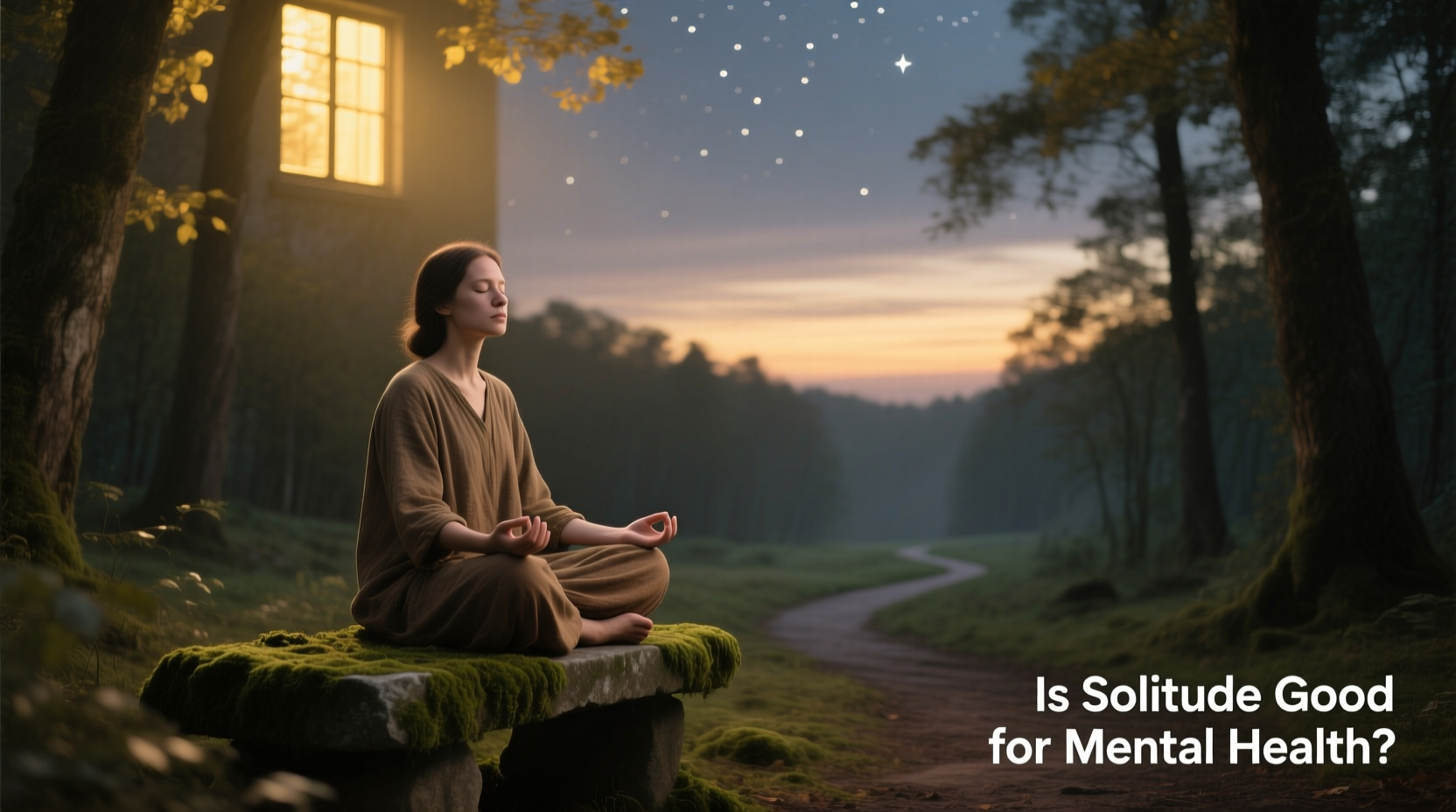
In an age defined by constant connectivity, notifications, and social obligations, the idea of being alone can feel uncomfortable—even alarming. Yet, a growing body of psychological research suggests that solitude, when chosen deliberately and practiced with awareness, can be a powerful tool for mental well-being. Far from loneliness or isolation, intentional solitude is a conscious decision to spend time alone for reflection, restoration, and personal growth. When approached with purpose, solitude doesn’t signal disconnection; it fosters deeper connection—with oneself.
The key distinction lies in intentionality. Solitude forced by circumstance—such as social withdrawal due to depression or anxiety—can worsen mental health. But solitude sought out with mindfulness offers measurable psychological benefits. It creates space for emotional processing, reduces cognitive overload, and supports identity formation. In this article, we explore how intentional solitude impacts mental health, the science behind its benefits, and practical ways to incorporate it into daily life without tipping into harmful isolation.
The Psychological Difference Between Loneliness and Solitude
Loneliness and solitude are often conflated, but they represent fundamentally different experiences. Loneliness is a negative emotional state marked by a perceived lack of meaningful connection. It’s involuntary and distressing, frequently linked to increased risks of depression, cardiovascular issues, and cognitive decline.
Solitude, in contrast, is a neutral or positive state of being alone by choice. It’s not defined by absence, but by presence—the presence of self. Psychologists refer to this as “positive solitude,” where individuals use alone time to recharge, reflect, or engage in creative pursuits. Research published in the journal *Personality and Individual Differences* found that people who enjoy solitude and view it positively report higher levels of autonomy, self-acceptance, and overall life satisfaction.
“Solitude is not about escaping others, but about finding yourself. When chosen freely, it becomes a sanctuary for the mind.” — Dr. Robert Coplan, developmental psychologist and author of *Solitude: A Return to the Self*
This shift in mindset—from solitude as deprivation to solitude as nourishment—is essential. The emotional outcome depends less on being alone and more on why you’re alone and how you experience that time.
Mental Health Benefits of Intentional Solitude
When practiced mindfully, solitude offers several scientifically supported benefits for mental health:
- Enhanced self-awareness: Without external input, the mind turns inward. This introspection allows individuals to better understand their emotions, values, and motivations.
- Reduced stress and mental fatigue: Constant stimulation taxes the brain’s executive functions. Solitude provides a cognitive reset, lowering cortisol levels and improving emotional regulation.
- Improved focus and creativity: Many artists, writers, and innovators credit their breakthroughs to periods of quiet reflection. Solitude minimizes distractions, enabling deep work and imaginative thinking.
- Greater emotional resilience: Time alone allows for processing difficult emotions without pressure to perform socially. This leads to healthier coping mechanisms and reduced reactivity.
- Stronger sense of identity: Away from social roles and expectations, individuals can reconnect with core beliefs and desires, fostering authenticity.
A 2020 study from the University of Rochester found that participants who spent just 15 minutes daily in intentional solitude reported lower anxiety levels and improved mood over a two-week period. Notably, the benefit was strongest when solitude was framed as a self-care practice rather than an obligation or punishment.
Tip: Start small. Even five minutes of intentional solitude—sitting quietly with your thoughts, walking without headphones—can initiate mental recalibration.How to Practice Solitude Intentionally: A Step-by-Step Guide
Intentional solitude isn’t simply being alone—it’s being alone with purpose. Here’s a practical timeline to integrate it into your routine:
- Define your intention (Day 1–3): Ask yourself why you want solitude. Is it for relaxation? Reflection? Creative inspiration? Clarifying your goal shapes how you structure the time.
- Set boundaries (Day 4–5): Inform household members or coworkers of your need for uninterrupted time. Use signals like closing a door or wearing headphones (even if off) to indicate privacy.
- Create a conducive environment (Ongoing): Choose a quiet, comfortable space. Minimize digital distractions—turn off notifications or use apps that block interruptions.
- Begin with short sessions (Week 1): Start with 10–15 minutes daily. Use this time for journaling, meditation, reading, or simply sitting in silence.
- Reflect and adjust (Weekly): After each session, note how you felt before and after. Did your mood improve? Were you restless? Adjust duration or activity based on feedback.
- Expand gradually (Week 3+): Increase time as comfort grows. Consider longer solitary walks, weekend retreats, or digital detox days.
The goal is not to eliminate social interaction, but to balance it with reflective stillness. Like physical exercise, mental solitude strengthens over time with consistent, moderate effort.
Common Pitfalls and How to Avoid Them
While beneficial, intentional solitude can backfire if misapplied. Below is a comparison of healthy practices versus warning signs:
| Healthy Solitude | Potentially Harmful Isolation |
|---|---|
| You look forward to alone time as renewal | You avoid others due to fear, shame, or low self-worth |
| You return to social interactions feeling refreshed | You feel increasingly disconnected or numb after being alone |
| You maintain regular relationships outside solitude | You withdraw from friends, family, or responsibilities |
| You use solitude for constructive activities (journaling, creating) | You ruminate on negative thoughts or past traumas |
| You set time limits and stick to them | You lose track of time and neglect basic needs |
If solitude begins to feel heavy, obsessive, or escapist, it may no longer serve mental health. In such cases, professional support can help distinguish between restorative solitude and avoidance behavior.
Real-Life Example: A Week of Intentional Solitude
Consider Maya, a 34-year-old project manager working remotely. Overwhelmed by back-to-back meetings and household demands, she felt emotionally drained and creatively stagnant. At her therapist’s suggestion, she committed to one week of intentional solitude.
Each morning, she woke 30 minutes earlier to sit on her balcony with tea, no devices. She journaled three times during the week, reflecting on work stress and personal goals. On Wednesday, she took a solo lunchtime walk in a nearby park, observing nature without distraction. By Friday, she noticed a shift: her irritability had decreased, and she proposed a new workflow idea during a team meeting—one she later described as “something I wouldn’t have seen through the noise before.”
Maya didn’t cut off relationships; she carved out space within them. Her experiment wasn’t about escaping life, but re-engaging with it more fully.
Expert Recommendations and Scientific Support
Clinical psychologists emphasize that solitude should complement, not replace, social connection. Dr. Netta Weinstein, a motivation and well-being researcher at the University of Reading, explains:
“Our studies show that people who value both autonomy and connection tend to have the highest well-being. Solitude supports autonomy—the sense that you’re acting in alignment with your true self.”
Neuroscientific evidence also supports this. Functional MRI scans reveal that during quiet wakefulness—often dismissed as “doing nothing”—the brain’s default mode network (DMN) activates. This network is involved in autobiographical memory, future planning, and understanding others’ perspectives. In other words, solitude isn’t mental inactivity; it’s integrative processing.
However, experts caution against romanticizing solitude. It’s not universally beneficial. Introverts may naturally seek it more, but extroverts can also benefit—if the practice feels voluntary and meaningful. The critical factor is internal attitude: solitude pursued with curiosity and care tends to uplift; solitude endured with dread can deepen distress.
Practical Checklist for Healthy Solitude
Use this checklist to ensure your solitude practice supports mental wellness:
- ☑ Define a clear purpose (e.g., reflection, rest, creativity)
- ☑ Schedule it like any important appointment
- ☑ Remove digital distractions (phone on silent or in another room)
- ☑ Choose a calming activity (meditation, sketching, walking)
- ☑ Limit duration to what feels sustainable (start small)
- ☑ Reflect afterward: How do I feel? Energized? Anxious? Calm?
- ☑ Maintain regular social contact outside solitude periods
- ☑ Reassess weekly: Is this helping me, or am I using it to avoid something?
Frequently Asked Questions
Can too much solitude be harmful?
Yes, if it becomes a pattern of avoidance or leads to social withdrawal. While short-term solitude is restorative, prolonged isolation without meaningful connection increases risks for depression and anxiety. Balance is key: solitude should enhance, not replace, relationships.
How is intentional solitude different from meditation?
Meditation is a structured practice focused on attention and awareness, often with specific techniques (e.g., breath focus). Solitude is broader—it’s the condition of being alone, which may include meditation but can also involve reading, writing, or walking. Both support mental health, but solitude emphasizes freedom from social demands, while meditation emphasizes mental training.
I feel anxious when I’m alone with my thoughts. Is solitude still right for me?
Initial discomfort is common, especially if you’re used to constant stimulation. Start with guided practices—like listening to a calming audio or journaling prompts—to ease into stillness. If anxiety persists, consider speaking with a therapist to explore underlying causes. Solitude shouldn’t feel punishing; it should evolve into a safe space.
Conclusion: Reclaiming Solitude as Self-Care
In a culture that often equates busyness with worth, choosing solitude can feel radical. Yet, the ability to be alone without unease is a hallmark of emotional maturity and mental resilience. When practiced intentionally, solitude is not a retreat from life—it’s a reconnection with it. It allows us to hear our inner voice beneath the noise, process emotions with clarity, and return to the world with renewed perspective.
The goal isn’t to become a hermit, but to cultivate a relationship with oneself that is as thoughtful and nurturing as any friendship. In doing so, we don’t isolate—we integrate. We become more present, authentic, and capable of meaningful connection because we are no longer outsourcing our sense of self to the opinions and rhythms of others.
🚀 Start today: Block 10 minutes in your calendar for intentional solitude. Use it to breathe, reflect, or simply be. Notice how you feel afterward. Small moments of stillness, repeated consistently, can transform your mental landscape.








