
Kombucha occupies a curious space at the intersection of wellness culture and regulatory scrutiny: a fermented tea lauded for gut health, yet quietly containing ethanol—a byproduct of yeast metabolism. This has led to persistent questions—not just among casual consumers, but also among healthcare workers, military personnel, commercial drivers, and individuals in court-mandated sobriety programs: Could drinking kombucha cause a positive result on an alcohol test? The short answer is: almost never under normal consumption patterns—but the full picture requires understanding fermentation science, testing methodology, legal thresholds, and real-world edge cases. This article cuts through the noise with evidence-based analysis, practical guidance, and authoritative context.
How Alcohol Forms in Kombucha—and Why It’s Inevitable
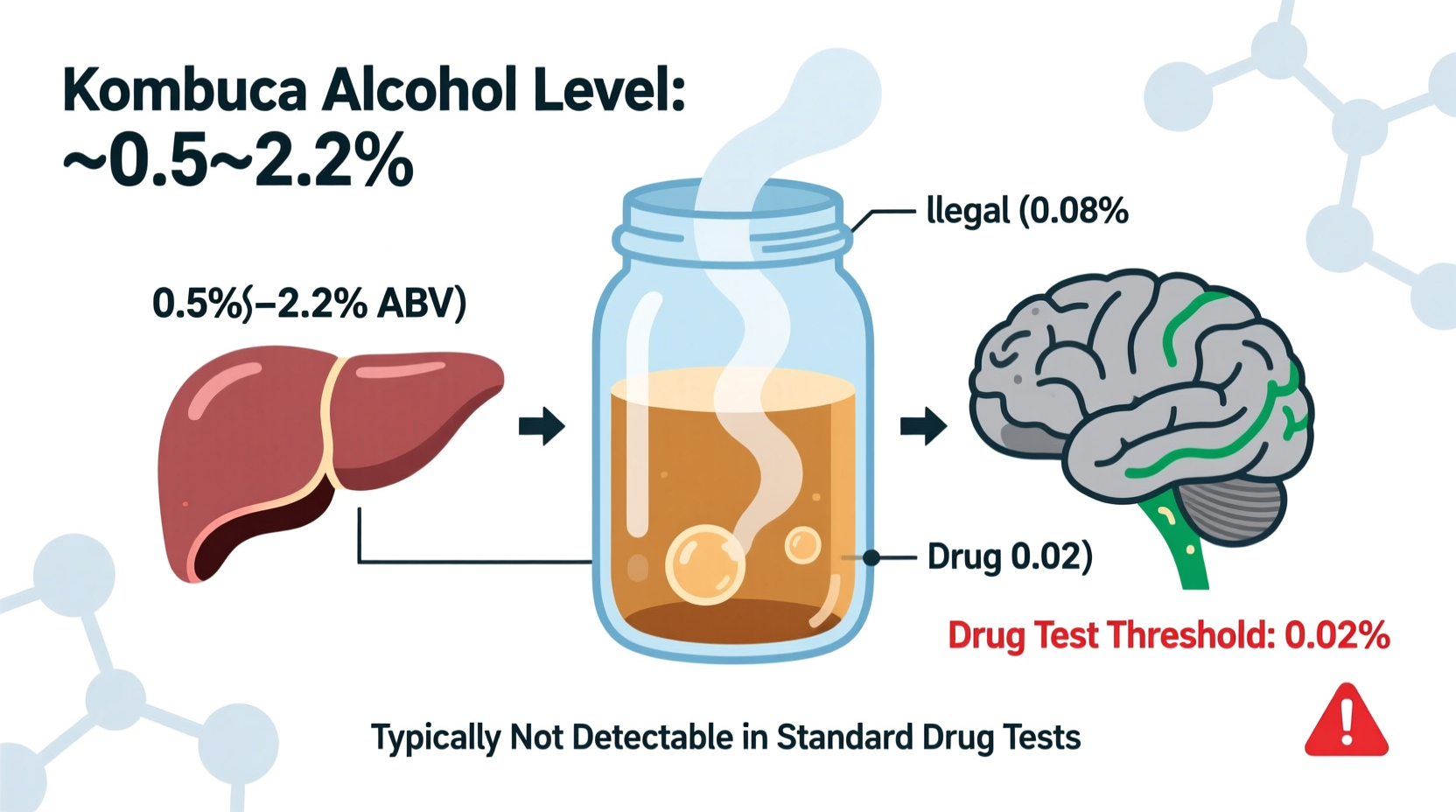
Kombucha is made by fermenting sweetened tea with a symbiotic culture of bacteria and yeast (SCOBY). During fermentation, yeast converts sugar into carbon dioxide and ethanol; bacteria then convert much of that ethanol into organic acids (acetic, gluconic, lactic), giving kombucha its signature tang. Because this process is biological—not industrial—it cannot be perfectly controlled. Even refrigeration slows but doesn’t halt microbial activity. As a result, all traditionally brewed kombucha contains measurable ethanol.
The U.S. Alcohol and Tobacco Tax and Trade Bureau (TTB) defines “non-alcoholic” beverages as those containing less than 0.5% alcohol by volume (ABV). Most commercially available kombuchas fall within 0.2–0.4% ABV when bottled. However, several variables can elevate levels:
- Extended shelf life: Unrefrigerated storage or prolonged time post-bottling allows continued fermentation.
- “Live” or unpasteurized batches: These retain active cultures and higher metabolic potential.
- Home brewing: Without precise temperature control, pH monitoring, or timely bottling, homebrewed kombucha regularly exceeds 0.5% ABV—and may reach 1.0–2.5% ABV in extreme cases.
- Flavor additions: Fruit juices or additional sugars introduced during secondary fermentation feed residual yeast, increasing ethanol yield.
Crucially, ethanol concentration does not correlate linearly with perceived “strength.” A 0.4% ABV kombucha contains roughly 1/10th the alcohol of a light beer (4.2% ABV) and less than 1/20th of wine (12% ABV). But testing sensitivity—and context—changes everything.
How Alcohol Testing Works—and What Triggers a Positive
Alcohol detection methods vary significantly in sensitivity, purpose, and cutoff thresholds. Understanding these distinctions is essential to assessing risk:
| Test Type | Detection Method | Typical Cutoff Level | Relevance to Kombucha |
|---|---|---|---|
| Breathalyzer (PBT) | Electrochemical fuel cell or semiconductor sensor | 0.02%–0.08% BAC (blood alcohol concentration) | Extremely unlikely to trigger—even after multiple servings. Requires acute, high-volume intake. |
| Urine EtG Test | Measures ethyl glucuronide (EtG), a direct metabolite of ethanol | 100 ng/mL (standard), 500 ng/mL (confirmatory) | Possible with heavy consumption (≥1 L of 0.5% ABV kombucha in 2 hours), especially with slow metabolism or dehydration. |
| Blood Alcohol Test | Gas chromatography (GC) | 0.02%–0.08% BAC | Virtually impossible via kombucha alone. Peak BAC from 355 mL (12 oz) of 0.4% ABV kombucha is ~0.003%—below detection limits. |
| Hair Follicle Test | Measures fatty acid ethyl esters (FAEEs) & EtG | 30 pg/mg FAEEs; 10 pg/mg EtG | No documented cases linked to kombucha. Requires chronic, repeated exposure over weeks/months. |
| Saliva (Oral Fluid) | Enzyme immunoassay or GC | 0.02% BAC | Transient presence possible immediately after drinking—but clears rapidly (<30 min). Not clinically meaningful. |
Note: EtG tests are the most sensitive—and therefore the only realistic concern for kombucha consumers. EtG remains detectable in urine for up to 80 hours after ethanol exposure, far longer than ethanol itself. But sensitivity comes with trade-offs: EtG can produce false positives from incidental exposures—hand sanitizer, mouthwash, cough syrup, or even fermented foods like ripe bananas or soy sauce.
Tip: If you’re subject to EtG testing (e.g., probation, workplace compliance), avoid kombucha entirely for 72 hours before your test—and disclose all fermented food/beverage intake to your testing supervisor.Real-World Evidence: When Kombucha *Did* Trigger Concern
In 2019, a registered nurse in Ohio faced disciplinary review after a routine workplace EtG screen returned positive (187 ng/mL). She consumed two 16-oz bottles of a popular brand of raw kombucha daily—reporting no other alcohol use. Her employer required retesting; a second sample, collected after 48 hours of abstaining from kombucha and using only ethanol-free hygiene products, came back negative (<50 ng/mL). Lab analysis of her usual kombucha batch revealed 0.48% ABV—just below the federal non-alcoholic threshold, but sufficient to generate detectable EtG in a habitual consumer with slower alcohol metabolism.
This case underscores three critical points:
- Individual metabolic variation matters: ALDH2 enzyme efficiency, hydration status, liver health, and fasting state all influence EtG production and clearance.
- Testing timing is decisive: EtG peaks in urine 5–12 hours after ingestion. A test administered shortly after kombucha consumption carries higher risk.
- Contextual disclosure prevents misinterpretation: Had the nurse proactively informed her employer about her kombucha habit—and provided product ABV documentation—the initial positive would likely have been dismissed as non-adverse.
Notably, no verified case exists of kombucha causing a positive result on a breathalyzer, blood test, or hair test in a healthy adult consuming standard servings. Regulatory agencies—including the Substance Abuse and Mental Health Services Administration (SAMHSA)—do not list kombucha as a known interferent in their clinical guidelines.
Expert Insight: What Toxicologists and Regulators Say
Dr. Lena Torres, board-certified toxicologist and Director of the Clinical Toxicology Laboratory at UCSF Medical Center, explains the physiological reality:
“The notion that kombucha poses a meaningful risk for alcohol testing failure is largely a myth perpetuated by misunderstanding of pharmacokinetics. Ethanol from kombucha is absorbed slowly, metabolized rapidly, and contributes negligibly to systemic exposure. For EtG to exceed 100 ng/mL, one would need to consume roughly 1.5 liters of 0.5% ABV kombucha within a 2-hour window—on an empty stomach—while being genetically predisposed to slower EtG elimination. That scenario is neither typical nor sustainable. Clinically, we see zero kombucha-related false positives in our lab’s 12-year dataset.”
Similarly, the TTB reaffirmed in its 2022 Compliance Bulletin that kombucha labeled “non-alcoholic” must contain ≤0.5% ABV at the time of bottling, and explicitly stated: “Consumption of compliant kombucha does not constitute alcohol use for regulatory or employment purposes.” The U.S. Department of Transportation (DOT) echoes this in Advisory Notice 2021-02: “Fermented non-alcoholic beverages are excluded from prohibited substances under Part 40 of DOT regulations.”
Practical Risk Mitigation: A Step-by-Step Guide
If your role, health status, or legal obligations require strict alcohol abstinence—or if you simply prefer caution—follow this evidence-informed protocol:
- Identify your kombucha’s ABV: Check the label. Reputable brands list ABV (e.g., GT’s Synergy lists 0.5%). If unlisted, contact the manufacturer or assume ≤0.5%.
- Calculate your intake window: Limit consumption to ≤12 oz per day, and avoid drinking within 12 hours of a scheduled test. Never consume kombucha on an empty stomach before testing.
- Choose pasteurized or shelf-stable options: These contain negligible live cultures and stable, low ABV (often <0.1%). Note: They may lack probiotic benefits.
- Hydrate strategically: Drink 250 mL water for every 12 oz kombucha consumed. Dilution reduces urinary EtG concentration without masking—simply lowering analytical signal.
- Document and disclose: Keep receipts, ingredient lists, and ABV statements. If tested, provide this information to the Medical Review Officer (MRO) before results are finalized.
FAQ: Addressing Common Concerns
Can kombucha make me feel drunk or impair my judgment?
No. The ethanol content in commercially compliant kombucha is physiologically insufficient to produce intoxication, sedation, or cognitive impairment—even when consumed in large volumes. A person would need to drink approximately 4–5 liters of 0.4% ABV kombucha in under an hour to approach the legal intoxication threshold (0.08% BAC)—a volume that would induce severe gastrointestinal distress long before any alcohol effect.
Do “alcohol-free” kombucha brands truly contain zero ethanol?
No product derived from yeast fermentation is 100% ethanol-free. “Alcohol-free” labeling (used in the EU and increasingly in the U.S.) means <0.05% ABV—achieved via vacuum filtration, centrifugation, or arrested fermentation. These versions pose effectively zero risk for any alcohol test, but flavor and effervescence may be reduced.
What if I’m in a court-ordered abstinence program?
Consult your probation officer or treatment provider before consuming kombucha. While federal guidelines exclude it from prohibited substances, individual jurisdictions or programs may impose stricter interpretations. When in doubt, choose certified 0.05% ABV products—or substitute with non-fermented alternatives like hibiscus tea or sparkling water with lemon.
Conclusion: Clarity, Confidence, and Control
Kombucha is not a stealth alcohol source—it’s a living food governed by microbiology, not malice. Its ethanol content reflects natural fermentation, not intoxicating intent. For the overwhelming majority of people, including those in safety-sensitive roles, responsible kombucha consumption poses no credible threat to alcohol test integrity. Yet awareness matters: knowing your product’s ABV, understanding test methodology, and applying simple mitigation steps transforms uncertainty into informed confidence. You don’t need to abandon a beverage you enjoy for its health properties—just engage with it knowledgeably. Read labels, ask questions, and advocate for transparency from producers and testers alike. Wellness includes both physical nourishment and mental clarity—and clarity starts with facts, not fear.
💬 Have you navigated kombucha and testing in your profession? Share your experience—what worked, what surprised you, and how you educated others. Your insight helps build a more informed, empowered community.








