
As the golden light of late afternoon fades earlier each day and a crispness settles into the morning air, your skin begins to send subtle signals. The humidity drops, the wind gains an edge, and the protective glow of summer tan starts to dull. These shifts aren’t just atmospheric—they’re biological. Your skin, constantly adapting to its environment, now faces drier air, reduced UV intensity, and fluctuating temperatures. Failing to adjust your skincare routine accordingly can lead to tightness, flakiness, irritation, or even breakouts as your complexion struggles to rebalance.
Transitioning your skincare from summer to autumn isn't about overhauling everything overnight—it’s about thoughtful recalibration. The habits that kept your skin matte and protected under intense sun may now be stripping it of essential moisture. Conversely, lightweight formulas that felt refreshing in August might prove insufficient by October. A smooth seasonal shift ensures resilience, radiance, and comfort through the cooler months ahead.
Understand Why Skin Changes with the Seasons
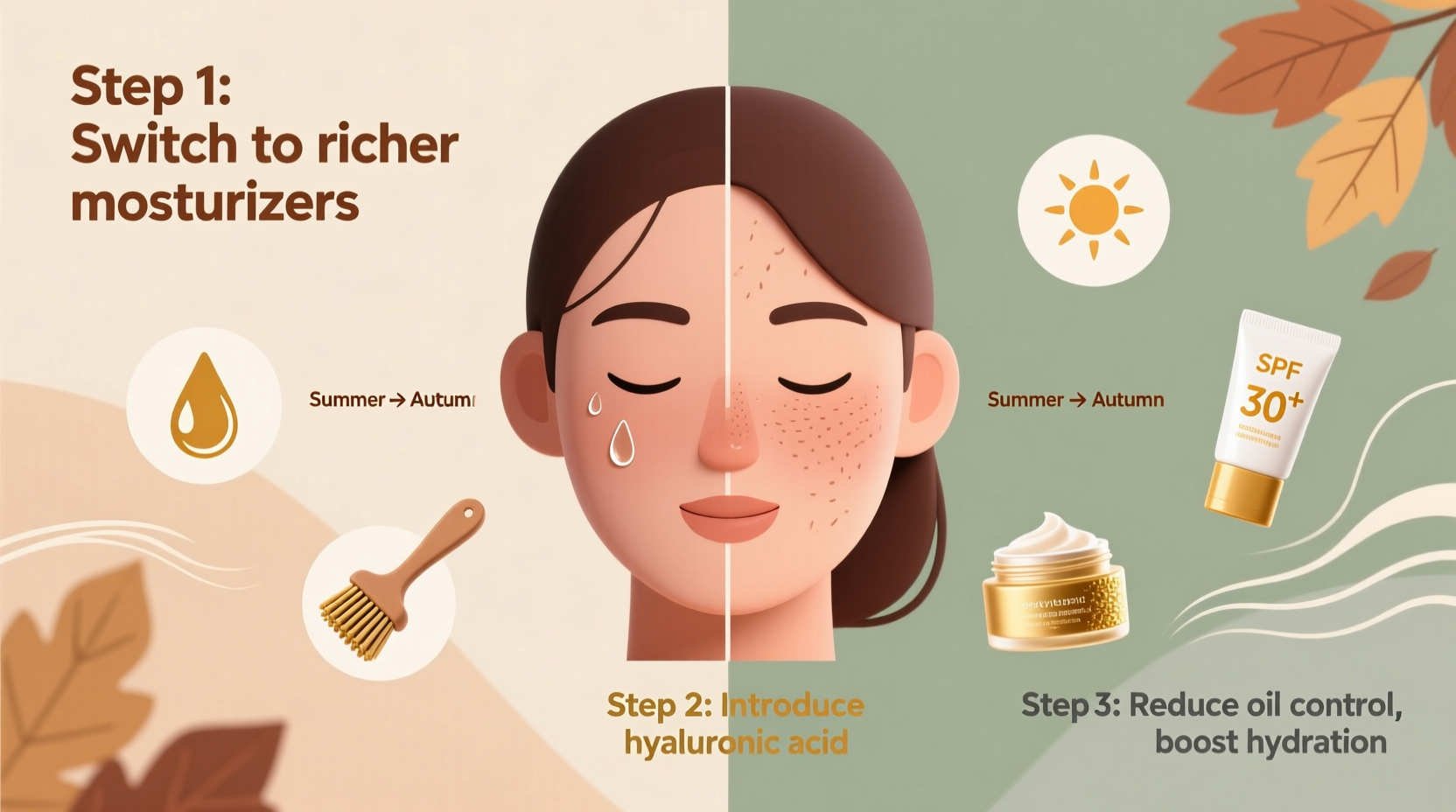
Skin is a dynamic organ influenced by external conditions. During summer, high heat and humidity increase sebum production, open pores, and accelerate sweat and sunscreen buildup. As a result, many adopt lighter moisturizers, gel cleansers, and rigorous exfoliation to manage oil and prevent clogged pores.
Autumn brings lower humidity—often below 40% indoors due to early heating use—which accelerates transepidermal water loss (TEWL). This means moisture escapes more easily from the skin’s surface, leading to dehydration. Additionally, cooler temperatures slow cellular turnover, which can make skin appear dull and rough if not properly supported. UV exposure remains significant in early fall, especially during midday, so sun protection should never be abandoned.
“Seasonal transitions are when the skin barrier is most vulnerable. A proactive approach prevents reactive issues like sensitivity and dryness.” — Dr. Lena Moreira, Board-Certified Dermatologist
The goal is not to abandon summer practices entirely but to assess what’s still serving your skin and what needs modification. Think of it as editing rather than replacing—a refinement process based on observation and environmental demands.
Key Adjustments for Autumn Skincare
Shifting gears doesn’t require a trip to the beauty counter. Start by evaluating your current regimen and identifying where adjustments will have the most impact.
1. Switch to a Gentler Cleanser
If you’ve been using foaming or gel-based cleansers all summer to combat oil, consider switching to a cream, milk, or balm formula. These options cleanse effectively without disrupting the lipid barrier. Harsh surfactants common in clarifying cleansers can strip natural oils, exacerbating dryness in drier climates.
Tip: Avoid hot water when cleansing—it can further compromise the skin barrier. Stick to lukewarm.2. Reintroduce or Upgrade Moisturization
Lightweight lotions and gels often lack the occlusive properties needed to seal in moisture when air becomes dry. Replace them gradually with richer creams containing ceramides, squalane, glycerin, or shea butter. Look for ingredients that both hydrate (attract water) and moisturize (prevent evaporation).
- Creams with hyaluronic acid deliver hydration while supporting plumpness.
- Occlusives like petrolatum or jojoba oil help lock in moisture overnight.
- Niacinamide strengthens the skin barrier and reduces redness caused by temperature swings.
3. Modify Exfoliation Frequency and Type
Chemical exfoliants like AHAs (glycolic and lactic acid) remain valuable in autumn for addressing post-summer dullness and uneven texture. However, reduce frequency from 3–4 times weekly to 1–2 times. Over-exfoliating in drier weather increases sensitivity and compromises barrier function.
Lactic acid is particularly well-suited for this season—it exfoliates gently while also acting as a humectant, drawing moisture into the skin. PHA (polyhydroxy acids) are another excellent option for sensitive types, offering mild resurfacing with added antioxidant benefits.
4. Continue Daily Sun Protection
UVB rays may weaken after summer, but UVA rays—the ones responsible for aging and deeper skin damage—remain constant year-round and penetrate clouds and glass. Skipping SPF because it’s cloudy or cool is one of the most common skincare missteps.
Opt for a broad-spectrum SPF 30 or higher every morning. If your summer sunscreen felt too heavy, switch to a moisturizer with built-in SPF or a lightweight fluid that layers well under makeup.
5. Integrate Facial Oils and Boosters
Facial oils were likely avoided in summer for fear of shine, but they become allies in autumn. They don’t add water but act as sealants, preventing moisture loss. Apply 2–3 drops after serums and before moisturizer for optimal absorption.
| Oil Type | Best For | Key Benefit |
|---|---|---|
| Squalane | All skin types, including oily | Non-comedogenic, mimics skin’s natural sebum |
| Jojoba Oil | Dry, sensitive, acne-prone | Balances sebum production, anti-inflammatory |
| Marula Oil | Mature, dehydrated skin | Rich in antioxidants and fatty acids |
Step-by-Step Transition Timeline
Rather than changing your entire routine at once, phase in new products over two to three weeks. This allows your skin to adapt without shock or irritation.
- Week 1: Begin by replacing your cleanser with a gentler alternative. Monitor how your skin feels in the morning—tightness indicates a need for more emollience.
- Week 2: Swap out your summer moisturizer for a cream-based formula. Introduce a facial oil at night, starting with every other day.
- Week 3: Reduce exfoliation frequency and consider switching to a milder acid like lactic or mandelic acid. Assess tone and texture for signs of over-drying.
- Ongoing: Maintain daily SPF application. Observe how indoor heating affects your skin and adjust hydration accordingly.
Common Mistakes to Avoid
Even with good intentions, missteps happen. Here are frequent errors people make during seasonal transitions:
- Over-moisturizing too quickly: Slathering on rich creams without assessing actual need can overwhelm combination skin and trigger congestion.
- Stopping sunscreen: Just because you're not at the beach doesn’t mean UV exposure stops.
- Layering too many active ingredients: Combining retinoids, strong acids, and vitamin C without spacing can cause irritation.
- Ignoring indoor climate: Heaters dry out air rapidly. Use a humidifier to maintain indoor humidity between 40–60%.
Mini Case Study: From Shiny to Smooth
Sophie, a 32-year-old graphic designer in Chicago, noticed her skin turning patchy and uncomfortable by mid-September. She had continued using her summer routine: a foaming cleanser, alcohol-heavy toner, gel moisturizer, and weekly clay masks. By early October, her cheeks were flaky, her T-zone was oddly oily yet tight, and her foundation started clinging to dry spots.
After consulting a dermatology nurse, she made gradual changes. She switched to a milky cleanser, discontinued the toner, introduced a ceramide-rich moisturizer, and began using a lactic acid serum twice a week. Within three weeks, her skin regained balance—no longer shiny in some areas and rough in others. Her key takeaway? “I thought oily skin didn’t need moisture. I was wrong. It needed the right kind.”
Checklist: Your Autumn Skincare Transition Plan
Use this checklist to ensure a seamless shift:
- ☐ Evaluate current products: Which feel drying or insufficient?
- ☐ Replace harsh cleanser with a hydrating alternative
- ☐ Upgrade moisturizer to a cream or balm texture
- ☐ Reduce exfoliation to 1–2 times per week
- ☐ Add a facial oil or barrier-repair serum
- ☐ Confirm daily SPF usage—even on cloudy days
- ☐ Monitor skin response and adjust as needed
- ☐ Consider a humidifier for bedroom or workspace
Frequently Asked Questions
Can I still use my summer serums in autumn?
Yes, but evaluate their compatibility. Vitamin C remains beneficial year-round for brightness and antioxidant defense. However, if your serum contains alcohol or drying agents, consider switching to a more balanced formula. Always layer hydrating products underneath.
My skin feels both oily and dry—what does that mean?
This is often called “dehydrated oiliness.” When skin lacks water, it compensates by producing more oil. Focus on hydration (water-based products with hyaluronic acid) rather than oil control. Avoid stripping cleansers that worsen the imbalance.
Should I change my routine if I live in a warm climate?
Adjustments depend on local conditions. If humidity remains high and temperatures stay warm, you may only need minor tweaks—such as reducing exfoliation slightly and reinforcing hydration. However, even in warmer zones, indoor AC can dry skin, so monitor closely.
Final Thoughts: Make the Shift Thoughtful, Not Sudden
Transitioning your skincare routine from summer to autumn is less about discarding and more about listening. Your skin communicates through texture, tone, and comfort level. Respond with intention, not reaction. Replace, refine, and reintroduce elements that support resilience and radiance as the season turns.
The most effective routines evolve with the environment and life stage. What worked in July may not serve you in November—and that’s not failure; it’s awareness. By making mindful, incremental changes, you preserve skin health and avoid the cycle of irritation and correction.
“Skincare isn’t static. The best regimens are flexible enough to honor seasonal rhythms while maintaining long-term integrity.” — Dr. Arjun Patel, Clinical Dermatologist🚀 Start today: Take five minutes to review your current routine. Identify one product to phase out and one nourishing addition to bring in. Small steps lead to lasting results. Share your transition journey in the comments—we’d love to hear what works for you.









