For years, the logic has been simple: oily skin = skip moisturizer. After all, if your face glistens by midday and blotting papers are a staple in your bag, why add more moisture? But dermatologists are increasingly clear on one point—this approach often does more harm than good. Skipping moisturizer, even with oily skin, can disrupt your skin’s natural balance and trigger even more oil production. Understanding why requires a deeper look at how skin functions, what hydration really means, and when going without moisturizer turns into a counterproductive habit.
The Myth of “Too Much Oil”
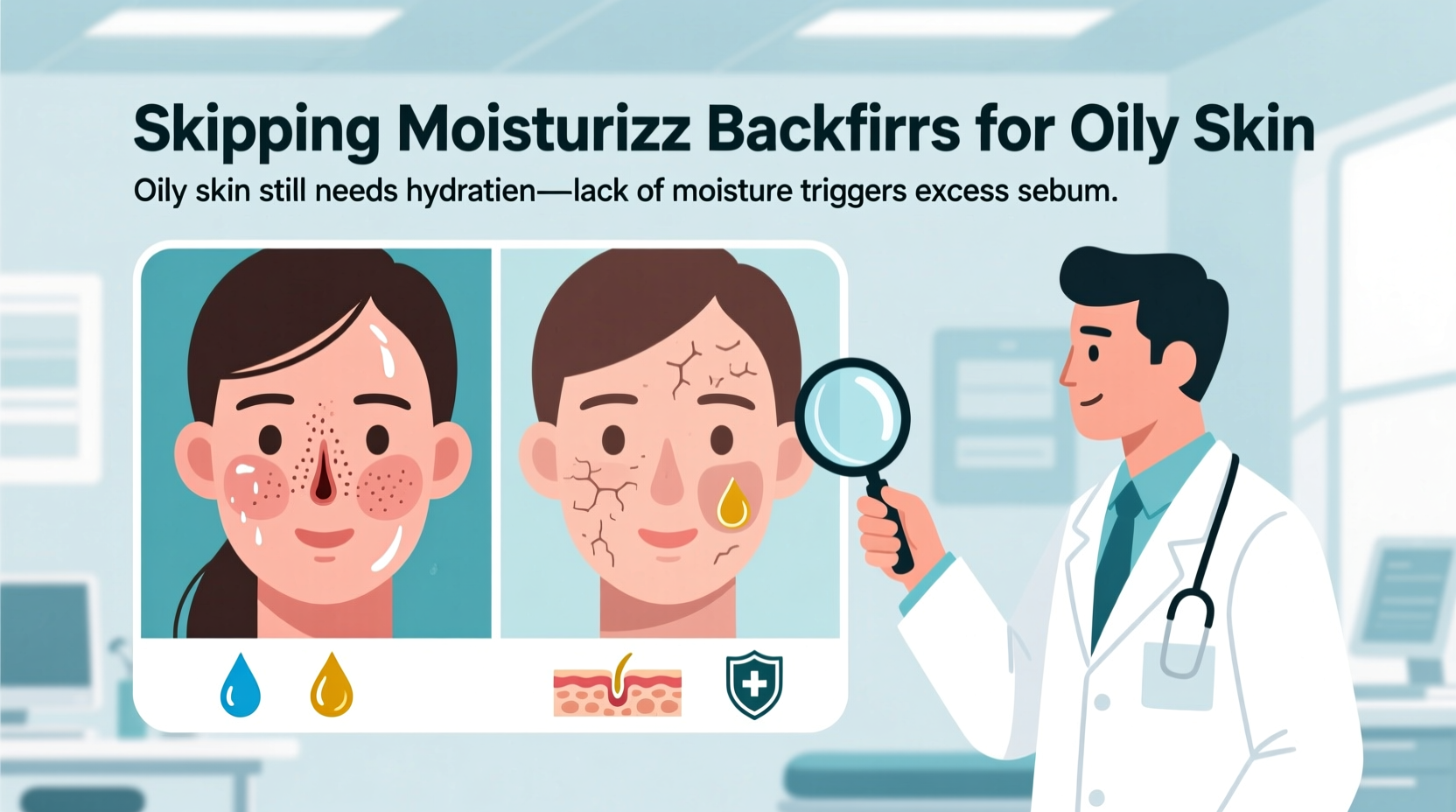
Oily skin is typically defined by overactive sebaceous glands producing excess sebum. This leads to a shiny complexion, enlarged pores, and a higher likelihood of clogged pores and acne. Many people assume that applying moisturizer will only make these issues worse. However, this assumption confuses two key concepts: oil and hydration.
Oil (sebum) and water (hydration) are not the same. You can have oily yet dehydrated skin—a condition where the skin produces excess oil but lacks sufficient water content. When skin is dehydrated, it sends signals to produce more oil to compensate, which ironically worsens the greasy appearance. This is where skipping moisturizer backfires: it doesn’t reduce oil—it encourages it.
“Many patients with oily skin avoid moisturizers out of fear, but they’re often unknowingly making their oiliness worse. Hydration helps regulate sebum production.” — Dr. Lena Park, Board-Certified Dermatologist
When Skipping Moisturizer Backfires: The Science
Skin relies on a healthy moisture barrier—composed of lipids, ceramides, and natural moisturizing factors—to retain water and protect against environmental stressors. When this barrier is compromised, transepidermal water loss (TEWL) increases. In response, the skin ramps up sebum production to compensate for the lack of surface moisture.
A 2021 study published in the Journal of Clinical and Aesthetic Dermatology found that individuals with oily, acne-prone skin who used lightweight, non-comedogenic moisturizers experienced reduced sebum output over eight weeks compared to those who skipped moisturization. The conclusion? Proper hydration helped normalize oil production.
Additionally, many acne treatments—like benzoyl peroxide, salicylic acid, and retinoids—dry out the skin as a side effect. Skipping moisturizer while using these products can lead to irritation, flaking, and even increased breakouts due to micro-tears in the compromised barrier.
Tip: Look for “non-comedogenic” and “oil-free” labels when choosing a moisturizer for oily skin—they’re formulated to hydrate without clogging pores.Choosing the Right Moisturizer for Oily Skin
Not all moisturizers are created equal. For oily skin, the goal is to deliver hydration without heaviness or pore-clogging ingredients. Here’s what to look for:
- Lightweight texture: Gel-based or water-based formulas absorb quickly and don’t leave a greasy residue.
- Key ingredients: Hyaluronic acid, glycerin, niacinamide, and ceramides provide hydration and support the skin barrier.
- Avoid: Heavy oils (like coconut oil), petrolatum, and fragrances that may irritate or clog pores.
- SPF integration: A daytime moisturizer with SPF 30+ is ideal—sun exposure can worsen oil production and acne scarring.
Niacinamide, in particular, has gained attention for its dual action: it regulates sebum production and strengthens the skin barrier. Studies show that 2–5% topical niacinamide reduces oiliness and improves skin texture within four weeks.
Moisturizer Comparison for Oily Skin
| Product Type | Best For | Key Ingredients | Avoid If… |
|---|---|---|---|
| Gel | Very oily, acne-prone skin | Hyaluronic acid, niacinamide | You have sensitive skin prone to stinging |
| Light lotion | Mixed or combination skin | Glycerin, ceramides | You're using drying acne treatments |
| Water-based | Humid climates or daytime use | Aloe vera, peptides | You need heavy hydration |
| Hybrid (gel-cream) | Balanced hydration in variable conditions | Squalane, hyaluronic acid | You're allergic to plant-derived squalane |
Real-Life Example: The Case of Maya
Maya, a 27-year-old marketing professional, had struggled with oily skin since her teens. She washed her face twice daily with a strong foaming cleanser, used salicylic acid toner, and avoided moisturizer entirely. By noon, her T-zone was slick, and she experienced frequent breakouts along her jawline.
After consulting a dermatologist, she learned her routine was stripping her skin. The doctor recommended a gentle cleanser, a hydrating toner with hyaluronic acid, and a lightweight gel moisturizer with niacinamide. Within three weeks, Maya noticed less shine, fewer breakouts, and smoother texture. “I thought I was doing everything right,” she said. “But my skin was rebelling because it was dehydrated.”
This case illustrates a common pattern: aggressive cleansing and skipping moisturizer create a cycle of dehydration → overproduction of oil → breakouts → further stripping. Breaking that cycle starts with reintroducing hydration.
When It Might Be Okay to Skip Moisturizer (Rarely)
While most dermatologists recommend daily moisturizing—even for oily types—there are rare exceptions. These include:
- Extremely humid environments: In tropical climates with high ambient humidity, the skin may absorb enough moisture from the air to remain balanced without added product.
- Short-term use of occlusive treatments: If using a prescription cream that already contains emollients (e.g., some acne medications), an additional moisturizer may be redundant.
- Allergic reactions: If a person has a confirmed allergy to common moisturizer ingredients, alternatives must be carefully selected rather than skipped entirely.
Even in these cases, “skipping” doesn’t mean abandoning hydration. It might mean switching to a hydrating serum or mist instead. The core principle remains: support the skin barrier.
Tip: If you feel your skin is “too oily” for moisturizer, try applying it only to dry areas (like cheeks) while avoiding the T-zone—a technique called “spot moisturizing.”Step-by-Step: Building a Safe Routine for Oily Skin
If you’ve been skipping moisturizer, transitioning to a balanced routine takes time. Follow this timeline to avoid irritation and see real improvements:
- Week 1: Simplify your cleanse. Switch to a gentle, pH-balanced cleanser. Avoid sulfates and alcohol-heavy formulas. Wash once at night; rinse with water in the morning.
- Week 2: Introduce hydration. Add a hyaluronic acid serum on damp skin after cleansing. Follow with a pea-sized amount of oil-free moisturizer.
- Week 3: Monitor changes. Track oil levels, breakouts, and texture. Shine should begin to stabilize, especially if using active acne treatments.
- Week 4: Optimize timing. Apply moisturizer morning and night. Consider adding a niacinamide booster if oil control is still an issue.
- Ongoing: Protect and maintain. Use a lightweight SPF 30+ every morning. Reassess your moisturizer seasonally—humidity and temperature affect skin needs.
“The biggest mistake I see is equating ‘oily’ with ‘well-hydrated.’ They’re opposites in function. Treating oily skin properly means respecting its need for water.” — Dr. Rajiv Mehta, Cosmetic Dermatologist
Frequently Asked Questions
Can moisturizer make oily skin worse?
Only if it’s the wrong type. Heavy, comedogenic formulas can clog pores and increase breakouts. However, non-comedogenic, oil-free moisturizers actually help regulate oil production by preventing dehydration-induced sebum spikes.
Should I moisturize if I’m using acne medication?
Yes—especially then. Most acne treatments (like retinoids and benzoyl peroxide) are drying and can compromise the skin barrier. Using a gentle moisturizer reduces irritation, peeling, and rebound oiliness, improving treatment tolerance and effectiveness.
Is there a difference between hydration and moisturizing?
Yes. Hydration refers to water content in the skin, achieved through humectants like hyaluronic acid. Moisturizing involves sealing that hydration with emollients and occlusives. For oily skin, focus on hydration first, then use lightweight sealants to lock it in without heaviness.
Action Checklist: Healthy Moisturizing for Oily Skin
- ☑ Assess your current routine: Are you using harsh cleansers or skipping hydration?
- ☑ Choose a non-comedogenic, oil-free moisturizer with hyaluronic acid or niacinamide.
- ☑ Apply moisturizer to damp skin to enhance absorption.
- ☑ Use SPF daily—opt for a moisturizer with built-in sunscreen or layer a lightweight one underneath.
- ☑ Monitor changes over 4 weeks: track oil levels, breakouts, and comfort.
- ☑ Adjust seasonally: switch to lighter gels in summer, slightly richer lotions in winter if needed.
Conclusion: Why Moisturizing Is Non-Negotiable
Skipping moisturizer with oily skin might seem logical, but it’s a shortcut that often leads to long-term setbacks. Dermatologists agree: hydration is not optional, regardless of skin type. A well-formulated moisturizer supports the skin barrier, reduces excess oil, and enhances the effectiveness of other skincare products.
The goal isn’t to eliminate oil—that’s neither possible nor desirable. Sebum protects the skin and maintains elasticity. The goal is balance. By choosing the right moisturizer and applying it consistently, you signal to your skin that it doesn’t need to overcompensate with oil. Over time, this leads to a calmer, clearer, and more resilient complexion.
💬 Have you tried skipping moisturizer with oily skin? What happened? Share your experience in the comments and help others navigate this common skincare dilemma.








