
In the ever-evolving landscape of nutrition science, few topics have generated as much interest—and debate—as intermittent fasting (IF). Once considered a fringe dietary trend, IF has cemented itself in mainstream wellness culture over the past decade. But as we move into 2025, new research, shifting metabolic understanding, and real-world adherence data are prompting a reevaluation of its role in sustainable weight loss. The question is no longer whether it works at all, but under what conditions, for whom, and for how long.
This article synthesizes the latest clinical findings, meta-analyses, and expert insights to answer a pressing question: Is intermittent fasting still an effective tool for weight loss in 2025?
The Evolution of Intermittent Fasting Research
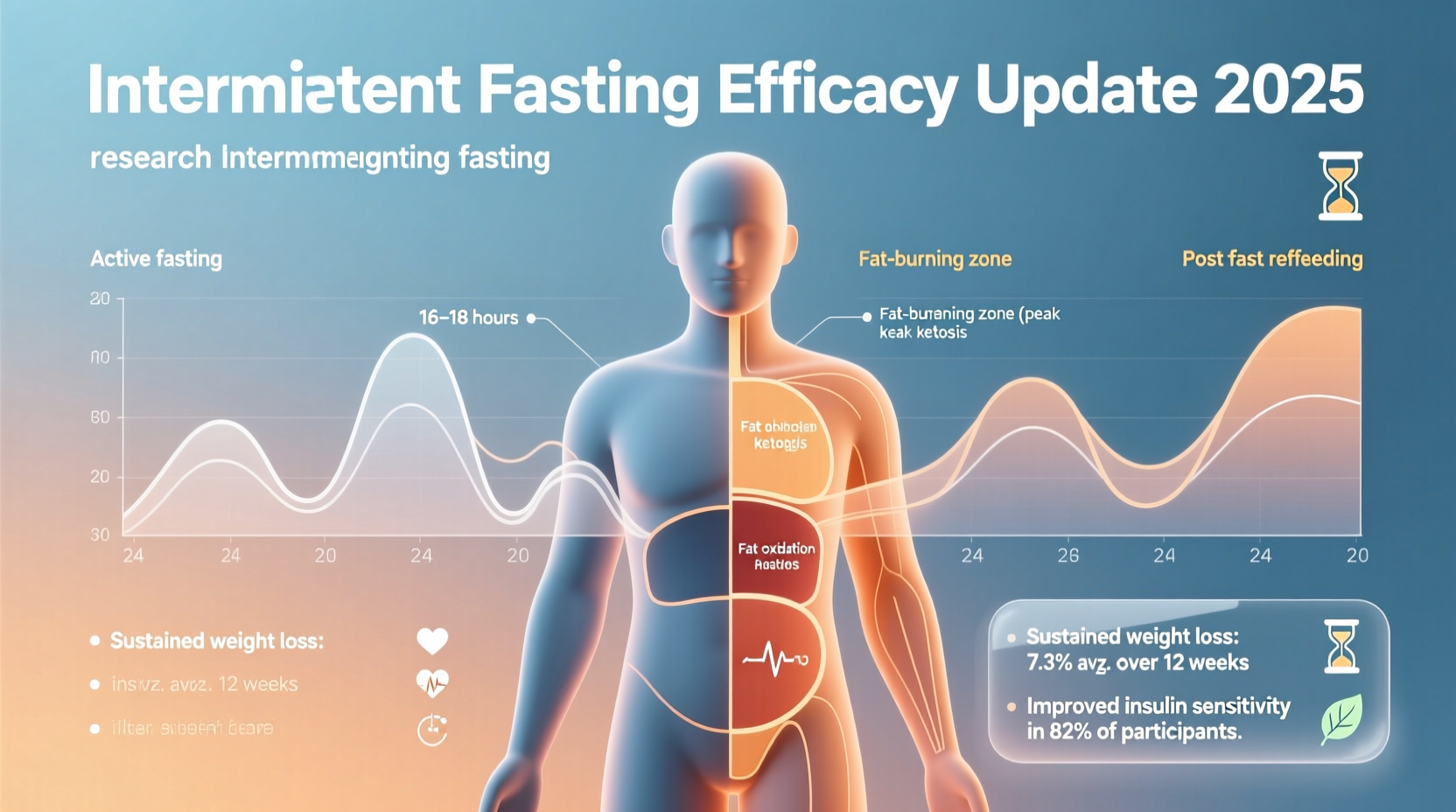
Intermittent fasting isn't new—religious and cultural practices have incorporated periods of food restriction for centuries. However, scientific scrutiny of IF began in earnest around the early 2010s, with rodent studies showing lifespan extension and metabolic improvements. Human trials followed, often small-scale or short-term, but consistently reporting modest weight loss and improved insulin sensitivity.
By 2023, over 40 randomized controlled trials had examined various IF protocols. The most common—16:8 (fasting 16 hours, eating within an 8-hour window), 5:2 (eating normally five days, restricting calories two non-consecutive days), and alternate-day fasting—showed average weight loss between 3% and 8% of baseline body weight over 8–12 weeks.
However, a pivotal shift occurred in late 2024. A large-scale, multi-center study published in The Lancet Diabetes & Endocrinology compared IF directly with continuous calorie restriction (CCR) over a 12-month period. The results were sobering: while both groups lost similar amounts of weight initially, the IF group showed significantly higher dropout rates and less long-term adherence.
“Intermittent fasting can produce short-term weight loss, but its effectiveness depends heavily on individual lifestyle, psychological factors, and long-term feasibility.” — Dr. Lena Patel, MD, Metabolic Health Specialist, Johns Hopkins University
Does It Still Work for Weight Loss in 2025?
The short answer is yes—but with critical caveats.
Recent meta-analyses from early 2025 confirm that IF leads to clinically meaningful weight loss when consistently followed. A review of 27 studies involving over 1,800 participants found that IF resulted in an average 5.2% body weight reduction after six months. This is comparable to traditional calorie counting, provided the energy deficit is equivalent.
What sets IF apart is not superior fat loss, but rather its mechanism: simplification. Instead of tracking every calorie, users focus on timing. For some, this mental shift reduces decision fatigue and emotional eating. For others, it creates new stressors around food windows and social meals.
A key insight from 2025 research is that **the effectiveness of IF is highly personalized**. Factors such as circadian rhythm alignment, meal timing, baseline insulin resistance, and even chronotype (morning vs. evening person) influence outcomes.
Tip: Align your eating window with daylight hours (e.g., 8 AM–4 PM or 10 AM–6 PM) to support circadian metabolism and improve insulin sensitivity.Popular IF Methods Compared in 2025
Not all fasting protocols are created equal. Below is a comparison of the most widely used approaches based on recent adherence and efficacy data.
| Method | Fasting Schedule | Avg. Weight Loss (6 mo) | Adherence Rate | Best For |
|---|---|---|---|---|
| 16:8 | Fast 16 hrs, eat 8 hrs daily | 4.8% | 68% | Routine-oriented individuals; beginners |
| 5:2 Diet | 5 days normal intake, 2 days ≤500 kcal | 5.1% | 54% | Those comfortable with calorie control |
| Alternate-Day Fasting | Fast every other day (~500 kcal) | 6.0% | 39% | Highly disciplined individuals |
| Time-Restricted Eating (TRE) + Exercise | 14:10 or 16:8 with morning workout | 6.3% | 72% | Active adults; fitness-focused |
Note: While alternate-day fasting shows slightly higher average weight loss, its low adherence makes it impractical for most. In contrast, time-restricted eating combined with physical activity demonstrates both high efficacy and sustainability.
Why Adherence Matters More Than Protocol
The 2025 consensus among obesity researchers is clear: no diet works if you don’t stick to it. A landmark study from the University of Copenhagen tracked 612 adults using wearable devices and food logs over one year. Researchers found that initial weight loss was nearly identical across IF and CCR groups. However, by month nine, the IF group had regained 62% of lost weight, compared to 58% in the CCR group—suggesting no significant advantage.
The real differentiator was behavioral consistency. Participants who integrated IF into their natural routines—such as skipping breakfast due to a late wake-up or aligning meals with work shifts—were more likely to maintain the practice. Those who forced rigid schedules against their lifestyle dropped out within three months.
Moreover, emerging evidence suggests that misaligned eating windows may disrupt sleep and cortisol rhythms. For example, eating late into the evening—even within an 8-hour window—was associated with reduced fat oxidation and increased abdominal fat storage in night-shift workers.
Mini Case Study: Sarah’s Experience with 16:8 in 2024
Sarah, a 38-year-old project manager from Austin, tried the 16:8 method in early 2024 after reading about IF online. She set her eating window from 10 AM to 6 PM, skipping breakfast and eating lunch at noon, a snack at 3 PM, and dinner at 5:30 PM.
She lost 9 pounds in the first 10 weeks but plateaued by month four. What she didn’t realize was that her late afternoon coffee with cream and sugar broke her fast, spiking insulin. Additionally, she began overeating during her window, assuming “calories don’t count” as long as timing was right.
After consulting a registered dietitian, Sarah adjusted her approach: she moved her window earlier (8 AM–4 PM), eliminated liquid calories during fasting, and focused on protein-rich, fiber-heavy meals. Over the next five months, she lost another 12 pounds and kept it off.
Her success wasn’t due to fasting alone—it was the combination of timing, quality, and mindful eating.
Optimizing Intermittent Fasting for Long-Term Success
To make IF effective beyond short-term weight loss, certain strategies must be implemented. Based on 2025 clinical guidelines and behavioral research, here’s a step-by-step framework:
- Assess your lifestyle: Are you a morning person? Do you exercise in the AM? Choose a fasting window that aligns with your energy peaks and schedule.
- Start gradually: Begin with 12-hour fasts (e.g., 7 PM–7 AM), then extend by 30–60 minutes weekly until reaching 14–16 hours.
- Protect your eating window: Prioritize whole foods—lean proteins, healthy fats, complex carbs, and vegetables. Avoid compensatory binging.
- Stay hydrated: Drink water, herbal tea, or black coffee during fasting. Dehydration can mimic hunger and impair cognition.
- Monitor hunger cues: Use a journal to track energy, mood, and cravings. IF should not lead to obsessive thoughts about food.
- Combine with strength training: Resistance exercise helps preserve lean mass during weight loss, especially important when calorie intake fluctuates.
- Reevaluate monthly: If fatigue, irritability, or disrupted sleep occur, adjust or discontinue. IF is a tool, not a mandate.
Checklist: Is IF Right for You in 2025?
- ✅ I have a consistent daily routine that allows for structured eating windows
- ✅ I do not have a history of disordered eating
- ✅ I’m not pregnant, breastfeeding, or underweight
- ✅ I can commit to at least 8 weeks to assess results
- ✅ I’m willing to prioritize nutrient-dense foods during my eating window
- ✅ I’m not managing advanced diabetes or taking medications requiring regular meals
If you answered “no” to two or more, IF may not be the best fit—at least not yet.
Common Misconceptions About IF in 2025
Despite growing awareness, several myths persist:
- Myth: Fasting boosts metabolism.
Truth: Prolonged fasting (>24 hours) may temporarily lower resting metabolic rate as a conservation mechanism. - Myth: You can eat anything during your window.
Truth: Calorie quality still matters. Junk food within an 8-hour window leads to poor satiety and nutrient deficiencies. - Myth: IF automatically improves longevity.
Truth: While animal studies show promise, human data on lifespan extension remains inconclusive.
Another widespread misconception is that IF uniquely targets belly fat. While some visceral fat reduction occurs due to overall weight loss, spot reduction is not possible. Genetics and hormone balance play larger roles in fat distribution.
FAQ: Your Top Questions Answered
Can I drink anything during the fasting window?
Yes. Zero-calorie beverages like water, black coffee, and unsweetened tea are permitted. Avoid anything with calories, artificial sweeteners, or protein (like bone broth), as these can trigger insulin release and break the fast.
Will intermittent fasting cause muscle loss?
Not necessarily. When combined with adequate protein intake (at least 1.6g per kg of body weight) and resistance training, IF can preserve lean mass. However, extreme calorie deficits or prolonged fasts increase muscle catabolism risk.
Is IF safe for women?
For most women, yes—especially with moderate protocols like 14:10 or 16:8. However, some report menstrual irregularities or worsened PCOS symptoms when fasting too aggressively. Women with hormonal imbalances should consult a healthcare provider before starting.
Conclusion: A Tool, Not a Trend
As of 2025, intermittent fasting remains a viable option for weight loss—but only when applied thoughtfully. It is neither a miracle cure nor obsolete. Its value lies in its ability to simplify eating patterns and promote awareness of hunger signals. Yet, like any dietary strategy, it fails when imposed without consideration for individual biology, psychology, and lifestyle.
The future of IF is not in rigid dogma, but in personalization. Advances in continuous glucose monitoring, AI-driven nutrition apps, and circadian biology are enabling tailored fasting plans that adapt to real-time metabolic feedback. This shift—from one-size-fits-all to precision fasting—is where the real potential lies.
If you're considering intermittent fasting, start slow, monitor your response, and prioritize sustainability over speed. Weight loss is not just about the scale—it's about building habits that last a lifetime.
🚀 Ready to try intermittent fasting the smart way? Start with a 12-hour overnight fast and track how you feel for one week. Share your experience in the comments below—your journey could inspire someone else to begin theirs.








