
Dry brushing has surged in popularity over the past decade, promoted by wellness influencers, dermatologists, and spa professionals alike as a simple at-home ritual for achieving silky, radiant skin. Advocates claim it not only sloughs off dead skin cells but also boosts circulation, reduces cellulite, and supports lymphatic drainage. But with so much hype, it's fair to ask: is dry brushing truly effective, or is it just another fleeting beauty trend offering only surface-level benefits?
To answer this, we need to look beyond marketing claims and examine what dry brushing actually does—what the science says, who benefits most, and whether the effort required delivers lasting results or just momentary smoothness.
The Mechanics of Dry Brushing
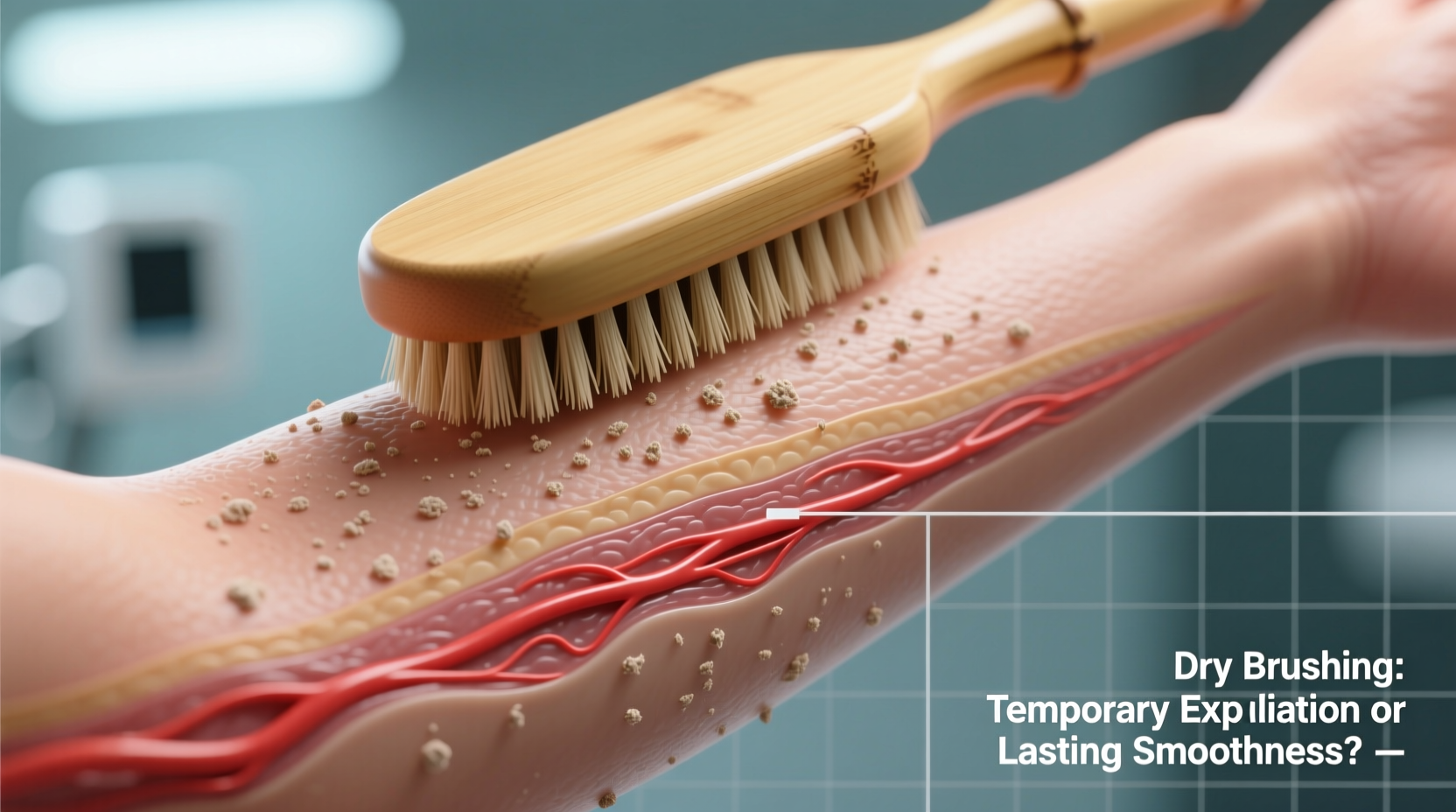
Dry brushing involves using a natural-bristle brush with firm but soft bristles to gently scrub the skin in upward motions, typically starting from the feet and moving toward the heart. The technique is performed on dry skin before showering, ideally daily. Its primary mechanical function is physical exfoliation—removing dead skin cells that accumulate on the epidermis.
Unlike chemical exfoliants such as AHAs or BHAs, which dissolve the bonds between skin cells, dry brushing relies on friction. This makes it a form of manual exfoliation similar to scrubs, though without added particles or ingredients that might irritate sensitive skin.
Because it’s done on dry skin, there’s no risk of clogging pores with oils or residues, and many users report an immediate improvement in skin texture. However, the question remains: how deep do these improvements go?
Tip: Always use long, sweeping strokes toward the heart to support lymphatic flow—never scrub aggressively.What Science Says About Skin Smoothing and Exfoliation
The most well-documented benefit of dry brushing is its ability to improve skin texture through exfoliation. A 2018 study published in the Journal of Cosmetic Dermatology found that regular physical exfoliation led to a measurable reduction in roughness and dullness after four weeks of consistent use. Participants reported higher satisfaction with skin smoothness, though researchers noted that results were largely superficial and required ongoing maintenance.
In practical terms, this means dry brushing can deliver visibly smoother skin—but only temporarily. Once you stop, dead skin cells begin to build up again within days. It doesn’t alter the skin’s natural turnover cycle; it merely accelerates the removal of cells already destined to shed.
That said, consistency matters. When performed regularly (3–7 times per week), dry brushing helps prevent clogged pores and keratosis pilaris flare-ups, particularly on rough areas like elbows, knees, and thighs. For individuals prone to ingrown hairs or bumpy skin, it may reduce the frequency of these issues by keeping follicles clear.
“Physical exfoliation methods like dry brushing are effective for surface renewal, but they don’t penetrate deeply enough to affect collagen production or fat distribution.” — Dr. Lena Torres, Board-Certified Dermatologist
Beyond Exfoliation: Circulation, Lymphatic Drainage, and Cellulite Claims
Many proponents argue that dry brushing offers benefits far beyond exfoliation—specifically improved blood flow and lymphatic stimulation. The theory is that brushing toward the heart encourages fluid movement, reducing puffiness and enhancing detoxification.
While massage-like movements can indeed stimulate superficial circulation—leading to temporary redness and warmth—there is limited clinical evidence supporting significant lymphatic benefits from dry brushing alone. The lymphatic system relies primarily on muscle contraction and deep breathing, not external brushing, to circulate fluid.
Similarly, claims about cellulite reduction are often overstated. Cellulite forms due to structural changes in the connective tissue beneath the skin, influenced by hormones, genetics, and fat distribution. No topical method—including dry brushing—can permanently alter this structure.
However, some users report a *temporary* smoothing effect after dry brushing. This is likely due to increased blood flow and mild swelling in the dermis, which plumps the skin slightly and minimizes the appearance of dimpling for a few hours. Think of it as a “skin workout” glow—not a permanent fix.
A Real Example: One Month of Consistent Dry Brushing
Samantha, a 34-year-old office worker in Seattle, struggled with dry, flaky skin on her legs and arms, especially during winter months. She began dry brushing every morning before her shower, following proper technique: using a boar bristle brush, starting at her feet, and brushing upward in long strokes.
After two weeks, she noticed her skin felt noticeably smoother after moisturizing. Her usual body lotion absorbed faster and didn’t sit on the surface. By week three, the persistent rough patches on her thighs had diminished. She also reported a slight energizing effect from the routine, likening it to a morning stretch.
She paused the practice for five days during travel and quickly saw a return of flakiness. Resuming the habit brought back the smoothness within two days. While she didn’t observe changes in cellulite or body shape, Samantha concluded that dry brushing was worthwhile for maintaining soft skin—especially when paired with hydration and moisturizer.
Her experience reflects what many users report: tangible short-term benefits for texture and comfort, but no transformative body changes.
Step-by-Step Guide to Effective Dry Brushing
To get the most out of dry brushing—and avoid irritation—follow this sequence:
- Choose the right brush: Opt for one with natural bristles and a long handle for hard-to-reach areas.
- Start dry: Perform on completely dry skin, before showering.
- Begin at the feet: Use firm, circular motions on feet, then long upward strokes along calves and thighs.
- Move to arms: Start at hands, brush up through forearms to shoulders.
- Work the torso: Use gentle circular motions on stomach and back. Avoid breasts and sensitive areas.
- Brush duration: Spend 3–5 minutes total. You should see mild pinkness, not redness or pain.
- Shower afterward: Rinse off loosened skin cells and apply moisturizer to damp skin.
- Clean your brush: Wash monthly with mild soap and water; let air dry.
Potential Risks and Who Should Avoid It
Dry brushing isn’t suitable for everyone. Overzealous brushing can lead to micro-tears, inflammation, or worsened conditions like eczema and psoriasis. Individuals with acne, rosacea, or broken capillaries should avoid it entirely on affected areas.
Additionally, those with diabetes or poor circulation should consult a healthcare provider before beginning, as reduced sensation increases the risk of unnoticed skin damage.
Overuse is another concern. Daily brushing may strip the skin’s protective barrier, leading to dryness and sensitivity—especially in cold or dry climates. For most people, 3–4 times per week is sufficient.
Do’s and Don’ts of Dry Brushing
| Do | Don’t |
|---|---|
| Use upward strokes toward the heart | Brush over cuts, rashes, or sunburns |
| Replace your brush every 3–6 months | Use on the face (unless with a facial-specific tool) |
| Follow with moisturizer or oil | Apply excessive pressure |
| Clean the brush regularly | Dry brush more than once per day |
| Start slowly if new to the practice | Expect dramatic cellulite reduction |
How It Compares to Other Exfoliation Methods
Dry brushing isn’t the only way to exfoliate the body. Alternatives include loofahs, washcloths, chemical exfoliating body lotions (with glycolic or lactic acid), and physical scrubs.
- Loofahs: Effective but require frequent cleaning to prevent bacterial growth.
- Chemical exfoliants: Penetrate deeper and can improve tone and texture over time, but may irritate sensitive skin.
- Body scrubs: Often contain oils or plastics; can be messy and less eco-friendly.
Dry brushing stands out for being low-cost, chemical-free, and quick. However, it lacks the precision and depth of chemical exfoliation. For best results, some dermatologists recommend alternating dry brushing with weekly use of a gentle AHA body serum to maintain cell turnover.
FAQ
Can dry brushing help with ingrown hairs?
Yes, in some cases. Regular exfoliation prevents hair from becoming trapped under layers of dead skin, reducing the likelihood of ingrowns—especially after shaving or waxing. However, it won’t treat existing ingrown hairs or replace proper hair removal techniques.
Should I dry brush every day?
Daily brushing is acceptable for people with resilient, non-sensitive skin. However, those with dryness or conditions like eczema should limit it to 2–3 times per week to avoid barrier disruption.
Does dry brushing really detoxify the body?
No. The idea that dry brushing “detoxifies” is a myth. The liver and kidneys are responsible for detoxification. While brushing may support lymphatic flow slightly, it doesn’t remove toxins from the body in any clinically meaningful way.
Checklist: Is Dry Brushing Right for You?
Before committing to the routine, ask yourself the following:
- ✅ Do I have dry, rough skin that needs regular exfoliation?
- ✅ Am I consistent with self-care routines?
- ✅ Do I enjoy morning rituals that invigorate me?
- ✅ Do I moisturize my skin daily?
- ✅ Do I avoid aggressive scrubbing and listen to my skin’s signals?
- ❌ Do I have active rashes, infections, or sensitive skin conditions?
- ❌ Am I looking for a solution to lose weight or eliminate cellulite?
If you answered “yes” to the first five and “no” to the last two, dry brushing could be a valuable addition to your regimen.
Final Verdict: Worth the Effort or Just Temporary?
Dry brushing is not a miracle treatment. It won’t reshape your body, erase cellulite, or replace medical skincare. But as a tool for maintaining smooth, healthy-looking skin, it holds real value—particularly when practiced correctly and consistently.
The benefits are mostly cosmetic and short-term: smoother texture, improved product absorption, and a slight glow from increased circulation. These outcomes, while temporary, can enhance daily confidence and skin comfort—especially in dry seasons.
For minimal investment—a $15 brush and five minutes a day—it’s a low-risk habit with tangible rewards. The key is managing expectations. View dry brushing not as a cure-all, but as one component of holistic skin health, alongside hydration, nutrition, and proper moisturization.
“The ritual itself can be therapeutic. Many patients tell me it helps them connect with their bodies each morning—that mindfulness may be the greatest benefit of all.” — Dr. Arjun Patel, Integrative Dermatology Specialist
Take Action Today
If you’ve been curious about dry brushing, try it for two weeks with intention. Follow the proper technique, pay attention to how your skin responds, and pair it with a nourishing body oil. Keep a small journal noting changes in texture, dryness, and overall feel.
You might discover it’s not about dramatic transformation—but about showing up for your skin every day. And sometimes, that small act of care makes all the difference.
💬 Have you tried dry brushing? What results did you see? Share your experience in the comments and help others decide if it’s worth the effort.








