For many people, the dream of fitness begins with a single purchase: a home treadmill. It promises convenience, privacy, and time saved on commutes to the gym. But when space is limited—especially in urban homes or shared living spaces—the foldable treadmill emerges as a tempting compromise. Marketed as the perfect blend of function and practicality, it folds away neatly after use, tucking into corners or behind furniture like a well-trained pet. Yet for every satisfied owner, there’s another whose machine gathers dust under a pile of laundry, serving more as a clothes rack than a fitness tool.
The question isn’t just about mechanics or design—it’s psychological. Is buying a foldable treadmill a smart investment in long-term health, or is it simply “gym guilt” in disguise? To answer that, we need to look beyond marketing claims and examine real-world usage, durability, cost-effectiveness, and behavioral patterns.
The Promise of Convenience vs. Reality of Use
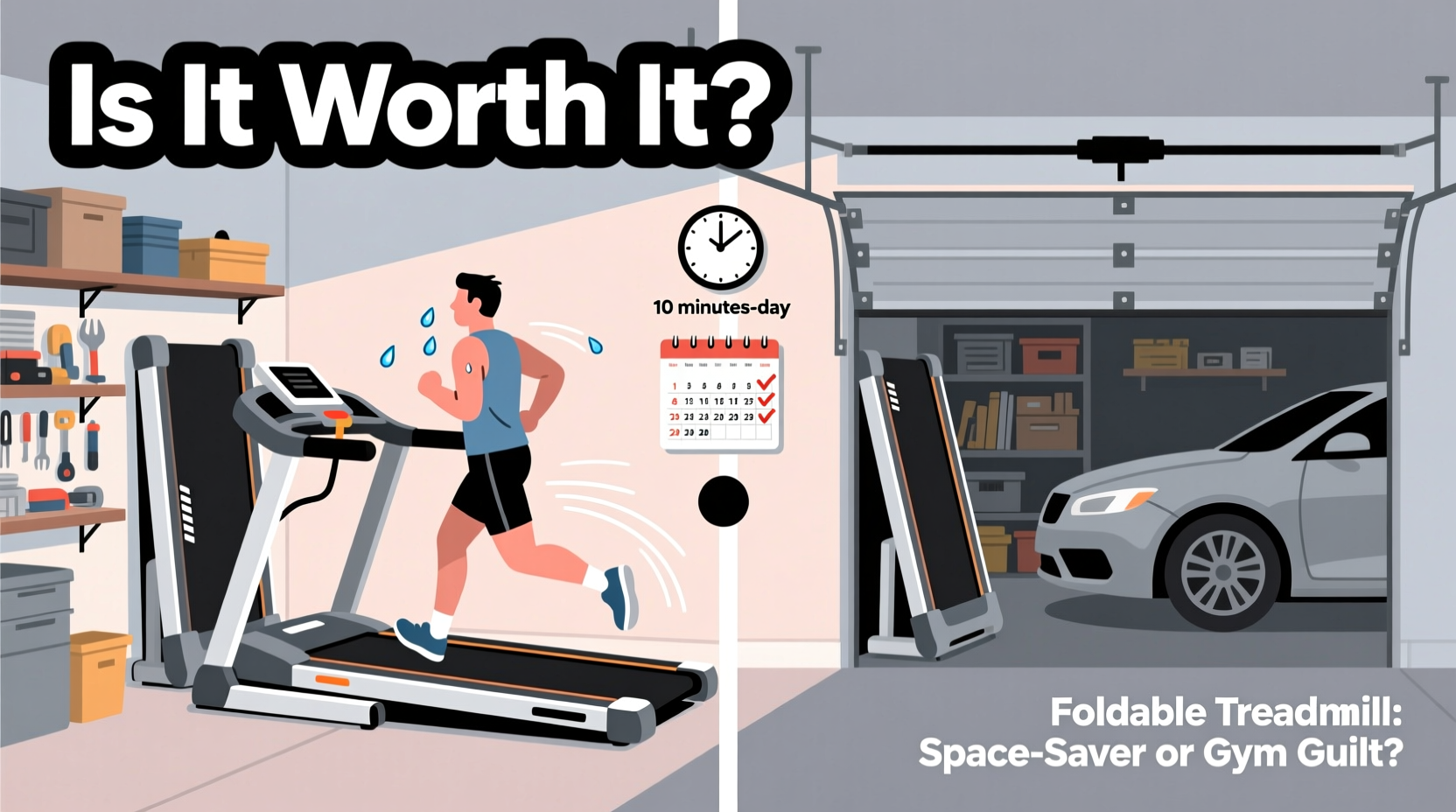
Foldable treadmills are built around one central idea: accessibility through compactness. Manufacturers emphasize features like hydraulic folding systems, lightweight frames, and small footprints. These selling points appeal to city dwellers, apartment renters, and anyone who values multi-functional spaces. The logic seems sound—if your workout equipment doesn’t take up room, you’re more likely to use it.
But research tells a different story. A study by the International Health, Racquet & Sportsclub Association found that nearly half of all home fitness equipment is abandoned within six months of purchase. Treadmills rank among the most commonly unused items. While foldability improves storage logistics, it doesn't automatically translate into consistent usage.
Convenience only works if the user is already motivated. For someone struggling with routine, even a 30-second setup can become a barrier. The act of unfolding, plugging in, waiting for calibration, and adjusting settings adds friction—friction that often tips the balance toward skipping the workout altogether.
Tip: If you haven’t used your treadmill within the first month, reconsider whether the purchase addressed a real habit or just an idealized version of yourself.Who Actually Benefits From a Foldable Treadmill?
Not everyone is equally suited for a foldable treadmill. Its value depends heavily on lifestyle, physical needs, and commitment level.
- Apartments or small homes: In tight quarters, space efficiency is non-negotiable. A foldable model may be the only viable option for owning a treadmill at all.
- Seasonal exercisers: People who ramp up activity during winter months (when outdoor running is unpleasant) may find temporary utility in a foldable unit they can store easily when not needed.
- Rehabilitation users: Those recovering from injury might benefit from low-speed walking sessions without needing full commercial-grade support.
- Casual walkers: If your goal is light daily walking rather than intense interval training, a mid-range foldable treadmill may suffice.
However, serious runners, high-intensity trainers, or individuals over 200 pounds often face limitations. Most foldable models have lower weight capacities (typically 250–300 lbs), reduced motor power, shorter decks, and less shock absorption. This compromises both performance and joint safety over time.
“Many patients come to me with knee pain after switching from outdoor runs to cheap foldable treadmills. The lack of cushioning and inconsistent belt speed increases impact stress.” — Dr. Lena Patel, Physical Therapist and Sports Medicine Consultant
Cost Over Time: Hidden Trade-offs of Foldable Models
At first glance, foldable treadmills appear cost-effective. Prices range from $400 to $1,200, significantly cheaper than premium non-folding or commercial units. However, longevity paints a different picture.
Due to lighter materials and compact engineering, foldable treadmills generally last 3–5 years with regular use—about half the lifespan of sturdier models. Replacement parts are often proprietary and expensive. Repair costs can exceed 50% of the original price, making replacement more economical.
Compare this to a durable, non-folding treadmill priced at $1,800 with a 10-year lifespan: amortized, it costs roughly $150 per year. A $700 foldable treadmill replaced every five years totals $1,400 over the same period—plus potential maintenance fees.
| Feature | Foldable Treadmill | Non-Folding/Sturdy Model |
|---|---|---|
| Avg. Price | $700 | $1,800 |
| Lifespan (years) | 3–5 | 8–12 |
| Motor Durability (C.H.P.) | 1.5–2.5 | 3.0+ |
| Weight Capacity | 250–300 lbs | 350+ lbs |
| Deck Cushioning | Limited | Advanced suspension systems |
| Storage Footprint | Compact when folded | Permanent floor space required |
The data suggests a trade-off: save space now, pay more later. Or invest upfront for better performance and longevity. Your choice should align with how frequently—and intensely—you plan to train.
When Foldable Makes Sense: A Practical Decision Framework
Purchasing a foldable treadmill shouldn’t be driven by impulse or guilt. Instead, follow a structured evaluation process before committing.
- Assess your current exercise frequency: Are you currently active at least twice a week? If not, a new machine won’t create motivation out of thin air.
- Define your goals: Walking for wellness? Training for a 5K? Rehab? Match the machine to your actual objectives, not aspirational ones.
- Measure your space: Will the treadmill fit comfortably when open and safe to use? Can it be stored without blocking pathways?
- Test the setup/breakdown process: Try doing it three times in a row. If it feels cumbersome, you’ll avoid it when tired or short on time.
- Check return policies: Buy from retailers offering at least a 30-day trial period. Use it daily during that window to gauge real-world integration.
Real-Life Example: Two Buyers, Two Outcomes
Consider two hypothetical buyers: Sarah and James.
Sarah lives in a 700-square-foot apartment with her partner. She walks 8,000 steps daily but struggles to maintain consistency in winter. After researching options, she buys a mid-tier foldable treadmill ($699) with decent cushioning and a quiet motor. She places it near her living room window, unfolds it every morning while drinking coffee, and walks 30 minutes at 3 mph. On weekends, she folds it and slides it behind the couch. After 18 months, she’s still using it regularly and credits it with maintaining her energy levels through cold months.
James, meanwhile, bought a similar model after New Year’s resolutions. He stored it in a spare bedroom closet and only set it up when he had “dedicated workout time.” Between work stress and family commitments, those windows never materialized. Within four months, the treadmill became a de facto shelf for towels and jackets. He sold it secondhand at a 60% loss.
The difference wasn’t the product—it was integration into daily life. Sarah designed her routine around ease and visibility. James relied on willpower alone.
Expert Tips for Maximizing Value
If you decide a foldable treadmill is right for you, maximize its usefulness with these strategies:
- Create a micro-routine: Commit to just 10 minutes a day. Short sessions build momentum without feeling overwhelming.
- Pair it with entertainment: Watch shows, listen to podcasts, or join virtual classes while walking to boost engagement.
- Maintain it monthly: Clean the deck, lubricate the belt (if required), and inspect folding mechanisms to prevent wear.
- Use it passively: Stand and walk slowly while taking phone calls or reading emails.
- Track progress: Even casual use benefits from tracking—use built-in apps or sync with fitness trackers to monitor distance and consistency.
“The best treadmill is the one you actually use. That might be a $2,000 machine—or it might be a $500 foldable tucked beside your sofa. Consistency beats specs every time.” — Mark Tran, Certified Personal Trainer and Home Fitness Coach
Frequently Asked Questions
Can I run on a foldable treadmill?
You can, but cautiously. Most models support jogging at lower speeds (under 6 mph), but lack the stability and shock absorption needed for sustained running. High-impact use accelerates wear and increases injury risk, especially for heavier users.
Do foldable treadmills break easily?
They are more prone to mechanical issues due to repeated folding and lighter construction. Hinges, hydraulics, and folding latches are common failure points. Regular inspection and gentle handling extend lifespan.
Are budget foldable treadmills worth it?
Rarely. Units under $500 often have underpowered motors, poor assembly quality, and minimal customer support. Spending $600–$900 typically gets a reliable balance of performance and portability.
Action Plan: Decide Before You Buy
Before spending hundreds on a foldable treadmill, complete this checklist to avoid buyer’s remorse:
- ✅ Have I exercised consistently in the past 90 days?
- ✅ Do I have a designated spot where the treadmill can stay partially accessible?
- ✅ Can I perform the folding/unfolding motion without strain?
- ✅ Am I willing to commit to using it at least 3 times per week for the next 60 days?
- ✅ Does the model have positive long-term reviews (12+ months) and accessible customer service?
- ✅ Is there a return policy or trial period if it doesn’t fit my lifestyle?
If you answered “no” to more than two of these, reconsider. Alternatively, explore alternatives like outdoor walking, local track access, or affordable gym memberships with flexible hours.
Final Verdict: Tool or Trophy?
A foldable treadmill isn’t inherently good or bad—it’s a tool shaped by how you use it. For space-constrained households with realistic fitness goals and established habits, it can be a practical addition. But for those hoping it will magically transform sedentary lifestyles, it risks becoming nothing more than gym guilt in disguise: a symbol of intention without action.
The truth is, no machine guarantees results. What matters is alignment between your environment, behavior, and expectations. If you treat the treadmill as part of a broader system—one that includes scheduling, accountability, and gradual progression—it earns its place in your home. If it sits idle, no amount of folding cleverness will justify the footprint it occupies.
Before clearing space in your garage or rearranging furniture, ask yourself: Am I buying this because I will use it—or because I wish I would?
🚀 Ready to make a decision? Audit your last month of physical activity, define one clear goal, and choose equipment that supports—not substitutes for—real change.








