Selecting the right Apple Watch band isn’t just about matching your outfit—it’s about ensuring performance, comfort, and longevity during physical activity. Whether you're logging miles on a treadmill, lifting weights, or practicing yoga, your band plays a crucial role in how effectively your wearable supports your fitness journey. The ideal band should stay secure, feel lightweight, resist sweat damage, and still look good after months of use. With dozens of options available, making the right choice requires understanding materials, fit, function, and personal habits.
Understanding Your Workout Type Matters
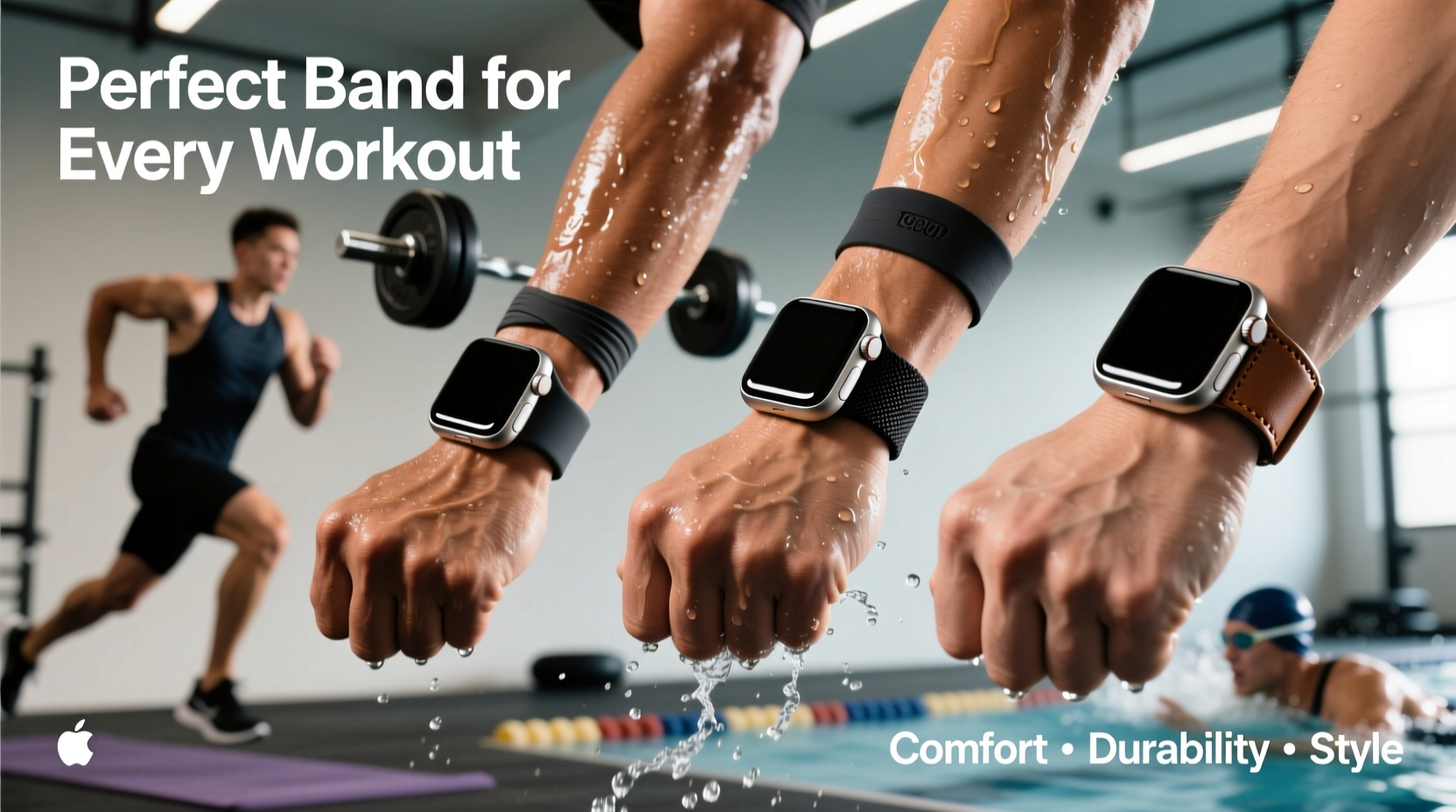
Not all workouts impose the same demands on a watch band. High-intensity training introduces moisture, friction, and impact that low-impact activities don’t. Identifying your primary exercise routine helps narrow down suitable materials and designs.
- Running and cardio: Requires sweat resistance, breathability, and snug fit to prevent bounce.
- Weightlifting: Needs durability and minimal bulk to avoid interference with grip or bar contact.
- Yoga and Pilates: Prioritizes softness, flexibility, and subtle aesthetics.
- Swimming: Demands full water resistance and quick-drying properties.
- Cycling: Benefits from lightweight construction and aerodynamic design.
A runner pounding pavement in humid conditions faces different challenges than someone doing gentle stretching at home. Matching the band to your movement style ensures both safety and comfort.
Tip: If you sweat heavily, avoid bands with trapped stitching or layered fabric—they retain moisture and promote odor buildup.Material Comparison: Pros, Cons, and Best Use Cases
The material of your band directly impacts its performance during exercise. Each option has trade-offs between comfort, durability, and maintenance.
| Material | Pros | Cons | Best For |
|---|---|---|---|
| Sport Band (Fluoroelastomer) | Water-resistant, durable, easy to clean, stays secure | Can feel stiff initially, limited aesthetic range | Running, HIIT, gym workouts |
| Sport Loop (Knit Nylon) | Lightweight, breathable, soft on skin, adjustable | Absorbs sweat, may stretch over time, harder to clean | Yoga, walking, indoor training |
| Aluminum Link | Stylish, premium feel, secure clasp | Heavy, not sweat-safe long-term, metal can corrode | Low-impact or post-workout wear only |
| Third-party Silicone | Affordable, flexible, widely available | Variable quality, may yellow or crack | General fitness, casual use |
| Nylon Braided Loop | Elegant texture, comfortable for all-day wear | Poor sweat management, stains easily | Office-to-gym transitions, light activity |
“Many athletes overlook micro-abrasions caused by rough-textured bands. Over time, this leads to skin irritation—even when the band feels ‘fine’ at first.” — Dr. Lena Torres, Sports Dermatologist
Design Features That Impact Performance
Beyond material, specific design elements determine how well a band performs under stress:
- Clasp Type: Pin-and-tuck closures (like Sport Bands) are more secure than magnetic fasteners during dynamic motion.
- Ventilation: Perforated or mesh-style bands allow airflow, reducing heat buildup and moisture retention.
- Weight Distribution: Lightweight bands reduce wrist fatigue during prolonged use.
- Edge Finish: Smooth, seamless edges prevent chafing during repetitive arm movements.
For serious training, prioritize functional design over fashion. A sleek metal band might look impressive, but it's impractical if it slips during sprints or causes discomfort after 30 minutes of rowing.
Step-by-Step Guide to Choosing Your Ideal Workout Band
- Assess your weekly routine: List your top three activities and their intensity levels.
- Evaluate current pain points: Does your current band slip? Chafe? Retain odor?
- Determine climate factors: Do you train in hot, humid environments or air-conditioned gyms?
- Test for sensitivity: If you have sensitive skin, avoid rubber-based materials unless dermatologically tested.
- Try before committing: Use Apple’s in-store try-on option or order multiple samples online.
- Check cleaning requirements: Can you rinse it under water? Is machine washing safe?
- Set a replacement schedule: Even durable bands degrade. Plan to replace every 6–12 months with regular use.
Real-World Example: From Injury to Improvement
Jamal, a 34-year-old triathlete, experienced recurring wrist rash during long-distance swims and runs. He assumed it was chlorine-related until switching to a third-party nylon band eliminated the issue. After investigation, he realized his original fluoroelastomer band had tiny seams that trapped salt and sweat against his skin. By switching to a seamless silicone alternative with antimicrobial treatment, he resolved the irritation without sacrificing performance. His experience underscores that even high-quality factory bands may not suit every physiology or environment.
Tip: Rinse your band with fresh water after swimming or heavy sweating to prevent mineral buildup and bacterial growth.Style Without Sacrificing Function
You don’t need to abandon aesthetics for practicality. Many modern bands blend sport-ready engineering with refined design. Look for:
- Minimalist colorways that transition from gym to office.
- Bands with reflective threading for nighttime visibility.
- Customizable options like engraved buckles or interchangeable links.
- Collaborations with athletic brands (e.g., Nike-branded Sport Bands) that combine form and fitness intelligence.
Apple’s own lineup includes performance-oriented styles that maintain a clean, modern look. Third-party manufacturers now offer hybrid models—such as stainless steel with silicone inserts—that balance elegance and resilience.
Frequently Asked Questions
Can I wear my Apple Watch in the pool with any band?
The Apple Watch itself is water-resistant, but not all bands are. Avoid leather, nylon loops, and metal bands in chlorinated or saltwater. Opt for fluoroelastomer, silicone, or specially rated aquatic bands. Always rinse and dry afterward.
How often should I replace my workout band?
With daily intense use, inspect bands every 3–6 months. Signs of wear include fraying, loss of elasticity, discoloration, or difficulty securing. Replace immediately if integrity is compromised to avoid losing your device.
Are third-party bands safe for workouts?
Some are excellent; others compromise safety. Choose brands with reinforced anchor points, certifications (e.g., IPX7), and positive user reviews focused on athletic use. Avoid ultra-cheap options with flimsy connectors.
Final Checklist Before You Buy
- ✅ Sweat-resistant material?
- Look for non-porous surfaces like silicone or coated synthetics.
- ✅ Secure closure system?
- Pin-and-tuck or double-loop systems outperform magnets during motion.
- ✅ Lightweight and low-profile?
- Reduces drag and interference during lifts or stretches.
- ✅ Easy to clean?
- Should tolerate soap, water, and occasional disinfectant wipes.
- ✅ Skin-friendly finish?
- No sharp edges or abrasive textures that cause micro-tears.
- ✅ Matches your most frequent workout type?
- Don’t buy a swim band if you’re mostly strength training—align with reality.
Conclusion: Make Every Movement Count
Your Apple Watch is a tool for progress, not just data tracking. The band you choose influences comfort, hygiene, and even injury prevention. By aligning material, design, and maintenance with your actual workout habits, you gain reliability and confidence—without compromising on personal style. Don’t settle for a band that merely fits; choose one that enhances your performance, survives your routine, and reflects your commitment to health.
🚀 Ready to upgrade your fitness gear? Re-evaluate your current band today using the checklist above—and share your go-to workout band in the comments to help others make smarter choices.








