
Emotional burnout doesn’t announce itself with a siren or a flashing light. It creeps in quietly—through fatigue that coffee can’t fix, through irritability that surprises even you, through a growing sense of detachment from things you once cared about. By the time many people realize they’re burned out, their relationships, careers, and health have already taken significant hits. The good news? Burnout is preventable—if you know what to look for.
Recognizing the early warning signs of emotional burnout isn’t just about self-awareness; it’s an act of self-preservation. Whether you're a high-performing professional, a caregiver, a student, or someone juggling multiple roles, understanding the subtle shifts in your mood, energy, and behavior can help you intervene before exhaustion becomes overwhelming.
The Hidden Progression of Burnout
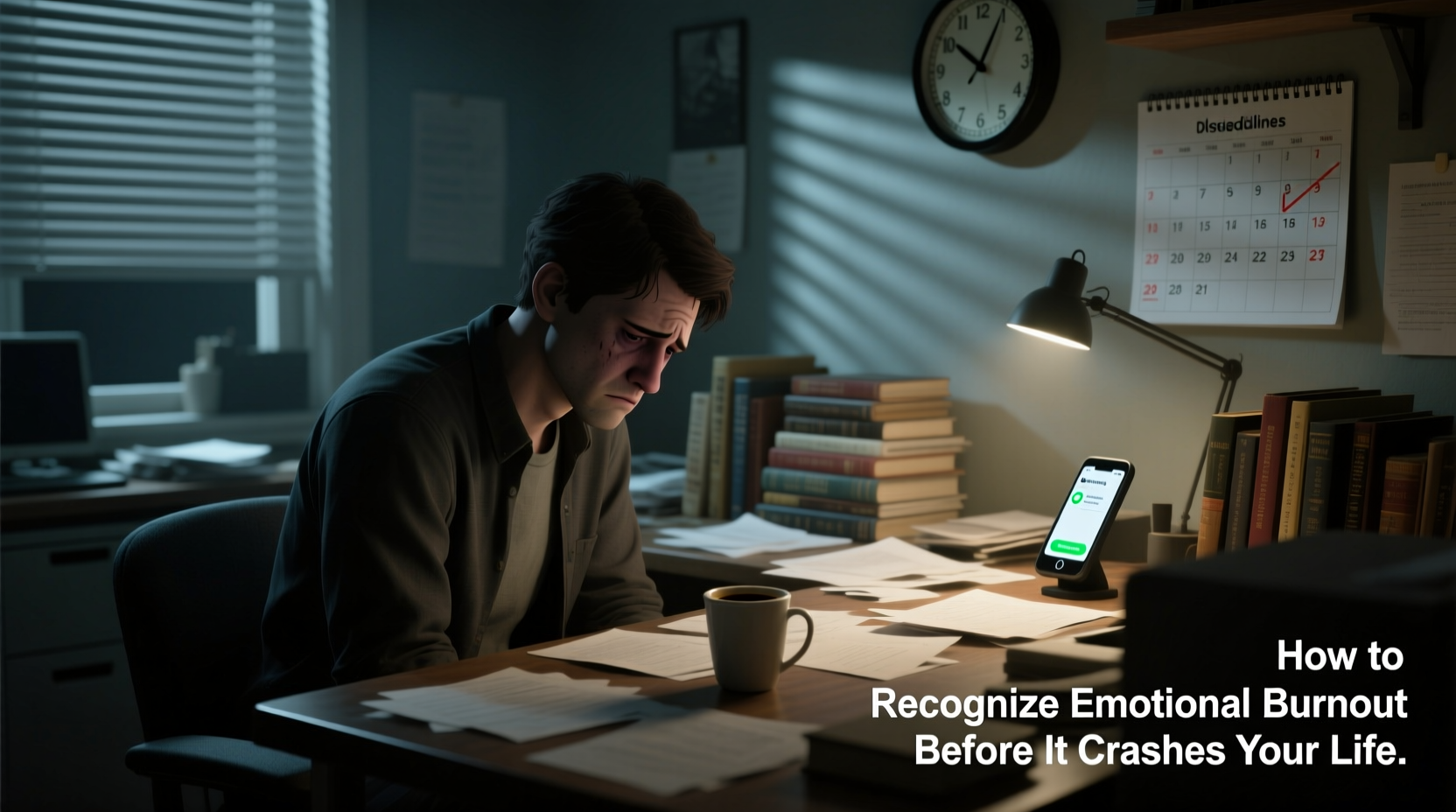
Burnout doesn’t happen overnight. It develops in stages, often masked by productivity, discipline, or denial. Psychologists describe it as a response to chronic workplace stress that hasn't been successfully managed—but it extends far beyond the office. Caregivers, entrepreneurs, parents, and volunteers are equally vulnerable.
The World Health Organization (WHO) officially recognized burnout in 2019 as an occupational phenomenon characterized by three dimensions:
- Feelings of energy depletion or exhaustion
- Increased mental distance from one’s job, or feelings of negativism or cynicism related to one's work
- Reduced professional efficacy
While initially framed around work, these symptoms apply broadly to any sustained emotional or psychological effort without adequate recovery.
Tip: If you find yourself routinely saying, “I’ll rest when this project ends,” but there’s always another project, you’re on a collision course with burnout.Early Warning Signs You Can’t Afford to Ignore
The earliest signs of emotional burnout are often dismissed as temporary stress or fatigue. But patterns matter. A single bad week doesn’t mean you’re burned out—consistent signals over weeks or months do.
Physical Symptoms
- Chronic fatigue, even after full nights of sleep
- Frequent headaches or muscle tension
- Changes in appetite or weight
- Increased susceptibility to illness due to lowered immunity
- Sleep disturbances—either insomnia or oversleeping
Emotional and Mental Shifts
- Irritability over small inconveniences
- Feeling emotionally numb or detached
- Lack of motivation, even for tasks you used to enjoy
- Persistent sense of dread about daily responsibilities
- Difficulty concentrating or making decisions
Behavioral Changes
- Withdrawing from social interactions
- Procrastinating or skipping commitments
- Relying on substances like alcohol, caffeine, or sugar to cope
- Neglecting personal care or hygiene
- Increased absenteeism or presenteeism (being physically present but mentally disengaged)
One of the most telling signs is a shift in your internal narrative. Where you once thought, “This is hard, but I can handle it,” you might now hear, “What’s the point?” That erosion of meaning is a red flag.
“Burnout begins when recovery no longer keeps up with demand. The body and mind are sending signals long before the system fails.” — Dr. Amira Patel, Clinical Psychologist and Stress Resilience Researcher
Who Is Most at Risk?
While anyone can experience burnout, certain personality types and life circumstances increase vulnerability.
| Risk Factor | Description | Example |
|---|---|---|
| Perfectionism | Setting unrealistically high standards and tying self-worth to performance | A manager who works late every night because \"only A+ work counts\" |
| High Responsibility Load | Juggling multiple demanding roles (e.g., parent, employee, caregiver) | A nurse working 12-hour shifts while homeschooling two children |
| Lack of Control | Little autonomy over schedule, workload, or decision-making | An employee micromanaged daily with no input on priorities |
| Poor Work-Life Boundaries | Answering emails late at night or feeling guilty for taking breaks | A freelancer who never disconnects, fearing lost opportunities |
| Altruistic Overextension | Putting others’ needs ahead of one’s own consistently | A volunteer coordinator who skips meals to support others |
If several of these apply to you, you don’t need to wait for collapse to take action. Prevention starts with acknowledgment.
A Real-Life Example: The Breaking Point That Wasn’t Sudden
Consider Lena, a 37-year-old nonprofit director. On paper, she was thriving—leading impactful programs, praised by her board, active in her community. But behind the scenes, she hadn’t taken a full weekend off in 18 months. She started waking up at 3 a.m. with racing thoughts. She snapped at her partner over laundry. Her favorite hobby—painting—gathered dust.
She chalked it up to “a busy season.” Then, during a routine team meeting, she burst into tears when asked to reschedule a call. That moment shocked her—and her team. What looked like a sudden breakdown was actually the culmination of ignored signals: chronic fatigue, emotional flatness, and physical tension that had built for over a year.
After taking medical leave, Lena began therapy and restructured her work boundaries. “I thought pushing through was strength,” she said later. “But real strength was admitting I was breaking.”
Step-by-Step Guide to Early Detection and Intervention
Waiting until you’re exhausted isn’t the only option. Use this timeline to catch burnout before it takes control.
- Week 1–4: Monitor Daily Signals
Create a simple journal. Each evening, note:- Your energy level (1–10)
- One emotion you felt most strongly
- Whether you took breaks
- Hours slept
- Month 2: Evaluate Patterns
Review your journal. Are you consistently below a 5 in energy? Do words like “drained,” “overwhelmed,” or “numb” dominate? This is not normal stress—it’s accumulation. - Month 3: Introduce Recovery Rituals
Add non-negotiable recovery practices:- 30 minutes of screen-free time before bed
- One full day off per week (no work emails or calls)
- Short walks in nature, even 10 minutes daily
- Month 4: Set Structural Boundaries
Adjust your environment:- Block focus and rest hours in your calendar
- Delegate one recurring task, even if imperfectly
- Communicate limits: “I don’t take work calls after 7 p.m.”
- Ongoing: Reassess Monthly
Ask: “Am I recovering faster than I’m depleting?” If not, adjust. Recovery isn’t luxury—it’s infrastructure.
Action Plan: What to Do When You See the Signs
Spotting burnout early is only half the battle. Action turns insight into change. Use this checklist to respond effectively:
- ✔ Assess Your Load
- List all ongoing responsibilities. Highlight which ones drain you versus energize you. Consider pausing or delegating at least one draining task.
- ✔ Restore Sleep Hygiene
- Set a fixed bedtime and wake time. Avoid screens 60 minutes before sleep. Keep your bedroom cool and dark.
- ✔ Reconnect with Joy
- Do one thing purely for enjoyment this week—reading, gardening, cooking, music. Not for productivity. Just for pleasure.
- ✔ Talk to Someone
- Share your feelings with a trusted friend, mentor, or therapist. Verbalizing your experience reduces isolation.
- ✔ Adjust Expectations
- Challenge perfectionist thinking. Replace “I must do everything perfectly” with “I will do my best within my limits.”
- ✔ Seek Professional Support
- If symptoms persist beyond two weeks, consult a mental health professional. Therapy, coaching, or medical evaluation may be necessary.
Frequently Asked Questions
Is emotional burnout the same as depression?
No, though they share symptoms like fatigue and hopelessness. Depression is a clinical mental health condition that can occur independently of external stressors. Burnout is specifically tied to chronic unmanaged stress, usually in work or caregiving contexts. However, prolonged burnout can increase the risk of developing depression. Always consult a healthcare provider for accurate diagnosis.
Can you recover from burnout without quitting your job?
Yes—many people do. Recovery often involves changing how you engage with your role, not necessarily leaving it. Setting firmer boundaries, renegotiating responsibilities, improving recovery habits, and seeking support can make a significant difference. In some cases, a temporary leave or role adjustment may be needed, but resignation isn’t the only solution.
How long does it take to recover from burnout?
Recovery time varies. Mild burnout may resolve in a few weeks with proper rest and lifestyle changes. Moderate to severe cases can take months. The key is consistency in recovery practices and avoiding a return to old patterns too quickly. Think of it like healing from a physical injury—rushing back leads to reinjury.
Protect Your Inner Foundation Before It Cracks
Emotional burnout doesn’t reflect weakness. It reflects engagement—often too much of it, without balance. The ability to recognize its signs isn’t about vigilance against failure; it’s about honoring your human limits. In a culture that glorifies hustle, choosing rest is revolutionary.
You don’t have to wait for a breakdown to begin rebuilding. Start today: pause, reflect, and ask yourself honestly, “Am I replenishing as much as I’m expending?” If the answer gives you pause, that’s not a flaw—it’s data. And data is power.
Your well-being isn’t secondary to your goals. It’s the ground they grow from. Protect it fiercely.
💬 Have you noticed burnout signs in your life? What helped you recover? Share your story in the comments—your experience could be the wake-up call someone else needs.








