
Garlic tincture is a concentrated liquid extract made by steeping fresh garlic in alcohol or vinegar, designed to preserve and intensify its bioactive compounds. Used for centuries in folk medicine and modern herbalism, this potent preparation offers a convenient way to harness the immune-supportive, antimicrobial, and cardiovascular benefits of garlic without the pungent breath or digestive irritation some experience when consuming raw cloves. Making garlic tincture at home is both economical and empowering—allowing full control over ingredient quality, potency, and formulation. With minimal equipment and time, anyone can produce a shelf-stable, effective remedy that integrates seamlessly into daily wellness routines.
Definition & Overview
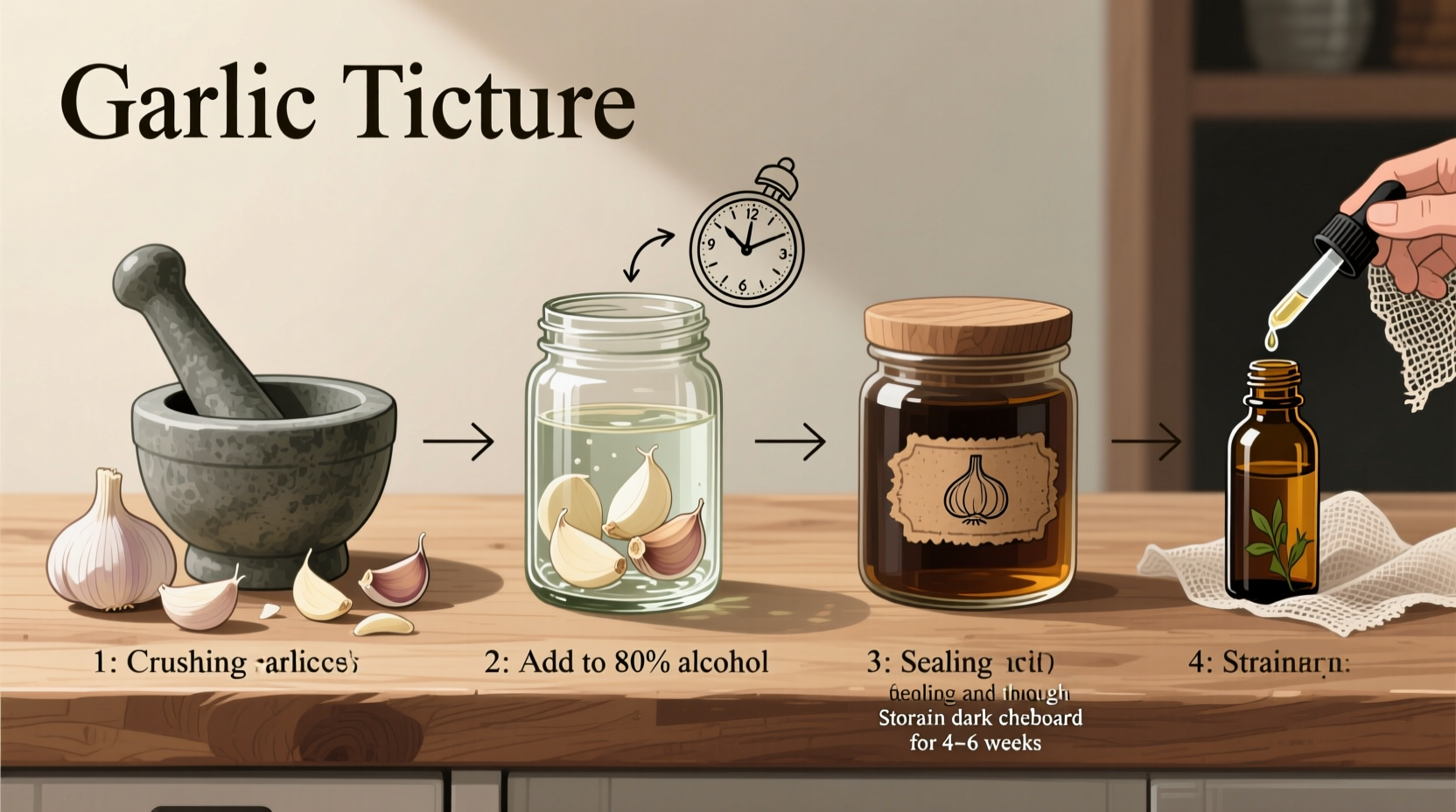
A tincture is an alcohol- or vinegar-based extraction of plant material, used primarily to concentrate medicinal properties into a stable, bioavailable form. Garlic tincture specifically refers to an extract derived from *Allium sativum*, the common garlic bulb, which has been celebrated across cultures—from ancient Egypt to traditional Chinese medicine—for its therapeutic potential. Unlike culinary use, where flavor dominates, tincturing focuses on preserving allicin and other sulfur-containing compounds responsible for garlic’s pharmacological effects.
The process involves macerating crushed or sliced fresh garlic in a solvent—typically high-proof ethanol (such as vodka or grain alcohol) or apple cider vinegar—for several weeks. During this time, the solvent draws out soluble constituents, resulting in a deeply flavored, amber-to-golden liquid rich in organosulfur compounds, flavonoids, and volatile oils. The final product can be taken orally in small doses, either directly or diluted in water, and stored for years without refrigeration.
While not a substitute for medical treatment, garlic tincture is widely regarded as a supportive agent for immune modulation, blood pressure regulation, and microbial defense. Its popularity among home herbalists stems from accessibility, low cost, and historical validation through both anecdotal evidence and scientific research.
Key Characteristics
| Characteristic | Description |
|---|---|
| Flavor Profile | Intensely pungent, sharp, slightly sweet with a lingering heat; more concentrated than raw garlic |
| Aroma | Strong sulfurous scent, reminiscent of freshly crushed garlic, persisting even after dilution |
| Color | Amber, golden yellow, or pale green depending on garlic age and solvent used |
| Heat Level | Moderate to high—burns slightly on tongue due to volatile compounds; sensation diminishes with dilution |
| Culinary Function | Limited direct culinary use; primarily medicinal, though trace amounts may enhance savory broths or dressings |
| Shelf Life | Alcohol-based: 4–6 years; vinegar-based: 1–2 years when stored properly |
| Solubility | Active compounds like allicin are partially alcohol-soluble; vinegar extracts different phytochemicals |
Practical Usage
Garlic tincture is intended for internal use in small quantities. A typical dose ranges from 1 to 3 milliliters (¼ to ¾ teaspoon), taken once or twice daily, especially during cold and flu season or periods of lowered immunity. It should always be diluted in water, juice, or tea to reduce throat irritation and mask intensity. For children or sensitive individuals, start with ½ mL and observe tolerance.
To maximize absorption, take on an empty stomach or 20 minutes before meals. Some users prefer nighttime dosing to avoid social discomfort from residual odor. While not palatable in large amounts, consistent low-dose use aligns with long-term preventive health strategies rather than acute symptom relief.
TIP: To minimize gastric upset, consume garlic tincture with a small amount of food or follow it with a chaser of olive oil or yogurt. Avoid taking undiluted shots—this increases risk of mucosal irritation.
In professional herbal practice, garlic tinctures are often combined with complementary botanicals such as echinacea, ginger, or elderberry to create synergistic immune blends. Clinical herbalists may recommend standardized dosing protocols based on body weight and health status. For example, adults weighing over 70 kg (154 lbs) might take 2 mL twice daily during peak winter months, while lighter individuals receive proportionally lower doses.
Home cooks interested in functional foods occasionally incorporate minute drops (1–2 per liter) into soups, bone broths, or fermented sauces to subtly boost nutritional value without altering taste significantly. However, heat degrades many active compounds, so adding tincture post-cooking preserves efficacy.
Variants & Types
Not all garlic tinctures are created equal. The choice of base solvent, garlic variety, and preparation method results in distinct variants with varying strengths, uses, and storage requirements.
- Alcohol-Based Tincture: Made with 80–100 proof (40–50% ABV) ethanol, typically vodka or food-grade grain alcohol. This version extracts the broadest spectrum of compounds, including resins and less polar molecules. It is more potent, longer-lasting, and preferred for serious herbal applications.
- Vinegar-Based Extract: Uses raw, unfiltered apple cider vinegar instead of alcohol. Suitable for those avoiding ethanol (e.g., children, recovering alcoholics). Less efficient at extracting certain compounds but still captures water-soluble antioxidants and minerals. Requires refrigeration after opening and has a shorter shelf life.
- Glycerin-Based (Less Common): Vegetable glycerin produces a sweet, mild extract suitable for pediatric formulations. However, it poorly extracts sulfur compounds and yields a weaker medicinal profile. Rarely recommended for garlic unless necessary for sensitivity reasons.
- Fresh vs. Dried Garlic: Fresh, raw garlic is vastly superior. Dried garlic powder lacks the enzyme alliinase needed to generate allicin upon crushing. Always use organic, firm, unblemished bulbs for best results.
Regional variations also exist. In Eastern European traditions, garlic tinctures are sometimes blended with honey and lemon for winter tonics. In Ayurvedic-inspired practices, garlic may be infused in warm sesame oil (known as *tila taila*) for external application to joints or ears, though this differs fundamentally from alcoholic tinctures.
Comparison with Similar Ingredients
Garlic tincture is frequently confused with other garlic preparations, each differing in composition, purpose, and effectiveness.
| Product | Base | Potency | Primary Use | Shelf Life |
|---|---|---|---|---|
| Garlic Tincture (alcohol) | Alcohol (ethanol) | High – full-spectrum extraction | Internal medicinal use | 4–6 years |
| Garlic Vinegar Extract | Apple cider vinegar | Moderate – selective solubility | Daily wellness, culinary adjunct | 1–2 years (refrigerated) |
| Garlic Powder Capsules | Dried garlic powder | Variable – depends on standardization | Convenient supplementation | 2–3 years |
| Raw Crushed Garlic | None (whole food) | High (short-lived allicin release) | Cooking, immediate immune boost | Hours (once crushed) |
| Aged Garlic Extract (AGE) | Water-extracted aged garlic | Moderate-high – stable compounds (S-allylcysteine) | Cardiovascular support | Commercial only, ~3 years |
“The advantage of a homemade tincture is transparency—you know exactly what went into it. Commercial supplements vary wildly in allicin yield, and many contain fillers or binders that compromise purity.” — Dr. Elena Márquez, Clinical Herbalist & Author of *Botanical Medicine Today*
Step-by-Step Guide: How to Make Garlic Tincture at Home
Creating your own garlic tincture ensures freshness, potency, and freedom from additives. Follow this detailed method for reliable results.
- Gather Supplies
- 1 medium head of organic garlic (approx. 10–12 cloves)
- 1 cup (240 mL) of 80–100 proof vodka or food-grade grain alcohol (e.g., Everclear)
- 1 clean glass jar with tight-sealing lid (8 oz / 250 mL capacity)
- Unbleached coffee filter or cheesecloth
- Small funnel
- Dark glass dropper bottles for storage (amber or cobalt)
- Prepare the Garlic
Peel each clove and slice thinly or crush lightly with the flat side of a knife. Crushing activates alliinase, the enzyme that converts alliin into allicin—the key bioactive compound. Do not mince too finely, as this makes straining difficult.
- Fill the Jar
Place prepared garlic into the glass jar. Pour alcohol over the cloves until they are submerged by at least 1 inch (2.5 cm). Seal tightly.
- Label and Store
Label the jar with contents and date. Store in a cool, dark place—such as a pantry or cupboard—away from sunlight and heat sources. Shake gently every day to promote extraction.
- Wait 3–6 Weeks
Allow the mixture to macerate for a minimum of 3 weeks; 4–6 weeks is ideal. Longer steeping increases potency but does not degrade quality.
- Strain and Bottle
Line a funnel with a coffee filter or cheesecloth and pour the liquid into dark glass dropper bottles. Squeeze remaining pulp gently to extract every drop. Discard solids or compost them.
- Store Properly
Keep finished tincture in a cool, dark cabinet. No refrigeration required. Alcohol prevents spoilage.
PRO TIP: For enhanced extraction, consider using a blender to briefly pulse garlic with half the alcohol before transferring to the jar. This increases surface area and speeds up compound release. Just remember to transfer immediately to avoid oxidation.
Practical Tips & FAQs
Can I use rubbing alcohol?
No. Only food-grade ethanol (like vodka, brandy, or grain alcohol) should be used. Rubbing alcohol (isopropyl) is toxic and unsafe for consumption.
Why does my tincture look cloudy?
Cloudiness is normal, especially early in the process. It indicates suspended plant particles and released oils. Most clears after thorough straining and settling.
Does garlic tincture go bad?
Properly made alcohol-based tinctures do not spoil. Over many years, color may darken and potency slowly decline, but safety remains intact. Vinegar-based versions can develop mold if contaminated—always inspect before use.
What’s the best garlic variety to use?
Hardneck varieties (e.g., Porcelain, Rocambole) generally have higher allicin potential than softneck. However, any fresh, organic garlic will work well. Avoid sprouted or shriveled cloves.
Is there a non-alcoholic alternative?
Yes. Apple cider vinegar works as a solvent, though it extracts fewer compounds. Glycerin is another option but yields a much milder product. Neither matches alcohol’s efficiency.
Can I heat the mixture to speed extraction?
No. Heat destroys delicate sulfur compounds like allicin. Always macerate at room temperature. Patience is essential.
How do I know it's working?
Effects are subtle and cumulative. Users often report fewer respiratory infections, improved circulation, or reduced blood pressure over time. These outcomes reflect long-term support, not immediate cures.
Are there side effects?
Excessive intake may cause heartburn, nausea, or increased bleeding risk (due to mild anticoagulant properties). Discontinue use before surgery and consult a healthcare provider if on blood thinners.
Can I give it to pets?
Use extreme caution. While some holistic veterinarians recommend tiny doses for dogs, garlic is toxic to cats and certain breeds (e.g., Japanese breeds like Shiba Inu). Never administer without professional guidance.
Should I peel the garlic?
Yes. The papery skin contributes little to extraction and can harbor dirt or microbes. Peeling ensures cleaner, safer tincture.
Storage, Shelf Life & Safety
Store alcohol-based garlic tincture in tightly sealed, dark glass bottles away from light and heat. Ideal conditions mimic wine storage: cool, dry, and stable. Properly preserved, it retains therapeutic value for four to six years.
Vinegar-based versions should be refrigerated after two months and used within 18 months. Always label with batch date and solvent type.
Keep out of reach of children. Despite its natural origin, this is a concentrated preparation. Accidental ingestion of large quantities may lead to gastrointestinal distress.
Individuals with known allergies to alliums (onions, leeks, chives) should avoid garlic tincture altogether. Those on anticoagulant medications (e.g., warfarin) should consult their physician due to potential interactions.
Summary & Key Takeaways
Garlic tincture is a powerful, time-tested method for capturing the health-promoting properties of garlic in a stable, easy-to-use format. By combining fresh garlic with high-proof alcohol, home preparers can create a potent extract rich in allicin and related sulfur compounds known for antimicrobial, immune-modulating, and cardiovascular benefits.
The process is simple: peel and crush fresh cloves, submerge in alcohol, wait 3–6 weeks, strain, and store. No special skills or equipment are required beyond basic kitchen tools. The result is a shelf-stable remedy that supports wellness year-round.
Choose alcohol for maximum potency and longevity; opt for vinegar if avoiding ethanol. Avoid glycerin unless absolutely necessary. Always use fresh, organic garlic and never compromise on solvent quality.
Used responsibly, garlic tincture complements a proactive health regimen. While not a cure-all, its role in preventive care is supported by both tradition and science. Making it at home empowers individuals to engage directly with plant medicine, fostering deeper understanding and self-reliance.
Start a batch today—your future self may thank you when cold season arrives.









