Yoga mats develop odors over time due to sweat, skin oils, bacteria, and environmental exposure. While a musty or sour smell is common, especially with frequent use, it doesn’t mean you need to replace your mat. The right cleaning method can eliminate odor while preserving the integrity of the material. Whether your mat is made of PVC, TPE, rubber, or natural cork, improper cleaning can degrade its texture, cause cracking, or reduce grip. This guide provides practical, damage-free strategies to restore freshness and extend the life of your yoga mat.
Understanding Why Yoga Mats Smell
Odor buildup on a yoga mat isn't just unpleasant—it’s a sign of microbial activity. Sweat contains salt, urea, and organic compounds that feed bacteria and fungi thriving in warm, damp environments. When a mat isn’t dried properly after use, these microbes multiply, producing volatile organic compounds responsible for foul smells. Additionally, dirt, dust, and lotions from your skin contribute to residue accumulation, creating a breeding ground for odor-causing organisms.
The type of mat also influences how quickly it absorbs moisture and develops smells. Closed-cell materials like PVC resist absorption better than open-cell foams or natural rubber, which are more porous. Cork and jute surfaces, while antimicrobial by nature, can still trap moisture if not cared for correctly.
“Most yoga mat odors come from trapped moisture and bacterial growth. Regular airing and gentle cleaning prevent long-term damage.” — Dr. Lena Torres, Microbiologist & Wellness Consultant
Safe Cleaning Methods by Material Type
Cleaning a yoga mat requires matching the method to the material. Using harsh chemicals or soaking certain mats can lead to warping, delamination, or loss of cushioning. Below is a breakdown of recommended approaches based on common mat types.
| Mat Material | Safe Cleaning Method | Avoid |
|---|---|---|
| PVC | Wipe with mild soapy water; air dry flat | Soaking, direct sunlight, abrasive scrubbing |
| TPE (Thermoplastic Elastomer) | Spot clean with vinegar solution; rinse lightly | Submerging, alcohol-based cleaners |
| Natural Rubber | Damp cloth with diluted castile soap; wipe and dry in shade | Bleach, ammonia, prolonged sun exposure |
| Cork | Spray with water and tea tree oil mix; wipe gently | Excessive water, submersion |
| Jute/Cotton Blends | Hand wash with cold water and mild detergent | Machine washing, wringing, high heat drying |
Step-by-Step Guide to Deep Clean Your Yoga Mat
For a thorough yet safe deep clean, follow this five-step process. It works for most non-submersible mats and eliminates odor at the source without aggressive scrubbing or chemical overload.
- Shake and Vacuum Surface Debris
Take your mat outdoors and shake it vigorously to dislodge dust and dead skin cells. For textured or fabric-backed mats, use a soft brush attachment on a vacuum to remove embedded particles. - Prepare a Gentle Cleaning Solution
Mix one cup of lukewarm water with two tablespoons of white vinegar and a few drops of tea tree oil (a natural antifungal). Alternatively, use a teaspoon of unscented castile soap diluted in a spray bottle filled with water. Avoid essential oils with citrus bases if your mat is rubber-based, as they may degrade the material. - Apply Solution Evenly
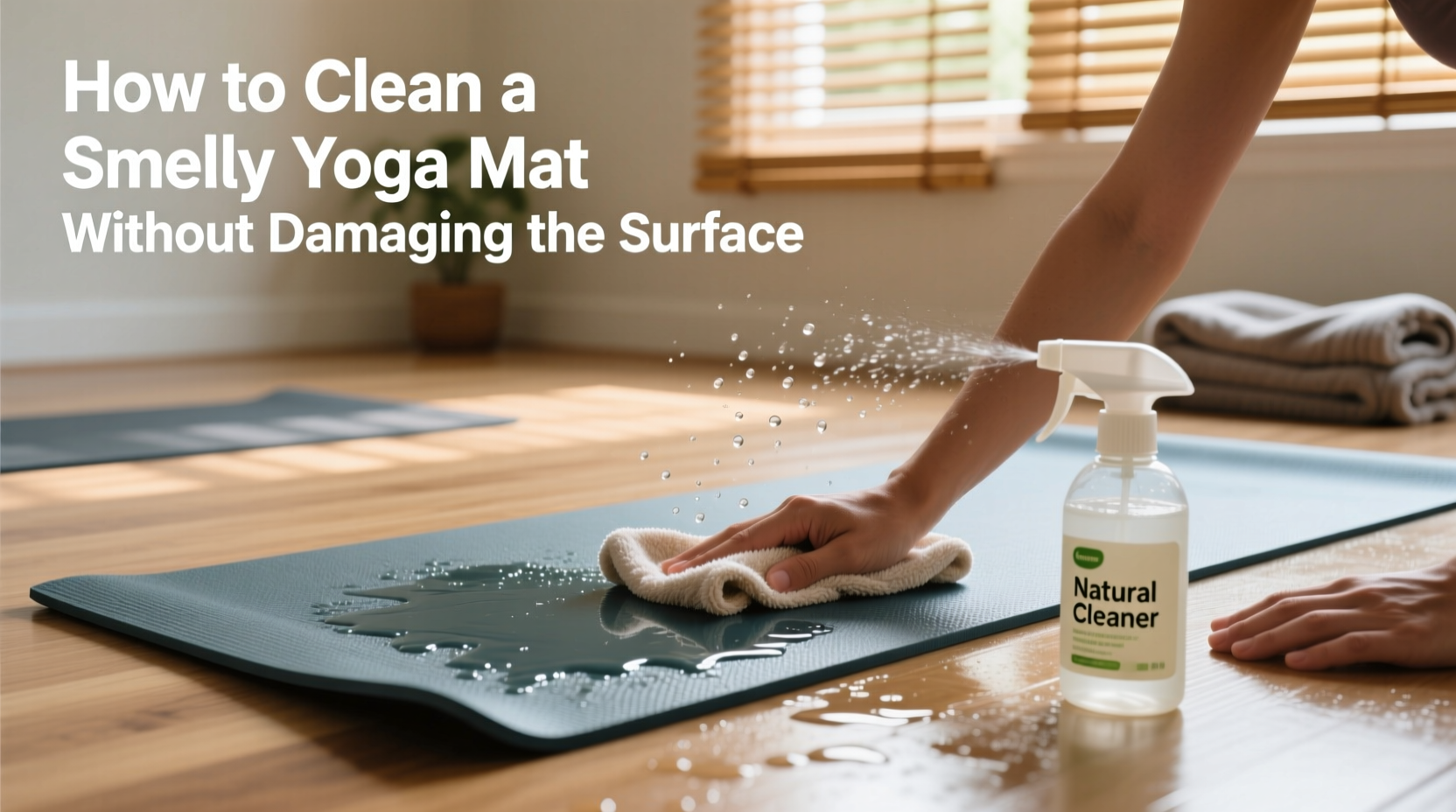
Spray the solution lightly across one side of the mat. Do not oversaturate���excess moisture seeps into layers and encourages mold. Use a microfiber cloth to wipe in circular motions, focusing on high-sweat zones like the center and hand/foot placements. - Rinse and Dry Properly
Wipe the mat with a clean, damp cloth to remove soap residue. Then, hang it over a railing or lay it flat on a dry towel in a shaded, well-ventilated area. Never dry in direct sunlight or near heaters, as UV and heat warp materials and fade colors. - Deodorize Naturally
Once dry, sprinkle a light layer of baking soda over the surface. Let sit for 15–20 minutes, then brush off with a dry cloth. Baking soda neutralizes lingering odors without abrasion.
When Machine Washing Is Acceptable
Only machine-washable mats—typically those labeled as such by the manufacturer—should go in a washer. These are often travel mats or ultra-lightweight models made from durable synthetics.
- Use a front-loading machine (top loaders with agitators can damage mats).
- Place the mat inside a pillowcase or laundry bag to reduce friction.
- Wash on cold, gentle cycle with mild detergent—no fabric softeners.
- Hang immediately to dry; never tumble dry.
Preventing Future Odors: Daily Habits That Work
Prevention is the most effective way to avoid persistent smells. Incorporating simple post-practice routines drastically reduces bacterial buildup and extends mat lifespan.
Wipe After Every Use
Keep a dedicated mat-cleaning spray and microfiber towel in your yoga bag. A quick wipe-down removes sweat before it dries and breeds bacteria. A basic DIY spray: ¾ water, ¼ rubbing alcohol (70%), and 5 drops of lavender or tea tree oil. Alcohol evaporates quickly and kills microbes without leaving residue.
Air It Out Completely
Rolling up a damp mat traps moisture inside. Instead, unroll it at home and drape it over a banister or drying rack for at least an hour after class. If space is limited, hang it vertically using a wall-mounted hook or door hanger.
Rotate Mats for Heavy Users
If you practice daily, consider owning two mats. Alternating use allows each mat ample time to dry and off-gas between sessions, reducing wear and odor development.
Store Smartly
Store your mat rolled loosely in a breathable cotton bag—not plastic, which traps humidity. Keep it in a cool, dry closet away from basements or garages where mold spores are prevalent.
“Hygiene isn’t optional in shared practice spaces. A clean mat protects both your health and your investment.” — Rachel Kim, Certified Yoga Instructor & Studio Owner
Mini Case Study: Reviving a Six-Month-Old Rubber Mat
Sophie, a Vinyasa enthusiast in Portland, noticed her natural rubber mat developed a sour dairy-like smell after five months of twice-weekly use. She had been wiping it with baby wipes, thinking it was sufficient. After learning about microbial buildup, she followed the deep-cleaning protocol outlined above.
She shook the mat outside, sprayed it with a mix of water, castile soap, and tea tree oil, wiped it thoroughly, and hung it in her breezy sunroom (out of direct sunlight) for 12 hours. The next day, she applied baking soda, brushed it off, and performed a short session on the mat. The odor was gone, and the surface felt grippier than before. Sophie now wipes her mat after every class and airs it overnight once a week. Eight months later, the mat remains fresh and fully functional.
Checklist: How to Clean and Maintain a Fresh Yoga Mat
- ✅ Shake off debris after each use
- ✅ Wipe with a natural, non-abrasive cleaner post-practice
- ✅ Air-dry completely before rolling
- ✅ Deep clean monthly (or biweekly for heavy use)
- ✅ Store in a breathable bag, away from humidity
- ✅ Perform a baking soda treatment every 6–8 weeks
- ✅ Replace if cracked, peeling, or permanently odorous despite cleaning
Frequently Asked Questions
Can I use bleach to kill the smell on my yoga mat?
No. Bleach breaks down synthetic polymers and natural rubber, causing brittleness and cracking. It also leaves toxic residues that can irritate skin and lungs during practice. Stick to vinegar, hydrogen peroxide (3%), or plant-based disinfectants instead.
Why does my mat still smell after washing?
Residual moisture trapped between layers or within pores can harbor bacteria. Ensure full drying time—up to 24 hours in humid climates. If odor persists, the mat may be beyond recovery, especially if it has delaminated or absorbed contaminants deeply.
Is it safe to use essential oils on my mat?
Yes, but selectively. Tea tree, eucalyptus, and lavender oils have antimicrobial properties and are generally safe in diluted form (5–10 drops per cup of water). Avoid citrus oils (like lemon or orange) on rubber mats, as limonene can degrade the material over time.
Conclusion: Care for Your Mat, Respect Your Practice
A smelly yoga mat doesn’t signal the end of its life—it’s a call for better care. With consistent, thoughtful maintenance, most mats can stay fresh, hygienic, and supportive for years. The methods outlined here protect both the physical structure and performance qualities of your mat, ensuring it remains a reliable foundation for your practice. By choosing natural cleaners, allowing proper drying, and adopting simple daily habits, you preserve not just the mat, but also the mindfulness that defines your routine.
💬 Have a favorite mat-cleaning hack or product that works wonders? Share your experience in the comments and help build a community of informed, eco-conscious yogis!








