
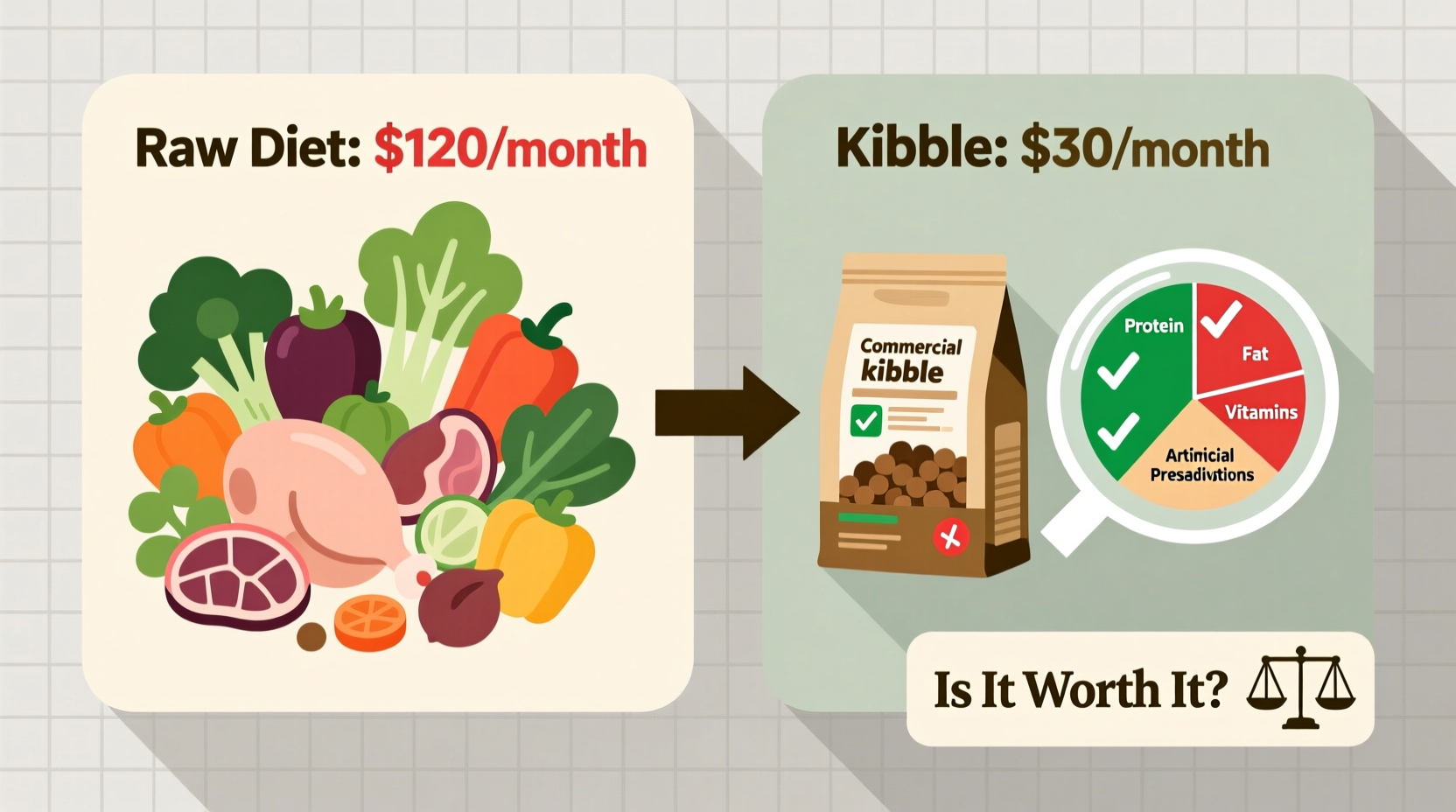
For pet owners navigating the increasingly complex world of canine and feline nutrition, the debate between fresh food—particularly raw diets—and traditional kibble is more heated than ever. Advocates of raw feeding claim transformative health benefits: shinier coats, cleaner teeth, increased energy, and fewer allergies. On the other side, veterinarians and researchers often caution against bacterial risks, nutritional imbalances, and the steep financial burden. With raw diets costing two to four times as much as premium kibble, the central question remains: Is the raw diet truly worth the massive cost difference?
The answer isn’t simple. It depends on your pet’s health, lifestyle, digestive resilience, and your own capacity to manage preparation, storage, and hygiene. This article breaks down the science, economics, and practical realities behind fresh food versus kibble to help you make an informed decision—not based on trends, but on evidence and long-term outcomes.
Nutritional Foundations: What's Really in the Bowl?
Kibble has dominated the pet food market for decades due to its convenience, shelf stability, and standardized formulations. Most commercial kibbles are designed to meet AAFCO (Association of American Feed Control Officials) standards, meaning they provide “complete and balanced” nutrition for dogs or cats at specific life stages. These diets typically rely on rendered meats, grains, legumes, and synthetic vitamin supplements to deliver required nutrients.
In contrast, raw diets aim to mimic what animals might consume in the wild: muscle meat, organ meats (like liver and kidney), bones, and sometimes vegetables and fruits. Proponents argue that cooking destroys enzymes, denatures proteins, and reduces bioavailability of certain nutrients. Raw feeding philosophies vary—from whole prey models to BARF (Biologically Appropriate Raw Food) diets—but all emphasize unprocessed, animal-based ingredients.
From a macronutrient perspective, raw diets tend to be higher in protein and fat, lower in carbohydrates, and free from fillers like corn or soy. This aligns more closely with the ancestral biology of carnivorous pets, especially cats, who are obligate carnivores. However, high protein doesn't automatically mean better nutrition. The quality, digestibility, and balance of amino acids, vitamins, and minerals matter just as much.
“While raw diets can offer superior ingredient quality, they’re not inherently more nutritious unless carefully formulated. Many homemade versions lack essential nutrients like calcium, phosphorus, or taurine.” — Dr. Karen Becker, Integrative Veterinarian
Cost Comparison: Breaking Down the Price Tag
One of the most immediate barriers to raw feeding is cost. A 30-pound bag of high-end kibble averages $80–$120 and can feed a 50-pound dog for six to eight weeks. In contrast, a comparable amount of pre-packaged raw food costs $250–$400 and lasts only three to four weeks. For many households, this represents a monthly expense increase of $150 or more.
To illustrate the difference, consider the following comparison for a medium-sized dog consuming approximately 2 pounds of food per day:
| Diet Type | Daily Cost | Monthly Cost | Annual Cost |
|---|---|---|---|
| Premium Kibble | $2.50 | $75 | $900 |
| Frozen Raw (Pre-Packaged) | $6.00 | $180 | $2,160 |
| Homemade Raw (Balanced) | $4.25 | $128 | $1,530 |
The data shows that even homemade raw diets—which require significant time investment—are still nearly double the annual cost of premium kibble. While some owners report reduced veterinary bills over time due to improved digestion and skin health, these savings are anecdotal and not guaranteed. Chronic conditions may improve, but acute issues related to contamination or nutrient deficiencies could offset any gains.
Tip: If considering raw, start with partial integration—replace one meal per day with raw food to test tolerance and manage costs.Health Outcomes: Real Benefits and Hidden Risks
Pet owners switching to raw diets often report noticeable changes within weeks: smaller stools, increased energy, reduced itching, and improved dental health. Some studies support these observations. A 2022 study published in Veterinary Medicine and Science found that dogs on raw diets had significantly lower levels of fecal alkaline phosphatase—an indicator of improved digestion—and less body odor.
However, these benefits come with documented risks. The FDA Center for Veterinary Medicine has repeatedly warned about the presence of pathogenic bacteria such as Salmonella, Listeria, and E. coli in raw pet foods. These pathogens pose dangers not only to pets with compromised immune systems but also to human family members through cross-contamination. Children, elderly individuals, and immunocompromised people are particularly vulnerable.
Nutritional imbalances are another concern. A 2020 study analyzing 95 commercial and homemade raw diets found that 60% failed to meet minimum requirements for at least one essential nutrient, including calcium, vitamin D, and zinc. Feeding an unbalanced raw diet over months or years can lead to serious conditions like skeletal deformities in growing puppies or dilated cardiomyopathy linked to taurine deficiency.
Case Example: Max, the Labrador with Chronic Ear Infections
Max, a 3-year-old yellow Labrador, suffered from recurring ear infections and itchy skin despite being on a grain-free kibble labeled “for sensitive skin.” His owner, Sarah, spent over $400 in vet visits and medications in one year. After consulting a veterinary nutritionist, she transitioned Max to a veterinarian-approved raw diet rich in omega-3 fatty acids and low in inflammatory ingredients.
Within eight weeks, Max’s ear inflammation decreased dramatically. His coat became denser and less prone to shedding. Stool volume dropped by half. Over the next year, Sarah saved $280 in medication and vet fees. While her food costs rose by $130 per month, she considered the trade-off worthwhile given Max’s improved quality of life.
But Max’s success story isn’t universal. Another client of the same nutritionist, a senior Chihuahua named Lola, developed pancreatitis after being fed a high-fat raw blend unsuitable for her age and metabolism. She required hospitalization and a return to a prescription kibble. The outcome underscores a critical point: raw diets are not one-size-fits-all.
Practical Guide: Transitioning Safely to Raw Food
If you're considering making the switch, doing so safely requires planning, patience, and attention to detail. Here’s a step-by-step approach to minimize digestive upset and maximize nutritional benefit.
- Consult Your Veterinarian or a Veterinary Nutritionist: Before changing your pet’s diet, get professional input—especially if your pet has existing health conditions.
- Start with Commercial Frozen Raw: These are more likely to be nutritionally balanced than homemade versions. Brands like Stella & Chewy’s, Primal, and Darwin’s offer tested formulas.
- Introduce Gradually Over 7–10 Days: Begin with 25% raw mixed into 75% current food. Increase the ratio every few days.
- Monitor Stool, Energy, and Appetite: Loose stools or vomiting indicate intolerance. Pause or slow the transition if issues arise.
- Practice Strict Hygiene: Thaw food in the refrigerator, not on the counter. Clean bowls and surfaces with hot, soapy water after each use. Wash hands thoroughly.
- Avoid Mixing Raw Meat with Kibble in the Same Meal: They digest at different rates and pH levels, which may cause gas or discomfort.
- Reevaluate Every Three Months: Track weight, coat condition, vet lab results, and behavioral changes.
Checklist: Is Raw Feeding Right for You?
- ✅ Do you have the budget to sustain a higher monthly food cost?
- ✅ Can you dedicate time to proper thawing, handling, and cleaning?
- ✅ Does your pet have no history of pancreatitis, kidney disease, or immune disorders?
- ✅ Are young children or immunocompromised individuals frequently exposed to pet areas?
- ✅ Have you consulted a vet or board-certified veterinary nutritionist?
- ✅ Are you using a commercially balanced product or a professionally formulated homemade plan?
If you answered “no” to any of the first three, raw feeding may not be practical. If you answered “yes” to the last three, you're more likely to succeed.
Frequently Asked Questions
Can I mix raw food and kibble?
You can, but not in the same meal. Due to differing digestion times, mixing them may cause gastrointestinal discomfort. Instead, feed raw in the morning and kibble at night, or alternate days during transition.
Are there long-term studies proving raw diets are healthier?
Currently, there are no large-scale, longitudinal studies confirming long-term health advantages of raw diets over high-quality kibble. Most evidence is observational or anecdotal. Research is ongoing, but limitations in funding and control variables make definitive conclusions difficult.
What if I want to try raw but can’t afford full-time feeding?
Many owners adopt a hybrid model—feeding raw for one meal a day and kibble for the other. You can also use raw as a topper to enhance palatability and add enzymes without doubling costs.
Conclusion: Weighing Value Beyond Price
The choice between fresh food and kibble ultimately hinges on value, not just cost. For some pets, especially those with chronic digestive issues, allergies, or low energy, a well-formulated raw diet can be transformative. The improvements in vitality, coat quality, and stool consistency may justify the financial investment for dedicated owners.
Yet for others—particularly pets with medical sensitivities or households with limited resources—premium kibble remains a safe, effective, and scientifically supported option. Modern formulations have evolved significantly, incorporating novel proteins, probiotics, and functional ingredients that bridge many of the gaps once associated with processed food.
The raw diet isn’t inherently superior simply because it’s more expensive or marketed as “natural.” Likewise, kibble isn’t inferior just because it’s cooked. What matters most is suitability: matching your pet’s biological needs with a diet you can consistently provide, safely handle, and afford over time.
💬 Have you tried raw feeding? What changed for your pet? Share your experience in the comments—your story could help another pet parent decide with confidence.








