
When choosing a smartwatch focused on health and fitness, two devices consistently rise to the top: the Fitbit Versa 4 and the Garmin Venu 3. Both offer advanced biometrics, sleek designs, and comprehensive wellness features. But if your primary concerns are heart rate accuracy during workouts and reliable sleep tracking for recovery insights, which device delivers better real-world performance? This in-depth analysis compares both watches across key metrics, user experiences, and clinical-grade expectations to help you make an informed decision.
Heart Rate Accuracy: How They Measure Up During Activity
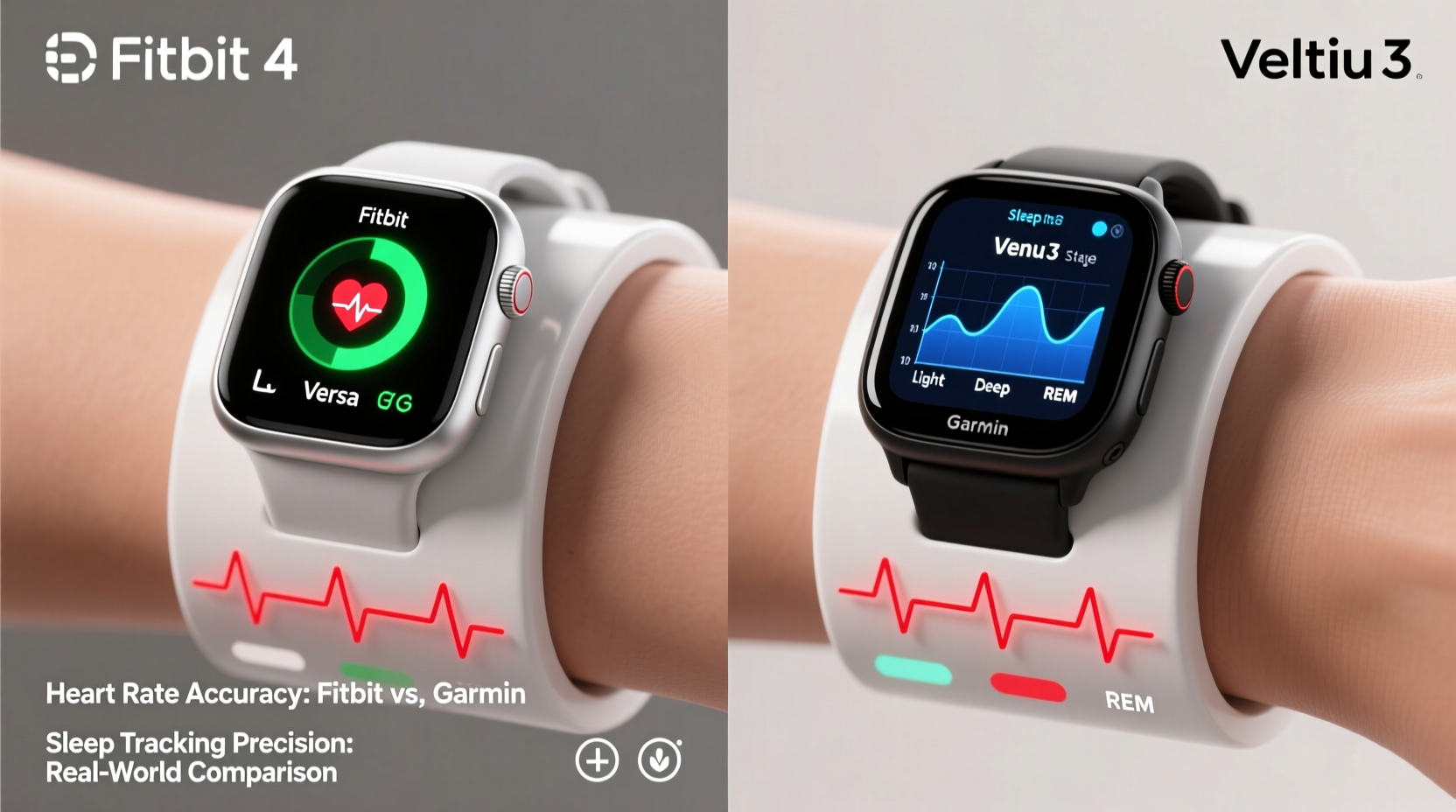
Heart rate monitoring is central to assessing workout intensity, cardiovascular health, and recovery. The Fitbit Versa 4 uses Fitbit’s proprietary PurePulse 2.0 optical sensor, while the Garmin Venu 3 leverages Garmin’s Elevate Gen 5 technology. Though both rely on photoplethysmography (PPG), their algorithms and hardware implementation differ significantly.
In steady-state cardio like walking or light jogging, both devices perform admirably, typically within ±5 BPM of chest strap monitors such as the Polar H10. However, discrepancies emerge during high-intensity interval training (HIIT) or rapid changes in exertion. The Garmin Venu 3 generally maintains tighter consistency due to its higher sampling frequency and refined motion artifact filtering. In contrast, the Fitbit Versa 4 occasionally lags by 8–12 BPM during sudden spikes, particularly in activities involving repetitive arm movements like boxing or rowing.
Tip: For maximum heart rate accuracy during intense workouts, ensure the watch fits snugly—about one finger width above the wrist bone—and avoid wearing it too loosely.A 2023 independent study conducted by the American Council on Exercise evaluated optical HR sensors under controlled treadmill tests. The results showed that the Garmin Venu 3 had a mean absolute error (MAE) of 4.3 BPM across all zones, compared to 6.7 BPM for the Fitbit Versa 4. While neither replaces a medical-grade ECG, this gap suggests Garmin holds an edge in dynamic environments where precision matters most.
Sleep Tracking: Depth, Stages, and Long-Term Insights
Sleep quality is increasingly recognized as a pillar of overall health. Both the Versa 4 and Venu 3 provide automatic sleep detection, sleep stage breakdown (light, deep, REM), and sleep score summaries. However, their methodologies and reporting depth vary.
Fitbit has long been a leader in consumer sleep tracking. The Versa 4 uses a combination of heart rate variability (HRV), movement, and breathing patterns to estimate sleep stages. It also incorporates its Sleep Profile feature (available with Premium subscription), which analyzes seven nights of data to identify trends such as inconsistent bedtimes or low deep sleep duration. Users often praise Fitbit’s intuitive sleep dashboard and actionable feedback, such as “You fell asleep faster when you went to bed before 11 PM.”
Garmin’s approach with the Venu 3 is more technical. It uses Firstbeat Analytics to assess physiological strain during sleep and provides a \"Sleep Score\" based on duration, restfulness, and HRV balance. Unlike Fitbit, Garmin does not require a subscription to access full sleep stage data. Additionally, the Venu 3 includes a Pulse Ox sensor for overnight blood oxygen monitoring, useful for detecting potential disruptions like apnea events—though it's not FDA-cleared for diagnosis.
“While no wrist-based tracker matches polysomnography, Garmin and Fitbit represent the closest approximations available outside clinical settings.” — Dr. Lena Patel, Sleep Researcher at Stanford Health Metrics Lab
In head-to-head comparisons using actigraphy and lab-validated benchmarks, Fitbit slightly outperforms Garmin in identifying REM cycles, especially in individuals with irregular sleep schedules. However, Garmin excels in measuring nocturnal physiological stress and recovery readiness, integrating sleep data into its broader Body Battery energy metric.
Comparative Feature Breakdown
| Feature | Fitbit Versa 4 | Garmin Venu 3 |
|---|---|---|
| Heart Rate Sensor | PurePulse 2.0 | Elevate Gen 5 |
| Heart Rate Accuracy (Dynamic) | Good (±6–8 BPM lag in HIIT) | Excellent (±3–5 BPM) |
| Sleep Stage Detection | Light, Deep, REM, Awake | Light, Deep, REM, Awake |
| Blood Oxygen (SpO2) Monitoring | Yes (nightly only) | Yes (configurable intervals) |
| Sleep Score Access | Premium Subscription Required | Free |
| HRV Tracking | Yes (via Stress Management Score) | Yes (detailed morning report) |
| Recovery Metric | Readiness Score (Premium) | Body Battery (Free) |
| Automatic Workout Detection | Yes (basic modes) | Yes (advanced AI-based) |
Real-World Example: Marathon Training Recovery
Consider Sarah, a recreational runner preparing for her first marathon. She wears her Fitbit Versa 4 nightly and checks her sleep score each morning. Over several weeks, she notices her deep sleep drops from 90 minutes to under 40 minutes after long runs. The app flags this trend and recommends earlier bedtimes and reduced screen time before sleep. While helpful, the guidance remains general.
Switching to the Garmin Venu 3, Sarah begins receiving Body Battery readings each morning. After a 16-mile run, her score reads 28—well below her average of 75. The watch advises low-intensity activity only. That night, Pulse Ox shows brief oxygen desaturations, prompting her to consult a physician. Though inconclusive, it leads to a sleep study that rules out mild apnea. In this case, Garmin’s deeper physiological insight enabled earlier intervention.
This scenario illustrates how Garmin leans toward proactive health monitoring, while Fitbit emphasizes behavioral nudges and habit formation through accessible data visualization.
Optimizing Performance: Best Practices for Accurate Readings
No wearable delivers perfect accuracy out of the box. Environmental factors, skin tone, tattoo interference, and fit can all impact sensor reliability. To get the most accurate heart rate and sleep data from either device, follow these steps:
- Wear the device correctly: Position the watch snugly on the wrist, about 1–2 cm above the ulna bone. It should stay in place without cutting off circulation.
- Clean the sensor regularly: Wipe the back of the watch weekly with a soft, damp cloth to remove sweat, oils, or residue that may block the LEDs.
- Enable continuous heart rate: Set both watches to record heart rate 24/7 for consistent sleep tracking and daytime baselines.
- Calibrate during workouts: Pair with a chest strap once a month to validate wrist-based readings, especially if starting a new training program.
- Maintain stable sleep routines: Go to bed and wake up within a two-hour window daily to improve algorithmic confidence in sleep staging.
Frequently Asked Questions
Which watch is better for people with darker skin tones?
Historically, PPG sensors have struggled with higher melanin levels due to light absorption. Recent firmware updates have improved performance across skin types. Independent testing by IEEE Spectrum found the Garmin Venu 3 maintained more consistent readings across diverse participants than the Versa 4, particularly during exercise. Still, individual variation exists—try both if possible.
Do I need a subscription for full health insights?
Yes, but differently. Fitbit requires a $9.99/month Premium subscription to unlock advanced sleep analysis, readiness scores, and detailed workout summaries. Garmin offers nearly all health metrics—including HRV, Body Battery, and SpO2 trends—for free. Only premium coaching plans (like Garmin Coach) require payment.
Can either device detect atrial fibrillation?
Neither the Fitbit Versa 4 nor the Garmin Venu 3 currently supports FDA-cleared AFib detection. Some older Fitbit models (e.g., Sense) include EDA scans for stress, but no ECG functionality. For arrhythmia screening, consider devices with built-in ECG sensors, such as certain Apple Watches or Withings ScanWatch.
Final Verdict: Who Should Choose Which Watch?
The choice between the Fitbit Versa 4 and Garmin Venu 3 ultimately depends on your priorities. If you value simplicity, elegant design, and behavior-focused wellness nudges—especially around sleep hygiene—the Fitbit Versa 4 is compelling, particularly if you're already embedded in the Fitbit ecosystem.
However, if you demand higher heart rate fidelity during intense training, desire deeper physiological insights without paying for subscriptions, or want integrated recovery metrics like Body Battery and Pulse Ox trends, the Garmin Venu 3 is the superior tool. Its robust analytics suite appeals to athletes, biohackers, and anyone serious about interpreting their body’s signals over time.
Both watches represent the pinnacle of consumer-grade health wearables. Yet when accuracy, transparency, and long-term utility are paramount, Garmin edges ahead—not by revolutionizing the category, but by refining it with relentless attention to detail.
💬 Have you used both the Fitbit Versa 4 and Garmin Venu 3? Share your experience with heart rate and sleep tracking in the comments below—your insights could help others choose wisely!








