It’s a common belief passed down through generations: hair grows faster when the sun is out, days are longer, and temperatures rise. Many people claim their hair seems to sprout quicker in the summer months, leading to the widespread assumption that seasonal warmth directly boosts hair growth. But how much of this is rooted in biology—and how much is simply perception? Dermatologists and trichology experts have studied this phenomenon for years, and the answer is more nuanced than a simple yes or no.
This article explores the science behind seasonal hair growth, separates popular myths from medical evidence, and offers practical advice backed by dermatological research. Whether you're growing out a haircut, recovering from shedding, or simply curious about your body's rhythms, understanding what truly affects hair growth can help you make smarter care decisions year-round.
The Science of Hair Growth Cycles
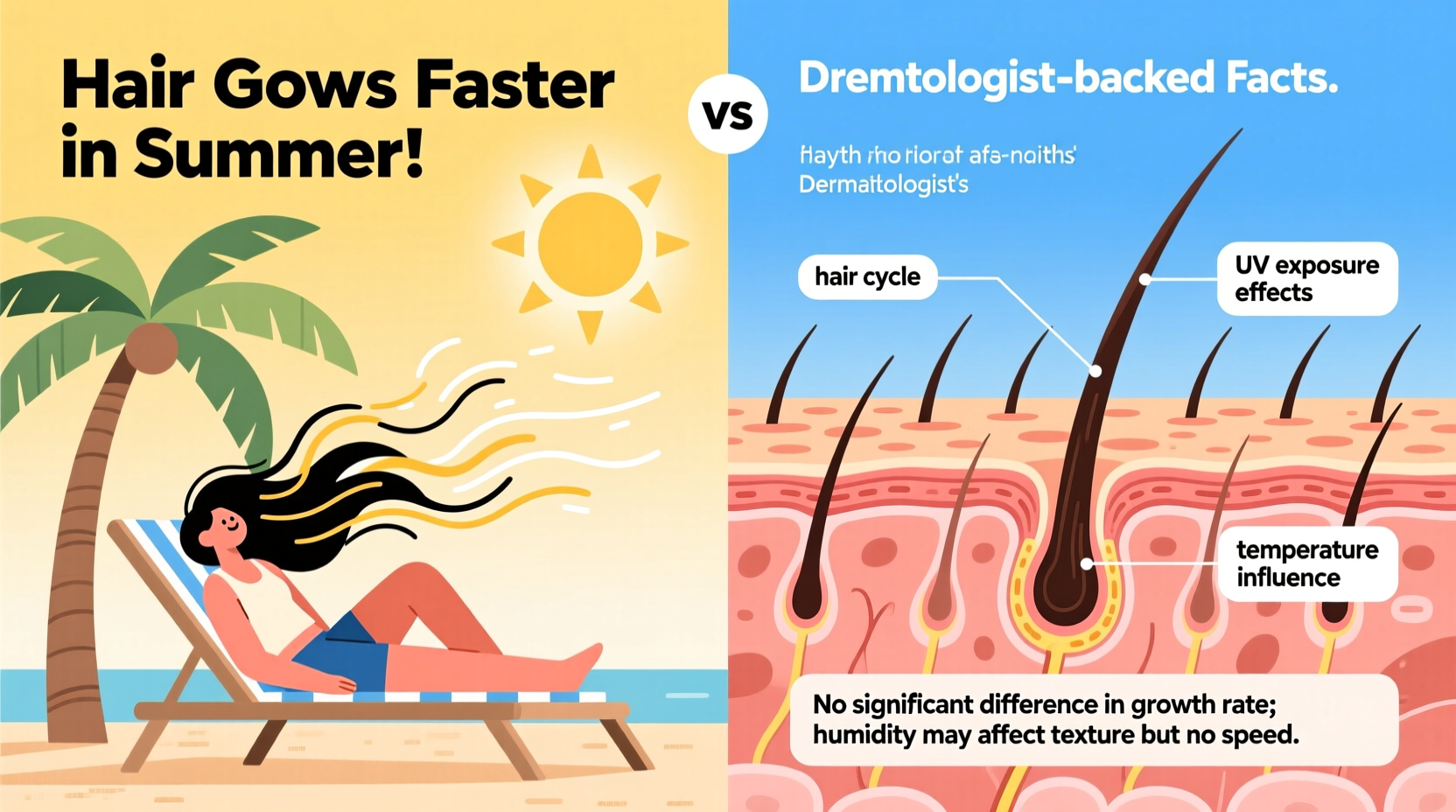
Hair doesn’t grow continuously. Instead, each strand follows a predictable life cycle composed of three main phases: anagen (growth), catagen (transition), and telogen (resting). The duration and efficiency of these phases determine overall hair length and density.
- Anagen Phase: This active growth stage lasts between 2 to 7 years. During this time, cells in the hair follicle divide rapidly, producing new hair shafts. About 85–90% of scalp hairs are typically in this phase at any given time.
- Catagen Phase: A short transitional period lasting roughly 2–3 weeks, during which growth stops and the follicle shrinks.
- Telogen Phase: The resting phase, lasting around 3 months. At the end of this stage, the old hair sheds, making way for new growth.
The idea that external factors like sunlight or temperature could influence this cycle isn’t far-fetched—after all, many bodily functions respond to environmental cues. However, changes in hair growth speed due to seasonality are subtle and influenced by multiple interconnected systems, including hormones, blood circulation, and metabolic activity.
Do Seasons Actually Affect Hair Growth?
Research suggests there may be a small but measurable increase in hair growth during summer months. A study published in the journal *Clinical and Experimental Dermatology* found that human hair growth rates peak in late spring and early summer, with a slight decline observed in winter. While the difference isn't dramatic—estimated at around 10–15% faster growth—it appears consistent across populations.
Why might this happen?
One theory involves increased blood circulation to the scalp. Warmer weather causes peripheral vasodilation—blood vessels near the skin expand—which may enhance nutrient and oxygen delivery to hair follicles. Since hair growth is metabolically active, improved circulation could support slightly faster cell turnover in the follicle matrix.
Another factor is sunlight exposure. Ultraviolet (UV) radiation stimulates the production of vitamin D in the skin, and emerging evidence links adequate vitamin D levels to healthy hair cycling. Vitamin D receptors are present in hair follicles, particularly in the dermal papilla, which plays a key role in regulating growth. While excessive UV exposure damages hair proteins, moderate sun exposure in summer may contribute to optimal vitamin D synthesis, indirectly supporting follicular function.
“While we don’t see explosive growth spurts in summer, there is a mild uptick in anagen activity correlated with increased daylight and ambient temperature.” — Dr. Lena Park, Board-Certified Dermatologist, Harvard Medical School Affiliate
Myths vs. Facts: Common Misconceptions About Summer Hair Growth
Despite some scientific basis for seasonal variation, numerous myths persist. Let’s clarify what’s supported by evidence—and what’s not.
| Myth | Fact |
|---|---|
| Hair grows twice as fast in summer. | Growth increases only marginally—around 10–15%. No clinical data supports doubling. |
| Sweating opens pores and boosts growth. | Sweat does not open follicles. Excessive sweat can clog pores and lead to scalp irritation or folliculitis. |
| Washing hair less in summer helps it grow faster. | Cleanliness supports scalp health. Infrequent washing leads to buildup, potentially impairing follicle function. |
| Swimming in pools or the ocean nourishes hair. | Chlorine and salt dehydrate hair, increasing breakage. They do not stimulate follicles. |
| More sunlight = more growth. | Moderate sun helps vitamin D synthesis, but overexposure damages keratin and increases hair fragility. |
The perception that hair grows faster in summer may also stem from other seasonal behaviors. For instance, people tend to wear their hair down more often, get regular trims before vacations, and use lighter styling products—all of which can make hair appear healthier and fuller, even if growth rate hasn’t changed significantly.
Tip: Don’t mistake reduced shedding for faster growth. Some studies suggest fewer hairs enter the telogen (shedding) phase in summer, which means you may notice less hair loss—not necessarily more growth.Dermatologist-Approved Tips to Support Healthy Hair Year-Round
Whether or not summer gives your hair a slight boost, long-term growth depends on consistent care and internal health. Relying solely on seasonal changes won’t yield dramatic results. Instead, focus on sustainable habits that optimize the environment for strong, resilient hair.
Nourish from Within
Hair is primarily made of keratin, a protein, so nutritional status plays a critical role. Deficiencies in iron, zinc, biotin, and vitamins B12 and D are linked to poor hair quality and shedding.
- Eat a balanced diet rich in lean proteins, leafy greens, nuts, and omega-3 fatty acids.
- Consider a blood test if you’re experiencing thinning—many nutrient deficiencies are asymptomatic until they affect hair or nails.
- Avoid extreme diets; rapid weight loss can trigger telogen effluvium, a form of temporary hair shedding.
Protect the Scalp Barrier
The scalp is living skin, and its health directly impacts follicle performance. In summer, increased sweating, UV exposure, and chlorine contact can compromise the scalp’s natural barrier.
- Rinse hair after swimming to remove chlorine or salt residue.
- Use a lightweight, non-comedogenic scalp serum if prone to dryness or flaking.
- Wear breathable hats instead of tight caps that trap heat and moisture.
Minimize Mechanical Stress
Summer hairstyles—tight ponytails, braids, or frequent use of clips—can cause traction alopecia over time, especially when combined with weakened, sun-exposed hair.
- Alternate hairstyles to avoid constant tension on the same areas.
- Use silk scrunchies or fabric bands instead of elastic ties.
- Avoid brushing wet hair, which is more elastic and prone to breakage.
Stay Hydrated and Cool
Dehydration affects every organ, including the skin and hair. When the body is under thermal stress, it prioritizes vital functions over non-essential processes like hair growth.
- Drink at least 2–3 liters of water daily, especially in hot climates.
- Limit alcohol and caffeine, which can contribute to dehydration.
- Cool showers help regulate scalp temperature and reduce inflammation.
Case Study: Sarah’s Summer Hair Journey
Sarah, a 34-year-old teacher from Austin, Texas, decided to grow her hair past her shoulders after years of short cuts. She began tracking her progress in January, measuring monthly growth using standardized photos and ruler checks.
Initially, she gained about 0.4 inches per month—within the average range. By May, her growth appeared to accelerate slightly, reaching 0.5 inches. She attributed this to spending more time outdoors, eating fresh salads, and reducing stress after the school year ended.
However, she also noticed increased frizz and split ends. After consulting a dermatologist, she learned that perceived “faster growth” was partly due to reduced shedding—her hair wasn’t falling out as much during summer. Additionally, her improved diet and hydration likely supported better hair integrity, making strands less prone to breakage, thus retaining length more effectively.
With guidance, Sarah adjusted her routine: she started using a weekly hydrating mask, wore a wide-brimmed hat during peak sun hours, and incorporated a gentle exfoliating scalp treatment every two weeks. By October, despite slower measured growth (back to ~0.4 inches/month), her hair was visibly thicker and stronger—a result of minimized damage rather than seasonal acceleration.
Sarah’s experience illustrates a crucial point: what we perceive as \"growth\" often includes both new length and retained strength. True progress comes from protecting existing hair while supporting biological conditions for renewal.
Checklist: Optimize Your Hair Health This Summer
Use this actionable checklist to support your hair during warmer months—whether or not growth speeds up.
- ✅ Rinse hair after swimming in chlorinated or salt water
- ✅ Wear a breathable hat or scarf for UV protection
- ✅ Increase water intake to stay hydrated
- ✅ Eat at least three servings of protein-rich foods daily
- ✅ Avoid tight hairstyles that pull on the hairline
- ✅ Use sulfate-free shampoo to prevent scalp dryness
- ✅ Schedule a scalp check-up if noticing unusual shedding
- ✅ Limit heat styling tools; air-dry when possible
Frequently Asked Questions
Does cutting hair in summer make it grow faster?
No. Trimming only affects the ends of the hair, not the follicle where growth occurs. However, regular trims prevent split ends from traveling up the shaft, helping retain length and improve appearance.
Can sunscreen protect my scalp and hair?
Yes. Scalp sunburn can damage follicles and inflame the skin. Use a spray or gel-based sunscreen on exposed areas (like part lines), or wear a hat. Some leave-in conditioners also contain UV filters.
Is it normal to shed less in summer?
Yes. Studies show a natural dip in hair shedding during summer months, with peak shedding often occurring in late summer and early fall. This cyclical pattern is believed to be an evolutionary adaptation, possibly related to thermoregulation or light exposure.
Conclusion: Work With Biology, Not Just Seasons
The idea that hair grows faster in summer contains a kernel of truth—but it’s easily overstated. While mild increases in growth rate and reduced shedding may occur due to environmental and hormonal factors, expecting dramatic results from summer alone sets unrealistic expectations.
Instead of waiting for seasonal advantages, focus on what you can control: nutrition, scalp hygiene, mechanical protection, and overall wellness. These elements have a far greater impact on hair length retention and follicle health than calendar months.
Think of summer not as a magic growth booster, but as an opportunity to reset habits. Take advantage of longer days to spend time outdoors, eat fresh produce, and establish routines that support long-term hair vitality. And remember—healthy hair isn’t just about speed. It’s about strength, resilience, and consistency.
💬 Have you noticed seasonal changes in your hair? Share your experience or questions below—we’d love to hear how your hair responds to the seasons!