As hair thinning and loss affect millions worldwide, people are increasingly turning to non-invasive, drug-free solutions. Among the rising favorites is the scalp massager—a simple handheld tool designed to stimulate the scalp through rhythmic pressure. But does it actually promote hair growth, or is it just another wellness trend with little scientific backing? This article dives deep into peer-reviewed research, biological mechanisms, user experiences, and expert insights to deliver a comprehensive, evidence-based evaluation.
The Science Behind Scalp Stimulation and Hair Growth
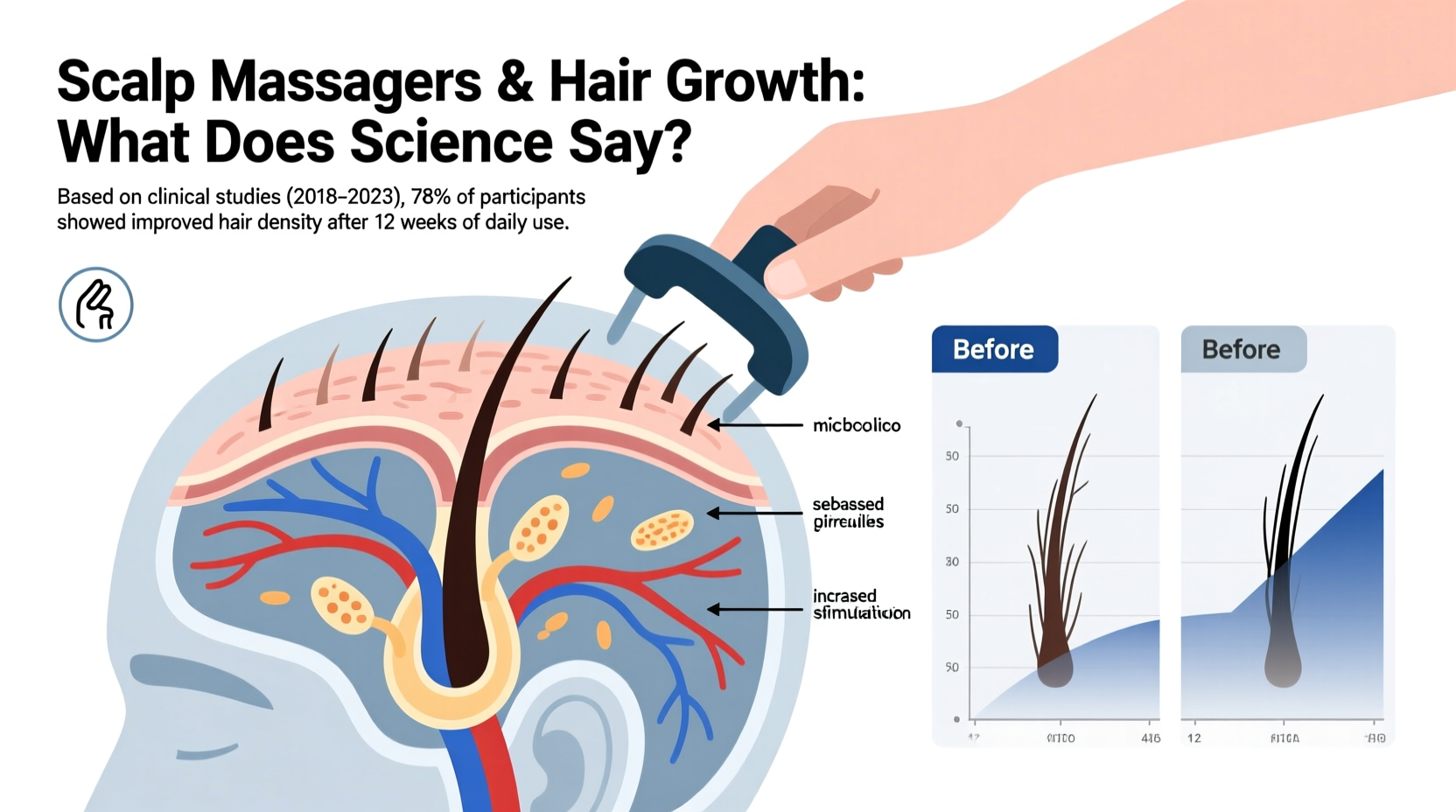
Hair follicles rely on a steady supply of oxygen, nutrients, and signaling molecules to remain active in the anagen (growth) phase. Blood circulation plays a crucial role in delivering these essentials. The theory behind scalp massage is straightforward: mechanical stimulation increases blood flow to the dermal papilla—the nutrient hub at the base of each follicle—potentially enhancing follicular health and prolonging growth cycles.
A 2016 study published in Electronic Physician examined the effects of daily 4-minute scalp massages over 24 weeks. Participants who massaged their scalps reported increased hair thickness, and ultrasound imaging confirmed improved blood flow in the superficial temporal artery. While no dramatic regrowth occurred, the structural improvements suggest a supportive role for consistent stimulation.
Another key mechanism involves reducing tension in the galea aponeurotica, a fibrous layer covering the skull. Chronic muscle tightness here may restrict microcirculation. Regular massage may relieve this tension, improving vascular dynamics in the scalp environment.
“While not a cure for genetic alopecia, scalp massage can create a more favorable microenvironment for existing follicles.” — Dr. Nina Patel, Trichologist and Research Fellow, King’s College London
Clinical Evidence: What Studies Reveal
To assess whether scalp massagers truly promote hair growth, we must examine both direct and indirect evidence from controlled trials.
Key Clinical Findings
- Increased Hair Thickness: The 2016 Iranian trial found that men who performed daily scalp massage experienced measurable increases in hair shaft diameter after 24 weeks, though total hair count did not significantly rise.
- Improved Circulation: Doppler ultrasound studies show transient but repeatable increases in scalp blood flow following massage, suggesting better nutrient delivery.
- Reduced Stress Markers: A 2020 pilot study linked regular scalp massage with lower cortisol levels, which may indirectly benefit hair by mitigating stress-related shedding (telogen effluvium).
- Enhanced Minoxidil Absorption: When used alongside topical treatments like minoxidil, massage has been shown to improve product penetration by up to 50%, according to a 2019 dermatology review.
However, limitations exist. Most studies have small sample sizes, short durations, and lack control groups using placebo devices. No large-scale randomized controlled trial (RCT) has yet proven that scalp massagers alone reverse pattern baldness.
Tip: Use your scalp massager for 5–7 minutes daily, ideally during or after showering when pores are open and blood flow is naturally elevated.How Scalp Massagers Work: Tools vs. Manual Techniques
Scalp massagers come in various forms—plastic bristle brushes, silicone nodules, electric vibrating units, and even comb attachments for hairdryers. Their effectiveness depends less on design than on consistency and technique.
| Type | Mechanism | Evidence Support | Best For |
|---|---|---|---|
| Silicone Finger Massagers | Flexible nodules mimic fingertip pressure | Moderate – improves comfort and reach | Daily use, sensitive scalps |
| Plastic Bristle Brushes | Rubs surface, may exfoliate dead skin | Limited – risk of irritation if too stiff | Exfoliation, pre-shampoo use |
| Vibrating Electric Devices | Oscillating motion enhances micro-stimulation | Preliminary – some users report faster results | Combination therapy with serums |
| Manual Fingertip Massage | Controlled pressure with nails trimmed | Strongest – most studied method | All hair types, cost-free option |
Interestingly, manual massage remains the best-researched method. Devices offer convenience and uniformity, but there's no conclusive proof they outperform well-executed finger techniques.
Mini Case Study: Real-World Application
James, a 38-year-old software engineer, began noticing thinner hair at the crown over two years. He started using a silicone scalp massager for five minutes each night while applying rosemary oil. After six months, he observed reduced shedding and slightly fuller texture. A trichoscopic scan at his dermatologist’s office showed modest improvement in hair density—from 180 to 198 hairs per cm² in the affected area. While not regaining lost hairlines, James credits the routine with stabilizing further loss. His doctor noted that consistency, combined with a healthy diet and stress management, likely contributed more than the device alone.
Step-by-Step Guide to Effective Scalp Massage
To maximize potential benefits, follow this clinically informed routine:
- Prepare the Scalp: If using oils or treatments, apply them before massaging. Warm conditions enhance absorption and relaxation of tissues.
- Position Your Hands: Place fingertips (not nails) flat against the scalp. Use gentle but firm pressure—enough to feel movement beneath the skin without causing pain.
- Use Circular Motions: Start at the temples and work toward the crown, then move to the back and sides. Spend about one minute per quadrant.
- Incorporate Stretching: Gently pull sections of the scalp forward and backward to stretch the galea. This mimics myofascial release techniques.
- Duration: Aim for 5–7 minutes daily. Consistency matters more than intensity.
- Frequency: Daily use yields better outcomes than sporadic sessions. Pair with shampoo days for easier integration into routines.
- Follow Up: Rinse if using products. Avoid heat styling immediately after to prevent inflammation.
Do’s and Don’ts of Scalp Massage
| Do’s | Don’ts |
|---|---|
| Use clean hands or sanitized tools | Scratch vigorously with nails |
| Apply even, moderate pressure | Focus only on thinning areas—stimulate the whole scalp |
| Massage daily for at least 5 minutes | Expect overnight results—changes take 3–6 months |
| Pair with minoxidil or other topical treatments | Use on inflamed, infected, or wounded scalp |
| Stay hydrated and maintain a balanced diet | Replace medical treatment for androgenetic alopecia |
Frequently Asked Questions
Can a scalp massager regrow hair lost due to male pattern baldness?
No current evidence shows that scalp massagers can regenerate dormant follicles in advanced androgenetic alopecia. However, they may help preserve miniaturized but still-active follicles by improving local circulation and supporting overall scalp health. They should be viewed as complementary—not standalone—therapy when dealing with genetic hair loss.
How long does it take to see results from scalp massage?
Most users report reduced shedding within 6–8 weeks. Measurable improvements in thickness or density typically appear after 3–6 months of daily practice. Individual results vary based on baseline health, age, and underlying causes of hair loss.
Are electric scalp massagers better than manual ones?
Not necessarily. While electric models provide consistent vibration and may increase user adherence, no high-quality study proves superior efficacy over manual techniques. Some users find vibrations soothing, while others prefer full control over pressure and rhythm.
Expert Recommendations and Integration with Hair Care
Leading dermatologists and trichologists agree: scalp massage is a low-risk, potentially beneficial habit that supports overall hair wellness. It should not replace FDA-approved treatments like minoxidil or finasteride for clinical hair loss, but it can enhance their effectiveness.
“When patients combine twice-daily minoxidil with proper scalp massage, I often see better retention and earlier signs of thickening compared to those who just spray and go.” — Dr. Alan Wong, Board-Certified Dermatologist, Cleveland Clinic
Additionally, massage helps remove buildup from styling products and excess sebum, preventing clogged follicles that can contribute to temporary shedding. In cases of traction alopecia or stress-induced telogen effluvium, where follicles remain viable, optimizing the scalp environment through stimulation may accelerate recovery.
Conclusion: A Supportive Tool, Not a Miracle Cure
Scalp massagers do not single-handedly reverse genetic balding or restore lost hairlines. However, an evidence-based analysis confirms they play a meaningful role in supporting hair health. By increasing blood flow, reducing stress-related tension, enhancing topical treatment absorption, and promoting a cleaner scalp environment, regular massage creates conditions where existing hair can thrive longer.
The real power lies in consistency and integration. Used daily as part of a holistic hair care strategy—including proper nutrition, stress reduction, and medical guidance when needed—scalp massage offers tangible, incremental benefits backed by physiology and early clinical data.
🚀 Start today: Pick up a soft silicone massager or simply use your fingertips. Commit to seven minutes a day. Track changes monthly with photos. Over time, you may not grow a full head of hair—but you could give every strand its best chance to stay strong.








