
In an era where desk jobs dominate and screen time continues to rise, poor posture has become a widespread concern. Slouching over keyboards, hunching over smartphones, and prolonged sitting have led to a surge in demand for quick fixes—among them, posture correctors. These wearable devices promise to pull your shoulders back, straighten your spine, and retrain your body into proper alignment. But do they actually work? More importantly, could they be doing more harm than good by weakening the very muscles they're supposed to support?
The answer isn't as straightforward as marketing claims suggest. While some users report immediate relief and improved awareness of their posture, others experience dependency, muscle atrophy, or discomfort. To understand the real impact of posture correctors, we need to examine how they function, what science says about their use, and whether they should be part of a long-term solution—or avoided altogether.
How Posture Correctors Work
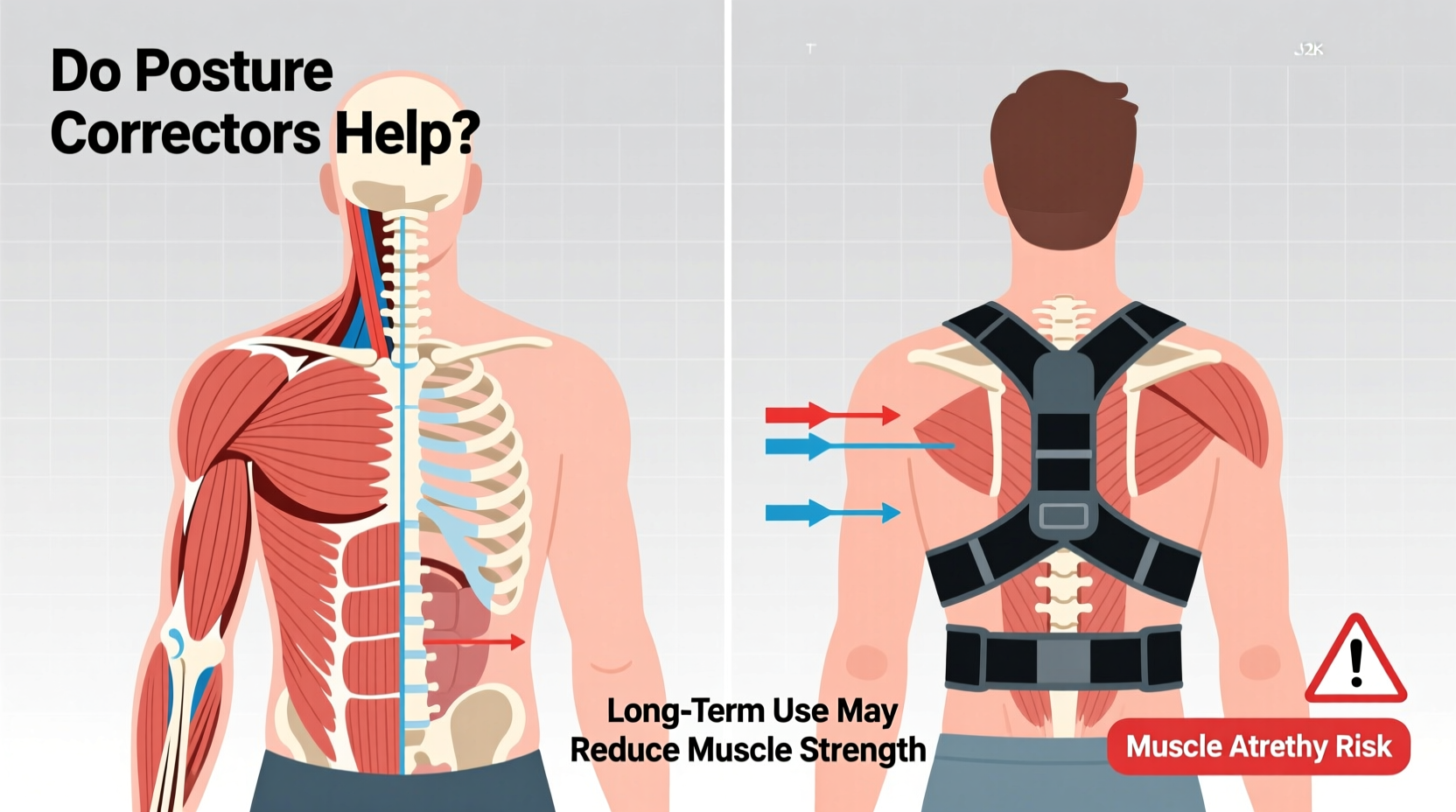
Posture correctors come in various forms: shoulder braces, back supports, vests, and even smart wearables that vibrate when slouching is detected. Most function by mechanically pulling the shoulders backward and restricting forward rounding of the upper back. This creates the appearance of better posture almost instantly.
The underlying theory is \"postural re-education\"—the idea that consistent positioning will train the body to maintain alignment naturally over time. Some models also include padding or lumbar support to encourage a neutral spine. However, this mechanical assistance raises a critical question: when a device is doing the job of your muscles, what happens to those muscles?
Tip: If you choose to use a posture corrector, never wear it for more than 2–4 hours a day. Prolonged use may reduce muscle activation and lead to dependency.The Risk of Muscle Weakening
Muscles adapt based on use. When supported consistently by external devices, postural muscles like the rhomboids, lower trapezius, and deep cervical flexors receive less neural input and mechanical load. Over time, this can lead to neuromuscular inhibition—a fancy term for \"your brain forgets how to activate these muscles.\"
A 2018 study published in the Journal of Physical Therapy Science found that participants who relied solely on posture braces without accompanying exercise showed no long-term improvement in postural control. In fact, some demonstrated reduced muscle endurance in key stabilizing muscles after four weeks of daily brace use.
“External support can be useful short-term, but if it replaces muscular effort, it undermines the body’s natural ability to stabilize itself.” — Dr. Laura Chen, DPT, Board-Certified Orthopedic Specialist
This phenomenon mirrors what happens with other orthotic devices. For example, ankle braces can reduce proprioception and strength if worn excessively. Similarly, relying on a posture corrector without strengthening the supporting musculature may create a cycle of dependency: worse posture leads to bracing, which weakens muscles, which worsens posture.
When Posture Correctors Can Be Helpful
Despite the risks, posture correctors aren’t inherently harmful. Like any tool, their value depends on context and usage. They can serve a beneficial role under specific conditions:
- Short-term rehabilitation: After injury or surgery, temporary bracing helps protect healing tissues and reminds patients to avoid harmful positions.
- Postural awareness training: For individuals completely unaware of their slouching, a corrector can act as a biofeedback device—providing sensory cues to adjust posture.
- Occupational support: Workers in physically demanding roles (e.g., warehouse staff) may benefit from intermittent support during heavy lifting phases.
The key is integration. A posture corrector should not replace active correction but rather complement it—like training wheels on a bicycle. Once balance and strength improve, the support should be gradually phased out.
Real-World Example: Office Worker Recovery
Consider Mark, a 34-year-old software developer who began experiencing chronic upper back pain and neck stiffness after transitioning to full-time remote work. His physical therapist assessed his posture and found significant forward head carriage and rounded shoulders.
Instead of prescribing a full-time brace, the therapist recommended a structured plan: wear a lightweight posture corrector for 30 minutes during morning work sessions, paired with daily exercises targeting scapular stabilization. Over six weeks, Mark progressed from needing the brace for reminders to maintaining upright posture unaided during focused tasks. By week ten, he discontinued the device entirely, having built sufficient strength and awareness.
Mark’s success wasn’t due to the brace—it was due to using the brace strategically within a broader corrective program.
Building Sustainable Posture: The Real Solution
If posture correctors alone don’t fix poor posture, what does? Long-term improvement comes from addressing the root causes: weak postural muscles, tight chest and hip flexors, poor ergonomics, and habitual movement patterns.
Here’s a practical, step-by-step approach to building lasting postural health:
Step-by-Step Guide to Improving Posture Naturally
- Assess Your Daily Habits: Track how much time you spend sitting, looking down at screens, or carrying uneven loads (like heavy bags on one shoulder).
- Optimize Your Workspace: Position your monitor at eye level, keep elbows at 90 degrees, and ensure your feet are flat on the floor or a footrest.
- Stretch Tight Muscles: Focus on pectorals (chest), anterior shoulders, hip flexors, and suboccipitals (back of the neck). Hold each stretch for 30 seconds, 2–3 times daily.
- Strengthen Key Postural Muscles: Incorporate exercises like rows, face pulls, chin tucks, and scapular retractions into your routine 3–4 times per week.
- Practice Mindful Alignment: Set hourly reminders to check your posture. Sit tall, retract your shoulders slightly, and engage your core gently.
- Move Frequently: Stand up every 30–60 minutes. Take short walks or perform dynamic stretches to reset muscle tone.
Posture Correctors: Do’s and Don’ts
| Do’s | Don’ts |
|---|---|
| Use for short durations (30 min – 2 hrs) | Wear all day or while sleeping |
| Pair with targeted strength exercises | Rely on it as a standalone fix |
| Choose adjustable, breathable designs | Use overly restrictive or painful models |
| Use as a reminder tool | Ignore pain or numbness while wearing |
| Gradually reduce usage over time | Continue long-term without progress assessment |
Expert-Backed Alternatives to Braces
Rather than depending on external devices, experts recommend focusing on functional strength and neuromuscular control. These approaches build resilience from within:
- Pilates and Yoga: Improve core stability, flexibility, and body awareness—key components of postural control.
- Resistance Training: Exercises like bent-over rows, deadlifts, and band pull-aparts strengthen the posterior chain.
- Ergonomic Coaching: A professional can assess your workspace and suggest adjustments tailored to your body.
- Physical Therapy: For chronic issues, a therapist can design a personalized program including manual therapy and motor retraining.
“You don’t need to hold yourself rigidly upright all day. Good posture is dynamic—it’s about being able to move efficiently through different positions with control.” — Dr. Rajiv Mehta, Spine Biomechanics Researcher
FAQ: Common Questions About Posture Correctors
Can posture correctors fix kyphosis or “hunchback”?
Not on their own. Mild postural kyphosis may improve with strength training and habit correction, especially in younger individuals. Structural kyphosis (due to vertebral deformities) requires medical evaluation and often cannot be corrected with braces alone. Always consult a healthcare provider before attempting self-treatment.
Are smart posture correctors worth it?
Some smart devices offer vibration alerts when slouching occurs, which can increase awareness. However, research shows mixed results on long-term behavior change. Their value lies in feedback—not correction. Pair them with exercises for best outcomes, and don’t expect miracles from technology alone.
Will I become dependent on a posture corrector?
You might, if used improperly. Dependency develops when the device replaces muscle effort instead of supplementing it. Limit usage, focus on building strength, and view the corrector as a temporary guide—not a permanent crutch.
Checklist: Using a Posture Corrector Safely and Effectively
- ✅ Consult a physical therapist or doctor before starting
- ✅ Limit wear to 2–4 hours maximum per day
- ✅ Combine use with daily posture-specific exercises
- ✅ Choose a comfortable, adjustable model
- ✅ Monitor for pain, numbness, or breathing restrictions
- ✅ Set a timeline to phase out usage (e.g., 4–8 weeks)
- ✅ Regularly assess progress without the device
Conclusion: Rethinking the Role of Posture Correctors
Posture correctors are neither miracle solutions nor outright dangers—they are tools with specific, limited applications. Used mindfully and temporarily, they can raise awareness and support early stages of postural retraining. But left unchecked, they risk creating muscle imbalances and fostering dependency.
The real path to better posture isn’t found in straps and braces, but in consistent movement, intelligent exercise, and ergonomic mindfulness. Strengthening your body’s innate ability to support itself is far more effective—and sustainable—than any wearable gadget.
If you’re struggling with poor posture, start by evaluating your daily habits and environment. Add simple stretches and strengthening moves to your routine. Seek guidance from a qualified professional if pain or dysfunction persists. True postural health isn’t about forcing your body into position—it’s about empowering it to find balance naturally.
🚀 Ready to build stronger, healthier posture? Begin today with one stretch and one strengthening exercise. Small steps lead to lasting change—no brace required.








