
For millions dealing with thinning hair or early-stage baldness, the search for an effective solution often leads to a crowded shelf of serums, oils, and over-the-counter treatments. Among them, minoxidil has reigned as the most clinically backed option for decades. But with the rise of premium hair growth serums—packed with peptides, plant extracts, and exotic botanicals—many are asking: do these new formulations actually work, or is minoxidil still the undisputed champion?
The answer isn’t black and white. While minoxidil remains the only FDA-approved topical treatment for androgenetic alopecia (male and female pattern baldness), newer serums have carved out a niche by targeting different aspects of scalp health and follicle stimulation. Understanding how each works—and where they fall short—is key to making an informed decision.
How Minoxidil Works: The Science Behind the Gold Standard
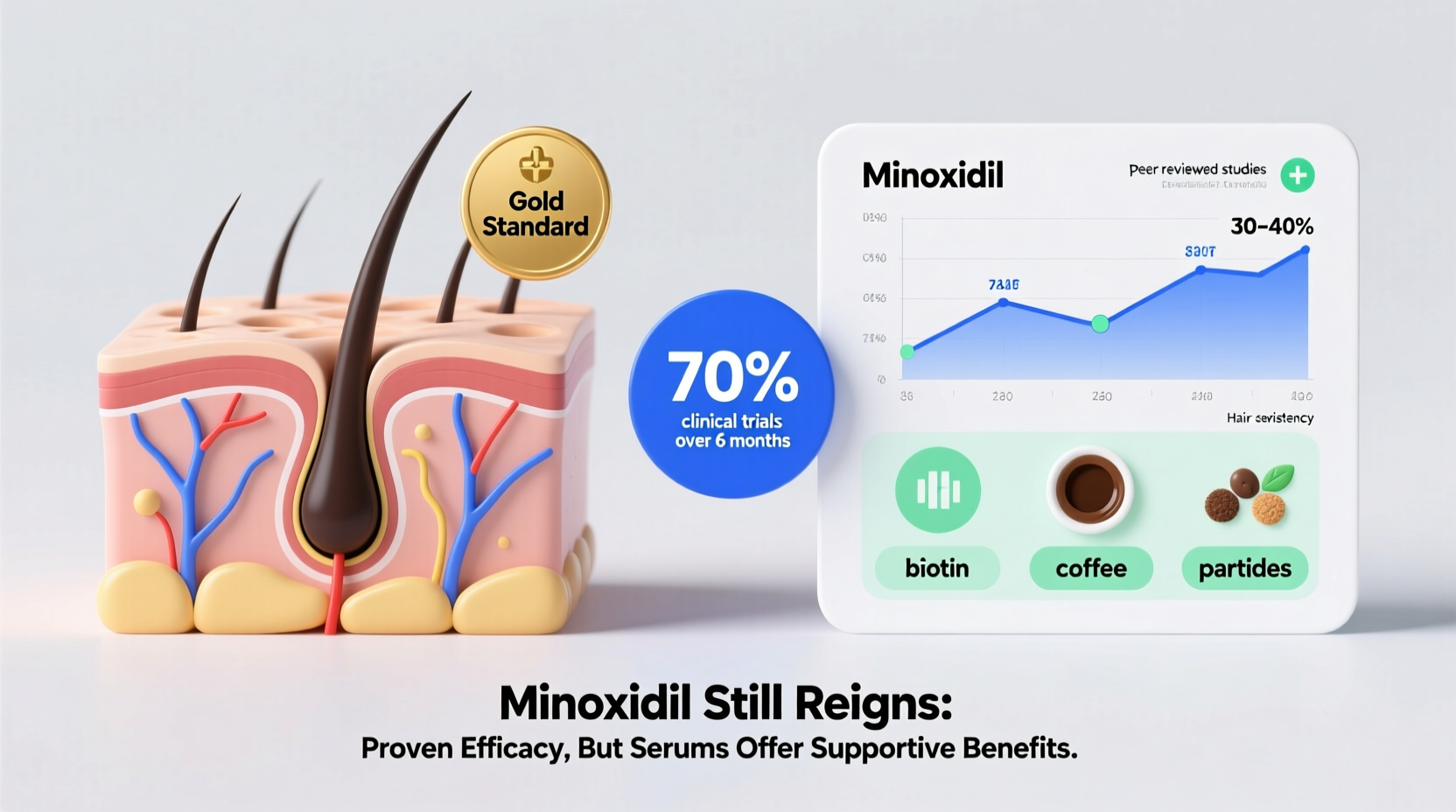
Minoxidil was originally developed as an oral medication for high blood pressure. Its hair growth side effect was discovered accidentally in the 1980s, leading to the development of topical formulations. Today, it’s available in 2% and 5% strengths and is widely considered the benchmark for over-the-counter hair loss treatment.
While its exact mechanism isn’t fully understood, research suggests that minoxidil acts as a vasodilator, increasing blood flow to hair follicles. It may also prolong the anagen (growth) phase of the hair cycle and stimulate dormant follicles. Clinical trials show that approximately 40–60% of men using 5% minoxidil experience moderate to dense hair regrowth after six months of consistent use. In women, the 2% solution has demonstrated similar efficacy, though results tend to be more modest.
“Minoxidil is the only topical agent with robust, long-term clinical data supporting its ability to reverse miniaturization of hair follicles in pattern baldness.” — Dr. Rebecca Lee, Dermatologist & Hair Loss Specialist
However, results aren’t guaranteed. Minoxidil works best in individuals under 40 with recent hair loss and a small affected area—typically the crown or mid-scalp. It does not address the root hormonal cause (DHT), nor does it prevent future loss if used alone. Additionally, discontinuation leads to reversal of gains within 3–6 months, meaning lifelong commitment is required.
The Rise of Hair Growth Serums: Beyond Minoxidil
In recent years, the market has exploded with serums promising thicker, fuller hair without a prescription. These products typically contain blends of:
- Peptides like copper tripeptide-1 and acetyl tetrapeptide-3
- Plant-based DHT blockers such as saw palmetto, pumpkin seed oil, and green tea extract
- Scalp conditioners like niacinamide, caffeine, and panthenol
- Growth factors derived from stem cells or bioengineered proteins
Unlike minoxidil, most of these ingredients are not FDA-approved for treating hair loss. Instead, manufacturers rely on cosmetic claims—such as “supports fullness” or “improves scalp health”—to avoid regulatory scrutiny. That said, some components have promising research behind them.
Caffeine, for example, has been shown in lab studies to counteract the effects of DHT on hair follicles and extend the growth phase. A 2007 study published in *International Journal of Dermatology* found that topical caffeine stimulated hair shaft elongation in male hair follicles. Similarly, saw palmetto has demonstrated mild anti-androgenic effects, potentially reducing DHT levels in the scalp.
Tip: Look for serums with at least 2–3 scientifically studied ingredients at effective concentrations. Avoid products that list active compounds near the end of the ingredient list, as they’re likely present in negligible amounts.Comparing Efficacy: Minoxidil vs. Modern Serums
To understand where each option stands, consider the following comparison based on clinical evidence, speed of results, safety, and sustainability.
| Factor | Minoxidil (5%) | Advanced Hair Growth Serums |
|---|---|---|
| Regrowth Evidence | Strong, FDA-approved clinical trials | Limited; mostly lab or small human studies |
| Time to See Results | 3–6 months | 4–8 months (if any) |
| DHT Blocking | No direct action | Some formulas include natural blockers |
| Side Effects | Potential itching, shedding, systemic absorption | Rare; usually mild irritation |
| Long-Term Use Required | Yes—regrowth reverses if stopped | Varies; maintenance likely needed |
| Cost (Monthly) | $20–$40 | $30–$100+ |
The data makes one thing clear: minoxidil has far stronger scientific backing for actual hair regrowth. However, many users find the side effects—initial shedding, scalp dryness, and the need for twice-daily application—difficult to tolerate. This has opened the door for gentler, multi-targeted serums that aim to improve overall scalp environment rather than force follicles into growth mode.
Can You Combine Both? A Strategic Approach
Increasingly, dermatologists recommend a combination strategy. Using minoxidil as the foundation for regrowth while layering in a supportive serum can enhance results and reduce irritation.
For example, pairing minoxidil with a niacinamide-rich serum may help counteract redness and inflammation. Adding a caffeine-based product could provide additional protection against DHT at the follicular level. Some advanced routines even incorporate microneedling once weekly to increase absorption and stimulate collagen production in the scalp.
“We’re moving beyond one-size-fits-all solutions. The future of hair regrowth lies in personalized regimens that combine pharmaceutical agents with targeted biostimulants.” — Dr. Alan Zhou, Trichologist
A growing number of patients report better tolerance and improved density when using this hybrid approach. However, caution is advised: layering too many actives can lead to sensitivity or clogged follicles. Start slowly, patch test, and monitor your scalp’s response.
Step-by-Step: Building an Effective Hair Regrowth Routine
Here’s a practical timeline for integrating either minoxidil, a growth serum, or both—based on clinical recommendations:
- Week 1–2: Scalp Assessment & Prep
Identify your hair loss pattern and scalp condition. Use a gentle clarifying shampoo to remove buildup. Begin photographing your scalp monthly for progress tracking. - Week 3–4: Introduce One Active
Start with minoxidil (once daily at night) or a peptide-based serum. Monitor for irritation. If using minoxidil, expect possible shedding in weeks 3–6. - Month 2: Evaluate Tolerance
If no adverse reactions, increase minoxidil to twice daily or continue serum use. Add a hydrating scalp essence if dryness occurs. - Month 3–6: Assess Early Results
Look for reduced shedding, increased baby hairs, or improved texture. Consider adding a second product (e.g., caffeine serum in the morning, minoxidil at night). - Month 6+: Maintenance & Optimization
Continue regimen. Re-evaluate every 3 months. If no improvement by month 6, consult a dermatologist about prescription options like finasteride or low-level laser therapy.
Real-World Example: Mark’s Experience with Dual Therapy
Mark, a 36-year-old software developer, began noticing thinning at his temples two years ago. He started with 5% minoxidil but quit after three weeks due to itching and flaking. After researching alternatives, he switched to a high-end serum containing caffeine, saw palmetto, and red clover extract.
After four months, he noticed slightly less shedding but no visible regrowth. On the advice of a trichologist, he reintroduced minoxidil—this time pairing it with a soothing niacinamide serum applied 30 minutes prior. He also reduced application to once daily and used a moisturizing scalp mist afterward.
By month five, shedding stabilized. At month eight, close-up photos revealed fine new growth along the hairline. “It’s not a full head of hair yet,” Mark says, “but I can see the difference. The combo approach made it sustainable.”
Frequently Asked Questions
Can hair growth serums regrow hair like minoxidil?
Most serums do not produce the same level of regrowth as minoxidil. While some ingredients show promise in lab settings, none have matched minoxidil’s proven ability to reactivate miniaturized follicles in large-scale human trials. Serums are better viewed as supportive treatments that improve scalp health and may enhance results when used alongside proven therapies.
Are natural DHT-blocking serums effective?
Some natural extracts—like saw palmetto, pumpkin seed oil, and beta-sitosterol—have demonstrated mild anti-DHT activity in studies. However, their potency is significantly lower than prescription medications like finasteride. They may help slow early hair loss but are unlikely to reverse advanced thinning on their own.
Is it safe to use multiple hair growth products together?
It can be, but with caution. Combining products increases the risk of irritation, allergic reactions, or ingredient conflicts. Always introduce one product at a time, allow 2–4 weeks to assess tolerance, and avoid overlapping actives that target the same pathways (e.g., two strong stimulants). When in doubt, consult a dermatologist.
Checklist: Choosing the Right Hair Growth Solution
- ✅ Confirm you have androgenetic alopecia (vs. telogen effluvium or other causes)
- ✅ Rule out underlying conditions (thyroid, iron deficiency, stress)
- ✅ Decide whether you want FDA-backed results (minoxidil) or a gentler, holistic approach (serum)
- ✅ Check ingredient labels for proven actives at meaningful concentrations
- ✅ Commit to at least 6 months of consistent use before judging effectiveness
- ✅ Pair with healthy lifestyle habits: balanced diet, stress management, good sleep
- ✅ Schedule a dermatology consult if no improvement after 6–8 months
Conclusion: Minoxidil Still Reigns, But the Court Is Expanding
Minoxidil remains the most reliable over-the-counter option for measurable hair regrowth. Its decades of clinical validation, regulatory approval, and real-world success make it the foundation of most effective hair loss routines. For those seeking proven results, it’s still king.
That said, the landscape is evolving. Advanced serums are no longer just luxury cosmetics—they’re becoming legitimate adjuncts in the fight against thinning hair. While they shouldn’t replace minoxidil for those with active genetic hair loss, they offer valuable support through improved scalp health, reduced inflammation, and complementary mechanisms of action.
The smartest path forward isn’t choosing between serums and minoxidil—it’s leveraging both strategically. By combining pharmaceutical efficacy with targeted biostimulation, you can create a more tolerable, sustainable, and ultimately more effective regimen.
🚀 Ready to take control of your hair health? Start today by auditing your current routine, selecting one evidence-backed product, and committing to consistency. Share your journey or questions in the comments—your experience could help someone else find their solution.








