Selecting a meaningful Christmas gift for someone studying psychology requires more than just picking something off the shelf. It’s about recognizing their intellectual curiosity, emotional depth, and commitment to understanding the human mind. Psychology students often juggle dense academic reading with personal exploration of mental health, behavior, and self-awareness. A thoughtful present can support both their academic journey and personal development. Books grounded in psychological science, paired with mindfulness tools that promote presence and resilience, make ideal gifts—blending utility, inspiration, and care.
The best gifts don’t just occupy space on a desk or nightstand—they become part of daily life. Whether it's a foundational textbook that reshapes how they see cognition, a memoir by a renowned therapist offering real-world insight, or a meditation journal that helps process stress during exam season, these items serve as companions through late-night study sessions and moments of introspection. This guide explores carefully selected books and mindfulness tools tailored to the interests and needs of psychology majors, along with practical advice for choosing wisely.
Why Books and Mindfulness Tools Make Ideal Gifts
Psychology is not merely an academic discipline—it’s a lens through which one interprets emotions, relationships, and societal patterns. Students in this field are typically reflective, analytical, and deeply interested in human experience. They appreciate content that challenges assumptions, deepens empathy, and fosters self-understanding. High-quality books offer all three. Unlike fleeting digital content, physical books provide a tactile, immersive experience that supports sustained focus—an essential skill for any student.
Mindfulness tools complement this intellectual work by addressing the emotional toll of rigorous study. The pressure of exams, clinical observations, and theoretical debates can lead to burnout. Mindfulness practices help regulate stress, improve concentration, and enhance emotional intelligence—all critical competencies in psychology. Gifting a tool like a guided meditation app subscription, a breathwork card deck, or a structured journal acknowledges not only what the student studies but also who they are: a person navigating growth, uncertainty, and discovery.
“Mindfulness isn't just about reducing stress—it's about cultivating awareness, which is at the heart of psychological inquiry.” — Dr. Jon Kabat-Zinn, Founder of Mindfulness-Based Stress Reduction (MBSR)
Top Book Recommendations for Psychology Majors
A well-chosen book can spark new perspectives, reinforce classroom learning, or open doors to specialized areas within psychology. Below is a curated list spanning classic theory, modern research, and narrative-driven explorations of the mind.
- Thinking, Fast and Slow by Daniel Kahneman – This Nobel Prize-winning exploration of cognitive biases and dual-process thinking remains essential reading. It introduces readers to System 1 (intuitive) and System 2 (analytical) thinking, laying groundwork applicable across social, cognitive, and behavioral psychology.
- The Man Who Mistook His Wife for a Hat by Oliver Sacks – A collection of neurological case studies written with literary grace. Sacks blends clinical detail with profound humanity, making complex conditions accessible and emotionally resonant.
- Attached by Amir Levine and Rachel Heller – Focuses on attachment theory in adult relationships. Highly relevant for students exploring developmental or clinical psychology, this book translates research into practical insights about love and connection.
- Quiet: The Power of Introverts in a World That Can’t Stop Talking by Susan Cain – Explores temperament and societal bias toward extroversion. Offers valuable context for personality psychology and workplace dynamics.
- Mindsight by Daniel J. Siegel – Introduces the concept of mindsight—the ability to perceive and shape internal experience. Blends neuroscience with mindfulness, ideal for those interested in integrative approaches to mental health.
Essential Mindfulness Tools to Support Mental Well-Being
Academic rigor demands mental stamina, but even the most disciplined minds benefit from intentional recovery. Mindfulness tools help psychology students manage anxiety, maintain focus, and model healthy habits they may later teach others. These aren’t luxuries—they’re professional development aids.
1. Guided Meditation Subscriptions
Apps like Insight Timer, Headspace, or Calm offer structured programs in sleep, focus, and stress reduction. A premium subscription removes ads and unlocks expert-led courses in mindfulness-based cognitive therapy (MBCT), compassion training, and breath regulation.
2. Breathwork Card Decks
Portable and visually engaging, decks like The Breathing App Cards or Mindful Breathe guide users through scientifically backed breathing techniques. Each card outlines a method (e.g., box breathing, 4-7-8 pattern) with duration and benefits. Perfect for quick resets between classes or before presentations.
3. Journaling Kits with Prompts
Journals designed specifically for psychological reflection go beyond blank pages. Look for ones with prompts such as:
- “What emotion am I avoiding today?”
- “Describe a recent interaction using active listening principles.”
- “Track your mood and triggers over seven days.”
4. Weighted Blankets or Meditation Cushions
Tactile comfort supports nervous system regulation. A small meditation cushion (zafu) encourages proper posture during seated practice, while a 10–15 lb weighted blanket can reduce cortisol levels and improve sleep quality—critical during finals week.
| Tool | Primary Benefit | Best For |
|---|---|---|
| Headspace Subscription | Structured mindfulness training | Daily habit building |
| Breathwork Card Deck | Immediate stress relief | On-the-go use |
| Therapy-style Journal | Emotional processing & insight | Self-reflection assignments |
| Weighted Lap Pad | Anxiety reduction | Study breaks or library sessions |
| Meditation Bell or Chime | Ritual signaling & focus | Morning or evening routine |
How to Choose Based on Their Focus Area
Psychology is broad, and preferences vary widely depending on specialization. A neuroscience track student might value different resources than one pursuing counseling. Consider aligning your gift with their academic path.
Clinical or Counseling Psychology
Students aiming for therapy roles benefit from narrative depth and interpersonal insight. Prioritize books like Becoming Myself by Irvin Yalom or Maybe You Should Talk to Someone by Lori Gottlieb. Pair with a feelings wheel poster or emotion-tracking journal to deepen emotional literacy.
Cognitive or Neuropsychology
For those fascinated by brain function, consider Behave by Robert Sapolsky—a sweeping analysis of biological and environmental influences on behavior. Supplement with a neuroanatomy coloring book or fMRI visualization cards for interactive learning.
Social or Developmental Psychology
Gifts emphasizing group dynamics, identity, or lifespan development resonate here. Nudge by Thaler and Sunstein explores behavioral economics applications, while mindfulness tools focused on empathy—like loving-kindness (metta) meditation guides—are especially fitting.
Tip: When in doubt, opt for versatility. A high-quality notebook paired with a set of fine pens works across all subfields—for note-taking, journaling, or designing experiments.Step-by-Step Guide: Building the Perfect Gift Set
Create a cohesive, personalized package that balances intellect and well-being. Follow this timeline to assemble a memorable Christmas gift.
- Week 1: Identify Interests – Reflect on conversations you’ve had. Did they mention a favorite theorist? Struggle with test anxiety? Express interest in trauma-informed care?
- Week 2: Select One Anchor Item – Choose either a flagship book or a premium mindfulness tool (e.g., hardcover of Thinking, Fast and Slow or Calm Plus subscription).
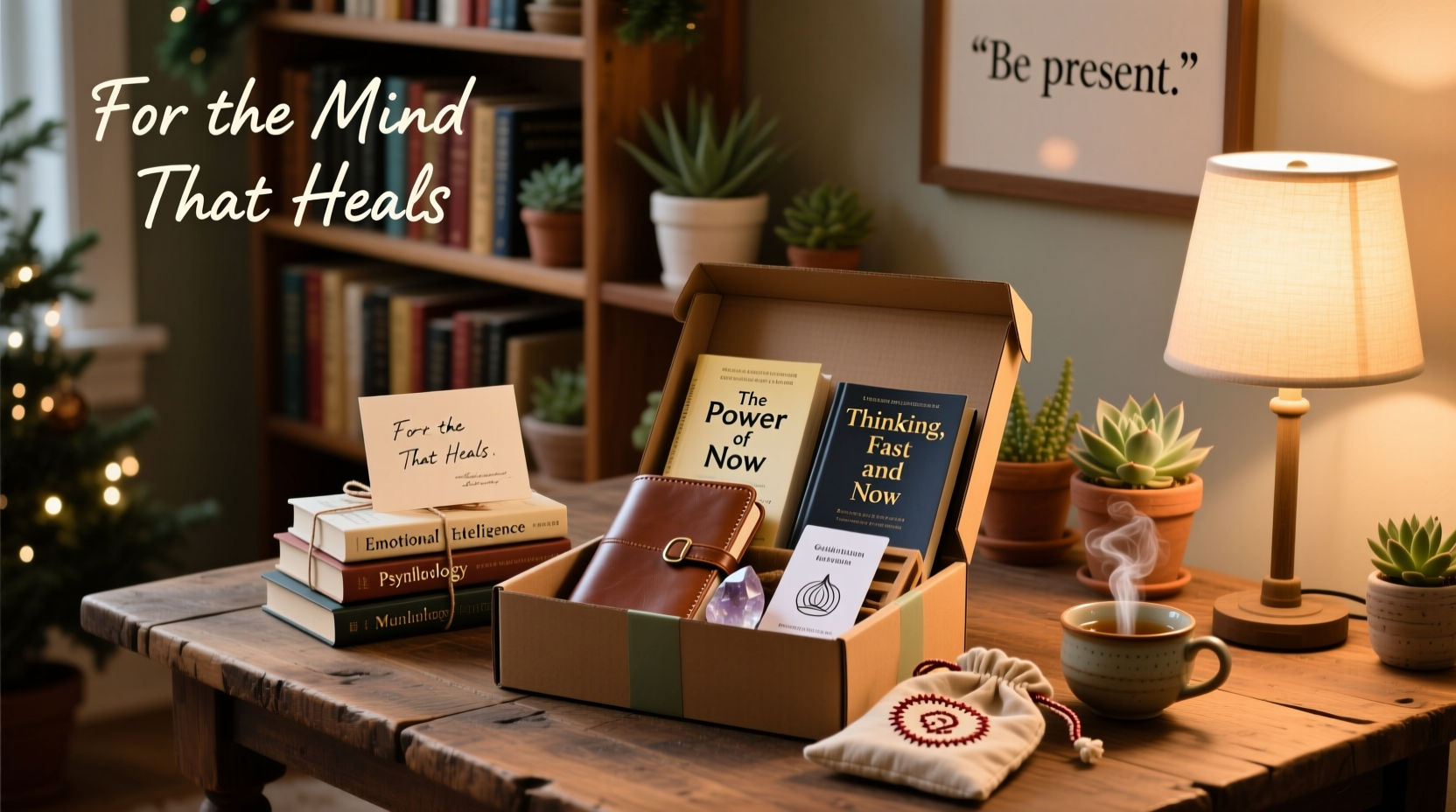
- Week 3: Add Complementary Pieces – Include smaller items: a gratitude journal, tea blend labeled “for mindful moments,” or affirmation cards featuring psychological concepts.
- Week 4: Package Thoughtfully – Use recycled kraft paper and twine for a minimalist look. Attach a tag with a quote from Carl Rogers: “The curious paradox is that when I accept myself just as I am, then I can change.”
- Christmas Eve: Deliver with Intention – Hand-deliver if possible, or include a short letter explaining how each item connects to their journey.
“The most powerful interventions often begin not in clinics, but in quiet moments of self-awareness.” — Dr. Kristin Neff, Pioneer in Self-Compassion Research
Mini Case Study: Supporting a Student Through Finals
Maya, a third-year psychology major, was preparing for her abnormal psychology final while managing a part-time job and family responsibilities. Her roommate noticed increasing irritability and sleeplessness. Wanting to help, she created a “Mindful Finals Kit” containing:
- A softcover edition of The Body Keeps the Score by Bessel van der Kolk
- A pack of lavender-scented breath strips with instructions for diaphragmatic breathing
- A pocket-sized journal titled “5 Minutes to Center”
- A $10 gift code for Insight Timer’s premium course on sleep meditation
Within days, Maya reported using the journal each night to decompress and practicing breathwork before exams. She later said, “It wasn’t just the items—it was knowing someone saw how hard I was working. That mattered more than anything.”
Gift Checklist: What to Include
Use this checklist to ensure your gift is comprehensive and meaningful:
- ✅ One foundational or inspirational psychology book
- ✅ At least one mindfulness tool (app access, card deck, etc.)
- ✅ A journal or notebook with reflective prompts
- ✅ Personal touch: handwritten note or custom quote
- ✅ Optional: soothing consumable (herbal tea, dark chocolate)
- ✅ Eco-friendly packaging with reusable elements
Frequently Asked Questions
Are audiobooks acceptable gifts for psychology students?
Yes, especially for long commutes or repetitive tasks. Audiobooks like Atomic Habits by James Clear or Daring Greatly by Brené Brown are highly engaging. Consider pairing a physical copy with an Audible credit for maximum flexibility.
Can mindfulness tools feel too “new age” for serious students?
Some may hesitate if mindfulness is presented without scientific grounding. Counter this by selecting evidence-based resources—look for authors affiliated with institutions (e.g., Harvard, UCLA Mindful Awareness Research Center) or referencing peer-reviewed studies. Framing matters: call it “attention training” or “cognitive regulation” instead of vague spirituality.
Is it appropriate to gift mental health tools if someone hasn’t discussed struggles?
Absolutely—as long as it’s framed proactively. Position mindfulness tools as performance enhancers, not crisis interventions. For example: “I thought you’d appreciate this breathwork deck—it’s used by therapists to stay centered during sessions.” Avoid implying deficiency; emphasize growth and sustainability.
Final Thoughts: Give With Insight
Giving a Christmas gift to a psychology major is an opportunity to honor their dedication, curiosity, and emotional courage. The right combination of books and mindfulness tools doesn’t just acknowledge their academic path—it supports their evolution as thinkers and healers. In a world where mental health awareness is growing, these students are on the front lines, learning to listen deeply, think critically, and act compassionately.
Your gift can be a small anchor in their busy lives—a reminder that understanding the mind includes caring for it. Whether it’s a dog-eared classic that changes their perspective or a simple breathing exercise that calms their nerves before a presentation, these items become part of their toolkit. And years from now, they may remember not just what they learned, but who believed in them along the way.
💬 Found this guide helpful? Share it with someone shopping for a psychology student—or leave a comment with your favorite gift idea. Let’s build a community of thoughtful givers.








