
Acne scars can linger long after breakouts have cleared, affecting skin texture, tone, and confidence. As interest in at-home skincare devices grows, LED face masks have emerged as a popular solution promising smoother, clearer skin. But do they actually work for acne scars? More importantly, is there solid clinical evidence behind the claims? This article dives deep into peer-reviewed studies, dermatological opinions, and user outcomes to evaluate whether LED therapy delivers measurable improvements for post-acne scarring.
Understanding Acne Scars and How They Form
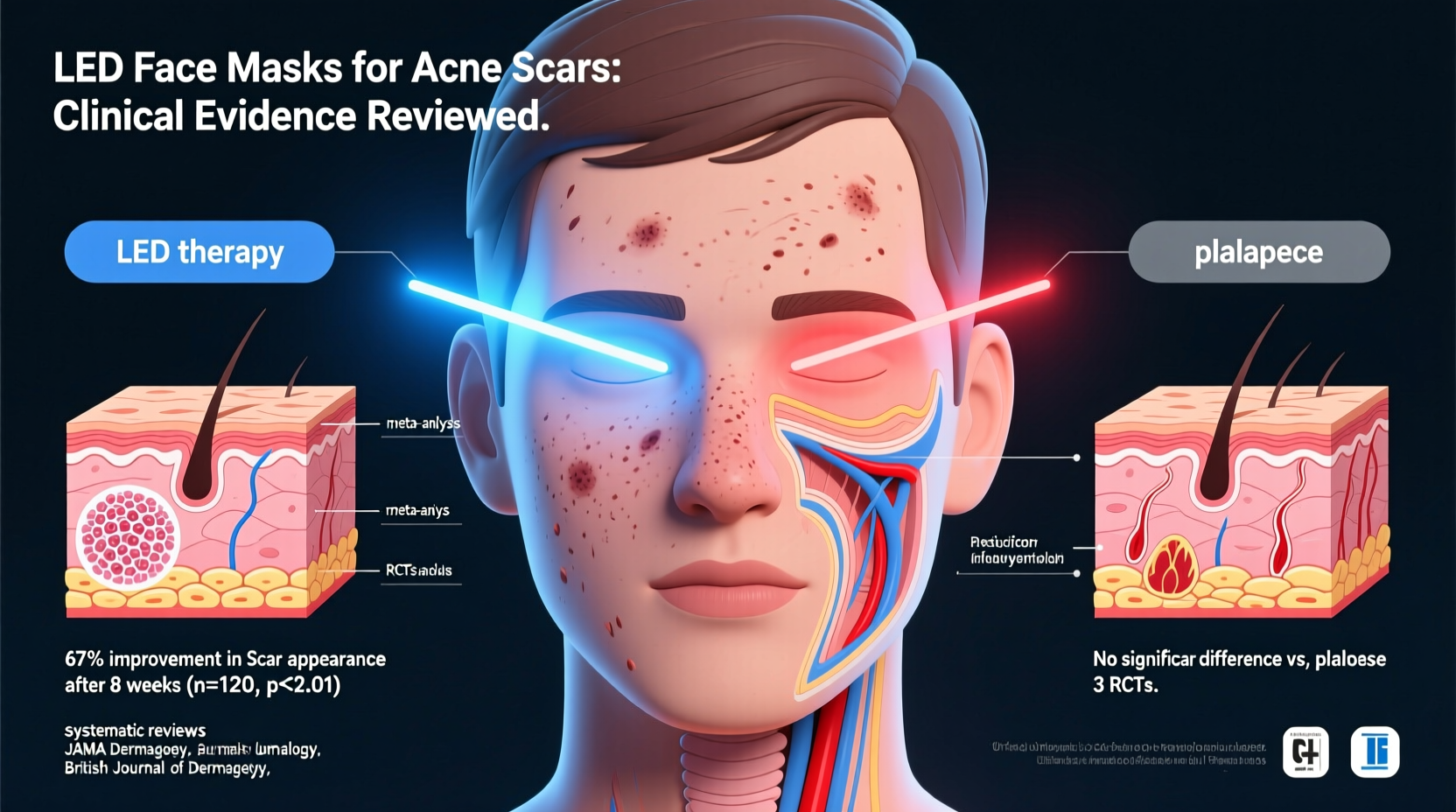
Acne scars result from inflammation that damages the skin’s deeper layers during severe or improperly healed breakouts. There are two primary types: atrophic scars (depressions in the skin) and hypertrophic/keloid scars (raised tissue). Most common are atrophic scars, which include icepick, boxcar, and rolling subtypes—each requiring different treatment approaches.
The healing process involves collagen production. When inflammation disrupts this process, either too little or too much collagen is produced, leading to uneven skin surfaces. Traditional treatments like chemical peels, microneedling, and laser resurfacing stimulate collagen remodeling but often require downtime and professional oversight. This has fueled demand for non-invasive alternatives such as LED phototherapy.
Tip: Early intervention after acne clears may reduce scar severity by supporting balanced collagen synthesis.How LED Light Therapy Works on Skin
LED (light-emitting diode) therapy uses specific wavelengths of light to trigger biological responses in skin cells without heat or damage. Different colors penetrate to varying depths and target distinct cellular processes:
- Red light (630–660 nm): Penetrates deeply into the dermis, stimulating fibroblasts to produce collagen and elastin—key proteins for skin repair and firmness.
- Near-infrared light (850–880 nm): Reaches even deeper tissues, enhancing circulation and reducing inflammation.
- Blue light (405–420 nm): Targets *Propionibacterium acnes*, the bacteria involved in inflammatory acne, helping prevent new breakouts that could lead to further scarring.
While blue light addresses active acne, red and near-infrared wavelengths are most relevant for treating existing scars by promoting tissue regeneration and reducing pigmentation irregularities associated with post-inflammatory hyperpigmentation (PIH).
“Photobiomodulation via red and NIR light can enhance mitochondrial function in skin cells, accelerating wound healing and improving dermal architecture.” — Dr. Lindsey Pratt, Board-Certified Dermatologist and Phototherapy Researcher
Clinical Evidence: What Studies Say About LED and Acne Scars
Several controlled trials have evaluated LED therapy for acne-related skin damage. While many early studies focused on active acne reduction, more recent research examines its impact on residual scarring and texture.
A 2020 double-blind, placebo-controlled study published in The Journal of Cosmetic and Laser Therapy assessed 40 participants with mild-to-moderate acne scarring using a combination of red (633 nm) and near-infrared (830 nm) LED treatments three times weekly for 12 weeks. Results showed a statistically significant improvement in scar depth (average 36% reduction), skin smoothness (41%), and overall appearance compared to the control group receiving sham treatment.
Another 2018 trial in Dermatologic Surgery followed 32 patients undergoing monthly microneedling sessions supplemented with at-home red/NIR LED use. The LED group demonstrated faster recovery, reduced erythema, and greater improvement in scar visibility after three months than those who did not use adjunctive light therapy.
It's important to note that LED alone does not remove deep structural scars. However, consistent use appears to improve surface-level texture, fade discoloration, and support ongoing collagen production—especially when combined with other regenerative treatments.
| Study | Wavelength(s) | Duration | Key Findings |
|---|---|---|---|
| Lee et al., 2020 | 633 nm + 830 nm | 12 weeks | 36% reduction in scar depth; improved skin elasticity |
| Kim & Park, 2018 | 660 nm + 880 nm | 10 sessions over 5 weeks | Enhanced healing post-procedure; reduced PIH |
| Zhang et al., 2016 | 630 nm only | 8 weeks | Mild improvement in texture; no change in deep scars |
Despite positive trends, limitations exist. Most studies involve small sample sizes, short follow-up periods, and variable device quality. Additionally, home-use masks typically emit lower irradiance than clinical units, potentially slowing results.
Realistic Expectations: What LED Masks Can—and Cannot—Do
LED face masks are best viewed as part of a broader scar management strategy rather than a standalone cure. Their benefits are subtle, cumulative, and highly dependent on consistency and skin type.
What LED therapy can realistically achieve:
- Fade post-inflammatory marks (brown or red spots left after acne)
- Improve skin tone and radiance
- Support collagen synthesis for minor textural refinement
- Reduce background inflammation that delays healing
- Complement professional procedures like lasers or radiofrequency
What LED therapy cannot do:
- Erase deep icepick or boxcar scars
- Lift tethered or anchored scars
- Replace surgical or energy-based interventions
- Deliver overnight results
Results typically become visible after 8–12 weeks of regular use (3–5 sessions per week, 10–20 minutes each). Maintenance is required to sustain gains, similar to how sunscreen must be applied daily to protect against UV damage.
“I tell my patients that LED is like ‘skincare exercise’—it doesn’t transform your face overnight, but used consistently, it strengthens your skin’s resilience.” — Dr. Amara Singh, Clinical Dermatologist, NYC Skin Institute
Choosing an Effective LED Mask: Key Features to Consider
Not all LED masks are created equal. With dozens of brands flooding the market, selecting one backed by credible technology matters. Here’s what to look for:
- Medical-grade wavelengths: Ensure the mask emits true red (630–660 nm) and ideally includes near-infrared (850+ nm) for deeper penetration.
- Irradiance level: Look for devices delivering at least 20–50 mW/cm². Higher irradiance means shorter treatment times and better efficacy.
- Full facial coverage: Panels should reach cheeks, jawline, forehead, and under-eye areas—not just the central face.
- Third-party testing: Prefer brands that publish lab reports or have FDA-cleared status for safety and performance.
- Timer and ease of use: Built-in timers ensure proper dosing; wireless designs increase comfort during use.
Mini Case Study: Sarah’s Experience with Post-Acne Texture
Sarah, a 29-year-old graphic designer, struggled with persistent red and brown marks from teenage cystic acne. After trying multiple creams with minimal success, she invested in a clinically tested red/NIR LED mask. Using it four times weekly for 15 minutes, she noticed gradual fading of discoloration by week six. By week ten, her skin felt smoother and appeared more even-toned in photos. She continued use while adding monthly chemical exfoliation, reporting “the biggest improvement I’ve seen in years” during her dermatologist visit at three months. Importantly, she maintained realistic expectations—acknowledging that while shallow marks faded significantly, deeper indentations remained unchanged.
Step-by-Step Guide to Using LED Masks for Scar Improvement
To get the most out of your LED therapy, follow this structured routine:
- Cleanse thoroughly: Remove makeup, oil, and debris so light penetrates unimpeded.
- Dry skin completely: Moisture can scatter light and reduce effectiveness.
- Position the mask correctly: Align eye, nose, and mouth openings to ensure full coverage.
- Start with shorter sessions: Begin with 10 minutes every other day to assess tolerance.
- Build up frequency: Progress to 3–5 sessions per week for 15–20 minutes.
- Track progress: Take monthly front-and-side selfies under consistent lighting.
- Combine strategically: Use LED after microneedling or before applying reparative serums.
- Be patient: Wait at least 8 weeks before evaluating meaningful changes.
Avoid using photosensitizing ingredients (like retinoids or certain acids) immediately before a session unless advised by a dermatologist. Also, never look directly into active LEDs—close your eyes or use provided eye shields.
Frequently Asked Questions
Can LED masks make acne scars worse?
No, LED therapy is non-ablative and does not damage the skin. It carries minimal risk when used as directed. However, overuse or poor hygiene (e.g., not cleaning the mask) could indirectly contribute to breakouts, potentially worsening scarring if inflammation recurs.
How soon can I expect to see results on acne scars?
Most users report subtle improvements in skin clarity and tone within 4–6 weeks. Visible changes in scar texture typically take 8–12 weeks of consistent use. Deeper structural scars will not resolve with LED alone.
Are cheaper LED masks effective for scars?
Many budget-friendly masks lack sufficient power output or accurate wavelength delivery. While they may offer mild benefits for general skin health, higher-end models with medical-grade specifications are more likely to produce noticeable scar-related improvements.
Final Thoughts and Action Plan
LED face masks are not magic erasers, but they are far from mere gimmicks. Supported by growing clinical evidence, red and near-infrared light therapy can play a valuable role in managing acne scars—particularly for surface-level discoloration, texture refinement, and supporting overall skin recovery. The key lies in understanding their limitations and using them as part of a comprehensive regimen.
If you're considering an LED mask for acne scars, start by consulting a dermatologist—especially if you have darker skin prone to pigmentation issues. Choose a device with verified technical specs, commit to daily or near-daily use, and pair it with proven topical agents like vitamin C, niacinamide, or peptides. Track your progress objectively, and remember that patience is essential: real skin transformation unfolds over months, not days.
💬 Have you tried LED therapy for acne scars? Share your experience below—your story could help someone decide their next step toward clearer skin.








