Choosing the right sunscreen is about more than just SPF numbers or water resistance—it’s also about how it looks and feels on your skin. One of the most common complaints, especially among people with deeper skin tones, is the dreaded white cast. That chalky, ashy film left behind by some sunscreens can be frustrating and discouraging. So, when comparing chemical versus physical sunscreens, which one actually avoids leaving a white cast?
The answer isn’t always straightforward, but understanding the science behind each type—and how formulations have evolved—can help you make an informed decision that protects your skin without compromising aesthetics.
Understanding Chemical and Physical Sunscreens
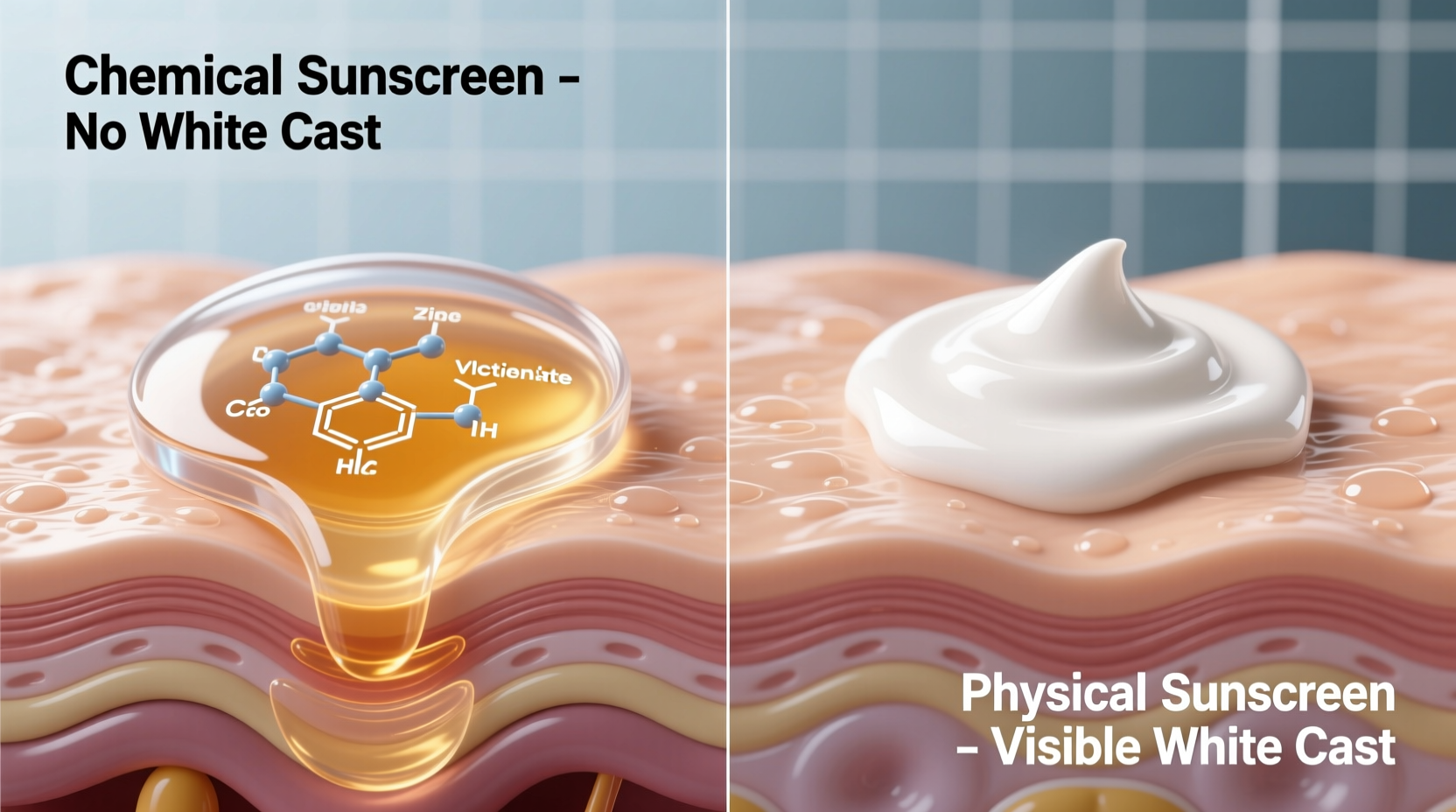
Sunscreen falls into two primary categories: chemical and physical (also known as mineral). Each works differently to protect your skin from harmful UV radiation.
Chemical sunscreens absorb UV rays using organic compounds such as avobenzone, octinoxate, oxybenzone, and octisalate. These ingredients penetrate the top layer of skin and convert UV rays into heat, which is then released from the body. Because they are absorbed rather than sitting on the surface, chemical sunscreens tend to blend seamlessly into all skin tones.
Physical sunscreens, in contrast, use mineral ingredients like zinc oxide and titanium dioxide. These sit on top of the skin and act as a shield, deflecting and scattering UV rays before they can penetrate. While effective and generally gentler on sensitive skin, traditional physical sunscreens are notorious for leaving a white or grayish cast—especially on medium to deep complexions.
Tip: If you have melasma or hyperpigmentation, avoiding rubbing or irritation is crucial—mineral sunscreens may be preferable despite potential casting.Why White Cast Happens—and Who It Affects Most
The white cast associated with sunscreen primarily comes from the light-scattering properties of zinc oxide and titanium dioxide. In their natural, non-nano form, these minerals are opaque and highly reflective, making them visibly white when applied to the skin.
This effect is more pronounced on individuals with richer melanin levels because the contrast between the white residue and darker skin is greater. However, even fair-skinned users may notice a ghostly sheen under certain lighting conditions.
It's important to note that not all physical sunscreens cause this issue. Advances in nanotechnology have led to the development of micronized or nano-sized particles that reduce opacity while maintaining UV protection. Many modern mineral formulas now use these smaller particles to minimize or eliminate visible whitening.
“White cast shouldn’t be a reason to skip sunscreen. With today’s formulations, there are excellent options across both categories that work beautifully on diverse skin tones.” — Dr. Lena Patel, Board-Certified Dermatologist
Comparing Performance: Chemical vs Physical
| Feature | Chemical Sunscreen | Physical Sunscreen |
|---|---|---|
| Active Ingredients | Avobenzone, Octocrylene, Oxybenzone, Homosalate | Zinc Oxide, Titanium Dioxide |
| Mechanism | Absorbs UV rays and converts to heat | Reflects and scatters UV rays |
| Application Feel | Lightweight, fast-absorbing, often invisible | Thicker texture, may feel greasy or leave residue |
| White Cast Likelihood | Very low | High (traditional), Low (nano-formulated) |
| Skin Sensitivity | Potential for irritation (especially with fragrance or alcohol) | Generally well-tolerated; ideal for sensitive or acne-prone skin |
| Reapplication Needs | Required after sweating or swimming | More stable, but still requires reapplication |
From the table above, it’s clear that **chemical sunscreens typically do not leave a white cast**, thanks to their transparent, skin-absorbing nature. They blend easily and are often formulated into lightweight lotions, gels, or sprays suitable for daily wear under makeup.
However, physical sunscreens have made significant strides. Brands now offer tinted versions, sheer finishes, and fluid textures designed specifically to address concerns around visibility. For example, a tinted mineral sunscreen uses iron oxides to match various skin tones, effectively neutralizing the white appearance.
How to Choose a Sunscreen Without White Cast
Selecting a sunscreen that offers broad-spectrum protection without discoloration involves evaluating ingredients, formulation, and personal needs. Here’s a practical checklist to guide your decision:
✅ Sunscreen Selection Checklist
- Check the active ingredients: If avoiding white cast is a priority, look for chemical filters like avobenzone or ecamsule.
- Look for “non-nano” or “micronized” labels: On mineral sunscreens, these indicate reduced particle size and lower visibility.
- Opt for tinted mineral formulas: Iron oxide pigments help blend zinc oxide into deeper skin tones seamlessly.
- Read reviews from users with similar skin tones: Real-world feedback often reveals casting issues not apparent in marketing materials.
- Test indoors and outdoors: Some sunscreens appear clear indoors but develop a blue-white tint in sunlight due to uncoated zinc oxide.
- Consider finish preferences: Matte, dewy, or sheer—choose based on your skincare routine and climate.
Also, keep in mind that newer hybrid sunscreens combine both chemical and physical filters to balance efficacy, wearability, and cosmetic elegance. These blends aim to deliver the gentle protection of minerals with the invisible finish of chemical agents.
Tip: Apply mineral sunscreen using a stippling motion rather than rubbing—it helps distribute the product evenly and reduces streaking or patchiness.Real-World Example: Navigating Sunscreen Choices
Take the case of Amara, a 32-year-old marketing executive with Fitzpatrick skin type V. She struggled for years with sunscreens that either caused breakouts or left her looking ashen, particularly during outdoor events or video calls. After trying multiple drugstore mineral options, she switched to a chemical-based facial sunscreen labeled “sheer finish” and “oil-free.”
The difference was immediate. The product absorbed within seconds, matched her golden undertones, and didn’t interfere with her foundation. Later, she discovered a tinted mineral option developed for melanin-rich skin, which she now uses on days when her skin feels reactive. Her experience highlights that solutions exist—but require research and trial.
Amara’s journey underscores a broader truth: there is no universal sunscreen. Personal factors like skin sensitivity, lifestyle, and aesthetic priorities shape what works best.
Step-by-Step Guide to Finding Your Ideal Sunscreen
- Assess your skin type: Is it oily, dry, combination, sensitive, or acne-prone? This influences texture preference and ingredient tolerance.
- Determine your main concern: Is it white cast, breakouts, environmental impact, or sensitivity?
- Shortlist three products: Include at least one chemical, one physical (preferably tinted), and one hybrid option.
- Perform a patch test: Apply a small amount on your jawline or neck and wait 24 hours to check for reactions.
- Test in natural light: Apply full coverage and observe how it looks in daylight—not just indoor lighting.
- Wear it with makeup (if applicable): See if it pilling occurs or alters your base.
- Evaluate after sun exposure: Check for fading, sweating, or reapplication needs.
- Make a final choice: Select the one that balances protection, comfort, and invisibility.
This methodical approach eliminates guesswork and increases the likelihood of long-term adherence to daily sun protection—a critical factor in preventing photoaging and skin cancer.
Frequently Asked Questions
Do all physical sunscreens leave a white cast?
No, not all do. Traditional formulas with high concentrations of non-micronized zinc oxide are most likely to leave a cast. However, many modern mineral sunscreens use nano-sized particles or added tints to prevent this. Look for terms like “clear finish,” “sheer,” or “tinted” on the label.
Can chemical sunscreens be safe for sensitive skin?
Yes, though some chemical filters like oxybenzone have been linked to irritation or hormone disruption in studies. Newer-generation filters such as Mexoryl SX, Tinosorb S, and Avobenzone (when photostabilized) are considered safer and less irritating. Always opt for fragrance-free, dermatologist-tested options if you have reactive skin.
Are there reef-safe sunscreens without white cast?
Yes. While many reef-safe sunscreens rely on zinc oxide, which can cause whitening, several brands now offer non-nano, tinted, or encapsulated mineral formulas that are both environmentally friendly and cosmetically elegant. Alternatively, look for chemical filters approved as reef-safe, such as Mexoryl or Tinosorb, available outside the U.S. in international markets.
Final Thoughts and Action Steps
The debate between chemical and physical sunscreen ultimately comes down to individual needs. If avoiding a white cast is your top priority, **chemical sunscreens are generally the better choice** due to their transparent, skin-blending properties. However, advancements in mineral formulations mean that physical sunscreens are no longer automatically ruled out—even for deeper skin tones.
The key lies in reading labels carefully, understanding ingredient technology, and being willing to test products. Don’t let outdated experiences deter you from exploring new options. Sun protection is non-negotiable for skin health, and today’s market offers inclusive, effective solutions for every complexion.
💬 Your skin deserves daily protection—without compromise. Try one new sunscreen this week, share your findings online, or recommend a favorite to someone who’s struggled with white cast. Together, we can normalize sun-safe habits for all skin tones.








