Fall fashion hinges on layering, texture, and footwear that bridges the gap between casual comfort and polished style. Among the most enduring choices in men’s footwear are chelsea boots and chukka boots—two classics with distinct origins, silhouettes, and sartorial personalities. While both thrive in autumn wardrobes, their versatility differs based on fit, occasion, material, and personal aesthetic. Choosing between them isn’t about superiority alone; it’s about alignment with lifestyle, climate, and style goals. Understanding the nuances helps determine which boot earns the title of the more versatile fall staple.
The Origins and Evolution of Each Boot
Before assessing versatility, it's essential to understand where each boot came from and how its design has evolved.
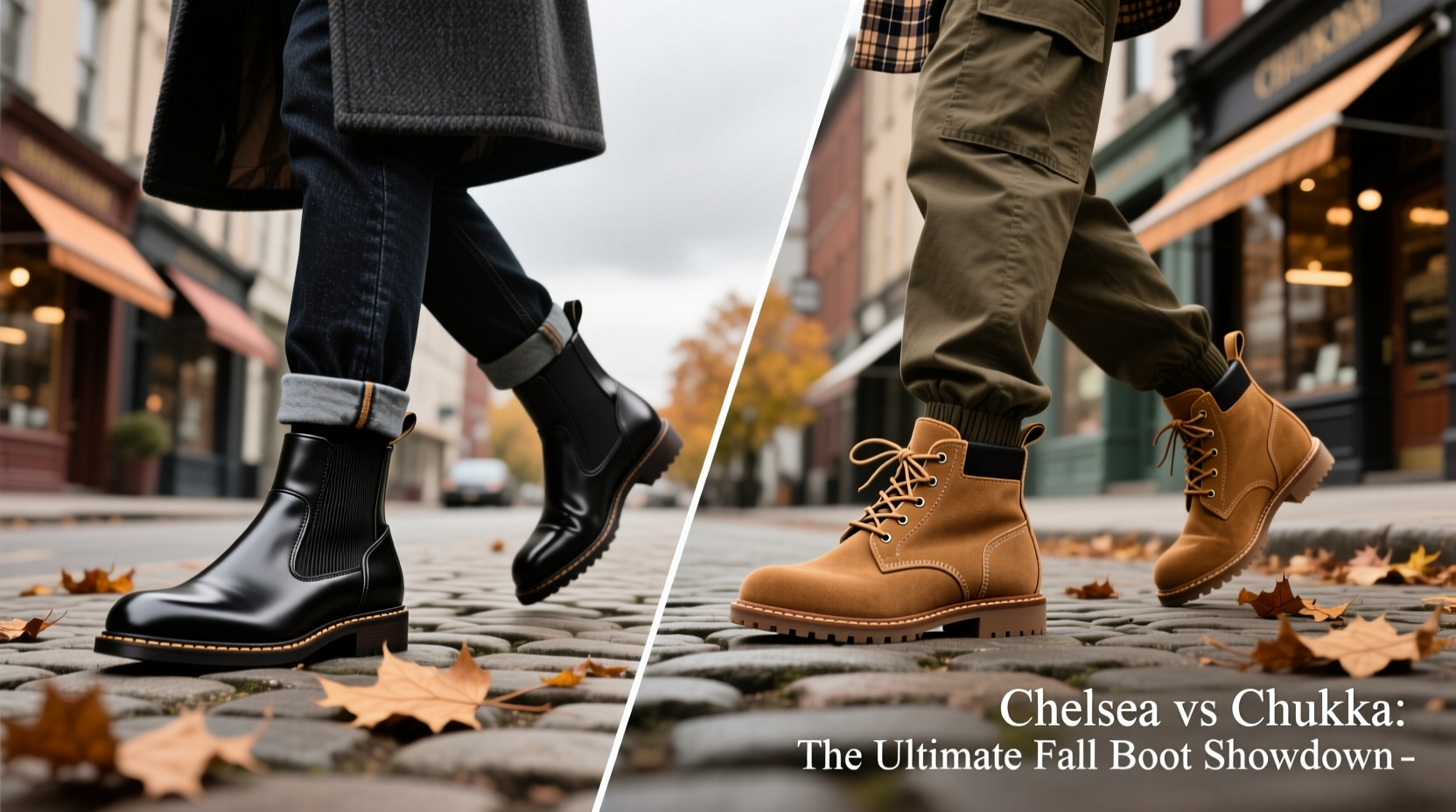
Chelsea boots trace their roots to Victorian England in the 1830s. Designed by J. Sparkes-Hall, a bootmaker for Queen Victoria, they were intended as an elegant, functional alternative to lace-up boots. Their defining features—elastic side panels, pull tabs at the heel, and slip-on construction—were revolutionary at the time. The name “Chelsea” emerged decades later, popularized in the 1960s by London’s mod scene and icons like The Beatles, who wore sleek black versions with tailored suits and slim trousers.
Chukka boots, on the other hand, originated from British military use in the early 20th century. Inspired by desert combat footwear worn during World War II, the chukka takes its name from the sport of polo—specifically, a \"chukka\" being one of the periods in a match. Characterized by two or three eyelets, ankle height, and often suede uppers, chukkas were designed for breathability and mobility. Over time, they transitioned into civilian fashion, embraced for their relaxed sophistication and adaptability to smart-casual dressing.
“Footwear heritage informs function. Chelsea boots were made for elegance and ease; chukkas for movement and ventilation. That DNA still shapes how we wear them today.” — Marcus Langford, Menswear Historian & Curator
Design and Construction: Key Differences
The visual and structural differences between these boots go beyond aesthetics—they influence wearability, formality, and seasonal suitability.
| Feature | Chelsea Boots | Chukka Boots |
|---|---|---|
| Fastening | Slip-on with elastic side panels | Lace-up (2–3 eyelets) |
| Height | Ankle-high, slightly higher than chukkas | Low-cut, sits just above ankle |
| Materials | Leather (common), suede, patent finishes | Suede (most common), leather, nubuck |
| Sole Type | Leather or rubber, often sleek | Crep sole or commando, varies by style |
| Formality Range | Smart casual to formal | Casual to smart casual |
| Weather Suitability | Better in damp conditions (especially leather) | Less weather-resistant (especially suede) |
The absence of laces gives chelsea boots a streamlined, almost dress-shoe-like appearance. This makes them easier to pair with tailored trousers or dark jeans without disrupting the line of the leg. Chukkas, while refined, lean toward casual due to their suede uppers and visible lacing. They work best with cuffed denim, chinos, or unstructured wool pants.
Tip: For maximum versatility, choose a black or oxblood leather chelsea boot—it pairs seamlessly with both denim and suit fabrics.Versatility Across Outfits and Occasions
Versatility isn’t just about how many outfits a shoe can handle—it’s about how well it transitions across environments: office, weekend, evening, and transitional weather.
Chelsea boots excel in this area. A black leather chelsea can be worn with a navy blazer and gray flannel trousers for a business-casual meeting, then swapped with dark selvedge jeans and a crewneck sweater for dinner. Their minimalism avoids visual clutter, making them ideal under cropped or slim-fit pants. Even in overcoats and layered ensembles, they maintain a clean profile.
In contrast, chukka boots shine in relaxed settings. A tan suede chukka complements olive chinos and a chambray shirt effortlessly, evoking East Coast prep or Mediterranean ease. However, pairing them with formal attire risks looking mismatched—the combination of suede and structured tailoring often feels incongruent unless intentionally styled with unlined jackets or textured fabrics.
Rain and dampness further tilt the balance. Leather chelseas, especially those with rubber outsoles or treated finishes, resist moisture better than suede chukkas, which absorb water and require frequent protection. In regions with wet autumns—Pacific Northwest, UK, Northeastern U.S.—this becomes a decisive factor.
Real-World Example: Alex’s Fall Wardrobe Rotation
Alex, a graphic designer in Chicago, owns both a pair of black leather chelsea boots and tan suede chukkas. During September and early October, he wears the chukkas frequently with light layers and open collars. But once temperatures drop below 55°F and rain becomes regular, he switches exclusively to the chelseas. “They just work with everything,” he says. “I can throw on a peacoat, jeans, and the chelseas and feel put together in five minutes. The chukkas get muddy too easily, and I don’t want to ruin them.”
This scenario reflects a broader trend: chelsea boots serve as reliable daily drivers, while chukkas function more as seasonal accents.
Material Matters: Leather vs Suede in Autumn
Autumn brings fluctuating humidity, morning dew, and sudden showers. Footwear materials must withstand these conditions without sacrificing style.
- Leather (Chelsea): Naturally water-resistant when polished or treated. Full-grain leather develops a patina over time, enhancing character. Easy to maintain with regular conditioning.
- Suede (Chukka): Highly susceptible to stains and moisture. Requires protective sprays and careful storage. Once soaked, suede loses shape and color, often irreversibly.
While suede offers a soft, tactile appeal that complements earthy fall palettes, its fragility limits wear frequency. A single rainy commute can sideline a pair of chukkas for days. Leather chelseas, meanwhile, endure drizzle and sidewalk splash with minimal care.
Tip: If you own suede chukkas, apply a silicone-based protector before the season starts and store them with cedar shoe trees to prevent odor and creasing.Moreover, leather’s reflective quality adds subtle polish. In low-light fall afternoons, a well-maintained chelsea boot catches ambient light, elevating even simple outfits. Suede absorbs light, creating a matte effect that reads as deliberately understated—a strength in curated looks but less impactful in varied contexts.
Styling Checklist: Maximizing Versatility
To determine which boot integrates best into your existing wardrobe, consider the following checklist:
- ✅ Do you own at least one pair of slim or straight-leg trousers that break cleanly at the ankle?
- ✅ Do you regularly wear blazers, overshirts, or structured outerwear?
- ✅ Is your climate prone to rain or damp conditions in fall?
- ✅ Do you value quick, no-fuss dressing?
- ✅ Are you aiming for a wardrobe with fewer pieces that do more?
If you answered “yes” to three or more, a leather chelsea boot is likely the more practical and versatile choice. It aligns with modern minimalist wardrobes that prioritize multipurpose items. Chukkas, while stylish, demand more attention to coordination and environmental conditions.
When Chukkas Win: Scenarios Where They Shine
It would be unfair to dismiss chukka boots as less versatile without acknowledging their strengths. There are specific contexts where they outperform chelseas:
- Warm, dry autumns: In cities like Los Angeles or Austin, where fall means crisp mornings and mild afternoons, suede chukkas offer breathability and a laid-back elegance.
- Casual creative environments: Workplaces that embrace individuality welcome chukkas paired with rolled chinos and knit polos.
- Vintage-inspired styling: When building a retro wardrobe—think 1970s California cool or Ivy League heritage—chukkas add authenticity.
However, these are niche advantages. For the average wearer navigating unpredictable weather and mixed dress codes, chelsea boots provide broader utility.
Expert Insight: The Designer Perspective
Fashion designers consistently favor chelsea boots in runway collections for their adaptability. At recent shows, brands like Acne Studios, Oliver Spencer, and A.P.C. styled models in chelseas with everything from trench coats to tailored shorts.
“The chelsea boot is the silent hero of men’s footwear. It doesn’t shout, but it works harder than any other style in the rotation. Designers reach for it because it disappears into the outfit—never fights for attention.” — Lena Torres, Senior Footwear Designer at Arket
Torres notes that while chukkas appear seasonally, often in spring/summer lines, chelseas anchor fall and winter collections year after year. “They’re not trendy—they’re foundational.”
Frequently Asked Questions
Can chukka boots be worn with suits?
Generally, no—not with traditional wool suits. The casual nature of suede and the chunky sole of most chukkas clash with formal tailoring. However, with unconstructed jackets, linen blends, or summer-weight suits in warmer climates, a polished leather chukka might work in a pinch. For reliability, stick to chelseas or derbies with suits.
Are chelsea boots appropriate for the office?
Yes, especially in business-casual environments. A black or dark brown leather chelsea with a smooth finish pairs well with dress pants and loafers. Avoid overly shiny or platform-soled versions if your workplace leans conservative.
How do I extend the life of suede chukka boots?
Use a suede protector spray before first wear. Brush regularly with a brass or nylon brush to lift dirt and restore nap. Store with shoe trees and avoid wearing in rain. For stains, use a suede eraser or consult a professional cleaner.
Final Verdict: Which Is the More Versatile Fall Staple?
After evaluating design, material resilience, styling range, and real-world usability, the chelsea boot emerges as the more versatile fall staple. Its ability to transition seamlessly from weekday wear to weekend outings, its compatibility with both casual and semi-formal attire, and its superior performance in damp conditions make it a smarter investment for most men.
That said, chukka boots have enduring charm and belong in any well-rounded wardrobe—just not as the primary workhorse. They function best as a secondary option for dry, warm days or intentional casual ensembles.
The ideal fall footwear strategy? Start with a high-quality leather chelsea boot in black or oxblood. Once that foundation is set, consider adding a suede chukka for variety. This approach ensures you’re prepared for anything autumn throws your way—without compromising style or practicality.
🚀 Ready to upgrade your fall footwear? Invest in a premium leather chelsea boot this season and build your wardrobe around its effortless versatility. Share your favorite pair or styling tip in the comments below.








