
In an era where desk jobs dominate and screen time is at an all-time high, poor posture has become a widespread concern. Slouching, forward head posture, and rounded shoulders are not just aesthetic issues—they can lead to chronic pain, reduced lung capacity, and even diminished confidence. As awareness grows, so does the market for posture correctors: wearable devices designed to pull the shoulders back and align the spine. But do they actually retrain your spine over time, or are they merely temporary fixes with limited long-term impact?
The answer isn't a simple yes or no. While posture correctors can provide immediate feedback and short-term alignment, their ability to \"retrain\" the spine depends heavily on how they're used, the individual's underlying habits, and whether they're paired with targeted exercises and behavioral changes.
How Posture Correctors Work
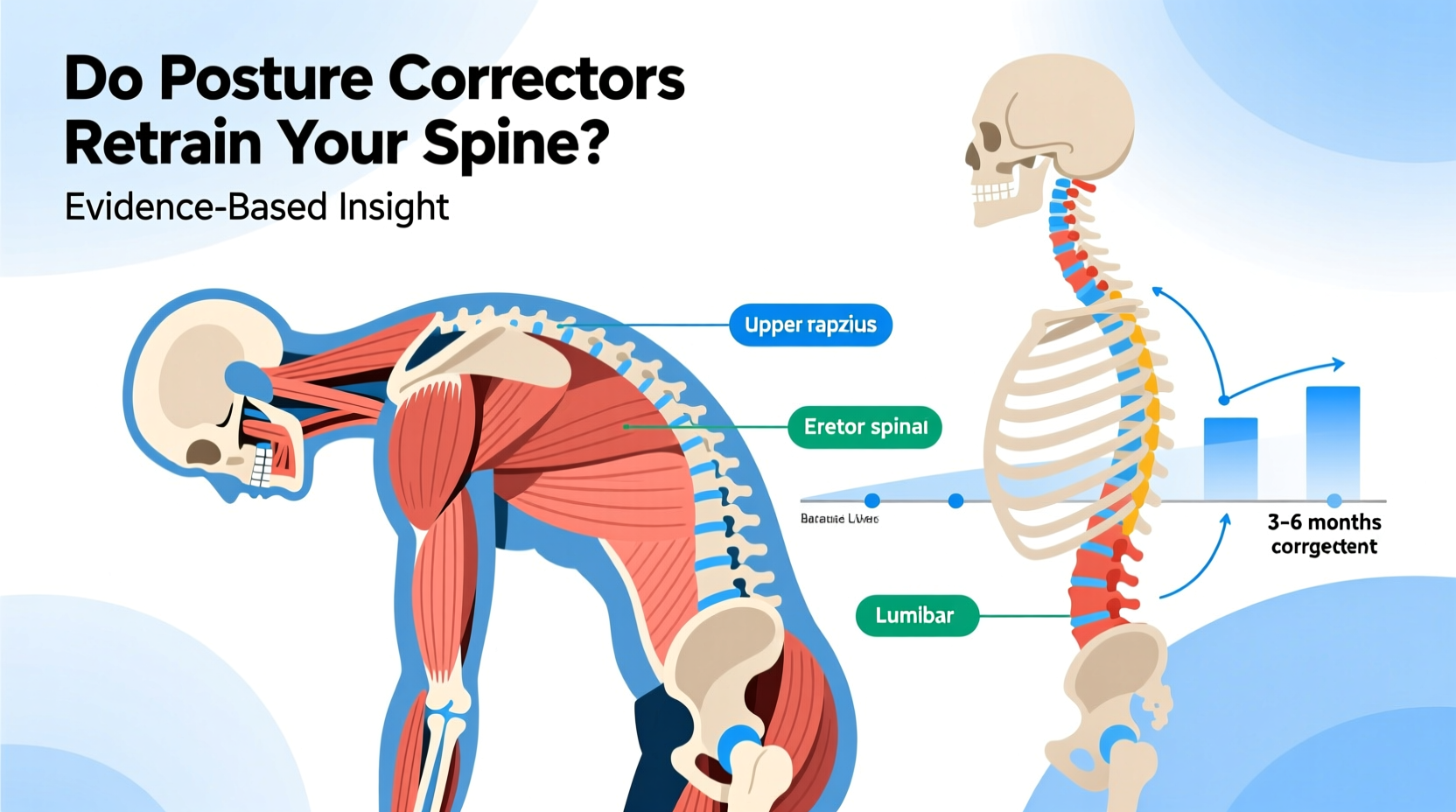
Posture correctors come in various forms—vests, braces, shirts, and straps—that physically restrict slouching by pulling the shoulders into a backward and downward position. Most work by anchoring around the upper arms or wrists and connecting across the upper back, creating tension that discourages forward rounding.
The mechanism is straightforward: when you begin to slump, the device applies gentle but noticeable pressure, prompting you to sit or stand up straighter. This constant sensory feedback can help break unconscious postural habits formed over years of sitting at desks, looking down at phones, or driving for long periods.
However, this correction is mechanical, not neurological. The device forces the body into alignment—it doesn’t teach the muscles to hold that position on their own. Think of it like training wheels on a bicycle: helpful at first, but insufficient for true mastery without active learning and muscle development.
The Science Behind Spinal Retraining
To understand whether posture correctors can retrain the spine, it’s essential to distinguish between passive support and active neuromuscular re-education. True spinal retraining involves:
- Strengthening weak postural muscles (especially the lower trapezius, rhomboids, and deep neck flexors)
- Stretching tight muscles (such as the pectorals and upper trapezius)
- Improving proprioception—the body’s awareness of its position in space
- Reinforcing new movement patterns through repetition and habit formation
A 2020 study published in the *Journal of Physical Therapy Science* found that participants who wore posture correctors for four weeks showed improved shoulder alignment during static standing. However, these gains were only maintained during wear. Once the device was removed, most subjects reverted to their original posture within minutes—unless they also performed strengthening exercises.
“Postural bracing can be a useful cue, but lasting change requires motor learning and muscular endurance.” — Dr. Laura Chen, DPT, Board-Certified Orthopedic Specialist
The Role of Muscle Memory and Habit Formation
Muscle memory isn’t about muscles remembering—it’s about the nervous system reinforcing specific neural pathways through repetition. When you repeatedly perform a movement, your brain becomes more efficient at executing it. Poor posture becomes habitual because the brain has optimized slouching as the default due to comfort and repetition.
Posture correctors interrupt this pattern by introducing discomfort when poor posture occurs. Over time, if used consistently and mindfully, they may contribute to habit disruption. But here’s the catch: if the user passively relies on the device without engaging their muscles or paying attention to body positioning, no real retraining occurs.
For example, someone wearing a brace while watching TV may sit up straight mechanically, but their postural muscles remain inactive. In contrast, someone who wears the brace during focused activities—like working at a desk or doing light exercise—and actively engages their core and scapular stabilizers stands a much better chance of developing sustainable improvements.
Tip: Use your posture corrector as a biofeedback tool, not a crutch. Set reminders to check in with your body every 20–30 minutes and consciously activate your back muscles.When Posture Correctors Help—And When They Don’t
Not all users benefit equally from posture correctors. Effectiveness depends on several factors, including the cause of poor posture, frequency of use, and integration with other interventions.
| Scenario | Likely Benefit | Risks / Limitations |
|---|---|---|
| Mild postural drift from desk work | High – good for awareness and habit correction | May create dependency if used excessively |
| Chronic kyphosis or structural imbalance | Low – requires medical intervention | Can mask symptoms without addressing root cause |
| Used alongside strength training | High – enhances motor learning | None if properly fitted and timed |
| Worn for >6 hours daily | Low – may weaken muscles over time | Muscle atrophy due to reliance |
| Used intermittently with mindfulness | High – promotes body awareness | Requires discipline and consistency |
As the table shows, context matters. A posture corrector used strategically for two to four hours a day—particularly during high-risk activities like computer work—can be part of a broader corrective strategy. But using it all day, every day, may hinder progress by preventing the muscles from learning to stabilize independently.
Mini Case Study: Office Worker with Chronic Rounded Shoulders
Sarah, a 34-year-old graphic designer, had been experiencing neck pain and fatigue for over a year. An ergonomic assessment revealed significant forward head posture and elevated upper traps. She purchased a popular posture brace and wore it for 6–8 hours daily while working.
After two weeks, her colleagues noticed she looked “taller,” and her pain decreased slightly. But by week four, the relief plateaued. Worse, when she forgot to wear the brace, her posture collapsed more dramatically than before. A follow-up with a physical therapist revealed that Sarah’s postural muscles had become less active—her body was relying entirely on external support.
The therapist adjusted her plan: limit brace use to 2–3 hours per day, incorporate daily scapular retractions, chin tucks, and thoracic mobility drills, and practice sitting without the brace using mindful cues. Within eight weeks, Sarah could maintain improved posture unaided for most of the day, and her pain dropped from a 7/10 to a 2/10.
This case illustrates a common pitfall: treating the symptom without addressing the cause. The brace helped initially, but real retraining began only when active rehabilitation replaced passive support.
Best Practices for Using Posture Correctors Effectively
If you choose to use a posture corrector, follow a structured approach to maximize benefit and minimize risk. Here’s a step-by-step guide to integrating it into a spine-retraining program:
- Assess your current posture – Take side-profile photos and note signs of forward head, rounded shoulders, or excessive lumbar curve.
- Consult a professional – See a physical therapist or chiropractor to rule out structural issues like Scheuermann’s kyphosis or joint dysfunction.
- Start with short durations – Wear the corrector for 20–30 minutes at a time, gradually increasing to 2–4 hours max per day.
- Pair with activation exercises – Perform rows, wall angels, chin tucks, and dead bugs while wearing or immediately after removing the brace.
- Practice without the device – Spend equal time practicing good posture unaided, using mirrors or phone alerts as feedback tools.
- Optimize your environment – Adjust your workstation so your monitor is at eye level, elbows at 90 degrees, and feet flat on the floor.
- Track progress monthly – Re-take photos and assess comfort, endurance, and pain levels.
Checklist: Are You Using Your Posture Corrector Correctly?
- ✅ I use it for no more than 4 hours per day
- ✅ I actively engage my back muscles while wearing it
- ✅ I perform posture-specific exercises daily
- ✅ I take breaks and practice good posture without the device
- ✅ My brace fits snugly but doesn’t restrict breathing or circulation
- ✅ I’ve addressed ergonomic factors in my workspace
- ✅ I reassess my posture monthly for progress
Frequently Asked Questions
Can posture correctors fix scoliosis?
No. Scoliosis is a structural lateral curvature of the spine that requires medical evaluation and often specialized bracing (like the Boston brace), physical therapy, or surgery. Over-the-counter posture correctors do not address spinal rotation or asymmetry and may give a false sense of correction.
How long does it take to retrain posture?
Visible improvements can occur in 6–12 weeks with consistent effort, but full neuromuscular retraining may take 6 months or longer. The key is regular exercise, mindfulness, and reducing prolonged static positions. Small, frequent posture checks throughout the day are more effective than occasional intense focus.
Are posture correctors safe for long-term use?
Long-term daily use is not recommended. Extended reliance can lead to muscle inhibition, reduced proprioception, and dependency. Use them as transitional tools, not permanent solutions. If pain increases or numbness develops, discontinue use and consult a healthcare provider.
Conclusion: Tools vs. Transformation
Posture correctors alone do not retrain the spine. They can serve as valuable biofeedback tools that increase awareness and disrupt harmful habits, but lasting change comes from active participation—strengthening weak muscles, releasing tight ones, and rewiring ingrained movement patterns.
Think of a posture corrector as a mirror: it shows you what good posture looks like, but it doesn’t build the strength to hold it. Real transformation happens when you combine external cues with internal effort—when you stop outsourcing alignment and start owning it.
If you’re struggling with posture, consider a posture corrector as one component of a broader strategy. Pair it with targeted exercises, ergonomic adjustments, and mindful body awareness. Track your progress, stay patient, and remember: the goal isn’t to depend on a strap forever, but to make proper alignment second nature.
🚀 Ready to build lasting posture? Start today: wear your corrector mindfully, do three sets of wall angels, and adjust your screen height. Small steps create lasting change.








