
In the middle of a dry winter night, you reach for your body lotion only to find the bottle empty. Your face cream, however, is still half-full. It’s tempting to grab it and smooth it over rough elbows or cracked heels. But is that really a good idea? While using face moisturizer on your body might seem like a harmless shortcut, dermatologists caution that facial and body skin have different needs — and so do their products.
The short answer: yes, you can use face moisturizer on your body in a pinch, but it's not ideal for regular use. Understanding why comes down to formulation, cost, texture, and skin type differences between your face and body.
Why Face and Body Moisturizers Are Formulated Differently
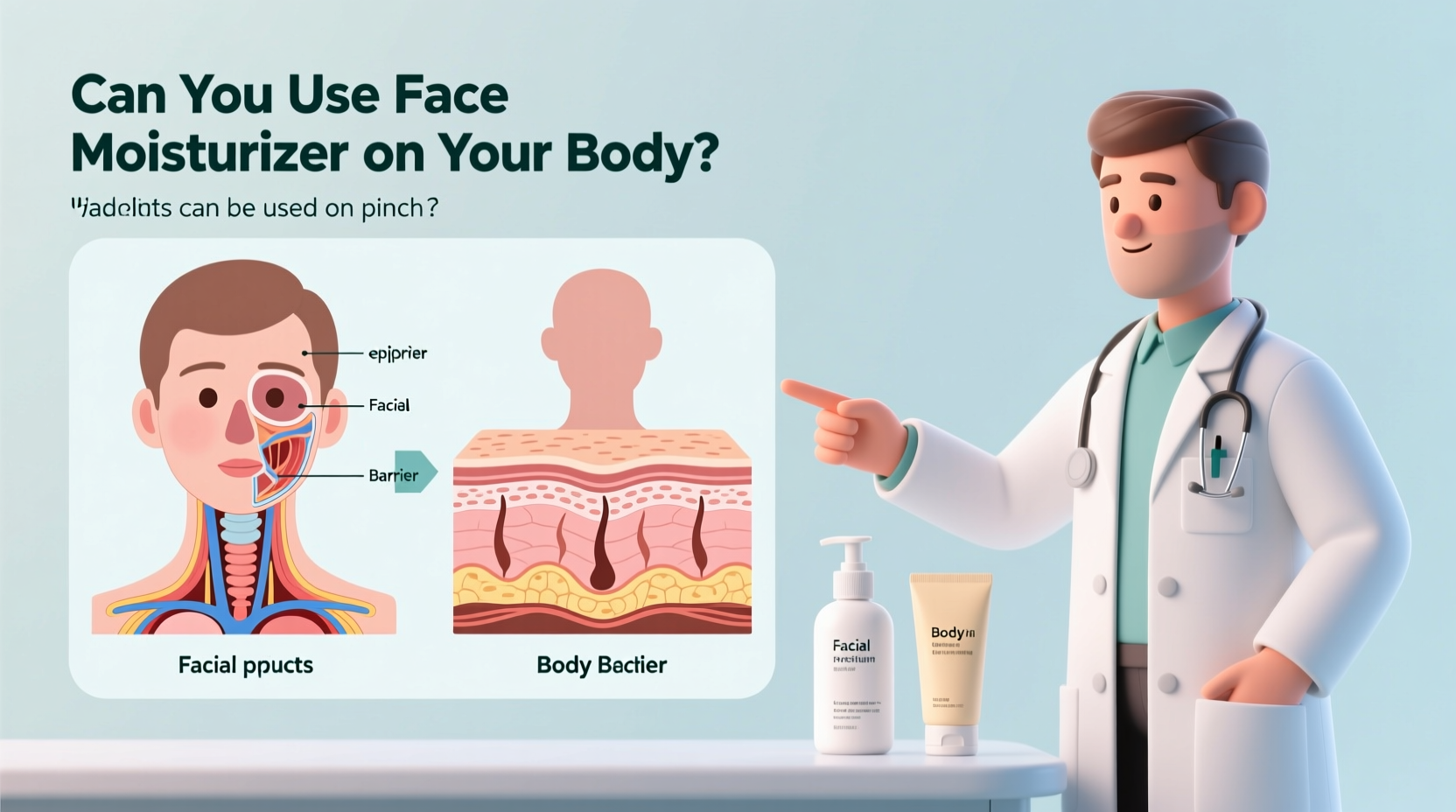
Skin on the face is thinner, more sensitive, and exposed to environmental stressors like UV radiation, pollution, and frequent product application. As a result, face moisturizers are typically designed with precision: lighter textures, higher concentrations of active ingredients (like hyaluronic acid, niacinamide, or peptides), and formulations that avoid clogging pores (non-comedogenic).
In contrast, body skin is thicker, less sensitive, and often drier — especially on areas like knees, elbows, and feet. Body lotions and creams are formulated to be more occlusive, meaning they create a stronger moisture barrier using heavier emollients like shea butter, petrolatum, or ceramides. They’re also generally less expensive per ounce because they don’t need to meet the same refinement standards as facial products.
Tip: If you must use face moisturizer on your body, focus on small, dry areas like hands, cuticles, or the neck — not large surface areas.When It’s Safe (and When It’s Not)
Using a facial moisturizer on your body occasionally won’t cause harm for most people — especially if you're applying it to non-sensitive areas like arms or legs. However, there are several factors to consider before making this substitution.
Safe Scenarios
- You’re traveling and forgot your body lotion — a little face cream on dry patches is fine.
- You have sensitive skin and prefer fragrance-free, hypoallergenic facial formulas over heavily scented body lotions.
- You’re targeting specific zones like the décolletage, hands, or tops of feet where skin is thinner and benefits from gentler ingredients.
Risks and Limitations
- Cost inefficiency: Facial moisturizers are significantly more expensive per ounce. Using them on large body areas isn’t economical.
- Insufficient hydration: Lightweight face creams may not provide enough moisture for very dry body skin, especially in winter.
- Potential irritation: Some face moisturizers contain actives like retinoids, alpha-hydroxy acids (AHAs), or vitamin C, which can irritate larger areas of body skin, particularly if applied before sun exposure.
- Comedogenic risk: While rare, certain oils or silicones in facial products could clog pores on acne-prone areas like the back or chest.
“Face creams are medical-grade skincare in many cases — they’re meant for delicate, high-exposure areas. Slathering them on your legs won’t hurt once, but doing it regularly wastes both product and money.” — Dr. Lena Patel, Board-Certified Dermatologist
Comparison: Face vs. Body Moisturizers
| Feature | Face Moisturizer | Body Moisturizer |
|---|---|---|
| Texture | Lightweight, fast-absorbing, often gel or serum-based | Thicker, creamier, sometimes greasy; designed for prolonged hydration |
| Active Ingredients | High concentration of anti-aging, brightening, or soothing agents | Focused on emollients and occlusives (e.g., glycerin, shea butter) |
| Fragrance | Often fragrance-free or lightly scented to reduce irritation | Frequently contains perfume for sensory appeal |
| Non-Comedogenic? | Usually yes, to prevent clogged pores | Not always — depends on formula |
| Price per Ounce | $1.50–$5+ | $0.20–$1.00 |
| Best For | Thin, sensitive facial skin; daily layering under sunscreen/makeup | Thicker skin; repairing dryness and barrier function |
Smart Substitution Strategies
If you're in a bind and considering using face moisturizer on your body, follow these guidelines to minimize downsides while maximizing benefits.
Step-by-Step Guide: How to Use Face Moisturizer on Body Safely
- Check the ingredient list: Avoid products with strong actives like retinol, salicylic acid, or high-dose vitamin C if applying to large or sensitive body areas.
- Do a patch test: Apply a small amount to your forearm or inner elbow and wait 24 hours to rule out irritation.
- Limited application only: Use sparingly on small dry zones — never replace full-body lotion with face cream.
- Avoid sun-exposed areas: If the face moisturizer contains AHAs or retinoids, don’t apply to arms or legs before going outside without sunscreen.
- Replenish body lotion quickly: Treat this as a temporary fix, not a long-term solution.
Real-Life Example: The Winter Travel Dilemma
Sophie, a 34-year-old teacher, packed light for a weekend ski trip. She brought her favorite hydrating face cream but left her thick body butter at home. After a day on the slopes, her legs felt tight and flaky. That night, she used her face moisturizer from head to toe. At first, it felt soothing — but by morning, her shins were dry again, and her lower back had developed small bumps, likely due to clogged pores from the silicone-heavy formula.
She later consulted her dermatologist, who explained that while the face cream provided temporary relief, it lacked the occlusive properties needed to lock in moisture in cold, dry environments. The solution? Now, Sophie packs a mini version of her body lotion and uses her face cream only on her hands and face.
What Dermatologists Recommend Instead
Relying on face moisturizer for body hydration isn’t sustainable — but there are smarter alternatives when you’re caught off guard.
- Use natural oils: Coconut oil, jojoba oil, or even olive oil can serve as emergency body moisturizers. Just be cautious with coconut oil if you’re prone to body acne.
- DIY mix: Blend a spoonful of your face cream with a neutral base like plain petroleum jelly to stretch its coverage without compromising protection.
- Switch to multi-use products: Consider investing in a gentle, fragrance-free moisturizer labeled for both face and body — ideal for travel or emergencies.
- Keep backups: Store a spare bottle of inexpensive body lotion in your car, office, or suitcase.
“There’s no shame in improvising skincare, but know the limits. A face cream on dry heels? Fine. On cracked heels with fissures? You need something heavier — like urea-based cream, not your nightly serum.” — Dr. Marcus Wu, Clinical Dermatologist
Checklist: Can You Use Face Moisturizer on Your Body?
Before reaching for your facial cream, run through this quick checklist:
- ✅ Is the product free of strong exfoliants or photosensitizing ingredients?
- ✅ Are you applying it to a small, non-acne-prone area?
- ✅ Do you have no access to body lotion right now?
- ✅ Will this be a one-time use?
- ✅ Is your skin not severely dry or cracked?
If you answered “yes” to all, go ahead — but keep it minimal. If any answer was “no,” seek an alternative.
Frequently Asked Questions
Can I use my hyaluronic acid face moisturizer on my body?
Yes, but with caveats. Hyaluronic acid is safe and hydrating, but it works best when sealed with an occlusive. If you apply it alone to dry legs, it may pull moisture from deeper layers and worsen dryness. Always follow with a richer cream or oil if using on the body.
Is it bad to use body lotion on my face in a pinch?
This is actually riskier than the reverse. Body lotions often contain fragrances, heavy oils, or comedogenic ingredients that can trigger breakouts or irritation on facial skin. Dermatologists strongly advise against routine use of body lotion on the face, even in emergencies.
Are there moisturizers that work for both face and body?
Yes. Many brands offer multi-use, fragrance-free, non-comedogenic moisturizers suitable for all skin types and areas. Look for labels like “for face and body” or “safe for sensitive skin.” Examples include CeraVe Moisturizing Cream, Vanicream, or Eucerin Advanced Repair.
Final Thoughts: Practicality Meets Skincare Wisdom
Skin health doesn’t require perfection — it requires awareness. In a true pinch, using your face moisturizer on your body is unlikely to cause harm, especially if done sparingly and thoughtfully. But treating your body like your face — or vice versa — overlooks important physiological and practical differences.
Your face deserves targeted care to maintain its delicate balance. Your body needs robust hydration to combat dryness and support its protective barrier. Respecting those distinctions leads to better results, fewer irritations, and longer-lasting products.
💬 Have you ever used face cream on your body — and what happened? Share your experience in the comments and help others navigate real-world skincare dilemmas!








