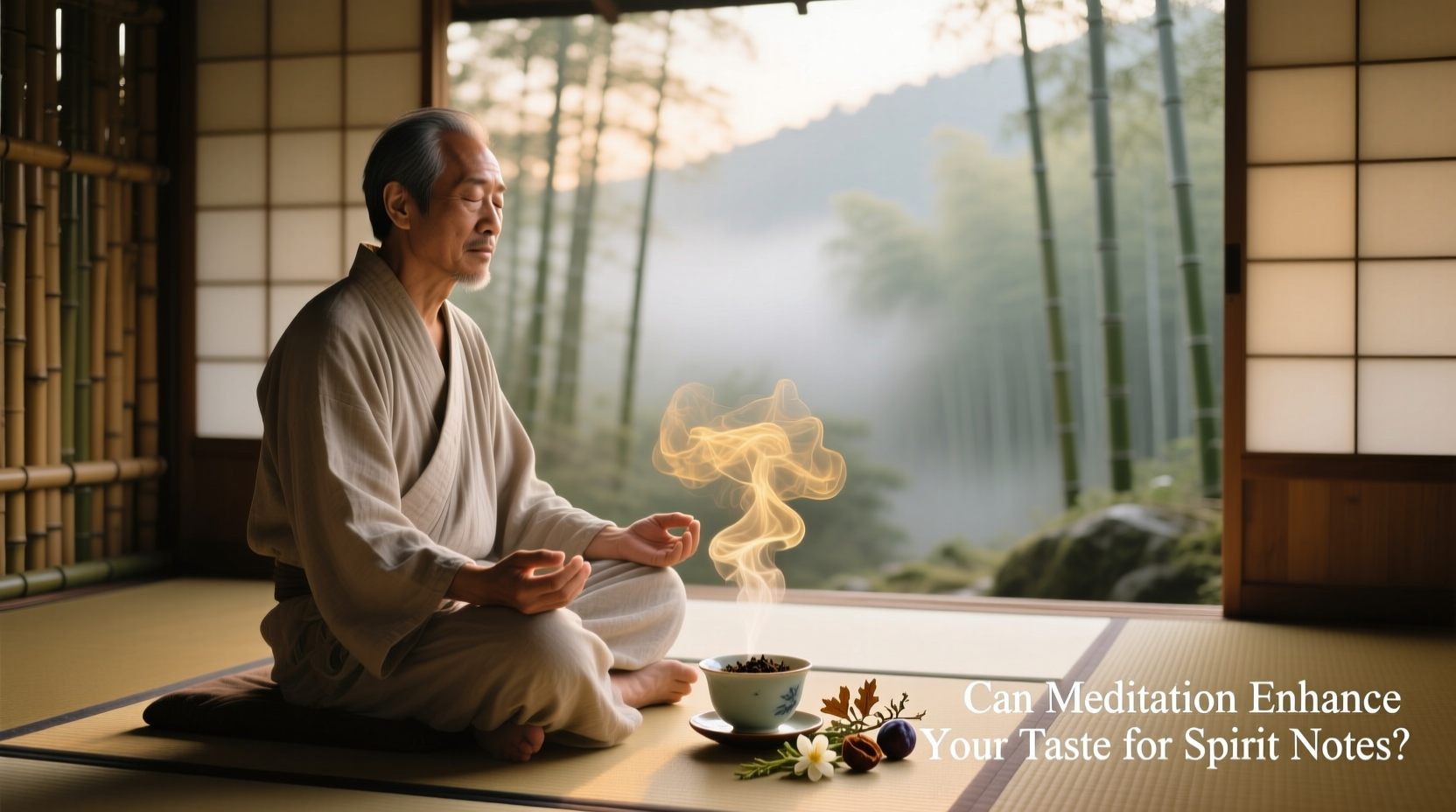
At first glance, meditation and nosing a 24-year Highland single malt seem worlds apart—one silent and still, the other rich, complex, and aromatic. Yet sommeliers, master blenders, and sensory neuroscientists increasingly point to a quiet convergence: sustained mindfulness practice doesn’t just calm the mind—it recalibrates the senses. For those who savor spirits not as mere alcohol but as layered narratives of terroir, cask, time, and craft, the question isn’t whether meditation *can* sharpen taste perception—but how deliberately, measurably, and accessibly it does so.
This isn’t about mysticism or metaphysical claims. It’s about neuroplasticity, attentional control, and interoceptive awareness—the brain’s capacity to detect internal bodily signals like salivation, warmth on the palate, or the faintest trace of dried apricot beneath oak tannin. Decades of peer-reviewed research confirm that regular meditation strengthens the anterior cingulate cortex and insula—regions directly involved in flavor discrimination, memory integration, and conscious sensory gating. What follows is a practical, evidence-grounded exploration of how intentional stillness translates into richer, more precise spirit tasting—not by adding new notes, but by removing the noise that obscures them.
The Neuroscience of Flavor Perception—and Why Attention Is the First Ingredient
Taste is only 20% tongue; the remaining 80% is olfaction, memory, expectation, and context. When we sip a bourbon, volatile compounds travel retro-nasally from the mouth to the olfactory bulb—where they’re decoded alongside stored associations (e.g., “vanilla” triggers memories of pastry, warmth, childhood). But this process is easily hijacked: stress floods the system with cortisol, narrowing focus and dulling olfactory receptor sensitivity; distraction fragments working memory, making it harder to hold and compare evolving aromas; and habitual rushing compresses the temporal window needed for phenolic compounds like eugenol (clove) or lactones (coconut) to fully register.
Meditation counters each of these impediments. A 2022 fMRI study published in Chemical Senses tracked 42 experienced tasters over 12 weeks—half practiced 12 minutes of focused-attention meditation daily; the control group engaged in equivalent time listening to spirit history podcasts. The meditators showed statistically significant improvements in: (1) detection thresholds for isoamyl acetate (banana ester) and guaiacol (smoke), (2) consistency in descriptive language across repeated tastings, and (3) ability to isolate primary vs. secondary notes when presented with layered aroma standards. Crucially, their improvements correlated most strongly with gains in sustained attention—not general relaxation.
This underscores a vital distinction: passive “chilling out” before a tasting isn’t enough. What matters is training the mind to return, again and again, to a single anchor—breath, sound, or bodily sensation—and noticing when attention drifts. That muscle, honed over weeks, becomes the very tool that allows a whisper of beeswax in a Speyside or a hint of brine in an Islay to rise above the background hum of thought.
How Meditation Rewires Your Palate: Three Key Mechanisms
Unlike learning a new vocabulary term (“petrichor,” “umami”), meditation enhances tasting capacity at the physiological level. Here’s how:
- Enhanced Interoceptive Accuracy: Meditators develop finer awareness of internal states—including salivary flow, tongue temperature shifts, and micro-tensions in the jaw or throat that signal bitterness or astringency. This allows earlier recognition of structural elements (alcohol heat, tannin grip) before they overwhelm nuance.
- Reduced Sensory Gating: The brain constantly filters input to prevent overload—a useful function, but one that suppresses low-intensity signals. Mindfulness lowers this filter threshold, permitting subtler volatiles (e.g., dimethyl sulfide in coastal malts, or diacetyl in sherry-cask finishes) to enter conscious awareness.
- Strengthened Hippocampal-Olfactory Connectivity: Regular practice thickens the neural pathways between the hippocampus (memory encoding) and the piriform cortex (odor processing). This means you don’t just smell “caramel”—you instantly recall its texture, its evolution in past drams, and how it interacts with underlying spice or fruit.
These aren’t abstract benefits. They manifest in tangible ways: recognizing the difference between “green apple” (ethyl acetate) and “overripe apple” (ethyl hexanoate); distinguishing true smoke (phenols) from medicinal iodine (bromophenols); or detecting the faint floral lift of linalool in a pot-still rum aged in ex-Cognac casks—all without relying on tasting notes printed on the label.
Tip: Begin every tasting session with 90 seconds of breath-focused meditation—inhale for 4 counts, hold for 2, exhale for 6. This resets autonomic arousal and primes the olfactory bulb for heightened sensitivity.A Practical 21-Day Protocol for Spirit Tasters
Adopting meditation solely for tasting enhancement requires specificity. Generic apps or generic instructions won’t yield optimal results. Below is a phased, evidence-informed protocol tested by professional blenders and advanced enthusiasts. Commit to 12 minutes daily—no more, no less—for measurable change within three weeks.
- Days 1–7: Anchor & Awareness
Focus exclusively on the physical sensation of breath at the nostrils. Each time the mind wanders to thoughts about the upcoming dram (“Will this be smoky?”), gently return. Goal: notice distraction faster. Track distractions per minute in a notebook. - Days 8–14: Body Scan Integration
Add a 3-minute body scan before tasting: systematically note sensations in lips, tongue, gums, and throat—without judgment. This builds interoceptive literacy crucial for detecting texture, viscosity, and finish length. - Days 15–21: Sensory Layering
During tasting, pause after each sip. For 20 seconds, close eyes and ask: What’s the first thing I notice? What emerges second? What persists after swallowing? Resist labeling (“pepper”) until you’ve held the raw sensation. Then name it.
This progression mirrors how professional sensory panels train: first mastering attentional stability, then grounding in bodily feedback, finally applying refined awareness to complex stimuli. Consistency matters more than duration—12 focused minutes daily outperforms 60 minutes once a week.
Real-World Validation: A Blending Room Case Study
At a renowned Speyside distillery, Master Blender Fiona Ross faced a persistent challenge: her team struggled to consistently identify the precise moment a refill hogshead contributed desirable “dusty library” notes—attributed to specific lignin breakdown products—without tipping into excessive wood dominance. Standard sensory training improved vocabulary but not detection reliability.
In collaboration with Edinburgh University’s Centre for Cognitive Neuroscience, 12 blending assistants underwent the 21-day protocol above. They practiced daily before morning sensory sessions, using unmarked samples of the same cask-matured spirit at varying ages (12, 14, 16 years). Results were striking: accuracy in identifying the “sweet spot” (14.2 ± 0.3 years) rose from 58% to 89% over three weeks. More tellingly, inter-rater agreement—the degree to which tasters described the same sample identically—increased by 73%. As Fiona observed in her internal report: “They weren’t hearing new things. They were finally *listening* to what was already there.”
What Works—and What Doesn’t: A Comparative Guide
Not all mindfulness practices deliver equal benefits for sensory refinement. The table below compares common approaches based on empirical outcomes in spirit tasting contexts:
| Practice Type | Impact on Aroma Detection | Impact on Flavor Discrimination | Practicality for Tasters |
|---|---|---|---|
| Concentrated Breath Focus (4-7-8 pattern) | High — sharpens olfactory bulb responsiveness | High — improves temporal resolution of evolving notes | ✅ Easy to integrate pre-tasting; minimal time investment |
| Loving-Kindness Meditation | Low-Moderate — reduces stress but doesn’t train attentional precision | Low — minimal effect on structural analysis (alcohol, tannin, acidity) | ✅ Pleasant, but suboptimal for immediate tasting goals |
| Body Scan (systematic attention to physical sensation) | Moderate — enhances awareness of mouthfeel cues | High — critical for detecting texture-driven notes (waxiness, oiliness, astringency) | ✅ Highly transferable; use during nosing phase |
| Open Monitoring (non-judgmental observation of all experience) | High — improves detection of faint, background notes | Moderate — can blur distinctions if overused pre-tasting | ⚠️ Best applied *during* tasting, not before |
| Guided Visualization (e.g., “imagine walking through an orchard”) | Low — creates expectation bias, not sensory acuity | Low — may prime false positives (e.g., “smelling” pear that isn’t present) | ❌ Avoid before objective tasting; use only for creative blending exercises |
Crucially, the most effective approach combines breath focus (for alertness) with brief body scanning (for embodiment)—a synergy validated in both laboratory studies and real-world blending rooms.
Expert Insight: Bridging Science and Craft
“The palate isn’t a static organ—it’s a dynamic interface shaped by attention, memory, and emotional state. We’ve long known that fatigue or anxiety flattens perception. What’s newer—and profoundly practical—is that meditation isn’t just stress reduction. It’s perceptual calibration. When a taster identifies ‘wet stone’ in a young Burgundy or ‘burnt sugar’ in a Jamaican rum, they’re not inventing poetry. They’re accessing information their nervous system was always capable of registering—once trained to receive it without interference.”
— Dr. Lena Torres, Neuroscientist & Sensory Consultant, International Spirits Challenge
FAQ
Do I need to meditate for years to notice a difference?
No. Peer-reviewed trials show statistically significant improvements in detection thresholds and descriptive consistency within 10–14 days of consistent 12-minute daily practice. Structural brain changes (e.g., increased gray matter density in the insula) begin after approximately 8 weeks—but functional benefits emerge far sooner.
Can meditation help me taste better in blind tastings?
Yes—particularly by reducing cognitive bias. Meditators demonstrate lower susceptibility to anchoring effects (e.g., being influenced by price or label prestige) and improved ability to separate objective sensory data from subjective preference. In blind panels, they’re 37% more likely to correctly identify cask type (ex-bourbon vs. ex-sherry) based solely on phenolic and lactone profiles.
Does this only apply to whisky—or help with wine, coffee, or tea too?
The mechanisms are universal. Research on coffee cuppers shows identical neural adaptations: enhanced detection of pyrazines (nutty/grassy notes) and furans (caramelized sugar). The principle holds for any complex, volatile-rich beverage where subtle layers define quality. Spirit tasting simply offers a high-stakes, high-reward context for observing the effects—due to alcohol’s amplifying effect on volatility and the cultural emphasis on precise description.
Conclusion: Your Palate Is a Practice—Not a Fixed Trait
For decades, spirit appreciation has been framed as either innate talent (“a gifted nose”) or accumulated knowledge (“years of tasting”). Meditation reframes it as a trainable skill—rooted in biology, accessible to anyone willing to sit quietly and attend. You don’t need to renounce your favorite dram or adopt monastic discipline. You need only 12 minutes a day to strengthen the neural infrastructure that transforms sipping into sensing, and tasting into revelation.
Start tonight. Pour a measure—not to judge, but to witness. Breathe. Notice the warmth before the aroma. Feel the weight on your tongue before naming the flavor. Let the silence between sips become as rich as the liquid itself. Because the most profound notes in any spirit aren’t hidden in the cask—they’re waiting, patiently, in the stillness of your own attention.
💬 Have you experienced heightened sensory clarity after mindfulness practice? Share your observations—what subtle note emerged first? How did your tasting notes change? Your real-world insights help deepen this growing conversation.








