
Sleep is a cornerstone of health, yet millions struggle to achieve restful nights. In the search for natural, non-pharmaceutical solutions, binaural beats have gained attention as a potential tool for improving sleep. These auditory illusions are created when two slightly different frequencies are played in each ear, prompting the brain to perceive a third tone—the difference between them. Advocates claim that this phenomenon can guide brainwave activity into states conducive to relaxation and deep sleep. But can simply listening to binaural beats actually improve sleep quality overnight? The answer lies at the intersection of neuroscience, individual variability, and consistent application.
The Science Behind Binaural Beats and Brainwave Entrainment
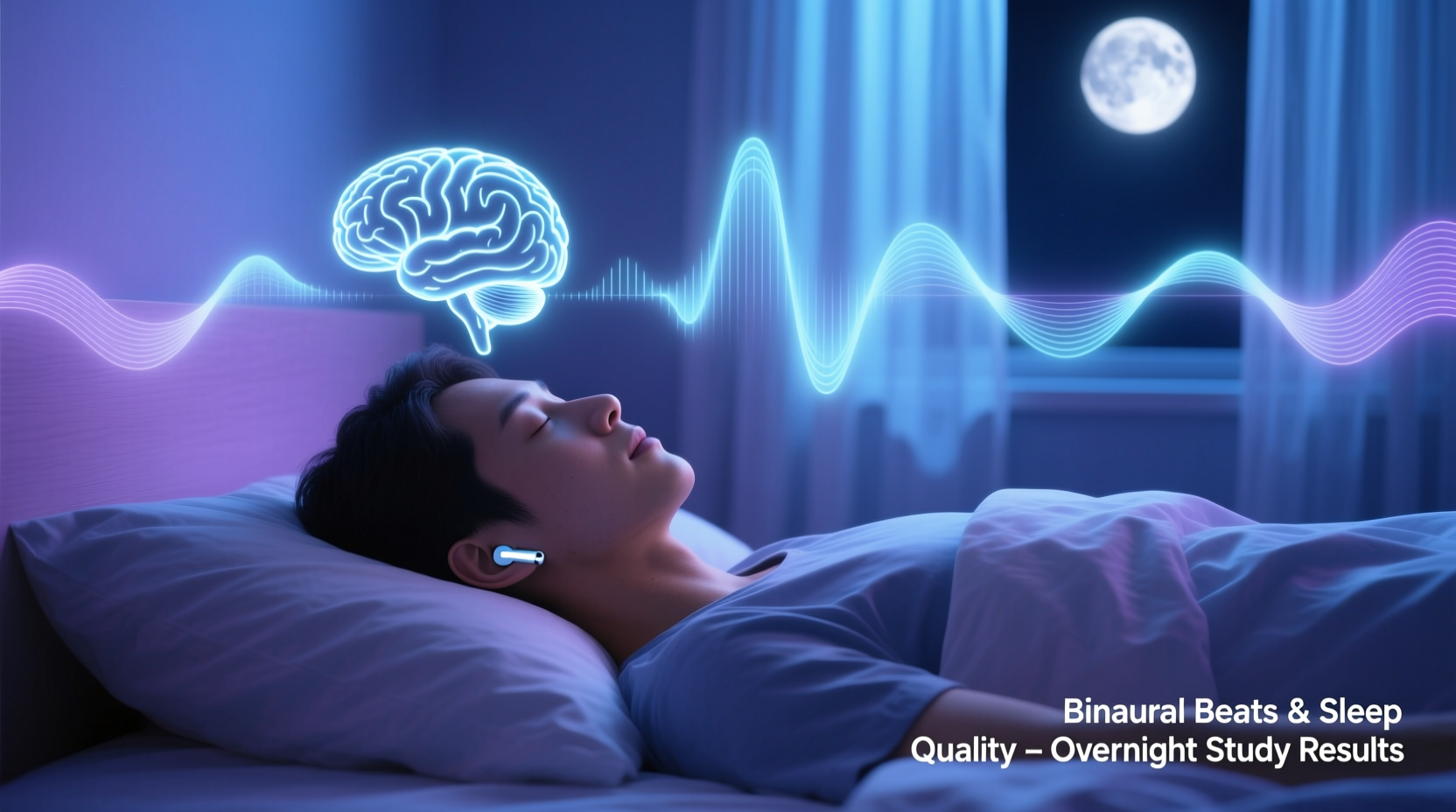
Binaural beats operate on the principle of brainwave entrainment—using rhythmic stimuli to synchronize brainwaves to a desired frequency. The human brain produces electrical activity across several frequency bands: delta (0.5–4 Hz) for deep sleep, theta (4–8 Hz) for light sleep and meditation, alpha (8–12 Hz) for relaxation, and beta (12–30 Hz) for alertness. When you listen to binaural beats tuned to, say, 3 Hz (within the delta range), your brain may begin to align its dominant rhythm with that frequency through a process called frequency-following response.
A 2019 review published in the journal *Neuroscience & Biobehavioral Reviews* analyzed multiple studies on auditory stimulation and sleep. Researchers found that exposure to delta-frequency binaural beats before or during sleep was associated with increased slow-wave sleep duration and improved subjective sleep quality in some participants. However, the effects were not universal and often required repeated use over several nights to become noticeable.
“While binaural beats show promise in modulating brain activity, they are not a quick fix. Their efficacy depends on consistency, proper frequency selection, and individual neurophysiology.” — Dr. Lena Patel, Cognitive Neuroscientist, University of California, San Diego
Can You Experience Improvement Overnight?
The idea of immediate results is appealing, especially for those desperate for better sleep. Some individuals report falling asleep faster or waking up feeling more refreshed after just one session. However, these anecdotal experiences often involve people who are already primed for relaxation—perhaps lying in bed with no distractions, wearing comfortable headphones, and mentally committed to winding down.
True overnight transformation is unlikely for most. The brain adapts gradually to external stimuli. Think of binaural beats like meditation: while a single session might bring temporary calm, lasting changes in sleep architecture require repetition. That said, certain conditions increase the chances of perceiving benefits quickly:
- High stress or anxiety levels prior to listening
- Established bedtime routine complementing the audio
- Use of high-quality stereo headphones (essential for the binaural effect)
- Listening to appropriately chosen frequencies (e.g., 2–6 Hz for sleep onset)
How to Use Binaural Beats Effectively for Sleep
Simply pressing play isn’t enough. To maximize the potential of binaural beats, follow a structured approach that integrates them into a broader sleep hygiene strategy.
Step-by-Step Guide to Incorporating Binaural Beats
- Select the right frequency: Aim for delta (0.5–4 Hz) or low theta (4–6 Hz) waves for sleep induction. Avoid alpha or beta frequencies unless used during pre-sleep relaxation earlier in the evening.
- Use stereo headphones: Binaural beats require separate audio channels for each ear. Speakers cannot reproduce the effect accurately.
- Set a consistent time: Begin listening 20–30 minutes before your intended sleep time to allow your brain to transition into a relaxed state.
- Create a low-stimulus environment: Dim lights, turn off phones, and maintain a cool room temperature to support the calming effect.
- Start with guided sessions: Many effective tracks combine binaural beats with gentle narration or nature sounds, which can ease mental resistance.
- Maintain regular use: Commit to at least 7–10 consecutive nights before evaluating effectiveness. Neural adaptation takes time.
- Track your sleep: Keep a simple journal noting how long it took to fall asleep, number of awakenings, and morning alertness.
Evidence vs. Expectations: What the Research Really Says
Scientific interest in binaural beats has grown, but findings remain mixed. A double-blind study from 2017 involving 30 adults with self-reported insomnia found that those who listened to 3 Hz binaural beats nightly for two weeks showed significant improvements in sleep latency and perceived sleep quality compared to the control group. Yet, another trial in 2021 with a larger sample size reported only marginal gains, suggesting placebo effects may play a role.
The inconsistency in outcomes underscores an important truth: binaural beats are not a standalone solution. They work best as part of a holistic approach that includes consistent sleep schedules, reduced blue light exposure, and stress management techniques such as mindfulness or breathwork.
| Frequency Range | Brain State | Recommended Use Time | Potential Benefit |
|---|---|---|---|
| 0.5–4 Hz (Delta) | Deep sleep | During sleep or pre-sleep | Enhances slow-wave sleep, supports physical restoration |
| 4–6 Hz (Theta) | Light sleep, drowsiness | 30 min before bed | Reduces time to fall asleep, promotes mental calm |
| 7–9 Hz (Alpha) | Relaxed wakefulness | Evening, not in bed | Helps transition from alertness to readiness for sleep |
| 12–15 Hz (Beta) | Focused alertness | Avoid at night | May interfere with sleep onset; use only during daytime |
Real-World Example: A Case Study in Nightly Practice
Consider the experience of Marcus, a 42-year-old software developer with chronic difficulty falling asleep due to racing thoughts. After trying melatonin and sleep apps with limited success, he began using a 4 Hz theta binaural beat track each night. He followed a strict protocol: lights out by 10:30 PM, noise-canceling headphones, and no phone use after 10:00 PM.
In the first three nights, Marcus noticed little change. By night five, he reported falling asleep 15 minutes faster. After ten days, his average sleep onset time decreased from 60 to 25 minutes, and he felt more rested upon waking. He attributed part of the improvement to the audio, but equally to the ritual itself—knowing that pressing play signaled his brain to shift into rest mode.
This case illustrates a key insight: the power of binaural beats often lies not just in their neurological impact, but in their ability to reinforce healthy behavioral cues.
Tip: Combine binaural beats with a breathing technique—such as inhaling for four counts, holding for four, exhaling for six—to amplify relaxation.Common Pitfalls and How to Avoid Them
Many users abandon binaural beats prematurely because they expect instant results or misuse the technology. Here are frequent mistakes and how to correct them:
- Using speakers instead of headphones: Without stereo separation, the binaural effect vanishes. Always use headphones.
- Choosing the wrong frequency: Listening to high-beta beats at bedtime can increase alertness. Stick to delta or theta for sleep.
- Expecting miracles after one night: Like any neuromodulation tool, binaural beats require consistency. Treat them as a long-term practice.
- Playing them too loudly: Low volume is sufficient. High volume can be jarring and counterproductive.
- Ignoring overall sleep hygiene: No audio track can overcome poor habits like late caffeine intake or irregular bedtimes.
Checklist: Optimizing Your Binaural Beat Routine for Better Sleep
Use this checklist to ensure you’re getting the most out of your sessions:
- ✅ Choose a reputable source for binaural beat tracks (look for verified frequency labeling)
- ✅ Use high-quality stereo headphones every session
- ✅ Select delta (0.5–4 Hz) or theta (4–6 Hz) frequencies for sleep
- ✅ Listen 20–30 minutes before bedtime in a dark, quiet space
- ✅ Maintain a consistent sleep schedule alongside audio use
- ✅ Avoid screens and stimulants for at least one hour before listening
- ✅ Track your sleep patterns for at least 7–10 days before assessing results
- ✅ Combine with relaxation techniques like progressive muscle relaxation or box breathing
Frequently Asked Questions
Are binaural beats safe for everyone?
For most people, binaural beats are safe. However, individuals with epilepsy or seizure disorders should consult a physician before use, as rhythmic auditory stimulation may trigger abnormal brain activity in rare cases. Pregnant women and those with pacemakers or other implanted devices should also seek medical advice.
How long should I listen to binaural beats to see results?
While some notice subtle improvements within a few nights, meaningful changes typically emerge after 7–14 days of consistent use. Long-term users often report deeper sleep and reduced nighttime awakenings after several weeks.
Can I fall asleep with binaural beats playing all night?
Yes, many people do. Some tracks are designed to loop or fade out after 60–90 minutes. If using a continuous loop, ensure the volume is low and the sound is non-disruptive. Consider using a timer to avoid prolonged headphone use, which may cause discomfort.
Conclusion: A Tool, Not a Magic Cure
Can listening to binaural beats improve sleep quality overnight? For a small subset of highly responsive individuals under ideal conditions, the answer may be yes. But for most, the real benefit unfolds gradually, supported by discipline and complementary sleep practices. Binaural beats are not a magic bullet—they are a tool. When used correctly, they can help train the brain to relax, reduce cognitive arousal, and create a predictable pre-sleep ritual that signals safety and rest.
If you're struggling with sleep, consider giving binaural beats a fair trial. Set realistic expectations, follow best practices, and integrate them into a broader wellness strategy. Over time, you may find that what started as an experiment becomes a cornerstone of your nightly wind-down—a gentle auditory nudge guiding you toward deeper, more restorative rest.
💬 Have you tried binaural beats for sleep? Share your experience in the comments—your story could help others discover what works.








