
Many dog owners report that their pets seem to know when they're feeling anxious—nuzzling closer, licking their hands, or refusing to leave their side during moments of distress. These behaviors are often described as intuitive, even psychic. But is there real science behind the idea that dogs can sense anxiety, or are we simply projecting our emotions onto loyal companions eager to please? The truth lies somewhere between biology, behavior, and deep evolutionary partnership.
Dogs have lived alongside humans for over 30,000 years, evolving not just to obey commands but to read us in ways no other animal can. Their ability to interpret subtle cues—facial expressions, body language, tone of voice—has been well-documented. But recent research suggests their sensitivity may extend beyond the visible, reaching into the realm of physiological changes linked to emotional states like anxiety.
The Science Behind Canine Sensitivity to Human Emotions
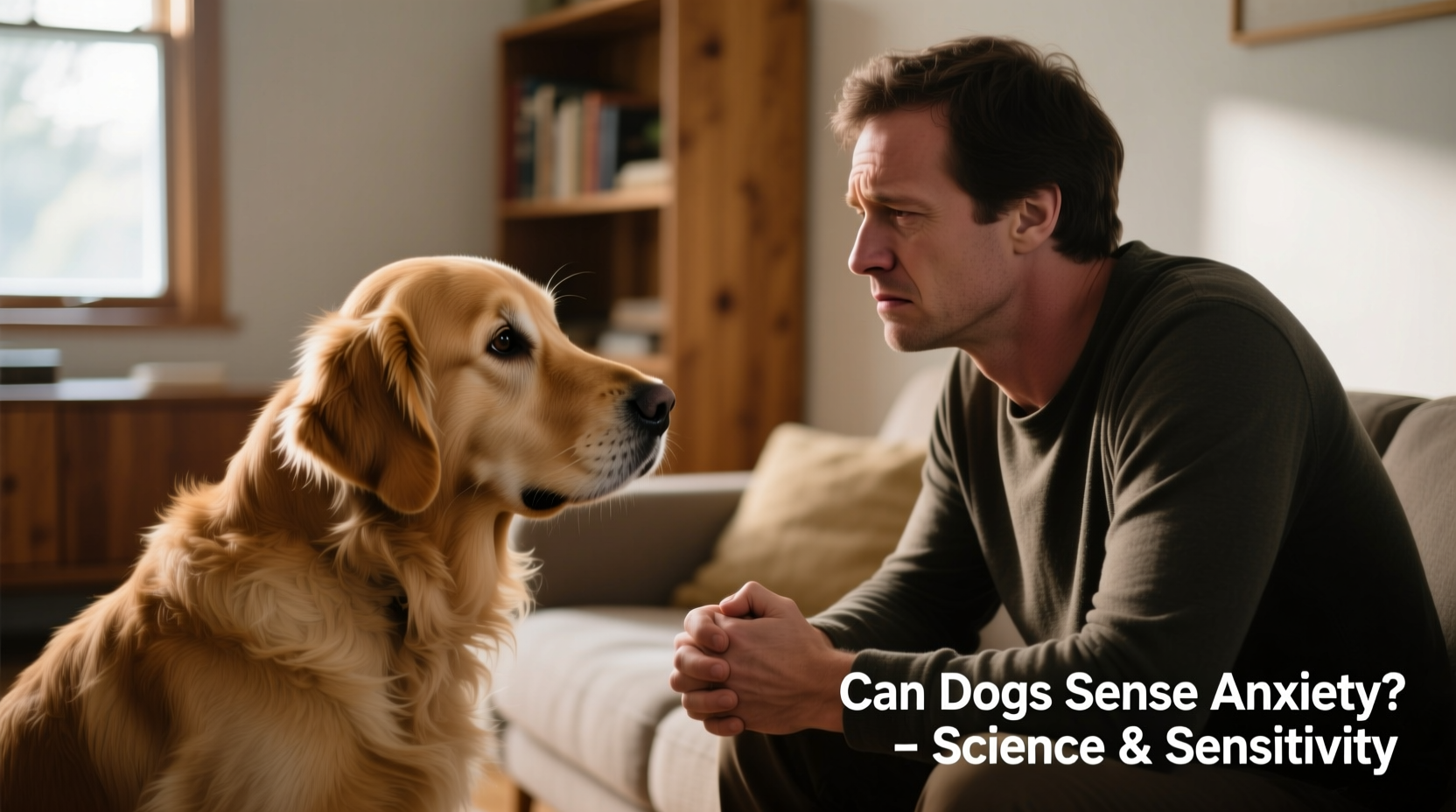
Dogs possess an extraordinary olfactory system—up to 300 million scent receptors compared to about 5 million in humans. This allows them to detect minute chemical changes in human sweat, breath, and skin secretions. When a person experiences anxiety, the body releases stress hormones such as cortisol and adrenaline. These biochemical shifts alter a person’s natural odor profile, producing what scientists call \"chemosignals.\" Dogs, with their highly tuned noses, can pick up on these signals before any outward signs of anxiety appear.
A 2018 study published in *Animal Cognition* demonstrated that dogs could reliably distinguish between sweat samples taken from humans who were calm versus those who were stressed. In controlled experiments, dogs consistently oriented toward the scent of stress, often displaying alert or concerned behaviors such as whining, pawing, or close proximity.
But scent isn’t the only clue. Dogs also monitor visual and auditory cues. A furrowed brow, rapid breathing, trembling hands, or a change in vocal pitch—all are detectable by a dog trained through millennia of co-evolution to pay attention to human nuance. Their brains respond differently to human emotional expressions than to neutral ones, particularly in regions associated with social processing.
“Dogs don’t just react to our actions—they anticipate our emotional states. It’s not magic; it’s finely honed perception.” — Dr. Brian Hare, Cognitive Neuroscientist and Founder of the Duke Canine Cognition Center
How Dogs Respond to Anxiety: Beyond Coincidence
It's one thing to detect anxiety, but do dogs actively respond to it in meaningful ways? Observational data and anecdotal reports suggest yes. Many dogs exhibit comforting behaviors when their owners are distressed, including:
- Leaning against the person
- Licking hands or face
- Bringing a toy or blanket
- Whining softly or making eye contact
- Curling up close, sometimes even placing a paw on the owner
These responses go beyond basic obedience or reward-seeking. They resemble empathy-driven behavior—an instinct to alleviate discomfort in others. While we can't say dogs experience empathy exactly as humans do, they display what researchers call \"emotional contagion,\" where one individual’s emotional state triggers a similar response in another.
In service dog training programs, this responsiveness is harnessed deliberately. Psychiatric service dogs are taught to interrupt panic attacks, guide handlers away from overwhelming environments, or apply deep pressure therapy (DPT) by lying across their owner’s lap or chest. These interventions are based on the dog’s ability to recognize early signs of anxiety, sometimes even before the person is consciously aware of it.
Tip: If your dog consistently approaches you during anxious moments, reinforce calm interaction with gentle praise—this strengthens positive emotional support patterns.Evidence vs. Wishful Thinking: Separating Myth from Reality
While scientific evidence supports dogs’ ability to detect anxiety, it's important to acknowledge the role of confirmation bias. Pet owners who believe their dogs are empathetic may interpret neutral behaviors—like a dog sitting nearby—as intentional comfort. Over time, these interpretations become part of a narrative that reinforces emotional bonding.
However, dismissing all such behaviors as projection would ignore compelling data. Controlled studies show dogs choose to approach distressed individuals more frequently than indifferent ones—even when the person is not their owner. In one experiment at the University of London, dogs were significantly more likely to approach a crying stranger than someone humming calmly, suggesting an innate motivation to respond to distress.
Moreover, dogs trained to assist people with anxiety disorders undergo rigorous testing to ensure reliability. These animals must perform specific tasks on cue or in response to physiological cues, proving their reactions are not random but learned and context-sensitive.
Still, not every dog will react the same way. Breed, temperament, socialization, and individual experience all influence how a dog interprets and responds to anxiety. A well-socialized rescue dog raised in a nurturing home may be more attuned than a fearful or under-socialized counterpart.
Real-Life Example: How a Service Dog Changed One Life
Sarah Thompson, a 34-year-old teacher from Portland, was diagnosed with generalized anxiety disorder and PTSD after a traumatic event. She struggled with sudden panic attacks, often without warning. After months of therapy and medication, she was paired with Milo, a black Labrador trained as a psychiatric service dog.
Within weeks, Sarah noticed Milo would nudge her hand or place his head on her knee about 90 seconds before a panic episode. “He didn’t bark or jump—he’d just get very still and focus on me,” she said. “Then I’d feel my heart race, and I knew I had to start my grounding techniques.”
Milo was trained to apply deep pressure therapy during full-blown attacks and to create a physical barrier in crowded spaces. But his most valuable skill was detection. His ability to sense rising anxiety gave Sarah time to intervene—using breathing exercises or stepping outside—before symptoms escalated.
“It’s not that he ‘knows’ I’m anxious in a human way,” Sarah explained. “But he feels the shift in my body—the faster heartbeat, maybe the smell of sweat—and he reacts. That tiny window makes all the difference.”
How to Recognize if Your Dog Is Responding to Anxiety
You don’t need a certified service dog to benefit from canine emotional awareness. Many family pets naturally tune into their owners’ moods. Here’s how to identify genuine anxiety-detection behavior:
- Consistency: Does your dog approach you during stressful moments repeatedly, not just occasionally?
- Timing: Do they react before you’ve expressed distress verbally or visibly?
- Targeted behavior: Are their actions soothing—licking, leaning, staying close—rather than seeking food or play?
- Change in routine: Do they abandon normal activities (like playing with toys) to stay near you when you’re upset?
- Physiological triggers: Do episodes correlate with measurable stress (e.g., before public speaking, during arguments)?
If multiple signs align, your dog may indeed be sensing your anxiety. However, rule out other causes—such as hunger, noise sensitivity, or separation anxiety—before concluding emotional detection.
Do’s and Don’ts When Interpreting Your Dog’s Behavior
| Do | Don’t |
|---|---|
| Observe patterns over time | Assume every nuzzle is empathy |
| Reinforce calm, supportive interactions | Punish your dog for approaching during anxiety |
| Consider professional training for therapeutic support | Expect untrained dogs to perform like service animals |
| Monitor your own body language and stress cues | Overwhelm your dog with constant emotional demands |
Training Dogs to Support Mental Health: A Step-by-Step Overview
While some dogs naturally comfort their owners, structured training enhances reliability and effectiveness. Here’s how psychiatric service dogs are typically prepared to assist with anxiety:
- Basic Obedience Training (Months 1–6): Dogs master commands like sit, stay, heel, and come, ensuring control in public settings.
- Socialization (Ongoing): Exposure to diverse environments, sounds, and people builds confidence and reduces reactivity.
- Task-Specific Training (Months 6–12): Dogs learn to recognize signs of anxiety (e.g., rapid breathing, pacing) and perform tasks like DPT, retrieving medication, or guiding to a safe space.
- Public Access Training (Months 9–15): Dogs practice remaining calm in stores, transit, and crowded areas while focusing on their handler.
- Certification & Bonding (Final Phase): Teams undergo evaluation to ensure reliability. Handlers learn to interpret canine signals and maintain consistency.
Note: Emotional Support Animals (ESAs) provide comfort but are not task-trained and lack public access rights under U.S. law. True service dogs require extensive preparation and are protected under the Americans with Disabilities Act (ADA).
Frequently Asked Questions
Can all dogs sense anxiety, or only certain breeds?
Most dogs have the sensory capacity to detect stress cues, but individual temperament and training play a bigger role than breed. That said, breeds like Golden Retrievers, Labradors, and Poodles are often selected for service work due to their trainability, calm demeanor, and strong human focus.
Do dogs get stressed when their owners are anxious?
Yes. Studies show that dogs can mirror their owners’ stress levels. Cortisol levels in dogs have been found to rise in sync with their humans’, especially in high-pressure households. This underscores the importance of self-care—not just for you, but for your pet.
How can I thank my dog for comforting me during anxiety?
Dogs don’t understand gratitude in human terms, but they respond to calm affection, gentle touch, and consistent routines. Avoid rewarding anxious behavior with excessive treats or frantic petting. Instead, offer quiet praise and maintain a stable environment to reinforce security.
Conclusion: Trust the Bond, But Understand the Mechanism
The idea that dogs can sense anxiety is not wishful thinking—it’s grounded in biology, evolution, and behavioral science. From their unparalleled sense of smell to their finely tuned social intelligence, dogs are uniquely equipped to perceive human emotional states. While we may never know exactly how they interpret our inner turmoil, their responses are often profoundly helpful.
Whether you have a trained service dog or a beloved family pet, the connection you share is more than companionship. It’s a dynamic relationship shaped by mutual awareness and silent communication. By understanding how dogs detect and respond to anxiety, we can better appreciate their role not just as pets, but as emotional allies.
🚀 Ready to deepen your bond with your dog? Start observing their behavior during stressful moments, keep a journal, and consider consulting a certified trainer if you're interested in developing supportive skills. Share your story in the comments—your experience could help others recognize the quiet wisdom of their own four-legged friends.








