
Combination skin—oily in the T-zone, dry or normal on the cheeks—is one of the most common skin types. It’s also one of the trickiest to manage, especially when you're working with a tight budget. Many people assume effective skincare requires expensive serums and luxury brands, but that’s simply not true. With the right ingredients, consistent habits, and smart product choices, you can achieve balanced, clear, and healthy-looking skin without overspending.
The key lies in understanding your skin’s unique needs: controlling excess oil where it appears, hydrating areas prone to dryness, and avoiding products that strip or irritate. This guide breaks down a realistic, affordable skincare routine backed by dermatology principles and real-world effectiveness. You’ll learn which ingredients matter, how to layer them properly, and where to cut costs—without sacrificing results.
Understanding Combination Skin: The Foundation of Effective Care
Combination skin isn’t a flaw—it’s a variation. It typically features enlarged pores and shine across the forehead, nose, and chin (the T-zone), while the cheeks remain normal or slightly dry. This imbalance stems from uneven sebum production influenced by hormones, climate, diet, and even skincare habits.
One major misconception is that oily zones need harsh cleansing to \"dry out\" the grease. In reality, over-cleansing disrupts the skin barrier, prompting the skin to produce even more oil as compensation. Similarly, skipping moisturizer because “my nose is shiny” leads to dehydration, which worsens both flakiness and breakouts.
Effective care for combination skin focuses on balance—not elimination. The goal isn’t to make all areas behave the same, but to support each zone appropriately. That means gentle cleansing, lightweight hydration, targeted treatments, and sun protection every single day.
“Skin health starts with respect for its natural functions. Stripping oils aggressively only creates more chaos.” — Dr. Lena Patel, Board-Certified Dermatologist
Core Ingredients That Work—And Won’t Break the Bank
You don’t need 10 products to see improvement. A few well-chosen ingredients deliver measurable results at low cost. Here are the most effective, research-backed components for combination skin, available in drugstore and mid-tier brands:
- Niacinamide (Vitamin B3): Regulates oil production, reduces redness, strengthens the skin barrier, and minimizes pore appearance. Look for concentrations between 4–5%—higher isn’t always better and may cause irritation.
- Hyaluronic Acid: A lightweight humectant that draws moisture into the skin without clogging pores. Ideal for hydrating dry patches without adding greasiness.
- Salicylic Acid (BHA): Oil-soluble exfoliant that penetrates deep into pores to clear congestion. Use 1–2 times per week to prevent blackheads and mild acne in oily zones.
- Glycerin: A simple, highly effective moisturizing agent found in almost all affordable, non-irritating formulas.
- Zinc PCA: Helps regulate sebum and has anti-inflammatory properties, often included in mattifying moisturizers.
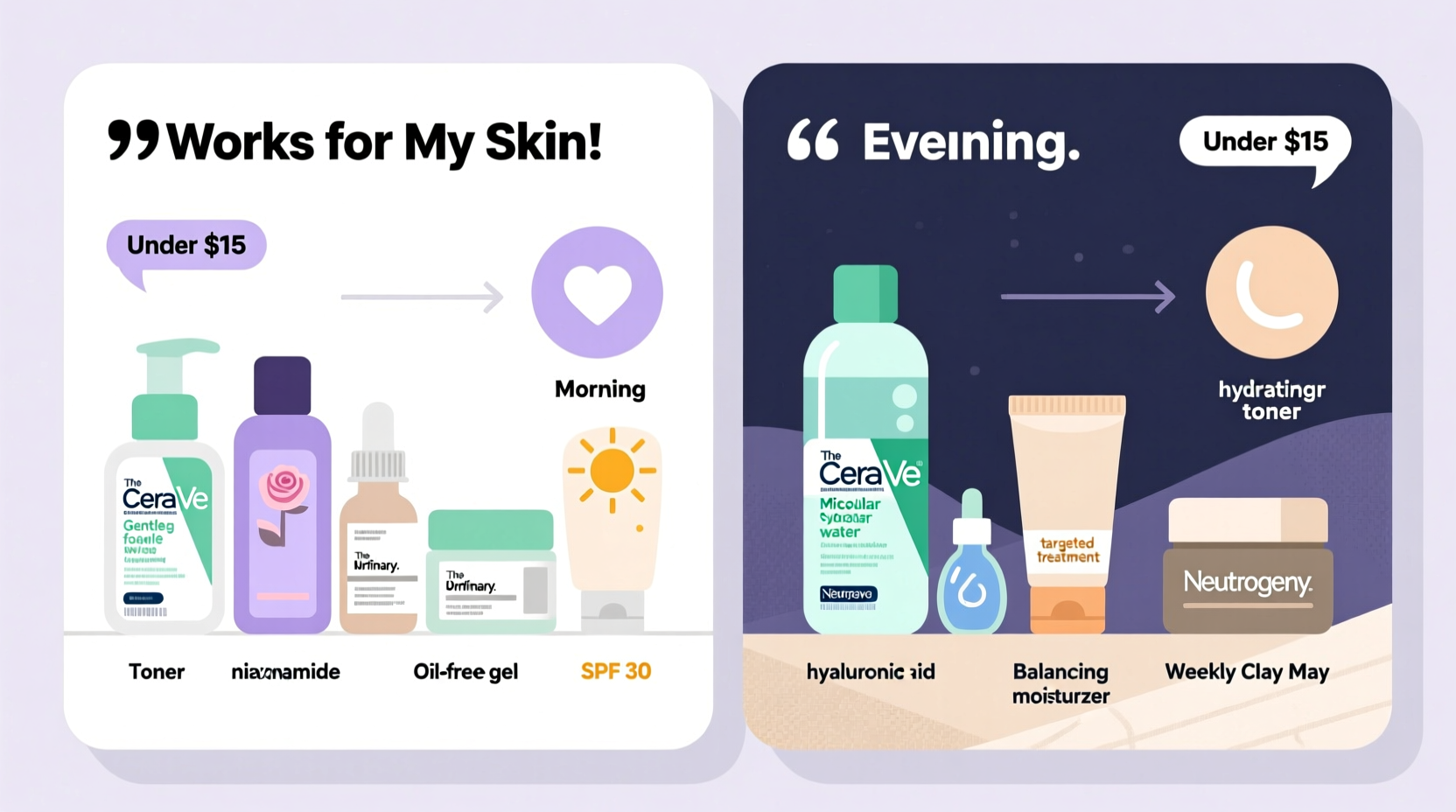
A Complete Budget-Friendly Routine (Morning & Night)
This two-step daily routine uses widely available products under $15 each. All recommended items are fragrance-free, non-comedogenic, and suitable for sensitive skin.
Morning Routine
- Creamy Gentle Cleanser – Use a low-foaming face wash like CeraVe Hydrating Cleanser or Vanicream Gentle Facial Cleanser. Avoid sulfates. Rinse with lukewarm water.
- Hyaluronic Acid Serum – Apply 2–3 drops to damp skin. Follow immediately with moisturizer to lock in hydration.
- Lightweight Moisturizer with SPF 30+ – Choose a formula labeled “oil-free” and “non-comedogenic.” Neutrogena Hydro Boost Water Gel Lotion SPF 50 or La Roche-Posay Toleriane Double Repair Face Moisturizer with SPF are excellent options.
Night Routine
- Double Cleanse (if wearing sunscreen/makeup): Start with a micellar water (like Bioderma Sensibio H2O or Garnier Micellar Water) followed by your regular cleanser.
- Niacinamide Serum (every night) – Apply after cleansing and before moisturizing. Let absorb for 60 seconds.
- Targeted Treatment (2–3 nights per week): After serum, apply a salicylic acid toner or spot treatment only to the T-zone. Do not apply to dry cheeks.
- Light Moisturizer: Use a gel-based or water-cream formula such as Aveeno Calm + Restore Oat Gel Moisturizer or Cetaphil PRO DermaControl Moisturizer.
Do’s and Don’ts: Smart Habits for Lasting Results
Even the best products fail when paired with poor habits. The table below outlines critical behaviors that either support or sabotage your skincare efforts.
| Do | Don’t |
|---|---|
| Use lukewarm water to wash your face—hot water strips natural oils. | Wash your face with bar soap or body wash—they’re too harsh for facial skin. |
| Pat your face dry with a clean towel; never rub. | Touch your face throughout the day—transfers bacteria and spreads oil. |
| Replace pillowcases every 5–7 days to reduce acne-causing buildup. | Sleep with makeup on—even if you’re exhausted. |
| Apply sunscreen every morning, rain or shine. | Skip moisturizer because your skin feels oily. |
| Introduce one new product at a time, waiting 7–10 days before adding another. | Start 5 new products at once—makes it impossible to identify irritants. |
Real Example: How Maria Balanced Her Skin on a $60 Monthly Budget
Maria, a 28-year-old teacher from Austin, struggled with combination skin for years. She had persistent blackheads on her nose, occasional breakouts near her jawline, and flaky patches on her cheeks—especially during winter. After trying several high-end brands with little improvement, she switched to a simplified, budget-conscious approach.
She began by auditing her routine: she was using a foaming face wash twice daily, skipping moisturizer, and applying heavy foundation without sunscreen. She replaced her cleanser with CeraVe Foaming Facial Cleanser ($12), added The Ordinary Niacinamide 10% + Zinc 1% ($6), and started using Neutrogena Hydro Boost Water Gel with SPF 30 ($15).
Twice a week, she applied Paula’s Choice 2% BHA Liquid Exfoliant ($14) only to her T-zone. She committed to changing her pillowcase every Saturday and stopped touching her face during grading sessions.
Within six weeks, her skin was visibly clearer. Her T-zone was less shiny by midday, her cheeks no longer flaked, and her pores appeared smaller. She maintained this regimen for under $60 per month—including product replacements—and now rarely experiences breakouts.
“Simplifying my routine was the breakthrough. I wasn’t doing too little—I was doing too much, and the wrong things.” — Maria R., educator and skincare enthusiast
Step-by-Step Guide: Building Your Routine Over 4 Weeks
If you’re starting from scratch, follow this gradual timeline to avoid irritation and track progress effectively.
- Week 1: Reset & Observe
Stop using all active products (retinoids, acids, strong exfoliants). Stick to a gentle cleanser, basic moisturizer, and sunscreen. Take photos every Sunday. Note areas of oiliness, dryness, and sensitivity. - Week 2: Introduce Hydration
Add a hyaluronic acid serum in the morning. Apply to damp skin after cleansing. Continue with the rest of your basic routine. Watch for any signs of irritation or increased dryness. - Week 3: Add Niacinamide
Incorporate a niacinamide serum at night. Begin with every other night to assess tolerance. If no redness or stinging occurs, move to nightly use by Week 4. - Week 4: Targeted Exfoliation
Apply a salicylic acid product (toner or serum) only to the T-zone, 2–3 nights per week. Do not layer with other actives. Monitor changes in texture and clarity.
After four weeks, evaluate your skin. Most people notice reduced shine, fewer clogged pores, and smoother texture. If everything feels balanced, maintain this routine. If dryness persists, add a pea-sized amount of richer moisturizer just on the cheeks. If breakouts continue, consider whether lifestyle factors (stress, diet, hormonal shifts) may be contributing.
Frequently Asked Questions
Can I use the same moisturizer for oily and dry areas?
Yes, but choose a lightweight, non-greasy formula. Apply a full pump to your entire face, then dab an extra half-pump only on dry patches if needed. Using different moisturizers isn’t necessary and increases complexity and cost.
Is it safe to use salicylic acid every day?
No. Daily use of salicylic acid can damage the skin barrier, leading to irritation and increased oil production. Limit use to 2–3 times per week, focusing only on oily zones. Over-exfoliation is a common cause of worsening combination skin.
What if my budget is under $30 per month?
Focus on multi-tasking products. A moisturizer with SPF eliminates the need for two separate items. Drugstore brands like CeraVe, Vanicream, and The Ordinary offer clinical-grade formulations at unbeatable prices. Prioritize: 1) gentle cleanser, 2) niacinamide serum, 3) moisturizer with SPF. Build from there.
Checklist: Your 7-Point Starter Plan
Follow this checklist to launch your budget-friendly routine with confidence:
- ☐ Identify your current skin concerns (oiliness, dryness, breakouts)
- ☐ Purchase a sulfate-free, non-foaming cleanser
- ☐ Add a niacinamide serum (4–5%) for daily use
- ☐ Choose a lightweight moisturizer with SPF 30+ for daytime
- ☐ Include a salicylic acid treatment for 2–3 weekly uses (T-zone only)
- ☐ Commit to changing pillowcases weekly
- ☐ Take weekly progress photos to track improvements
Conclusion: Skincare Success Doesn’t Require Luxury Labels
Healthy, balanced skin is achievable regardless of your income. The most effective routines aren’t defined by price tags, but by consistency, ingredient intelligence, and respect for your skin’s biology. For combination skin, simplicity beats excess. Focus on gentle cleansing, hydration, targeted treatment, and daily sun protection—and skip the marketing hype.
You don’t need a 10-step ritual or imported essences. You need the right few products, used correctly, over time. Start small. Track changes. Adjust as needed. Real results come not from spending more, but from understanding more.
💬 Have a favorite budget find that transformed your skin? Share it in the comments—your tip could help someone finally solve their skincare puzzle.








