Oral health is not just about avoiding cavities—it's about maintaining a balanced ecosystem in your mouth that supports long-term wellness. As consumers become more conscious of both personal health and environmental impact, two toothbrush types have surged in popularity: the bamboo toothbrush and the electric toothbrush. One promises sustainability and simplicity; the other, precision and power. But when it comes to improving oral health, which one truly delivers better results? The answer isn't as straightforward as it seems, and depends on usage habits, brushing technique, and individual dental needs.
The Rise of Eco-Friendly Alternatives: Bamboo Toothbrushes
Bamboo toothbrushes have gained traction as a sustainable alternative to traditional plastic brushes. Made from Moso bamboo—a fast-growing, naturally antibacterial material—these brushes feature biodegradable handles and bristles typically made from BPA-free nylon or plant-based polymers. Their appeal lies in their low environmental footprint: unlike the estimated 23 billion plastic toothbrushes discarded annually in the U.S. alone, bamboo handles decompose within months under proper conditions.
From a health standpoint, bamboo toothbrushes function like manual brushes. They rely entirely on user technique for plaque removal. This means effectiveness varies widely based on how long, how often, and how correctly someone brushes. While they are gentle on gums and suitable for sensitive mouths, they lack built-in mechanisms to ensure optimal brushing behavior.
Tip: Replace your bamboo toothbrush every 3–4 months or sooner if bristles fray—just like any other brush.Electric Toothbrushes: Power, Precision, and Proven Results
Electric toothbrushes, particularly oscillating-rotating and sonic models, have been clinically proven to reduce plaque and gingivitis more effectively than manual brushing. Studies published in the Journal of Clinical Periodontology show that users of electric toothbrushes experience an average 21% greater reduction in plaque and 11% greater reduction in gingivitis over three months compared to manual brush users.
The key advantage lies in consistent motion. Electric brushes deliver thousands of strokes per minute—up to 30,000 for sonic models—far exceeding what most people can achieve manually. Many also include pressure sensors, timers, and quadrant pacing to guide users through a full two-minute brushing session, addressing common flaws in routine hygiene.
For individuals with limited dexterity—such as those with arthritis, braces, or mobility issues—electric toothbrushes offer significant functional benefits. They require less physical effort while delivering superior cleaning action along the gumline and between teeth.
“Electric toothbrushes provide a measurable improvement in plaque control, especially for patients who struggle with manual technique.” — Dr. Lena Patel, Board-Certified Periodontist
Direct Comparison: Performance, Sustainability, and Practicality
To understand which option improves oral health more, it’s essential to compare them across multiple dimensions—not just cleaning efficacy, but also usability, environmental impact, and cost over time.
| Feature | Bamboo Toothbrush | Electric Toothbrush |
|---|---|---|
| Cleaning Efficacy | Depends on user technique; moderate plaque removal | High; consistent, rapid motion removes more plaque |
| Gum Health Impact | Low risk of over-brushing; good for sensitive gums | Can improve gum health but may cause recession if misused |
| Sustainability | High; biodegradable handle, low carbon footprint | Lower; plastic components, batteries, charging required |
| Lifespan | 3–4 months per unit | Brush head every 3 months; handle lasts 3–5 years |
| Cost (Annual) | $15–$30 (4–6 brushes) | $70–$120 (device + 4 heads + electricity) |
| User Compliance | Relies on discipline; no feedback mechanism | Higher compliance due to timers and smart features |
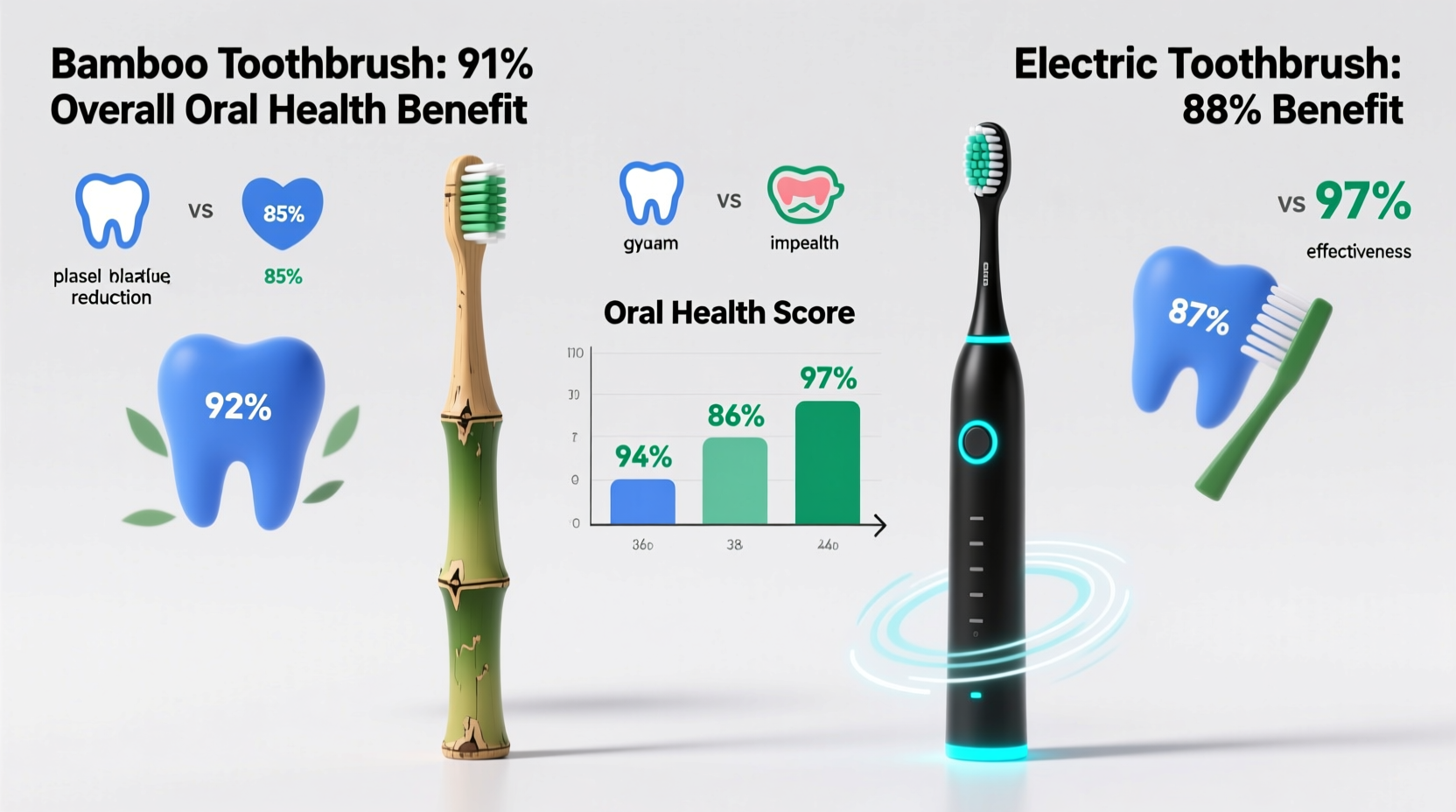
The data shows a clear trade-off: bamboo toothbrushes win on sustainability and simplicity, while electric toothbrushes dominate in clinical performance and habit formation.
Real-World Example: Two Patients, Two Approaches
Consider two patients at a general dental clinic: Sarah, a 28-year-old graphic designer, and James, a 65-year-old retiree with mild arthritis.
Sarah switched to a bamboo toothbrush to reduce her plastic use. She brushes twice daily but often rushes in the morning. Her dentist noted persistent plaque buildup near her molars during checkups. After switching to an electric toothbrush with a two-minute timer, her next visit showed a 40% reduction in plaque scores.
James had difficulty gripping a manual brush due to hand stiffness. He found brushing painful and inconsistent. His hygienist recommended a weighted-handle electric model with soft bristles. Within six weeks, his gum bleeding decreased significantly, and he reported greater comfort and confidence in his routine.
Both cases illustrate that while intention matters, tools shape outcomes. Environmental values are important—but so is effectiveness.
Maximizing Oral Health: A Balanced Approach
Choosing between a bamboo and electric toothbrush doesn’t have to be an either-or decision. For many, the best path forward involves combining principles from both: using technology to enhance hygiene while minimizing ecological harm.
Some brands now offer electric toothbrushes with replaceable heads and recyclable packaging. Others are developing compostable brush heads made from castor bean oil or other bio-based materials. Meanwhile, bamboo brush manufacturers are improving bristle quality and offering refill programs to reduce waste.
The goal should be sustainable oral health—practices that support both personal well-being and planetary responsibility.
Tip: If you use a bamboo toothbrush, remove the bristles with pliers before composting the handle to prevent microplastic contamination.Actionable Checklist: Choosing the Right Brush for You
Use this checklist to determine which toothbrush aligns best with your health goals and lifestyle:
- ✅ Do you struggle with consistent brushing technique or forget to brush for two minutes? → Consider an electric toothbrush.
- ✅ Do you have braces, implants, or gum disease? → Electric models are often recommended by dentists.
- ✅ Are you environmentally focused and willing to prioritize manual brushing discipline? → Bamboo may suit you.
- ✅ Do you travel frequently? → Bamboo brushes are lightweight and TSA-friendly; electric ones require charging.
- ✅ Do you have limited hand mobility or arthritis? → An electric toothbrush will likely improve your cleaning ability.
- ✅ Can you commit to replacing brush heads or entire brushes every 3–4 months? → Essential for hygiene in both types.
- ✅ Are you open to hybrid solutions? → Try an electric brush with eco-conscious replacement heads.
Expert Recommendations and Long-Term Outlook
Dental professionals consistently emphasize that the best toothbrush is the one used correctly and consistently. However, consensus is growing around the superiority of electric models for most adults.
The American Dental Association (ADA) states that “when used properly, electric toothbrushes can be safe and effective for removing plaque,” and many ADA-seal-approved brushes are electric. The Cochrane Review, a gold standard in evidence-based medicine, concluded in a meta-analysis of over 50 studies that powered toothbrushes produce “statistically significant reductions” in plaque and gingivitis compared to manual brushing.
That said, no tool compensates for poor habits. Even the most advanced electric brush fails if used for only 30 seconds once a day. Similarly, a bamboo toothbrush in the hands of someone who brushes thoroughly with proper technique can maintain excellent oral health.
Frequently Asked Questions
Can a bamboo toothbrush clean as well as an electric one?
Only if used with excellent technique, full two-minute duration, and proper angling. Most people underbrush manually, making electric models more reliable for consistent cleaning.
Are bamboo toothbrush bristles bad for the environment?
Most bamboo brushes still use nylon bristles, which are not biodegradable. To minimize impact, remove bristles before composting the handle. Some newer models use boar hair or bio-based polymers, though these are less common and may raise hygiene concerns.
Do electric toothbrushes damage enamel or gums?
When used correctly, no. However, excessive pressure—especially with rotating heads—can lead to gum recession or abrasion. Modern models include pressure sensors to alert users when brushing too hard, reducing this risk significantly.
Conclusion: Prioritize Health First, Then Sustainability
When evaluating bamboo versus electric toothbrushes, the evidence strongly favors electric models for improving oral health. Their ability to deliver consistent, high-frequency motion, coupled with behavioral aids like timers and apps, leads to measurably better outcomes in plaque removal and gum health.
That doesn’t diminish the importance of sustainability. The ideal future of oral care lies in merging efficacy with eco-responsibility—developing electric brushes with fully recyclable components, longer lifespans, and lower energy consumption, or advancing truly biodegradable bristle technology for manual options.
Until then, the priority should be oral health. If you’re choosing solely based on which tool improves your mouth’s condition more, the electric toothbrush is the clear winner. But if environmental ethics are non-negotiable, a bamboo brush paired with disciplined, technique-focused brushing can still support strong dental health—provided you stay vigilant.
🚀 Ready to upgrade your oral care? Assess your brushing habits, consult your dentist, and choose a tool that supports both your health and values. Share your experience or questions below—your journey might help others make a smarter choice.








