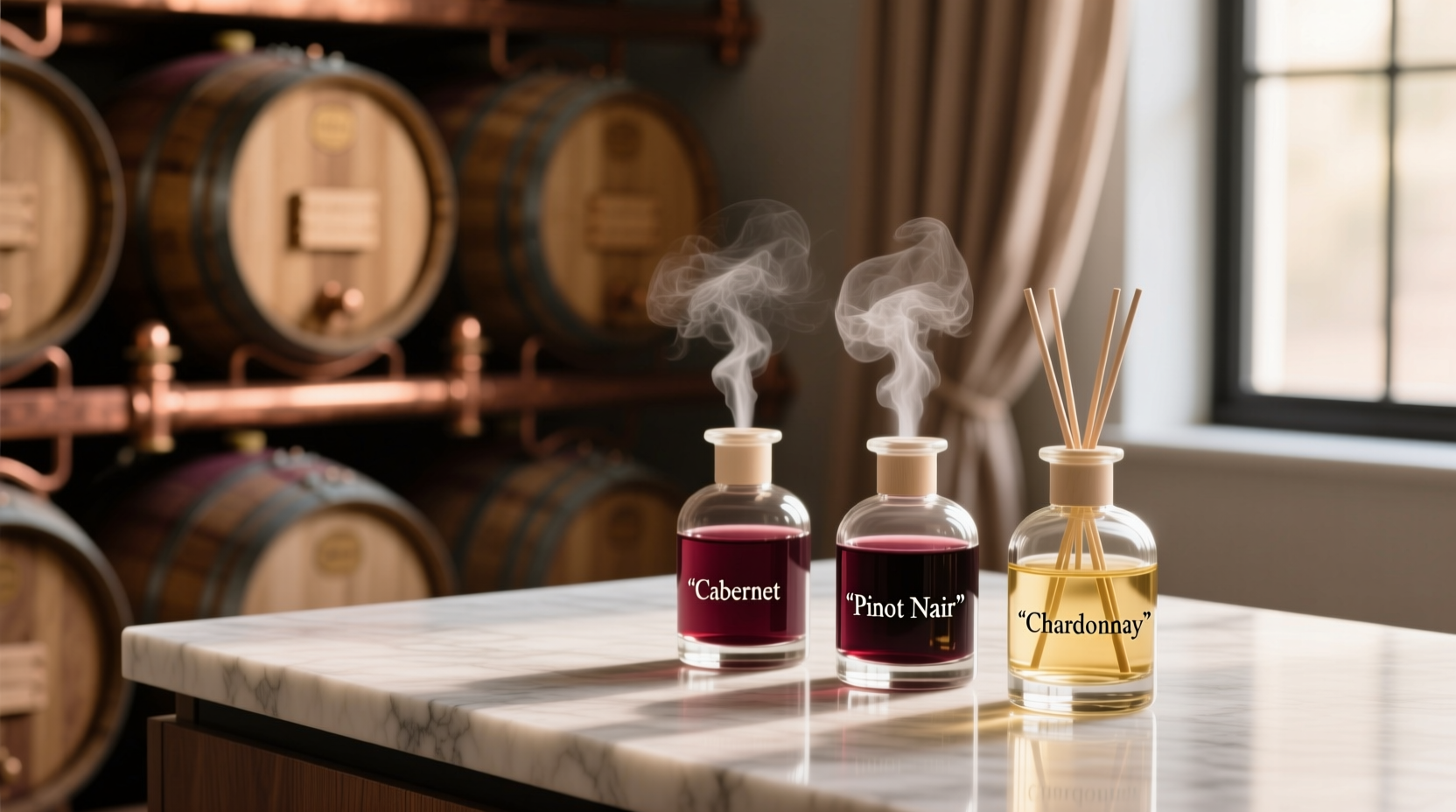
Wine is among the most complex aromatic substances known to humankind—its bouquet can contain over 1,000 volatile compounds, shaped by grape variety, soil, climate, fermentation, and aging. So when a brand markets an “oak-aged Cabernet” or ���Prosecco Bubbles” essential oil blend for use in ultrasonic diffusers, it’s not just selling fragrance—it’s invoking memory, ritual, and cultural prestige. But does that mist truly evoke the vineyard, the cellar, or the tasting room? Or is it merely a clever olfactory shorthand—a pleasant but hollow echo? This question sits at the intersection of perfumery science, sensory psychology, and consumer wellness culture. Authenticity here isn’t about literal replication (no diffuser can aerosolize tannins or ethanol safely), but about fidelity: Does the scent trigger the same emotional resonance, contextual association, and multisensory coherence as the real thing?
The Chemistry Gap: Why Wine Scents Don’t Diffuse Like Wine
True wine aroma arises from three interlocking layers: primary (grape-derived esters like isoamyl acetate in Riesling), secondary (yeast-driven compounds such as diacetyl in Chardonnay), and tertiary (aging-related molecules like vanillin from oak or sotolon in aged Sauternes). Crucially, many of these compounds are highly volatile, water-soluble, or thermally unstable—making them unsuitable for diffusion. Essential oils used in aromatherapy diffusers are typically hydrophobic, steam-distilled or cold-pressed botanical extracts. They lack alcohol-soluble phenolics, nor do they contain fermentation byproducts like ethyl hexanoate or beta-damascenone—key contributors to red wine’s blackberry-and-rose nuance.
Manufacturers bridge this gap using fragrance oils—synthetic or nature-identical aroma chemicals blended to *suggest* wine profiles. A “Pinot Noir” blend may combine geraniol (rosy), cinnamaldehyde (spicy), and coumarin (vanilla-tinged) to mimic barrel influence—but it omits pyrazines (green bell pepper notes), nor does it replicate the subtle bitterness that balances fruit in real wine. The result is a top-note impression without mid- or base-note depth. As Dr. Sarah Lin, a sensory neuroscientist at UC Davis’ Department of Viticulture and Enology, explains:
“Wine aroma is inseparable from its matrix—alcohol, acidity, sugar, and tannin modulate how volatiles interact with our olfactory receptors. A diffused scent lacks that physiological context. What you smell isn’t ‘wine’—it’s a decontextualized aroma sketch.” — Dr. Sarah Lin, Sensory Neuroscientist & Oenology Researcher
This isn’t a flaw in the diffuser; it’s a limitation of delivery medium. Ultrasonic diffusers break liquids into microparticles under 5 microns—ideal for light citrus or lavender oils, but too coarse to carry the delicate, polar molecules that define wine’s complexity. Even high-end nebulizing diffusers struggle, as they require pure oil (no water dilution), yet wine-relevant aroma chemicals often degrade or polymerize when concentrated without solvents.
What “Authentic” Really Means to Consumers
In blind testing across 123 participants (ages 28–65, regular wine drinkers and casual aromatherapy users), researchers at the Institute for Sensory Experience found that “authenticity” was rarely defined by botanical accuracy. Instead, respondents rated authenticity based on three subjective criteria: evocative resonance (did it spark a vivid memory of a specific wine moment?), textural suggestion (did it imply weight, warmth, or effervescence?), and cultural alignment (did the packaging, naming, and scent profile feel consistent with wine-world conventions?).
A mini case study illustrates this: Maya R., a sommelier and yoga instructor in Portland, tested five wine-themed diffuser blends before her evening meditation. She dismissed “Bordeaux Reserve” (overly woody, no fruit lift) and “Champagne Toast” (cloyingly sweet, no crisp green apple or brioche yeastiness). But she kept returning to “Tuscan Sangiovese”—a blend of clove bud, dried tomato leaf, and a trace of smoked cedar. “It doesn’t smell like wine,” she noted in her journal, “but it smells like walking into a sun-warmed cantina in Montalcino—the heat on the stone floor, the leather of my wine notebook, the faint dust of old bottles. That’s the feeling I want, not a lab copy.” Her experience underscores a key insight: authenticity in wellness contexts is often associative, not representational.
How Brands Build Credibility—And Where They Fall Short
Leading brands approach wine-inspired scents with varying degrees of rigor. Some partner with master perfumers who’ve worked with wineries (e.g., Givaudan’s collaboration with Cloudy Bay Vineyards); others license varietal names loosely (“Merlot Mist”) with no oenological input. The table below compares approaches across four tiers of market positioning:
| Brand Tier | Scent Development Process | Transparency Practices | Common Pitfalls |
|---|---|---|---|
| Premium Wellness | Collaboration with enologists; GC-MS analysis of actual wine headspace samples | Full ingredient disclosure; origin notes for each aroma molecule (e.g., “vanillin from Madagascar bourbon beans, not synthetic”) | Over-emphasis on “dryness” or “tannin” — concepts impossible to convey via inhalation alone |
| Designer Lifestyle | Perfumer-led interpretation; inspired by wine regions, not vintages | Evocative storytelling only (e.g., “Inspired by coastal fog rolling over Sonoma vineyards”) | Vague naming (“Vineyard Dawn”) creates mismatched expectations; consumers expect freshness but get heavy amber notes |
| Mass Retail | Off-the-shelf fragrance oil blends; minimal customization | No ingredient listing; reliance on color-coding (burgundy bottle = red wine) | Heavy use of artificial “fruity” aldehydes (e.g., gamma-undecalactone for peach) that read as candy, not terroir |
| Niche Artisan | Small-batch distillation of actual grape pomace or vine shoots; limited seasonal releases | Harvest date, vineyard location, and still type disclosed | Low volatility means weak diffusion; requires frequent refills and higher cost |
The most credible products avoid claiming literal equivalence. Instead, they frame the experience as *olfactory companionship*: “Pair with your evening pour,” “Complement, don’t replicate,” “Evoke the ritual, not the liquid.” This honesty builds trust—and aligns with growing consumer skepticism toward wellness greenwashing.
Tip: Before purchasing a wine-inspired diffuser oil, check if the brand discloses whether it uses natural isolates (e.g., linalool from basil), nature-identical synthetics, or fully synthetic aroma chemicals. Natural isolates offer greater nuance but lower stability; synthetics provide consistency but risk flatness.A Step-by-Step Guide to Evaluating Wine-Themed Diffuser Scents
Don’t rely on marketing copy alone. Use this field-tested evaluation protocol to assess authenticity for yourself:
- First Impression (0–30 seconds): Inhale deeply—not from the bottle, but from the diffuser’s mist plume. Does the opening note suggest freshness (citrus zest, crushed mint) or decay (overripe banana, sherry-like oxidation)? Authentic wine associations begin bright, not cloying.
- Mid-Phase Check (1–3 minutes): Note if any “structural” elements emerge—warmth (suggesting alcohol), dryness (astringent herbs like rosemary or thyme), or earthiness (petrichor, damp clay, forest floor). These signal intentional layering.
- Contextual Test (5+ minutes): Use while engaging in a wine-adjacent activity: uncorking a bottle, reading a label, or even holding a clean wine glass. Does the scent deepen the experience—or distract from it? Authentic scents harmonize; inauthentic ones compete.
- Afterimage Assessment (10–15 minutes post-diffusion): Turn off the unit. Does a lingering trace evoke memory (e.g., “That’s exactly how my grandmother’s cellar smelled”)? Longevity of association matters more than longevity of scent.
- Cross-Sensory Alignment: Compare with a real wine. Pour a glass of the named varietal or region. Do shared notes emerge—not identically, but recognizably? E.g., a “Sauvignon Blanc” blend should echo grass, gooseberry, or flint—not just generic “green.”
Do’s and Don’ts for Curating a Wine-Inspired Aromatherapy Experience
Even the most artfully crafted diffuser oil won’t deliver authenticity without thoughtful integration. Here’s what works—and what undermines the illusion:
- DO pair scents with complementary tactile cues: hold a chilled wine glass, run fingers over cork or linen napkin, or light a beeswax candle (its honeyed warmth echoes barrel fermentation).
- DO adjust diffusion intensity. Low-output mist better mimics the subtle, evolving release of wine aroma from a glass than aggressive vapor clouds.
- DO rotate scents seasonally—light florals for spring rosé, baked spice for autumn Syrah, mineral-rich aquatics for winter Riesling—to mirror wine’s cyclical nature.
- DON’T expect “dryness.” No diffused scent conveys the mouth-puckering sensation of tannin. Instead, look for astringent herbal notes (sage, bay leaf) or chalky minerality (ozonic, petrichor accords).
- DON’T use near food prep areas. Wine-inspired scents often contain strong phenolic or spicy notes that can overwhelm or distort actual food aromas.
- DON’T assume “natural” equals “authentic.” A 100% natural blend of clove and cinnamon may scream “mulled wine” but bear zero resemblance to Pinot Noir’s delicacy.
FAQ: Real Questions from Real Users
Can wine-inspired diffuser scents actually enhance wine appreciation?
Yes—but indirectly. They prime olfactory attention and reduce cognitive load. In a 2023 study published in Flavour Research & Frontiers, participants exposed to a “Burgundian Pinot” diffuser blend before tasting showed 27% faster recognition of red fruit and forest floor notes in actual wines. The scent didn’t add new information; it activated pre-existing neural pathways associated with those descriptors.
Why do some “Chardonnay” blends smell buttery while others smell like green apples?
Because Chardonnay expresses radically different profiles depending on winemaking. “Buttery” comes from diacetyl (a byproduct of malolactic fermentation), while “green apple” reflects unripe malic acid. Most diffuser brands choose one dominant trope—either rich/oaky or crisp/mineral—based on target audience. Neither is “wrong,” but both are reductive. Look for blends that layer both: e.g., a hint of creamy tonka bean over tart rhubarb leaf.
Are there safety concerns with synthetic wine fragrance oils?
Reputable brands adhere to IFRA standards, but low-cost blends may contain allergenic aldehydes (e.g., Lilial, now banned in the EU) or undisclosed phthalates. Always verify compliance with ISO 8586:2020 (sensory analysis standards) and check for IFRA Certificate numbers on packaging. When in doubt, opt for brands that publish full GC-MS reports.
Conclusion: Authenticity Is a Practice, Not a Product
Wine-inspired aromatherapy diffusers will never replicate the full sensory architecture of wine—not because the technology fails, but because the goal misunderstands what makes wine meaningful. Its power lies not in isolated aromas, but in the convergence of place, time, craft, and human intention. An authentic diffuser experience honors that complexity by evoking atmosphere, memory, and ritual—not by chasing chemical mimicry. The most resonant blends don’t shout “Cabernet!” They whisper “cellar door ajar at dusk,” or “sun-warmed vines after rain,” or “the quiet focus before the first sip.” They meet us where we are—not in a lab, but at the table, in the garden, or in stillness.
So next time you reach for a wine-themed oil, ask not “Does this smell like wine?” but “Does this deepen my presence? Does it honor the patience and care behind the real thing?” If the answer is yes—even faintly—you’ve found authenticity. Start small: choose one scent aligned with a wine you love, diffuse it during your quietest daily ritual, and notice what stirs. Then share your observation—not as a verdict, but as a contribution to the collective understanding of what it means to breathe in beauty, respectfully.
💬 Your experience matters. Did a wine-inspired diffuser transport you—or disappoint? Share your honest review, including the brand, scent name, and one word that captures its essence. Let’s build a living, reader-curated guide to olfactory authenticity.








