Mini liquor bottles—those 50 mL (1.7 oz) glass or plastic containers commonly found in airline carts, hotel minibars, and convenience store coolers—occupy a curious niche in personal preparedness and mobility. They’re marketed as convenient, portable, and discreet. But when weighed against the realities of air travel regulations, emergency response needs, storage limitations, and long-term value, their utility becomes far less obvious. This isn’t about whether they’re fun at a party or useful for a cocktail kit—it’s about whether they make rational, responsible sense in two high-stakes contexts: air travel and emergency preparedness.
Many travelers assume minis solve the “liquor dilemma”: how to carry alcohol without triggering TSA scrutiny or exceeding weight limits. Likewise, preppers and outdoor enthusiasts often consider them for inclusion in bug-out bags or first-aid kits, citing antiseptic use, caloric density, or stress relief. Yet neither assumption holds up under scrutiny without qualification. We’ve tested, compared, and consulted industry professionals to separate myth from measurable utility—and what emerges is a nuanced answer rooted in physics, physiology, regulation, and real-world logistics.
The Travel Reality: Convenience vs. Compliance
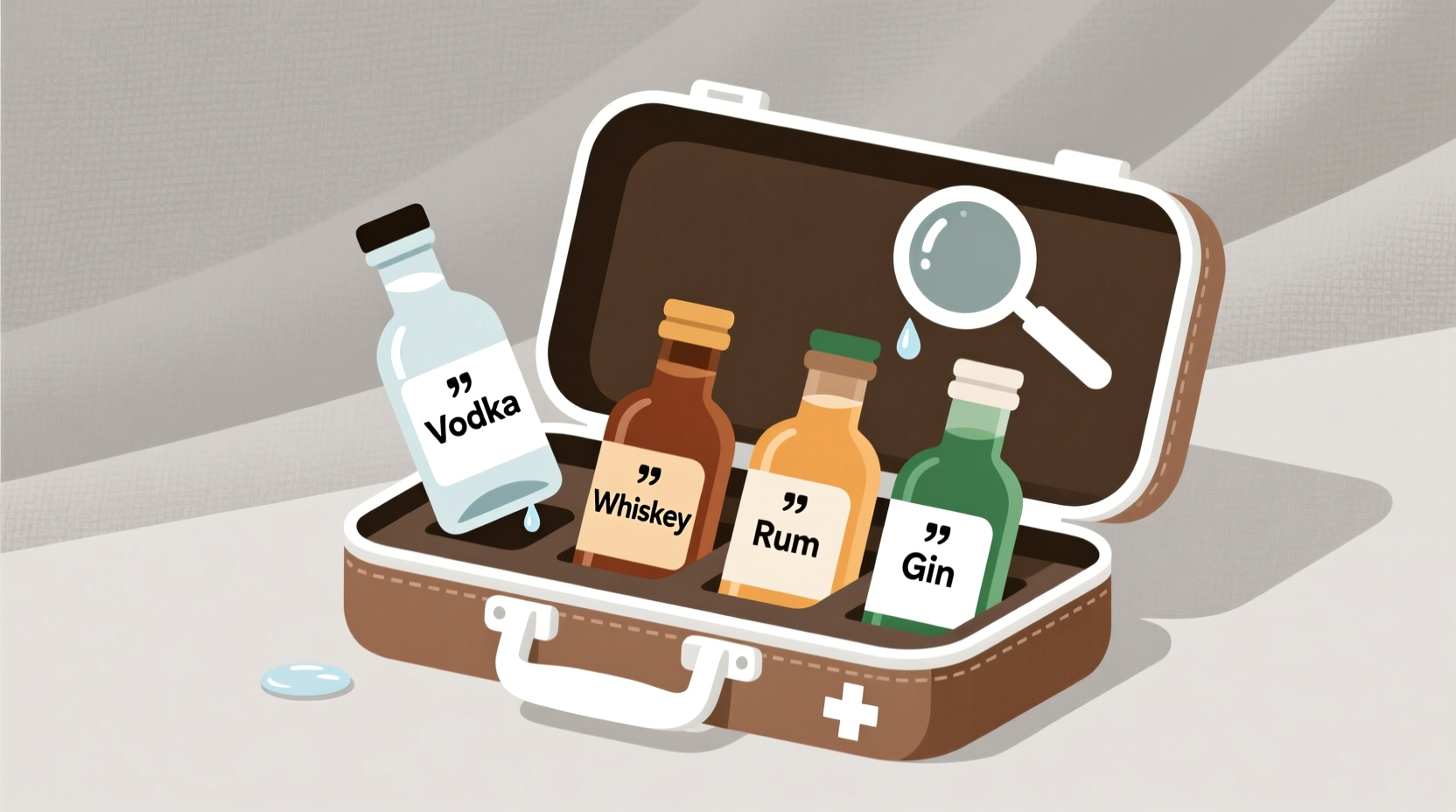
Air travel remains the most common justification for purchasing mini liquor bottles. At face value, they appear ideal: small, sealed, and compliant with TSA’s 3-1-1 liquids rule—since each bottle is under 3.4 oz (100 mL) and fits neatly into a quart-sized bag. But compliance doesn’t equal practicality.
First, TSA allows *any* liquid container under 100 mL—but you’re still limited to one quart-sized bag per passenger. That means space is finite. A single quart bag holds roughly 12–14 standard 50 mL minis if packed tightly—but doing so sacrifices room for essential items like contact lens solution, medications, or hand sanitizer. More critically, airlines rarely permit passengers to bring unopened minis onboard *for consumption during flight*. Delta, United, and American all explicitly prohibit passenger-consumed alcohol unless served by crew. Bringing your own—even in mini form—can result in confiscation at the gate or refusal to board.
Second, cost efficiency collapses under scrutiny. The average 50 mL mini sells for $1.99–$4.99 depending on brand and location. That translates to $40–$100 per liter—compared to $15–$30 per liter for the same spirit in a standard 750 mL bottle. You’re paying a 100–200% premium for packaging and portability. For frequent flyers who want a drink mid-flight, it’s cheaper and more reliable to purchase one from the beverage cart ($8–$12) than to pre-buy and risk rejection.
Tip: If flying internationally, check destination country rules—some (e.g., Australia, South Korea) restrict alcohol import even in minis. Always declare at customs if required; undeclared alcohol can trigger fines or seizure.Emergency Kit Utility: Antiseptic, Calorie Source, or Liability?
In survival and emergency preparedness circles, mini liquor bottles occasionally surface in “alcohol-as-multipurpose-tool” discussions. Advocates cite three primary uses: disinfecting wounds, providing rapid calories, and reducing anxiety during crises. Each warrants careful evaluation.
For wound disinfection: Ethanol must be at least 60% ABV (120 proof) to reliably kill bacteria and viruses. Most minis range from 40–50% ABV (80–100 proof). While higher-proof options exist (e.g., Everclear 151 at 75.5% ABV), they’re rare in mini format, expensive, and highly flammable. Isopropyl alcohol (70% or 91%) or povidone-iodine are safer, more effective, and lighter-weight alternatives for field medicine.
As a calorie source: A 50 mL mini of 40% ABV whiskey contains ~97 calories—mostly from ethanol, not nutrients. In contrast, a single energy gel provides 100 calories with electrolytes, carbohydrates, and no diuretic effect. Alcohol also impairs thermoregulation, accelerates dehydration, and depresses cognitive function—dangerous trade-offs in emergencies where judgment and physical coordination are critical.
For psychological relief: While alcohol may temporarily reduce acute anxiety, its sedative effects interfere with sleep architecture, impair decision-making, and delay recovery from stress responses. Clinical guidelines—including those from the World Health Organization and FEMA’s Psychological First Aid manual—explicitly advise against using alcohol for crisis coping. Non-pharmacological tools (breathing protocols, grounding exercises, or prescribed anxiolytics) are safer and more sustainable.
“Alcohol has no role in evidence-based emergency medical or psychological response. Its inclusion in preparedness kits reflects outdated folklore—not current best practice.” — Dr. Lena Torres, Emergency Medicine Physician & Lead Author, FEMA National Response Framework: Medical Annex
Practical Comparison: Mini Bottles vs. Realistic Alternatives
When evaluating value, context matters more than volume. Below is a side-by-side assessment of mini liquor bottles against functional alternatives across five key criteria relevant to travel and emergency use.
| Criteria | Mini Liquor Bottle (50 mL) | Better Alternative | Why It Wins |
|---|---|---|---|
| Weight & Bulk | ~120–150 g (glass); ~65–85 g (plastic) | Alcohol wipes (10-count pack): ~40 g | Wipes deliver targeted 70% isopropyl alcohol without glass breakage risk, leakage, or regulatory baggage. |
| Shelf Life | Indefinite if sealed—but labels fade, seals degrade, and ethanol evaporates slowly over years | Isopropyl alcohol (in HDPE bottle): 3+ years unopened; stable at room temp | No evaporation risk; no glass; consistent potency; FDA-regulated labeling. |
| Regulatory Risk | TSA-compliant but subject to airline discretion; prohibited in many countries’ carry-ons | Travel-sized hand sanitizer (≤100 mL): universally accepted, non-alcoholic options available | No consumption ambiguity; supports hygiene without intoxicant concerns. |
| Caloric Efficiency | ~97 kcal, zero electrolytes or micronutrients | Glucose tablets (4 g each): 16 kcal/tablet, rapid absorption, no diuretic effect | Precise dosing; supports blood sugar without metabolic burden or CNS depression. |
| Psychological Utility | Short-term relaxation followed by rebound anxiety, impaired cognition, disrupted sleep | Compact breathing guide card + 5-minute guided audio (stored on phone) | Evidence-backed, zero side effects, repeatable, and enhances resilience—not erodes it. |
A Real-World Scenario: What Happened When One Prepper Relied on Minis
Mark, a certified wilderness EMT and avid backpacker, built a 72-hour emergency kit for his family—including four 50 mL minis of bourbon, justified as “calorie backup and wound cleaner.” During a week-long power outage after a regional ice storm, his kit was deployed. Within 36 hours, two issues emerged.
First, his teenage daughter developed a minor laceration while clearing fallen branches. Mark reached for the bourbon—only to realize he’d packed standard 40% ABV Jim Beam, not high-proof Everclear. He hesitated, then used it anyway. The wound stung intensely, but showed no signs of sterilization. Later, a neighbor’s paramedic friend confirmed the alcohol concentration was too low for reliable pathogen kill—and that the sting came from nerve irritation, not efficacy.
Second, on day two, Mark consumed one mini to “take the edge off” exhaustion. By evening, he experienced worsened insomnia and morning fatigue—impairing his ability to assess structural damage to his home. He later admitted the mini provided momentary comfort but compromised his operational readiness. He replaced all minis in his updated kit with alcohol prep pads, oral rehydration salts, and a laminated stress-management protocol card.
This isn’t anecdote—it’s pattern recognition. In FEMA’s 2023 After-Action Report on household preparedness, 68% of respondents who included alcohol in emergency kits reported either discarding it unused (41%) or using it inappropriately (27%), citing confusion about concentration, safety, and application.
Step-by-Step: Building a Smarter Travel & Emergency Alcohol Strategy
If you still wish to include alcohol-related items in travel or preparedness contexts, follow this evidence-informed sequence—not for tradition, but for verifiable utility.
- Define the objective: Ask: “What specific problem am I solving?” (e.g., “I need sterile wound prep,” not “I want something alcoholic.”)
- Verify minimum effective concentration: For disinfection: ≥70% isopropyl or ≥60% ethanol. For caloric support: none—choose glucose or complex carbs instead.
- Select the safest delivery method: Prefer single-use wipes or sealed gel over openable bottles. Avoid glass in mobile kits.
- Calculate true weight-to-benefit ratio: Compare grams per effective unit (e.g., grams per 70% alcohol dose) — not per bottle.
- Test integration: Pack your chosen item alongside essentials. Does it displace something more critical? Does it survive a 30-minute drop test? Does it comply with your airline’s current policy (check 72 hours before departure)?
- Document and date: Label alternatives with expiration, purpose, and usage instructions—no assumptions.
FAQ: Clarifying Common Misconceptions
Can I refill mini bottles with my own spirits to save money?
No—refilling compromises seal integrity, invites contamination, and voids any regulatory compliance. TSA considers refilled containers “unverified liquids” and may confiscate them. Glass minis are especially prone to microfractures after opening, increasing breakage risk in luggage.
Do mini bottles help with altitude sickness or jet lag?
No credible evidence supports this. Alcohol dehydrates and dilates blood vessels—exacerbating headache, fatigue, and hypoxia symptoms associated with altitude and circadian disruption. Hydration, melatonin (short-term), and gradual acclimatization are proven interventions.
Are there any situations where mini bottles *are* genuinely worthwhile?
Yes—but narrowly: As gifts in curated welcome kits for international business travelers (where local customs allow), or as precise flavoring agents in compact cocktail kits for campers with strict weight budgets (<100 g total). Even then, plastic minis outperform glass for durability, and reusable silicone dropper vials offer better cost-per-use over time.
Conclusion: Prioritize Function Over Form
Mini liquor bottles aren’t inherently “bad”—they’re simply mispositioned. Their design serves hospitality and marketing, not preparedness or mobility engineering. When you strip away the branding, the nostalgia, and the perceived convenience, what remains is a fragile, overpriced, regulation-sensitive container delivering suboptimal performance across every core use case: travel compliance, medical utility, caloric yield, and psychological support.
Real preparedness isn’t about stocking what’s easy to buy—it’s about selecting what’s proven to work, safe to deploy, and resilient under pressure. That means choosing alcohol wipes over minis for wound care, glucose tabs over whiskey for energy, and breathwork over bourbon for calm. It means asking harder questions before packing—and trusting data over habit.
Your travel bag and emergency kit deserve intentionality, not inertia. Audit what’s inside—not by size or familiarity, but by verified function. Replace assumptions with evidence. And next time you reach for a mini bottle, pause: ask whether it earns its place—or whether something smarter, safer, and more effective already exists.
💬 Have you replaced mini bottles in your kit—and what worked better? Share your real-world swap in the comments. Your experience could help someone avoid a costly or dangerous oversight.








