Few products in the skincare world generate as much debate as facial toners. Loved by some for their refreshing feel and perceived tightening effect, dismissed by others as outdated or unnecessary, toners occupy a gray area in modern routines. With shelves lined with alcohol-laden astringents from decades past and newer formulas packed with hydrating actives, it’s no wonder consumers are confused. So, are facial toners really necessary? To answer that, we turn to dermatology — examining skin science, formulation evolution, and real-world benefits.
The short answer: not everyone needs a toner, but for certain skin types and concerns, the right one can be a valuable addition. The key lies in understanding what toners do (and don’t do), how formulations have changed, and where they fit within a personalized regimen.
What Exactly Is a Facial Toner?
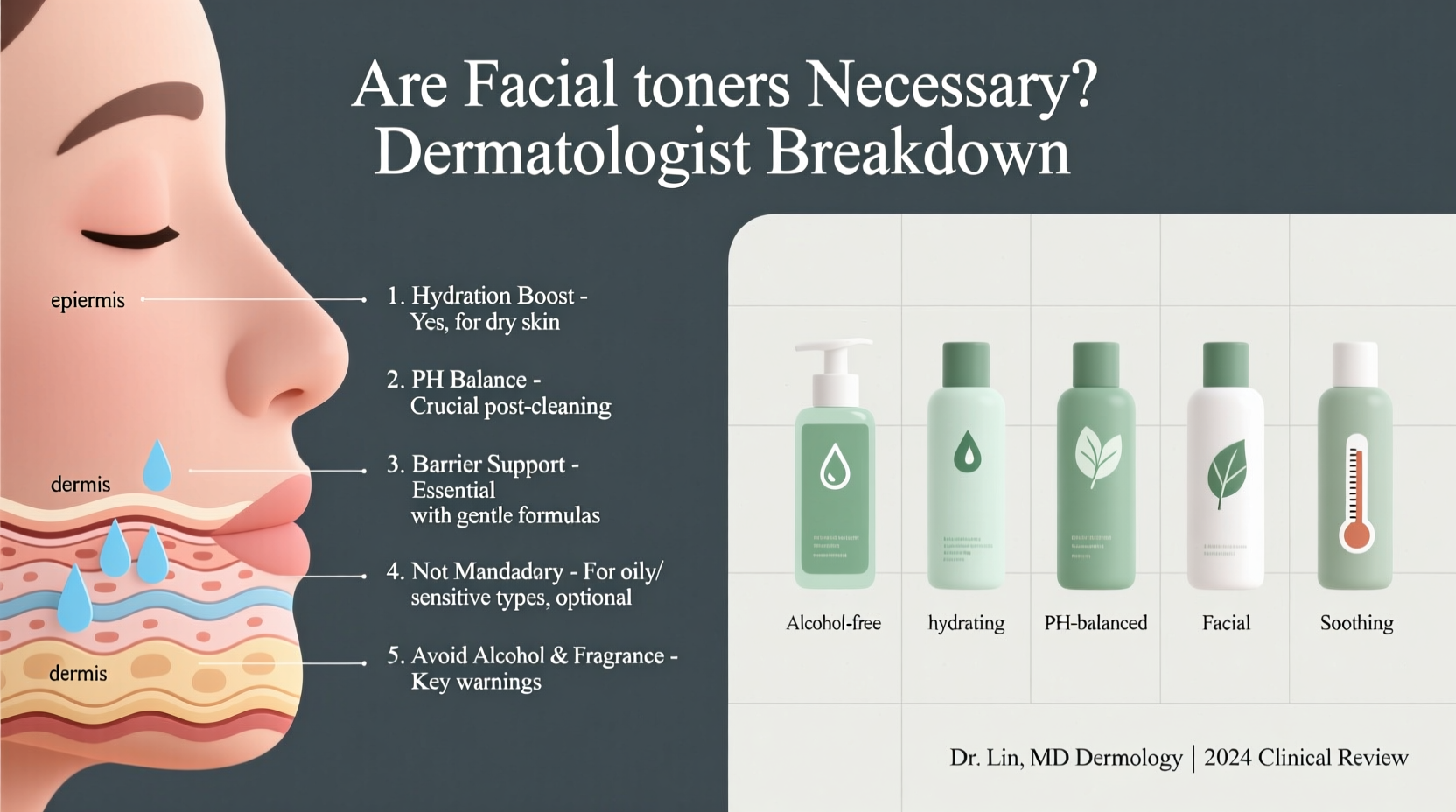
Facial toners originated in the early 20th century as solutions to remove soap residue left behind by harsh bar soaps, which were common before the advent of pH-balanced cleansers. These early toners often contained high concentrations of alcohol and functioned primarily as astringents, temporarily shrinking pores and reducing oil.
Today’s toners are vastly different. Modern formulations span a wide spectrum:
- Hydrating toners – Contain humectants like hyaluronic acid, glycerin, or panthenol to boost moisture.
- Exfoliating toners – Include alpha-hydroxy acids (AHAs) like glycolic or lactic acid, or beta-hydroxy acid (BHA) such as salicylic acid to gently resurface skin.
- Calming toners – Feature ingredients like centella asiatica, chamomile, or niacinamide to soothe irritation.
- Balancing toners – Aim to restore skin’s natural pH after cleansing.
- Astringent toners – Still available, though less recommended; typically contain alcohol and drying agents.
Unlike serums or moisturizers, toners are generally low-viscosity liquids applied after cleansing and before treatment products. They are not meant to replace any step but rather to enhance or support subsequent layers.
Tip: Always check the ingredient list. If alcohol (like denatured alcohol or ethanol) appears in the top three ingredients, the toner may be too drying for daily use — especially if you have dry or sensitive skin.Do You Really Need a Toner? Dermatological Perspective
According to board-certified dermatologist Dr. Lena Patel, “Toners aren’t essential for everyone, but they can serve specific purposes depending on your skin type and goals.”
“Think of toners as targeted prep steps. They’re not mandatory, but when chosen wisely, they can improve product absorption, deliver active ingredients, and help maintain skin barrier health.” — Dr. Lena Patel, MD, FAAD
The necessity of a toner depends largely on two factors: your cleanser and your skin’s unique needs.
If you’re using a gentle, pH-balanced cleanser (most modern facial washes), there’s little residue to remove. In this case, an old-school clarifying toner is redundant. However, if your skin tends to feel tight or unbalanced post-cleanse, a hydrating or pH-restoring toner may offer tangible benefits.
For oily, acne-prone skin, exfoliating toners with salicylic acid can help unclog pores and reduce breakouts. Sensitive skin types benefit from calming formulas that reduce redness and inflammation. Even mature skin can gain from toners infused with antioxidants or mild AHAs that support cell turnover.
In short: toners aren’t universally necessary, but they’re far from obsolete — provided they’re used intentionally.
When Toners Help (And When They Don’t)
Understanding your skin type is crucial to determining whether a toner adds value. Below is a breakdown of scenarios where toners are beneficial versus situations where they may do more harm than good.
| Skin Type / Concern | Toner Benefit | Potential Risk |
|---|---|---|
| Oily / Acne-Prone | Exfoliating toners (with BHA) help clear pores and control sebum. | Overuse can lead to over-drying or irritation. |
| Dry / Dehydrated | Hydrating toners add moisture and prep skin for serums. | Alcohol-based formulas worsen dryness and compromise barrier. |
| Sensitive / Reactive | Calming toners reduce redness and stabilize the skin. | Fragranced or acidic toners may trigger flare-ups. |
| Combination | Balancing toners regulate oil in T-zone without stripping cheeks. | Harsh toners disrupt natural oil distribution. |
| Mature / Aging | Antioxidant-rich or mild exfoliating toners support radiance and texture. | Strong acids without proper buffering cause sensitivity. |
The main risk with toners comes from misalignment between product and skin type. For example, someone with rosacea using a glycolic acid toner twice daily may experience increased redness and stinging. Conversely, skipping a hydrating toner in a dry climate might leave skin feeling taut and flaky.
Mini Case Study: From Irritated to Balanced
Sarah, a 32-year-old with combination skin, struggled with midday shine and occasional breakouts along her jawline. She used a foaming cleanser followed by a serum and moisturizer. Despite this routine, her skin felt uneven and occasionally irritated.
After consulting a dermatologist, she learned her cleanser slightly raised her skin’s pH, leaving it vulnerable. She began using a pH-balancing toner with witch hazel (alcohol-free) and allantoin. Within two weeks, her skin felt smoother, her moisturizer absorbed better, and breakouts decreased. The toner didn’t “do” anything dramatic — it simply created a more stable environment for the rest of her routine to work effectively.
This illustrates a core principle: toners often function best as facilitators, not standalone treatments.
How to Use a Toner Effectively: A Step-by-Step Guide
Using a toner incorrectly can negate its benefits. Follow this dermatologist-approved sequence for optimal results:
- Cleanse – Wash your face with a gentle, non-stripping cleanser. Pat dry with a soft towel.
- Apply toner immediately – While skin is still slightly damp, apply toner using either a cotton pad or clean hands. Damp skin helps lock in hydration.
- Choose your method:
- Cotton pad: Best for exfoliating or clarifying toners to ensure even application.
- Hands: Ideal for hydrating toners — pressing the liquid into the skin enhances absorption.
- Wait 30–60 seconds – Allow the toner to absorb before applying serums or moisturizers. This prevents dilution of active ingredients.
- Proceed with your routine – Layer your treatment products as usual. Think of the toner as a bridge between cleansing and targeting.
Frequency depends on the formula. Hydrating toners can be used morning and night. Exfoliating toners should be limited to 2–3 times per week initially, then adjusted based on tolerance. Never layer multiple acidic toners — this increases the risk of barrier damage.
Tip: Perform a patch test behind the ear or on the jawline before using a new toner, especially if it contains acids or fragrance. Wait 24 hours to check for reactions.Expert Checklist: Choosing the Right Toner
Not all toners are created equal. Use this checklist to find one that suits your skin:
- ✅ Avoid alcohol (ethanol, SD alcohol) if you have dry or sensitive skin.
- ✅ Look for hydrating ingredients like hyaluronic acid, glycerin, or aloe vera.
- ✅ For acne-prone skin, choose toners with salicylic acid (0.5%–2%) or niacinamide.
- ✅ If you want exfoliation, opt for AHAs (glycolic, lactic acid) at low concentrations (5%–10%) and buffered formulas.
- ✅ Fragrance-free is safer for reactive skin — both synthetic and essential oils can be irritants.
- ✅ Check the pH — ideally between 4.5 and 5.5 for compatibility with skin’s natural barrier.
- ✅ Start slow — introduce one new toner at a time and monitor your skin’s response.
Frequently Asked Questions
Can I skip toner if I use a good cleanser and moisturizer?
Yes, absolutely. A well-formulated cleanser and moisturizer can cover the basics of hygiene and hydration. Toners are optional enhancements, not essentials. If your skin feels balanced and your products absorb well, adding a toner may not provide noticeable benefits.
Do toners actually tighten pores?
No — toners cannot physically change pore size, which is genetically determined. However, some astringent toners create a temporary tightening sensation by constricting the skin slightly, giving the illusion of smaller pores. Over time, consistent use of exfoliating toners can keep pores clear, making them appear less prominent.
Is it okay to use a toner every day?
It depends on the formula. Hydrating and calming toners can typically be used twice daily. Exfoliating toners should be used cautiously — start 2–3 times per week and increase only if your skin tolerates it. Daily use of strong acids without proper recovery can compromise the skin barrier, leading to dryness, sensitivity, or breakouts.
Final Thoughts: Rethinking the Role of Toners
The question isn’t whether toners are necessary for everyone — it’s whether the right toner can elevate your personal skincare experience. Gone are the days when toners meant harsh alcohol swipes that left skin squeaky-clean and stripped. Today’s best options are intelligent, targeted treatments that support skin health rather than assault it.
The most effective skincare routines are built on individual needs, not trends or tradition. If you struggle with clogged pores, a BHA toner could be transformative. If your skin feels dehydrated despite moisturizing, a humectant-rich toner might be the missing link. But if your current routine works and your skin is healthy, forcing in a toner serves no purpose.
Listen to your skin. Read labels. Consult a dermatologist when unsure. And remember: simplicity often trumps complexity in skincare. A toner should enhance your routine — not complicate it.
🚀 Ready to optimize your routine? Reassess your current products, identify gaps, and consider whether a thoughtfully chosen toner could make a difference. Your skin doesn’t need every product — just the right ones.








